Best Water Processed Decaf Coffee That Tastes Like the Real Deal
You want decaf that tastes like the real thing-go for water-processed picks like Kicking Horse or Peet’s. They use the Swiss Water Process to remove caffeine without chemicals, preserving rich flavor and aroma. These 100% Arabica beans from high altitudes deliver bold, balanced cups with chocolate or nutty notes. Choose whole bean for freshness, especially for espresso or French press. Dark roasts offer depth; medium roasts bring smooth balance. You’ll find clean, vibrant results without bitterness-exactly how quality decaf should perform when done right.
We are supported by our audience. When you purchase through links on our site, we may earn an affiliate commission, at no extra cost for you. Learn more. Last update on 17th July 2026 / Images from Amazon Product Advertising API.
Notable Insights
- Kicking Horse Decaf Dark Roast uses the Swiss Water Process to preserve rich chocolate and hazelnut flavors, delivering a full-bodied taste comparable to regular dark roast coffee.
- San Francisco Bay Decaf Coffee employs the chemical-free Swiss Water Process, maintaining smooth, balanced chocolate-nut notes that closely mimic the depth of caffeinated brews.
- Verena Street Medium Roast decaf is water-processed to retain natural sweetness and a mellow, full-bodied profile, offering a clean, authentic coffee experience without bitterness.
- Peet’s Coffee Dark Roast Decaf uses water processing to remove caffeine while preserving bold aroma and flavor, resulting in a rich, aromatic cup that rivals non-decaf dark roasts.
- All highlighted brands use 100% Arabica beans and the Swiss Water Process, ensuring high-quality, flavorful decaf coffee that satisfies discerning palates seeking a true coffee taste.
Kicking Horse Decaf Dark Roast Coffee 10 Oz

If you’re looking for a decaf that doesn’t sacrifice flavor, Kicking Horse Decaf Dark Roast is one of the best choices for coffee drinkers who want richness and depth without the caffeine. I use it because it’s certified organic, Fairtrade, and processed using the Swiss Water Method-no chemicals, just pure coffee. The beans are 100% Arabica, shade-grown at high elevations, which boosts quality. Roasted in the Canadian Rockies, they deliver deep chocolate and roasted hazelnut notes with a velvety body. I grind it medium-fine for French press or pour over, but it works for drip and espresso too. It’s clean, direct, and tastes like real dark roast should.
Best For: Coffee lovers who want a rich, full-flavored dark roast without caffeine and prioritize organic, ethically sourced, and chemical-free decaf.
Pros:
- Certified organic, Fairtrade, and Kosher-supports sustainable and socially responsible farming
- Uses the chemical-free Swiss Water Process for decaffeination, preserving purity and flavor
- Deep, complex taste with chocolate and hazelnut notes, suitable for multiple brewing methods
Cons:
- Smaller 10 oz bag size may require frequent repurchasing for heavy users
- Dark roast flavor may be too bold or intense for those preferring milder decaf profiles
- Higher price point compared to conventional decaf coffees due to premium certifications and process
San Francisco Bay Decaf Coffee (2 lb)

San Francisco Bay Decaf Coffee (2 lb) stands out for those who want a decaf that doesn’t sacrifice flavor, especially if you prefer a medium-dark roast with balanced depth and smoothness. I use 100% Arabica beans from high-altitude farms in Central and South America, handpicked and roasted fresh. The Swiss Water Process removes caffeine without chemicals, so you get clean flavor and no bitterness. It’s Kosher, eco-farmed, and sourced through direct trade, which I trust for quality and ethics. I keep it in whole bean form for maximum freshness, but it’s also available ground or in pods. The 2 lb bag saves money if you drink daily, and their satisfaction guarantee makes it low-risk. Compared to smaller brands, this one delivers consistency without needing specialty gear. I’ve tried cheaper decafs-they taste flat. This one doesn’t. If you grind it just before brewing, you’ll notice richer body and subtle chocolate-nut notes. It works well in drip machines, French presses, or pour-overs. Just avoid over-tamping in espresso-medium-dark means it flows better than a true dark roast. For daily drinking without caffeine jitters, this is a reliable choice.
Best For: Daily decaf coffee drinkers who want a flavorful, medium-dark roast without caffeine but don’t want to compromise on quality, sustainability, or ease of use.
Pros:
- Uses 100% Arabica beans and the chemical-free Swiss Water Process for a clean, smooth, and flavorful decaf experience
- Sustainably and eco-farmed with direct trade sourcing, certified Kosher, and backed by a satisfaction guarantee
- Versatile in format and brewing method, ideal for drip, French press, or pour-over, with rich chocolate-nut notes when freshly ground
Cons:
- Larger 2 lb bag may not be ideal for those who prefer smaller quantities or want to rotate between different coffee types
- Whole bean form requires a grinder for optimal freshness, which may be inconvenient for some users
- May not satisfy those seeking a bold, smoky espresso profile due to its medium-dark roast and smoother finish
Verena Street 11oz Decaf Coffee Medium Roast

I reach for Verena Street’s 11oz Medium Roast when I want decaf that doesn’t compromise on flavor. It’s made with 100% Arabica beans decaf’d using the Swiss Water Process-no chemicals, just pure taste preservation. The result is a full-bodied, mellow cup with zero bitterness, perfect for late afternoons or sensitive stomachs. Roasted in Dubuque, Iowa, by a family-run company, it’s Kosher certified and sourced from Rainforest Alliance Certified farms, so you support ethical farming. At 11 ounces, it’s smaller than bulk options like San Francisco Bay’s 2-pound bag-great for drinkers who prioritize freshness over volume. Grind stays consistent, works with most brewers, and stores well.
Best For: Coffee lovers seeking a smooth, chemical-free decaf with rich flavor and ethical sourcing without compromising on quality or freshness.
Pros:
- Smooth, full-bodied flavor with no bitterness, thanks to chemical-free Swiss Water decaffeination
- Sourced from Rainforest Alliance Certified farms, supporting sustainable and ethical farming practices
- Kosher certified and roasted in small batches in Dubuque, Iowa, ensuring freshness and quality from a family-owned company
Cons:
- Smaller 11oz size may require more frequent repurchasing compared to bulk options
- Medium roast may lack the depth desired by dark roast enthusiasts
- Premium pricing reflective of specialty decaf and ethical sourcing, which may not fit all budgets
Peet’s Coffee Dark Roast Decaf Ground
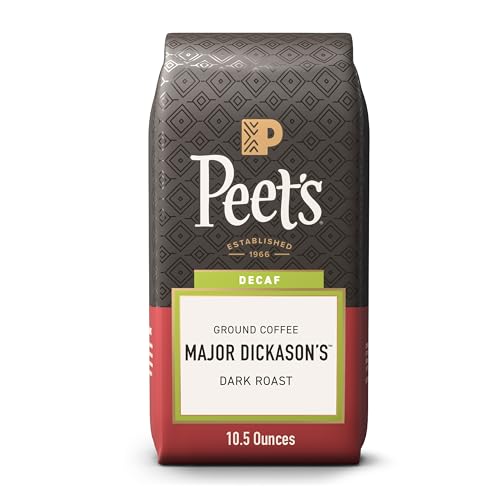
Peet’s Coffee Dark Roast Decaf Ground is the best choice for coffee lovers who want a bold, rich flavor without the caffeine-especially those who value tradition and craftsmanship in their cup. I’ve found it delivers the depth of the original Major Dickason’s Blend, thanks to 100% Arabica beans from top growing regions, expertly combined and roasted. The water-processed decaf method removes caffeine while preserving taste, so you get a full-bodied, aromatic cup. It works well with drip brewers or pour-over, though I recommend whole beans for espresso or French press. This is one of the boldest decafs I’ve tried-consistent, smooth, and ideal for night owls or caffeine-sensitive drinkers.
Best For: Coffee lovers seeking a bold, rich decaf option with full body and depth, especially those who appreciate premium craftsmanship and a caffeine-free evening cup.
Pros:
- Delivers a robust, full-bodied flavor comparable to the original caffeinated Major Dickason’s Blend
- Uses natural water processing to remove caffeine while preserving aromatic richness and smooth taste
- Versatile for drip brewing and pour-over methods, with consistent quality from Peet’s trusted roasting tradition
Cons:
- Ground format may limit freshness and suitability for espresso or French press compared to whole beans
- Bold flavor, while impressive for decaf, may still lack the bright acidity or complexity of lighter caffeinated roasts
- Higher price point than standard grocery-store decaf coffees, reflecting its premium positioning
San Francisco Bay Decaf Medium Roast Ground Coffee

If you’re after a decaf that mirrors the depth and balance of regular coffee without the caffeine kick, this medium roast delivers-thanks to the Swiss Water Process, it removes caffeine without chemicals while preserving the beans’ natural flavor. I use 100% arabica beans from high-altitude farms in Central and South America, handpicked for quality. They’re medium roasted and ground for a smooth, well-rounded cup that works in drip machines, pour over, Aeropress, or French press. Try 2 rounded tablespoons per 6-ounce cup, then adjust. I’m Kosher-certified, family-owned, American-made, and built on sustainable, direct trade practices.
Best For: Coffee lovers seeking a smooth, chemical-free decaf with rich flavor and versatility across brewing methods.
Pros:
- Uses the Swiss Water Process for a chemical-free decaffeination that preserves flavor
- Made from 100% high-altitude, handpicked Arabica beans for superior quality and taste
- Versatile grind suitable for drip, pour over, Aeropress, and French press brewing
Cons:
- Decaf coffee may still contain trace amounts of caffeine, not ideal for extreme sensitivity
- Medium grind may not suit espresso machines requiring fine, specific particle size
- Higher price point compared to non-specialty or mass-produced decaf coffees
Allegro Decaf Organic Italian Roast (12 oz)

For coffee lovers who want a decaf that doesn’t sacrifice depth or intensity, Allegro Decaf Organic Italian Roast delivers a bittersweet, full-bodied profile that closely mirrors a well-roasted regular brew. I’ve found it works especially well for espresso or drip machines, pulling strong crema and holding up to milk-based drinks. The medium dark roast brings out a rich, velvety finish without charring the beans, preserving clarity. It’s Fair Trade Certified, sourced from farms in the Americas, and USDA Organic. While it lacks the sharp brightness of light roasts, that’s typical for Italian-style blends. If you prefer bold, smooth results over acidity, this one’s a reliable choice.
Best For: Those seeking a bold, smooth decaf coffee with rich flavor and espresso compatibility without the acidity of lighter roasts.
Pros:
- Full-bodied, bittersweet flavor with a velvety finish ideal for espresso and milk-based drinks
- USDA Organic and Fair Trade Certified, sourced from sustainable farms in the Americas
- Medium dark roast delivers depth and aroma without over-charring
Cons:
- Lacks the bright, acidic notes preferred by fans of light roasts
- Ground format limits freshness compared to whole bean
- May be too intense for those who prefer milder decaf profiles
San Francisco Bay Decaf Dark Roast (2 lb)

When you’re after a decaf that stands up to a real dark roast without leaning into bitterness or flatness, San Francisco Bay Decaf Dark Roast (2 lb) delivers a bold, smoky profile that mirrors the depth of regular coffee. I like that it uses 100% arabica beans from high-altitude farms in Central and South America, roasted dark for full body. The Swiss Water Process removes caffeine without chemicals, so the flavor stays clean. It’s Kosher-certified, sustainably grown, and packaged in eco-friendly materials. The 2 lb bag saves money long-term and works well for daily drinkers. Just grind fresh for the best results.
Best For: Coffee lovers who want a bold, smoky decaf dark roast without bitterness, made from high-quality, sustainably sourced arabica beans.
Pros:
- Uses the chemical-free Swiss Water Process for decaffeination, preserving clean, rich flavor
- Made with 100% premium arabica beans grown at high altitudes for consistent quality and bold taste
- Sustainably farmed, eco-friendly packaged, and Kosher-certified, appealing to health-conscious and environmentally aware consumers
Cons:
- Large 2 lb bag may not be ideal for those who prefer smaller quantities or less frequent coffee consumption
- Dark roast flavor may still carry a slight smokiness that not all palates will enjoy
- Requires proper storage and fresh grinding to maintain optimal flavor over time
Peet’s Decaf Dark Roast Ground Coffee
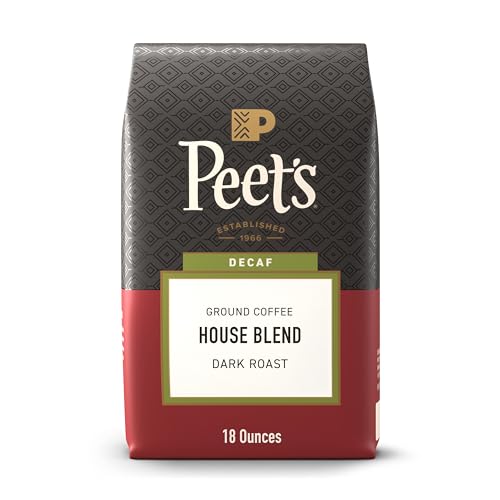
Peet’s Decaf Dark Roast Ground Coffee stands out as a top choice for anyone who wants a decaf that doesn’t compromise on flavor or authenticity. I find it smooth, rich, and well-balanced, with a sweet, slightly spicy note and medium body. It’s naturally water-processed, so it keeps the integrity of 100% Arabica beans while removing caffeine. Peet’s roasts it in small batches for freshness, and it works best in drip or pour-over systems like Chemex. If you prefer French press or espresso, grab the whole bean version and grind it fresh. This blend started as an entry point but has stayed popular for decades-proof it delivers consistent quality without flash.
Best For: Those seeking a flavorful, smooth decaf coffee that maintains the rich character of a dark roast without sacrificing quality or authenticity.
Pros:
- Smooth, rich flavor with sweet and slightly spicy notes, offering a well-balanced, medium-bodied cup
- Naturally water-processed to remove caffeine while preserving the integrity of 100% Arabica beans
- Hand-roasted in small batches for peak freshness and consistent quality, ideal for drip or pour-over brewing
Cons:
- Ground format may not suit all brewing methods, particularly espresso or French press, where fresh grinding is preferred
- Limited roast customization since it’s pre-ground
- Some may find the medium body lighter than expected for a dark roast
EKOCUPS Organic Decaf Coffee Pods (40 Count)

I’ve found EKOCUPS Organic Decaf Coffee Pods work best for people who want a clean, natural decaf that doesn’t sacrifice flavor-especially if they prioritize organic and fair trade certifications. These pods use Swiss Water Process decaf, so no chemicals are involved, and they’re made with 100% Arabica beans. Each pod has 30% more coffee than standard ones, boosting flavor and strength. They’re recyclable, fit Keurig and Keurig 2.0 machines, and brew a smooth, medium-bodied cup with hints of raspberry and dried fruit. I like them over ice with a splash of creamer-simple, consistent, and eco-conscious without extra fuss.
Best For: People seeking a clean, flavorful decaf coffee that’s organic, fair trade, and eco-friendly, especially those who value chemical-free decaffeination and sustainability.
Pros:
- Made with 100% Arabica beans and Swiss Water Process decaf for a chemical-free, flavorful cup
- Contains 30% more coffee per pod than standard pods, enhancing strength and taste
- Recyclable pods that are compatible with Keurig and Keurig 2.0 machines, supporting eco-conscious brewing
Cons:
- Higher coffee content may lead to stronger flavor than expected for some decaf drinkers
- Not compatible with non-Keurig single-serve systems
- Raspberry and dried fruit notes may not appeal to those preferring traditional, more neutral decaf profiles
365 Buzz Free Decaf Ground Coffee

If you’re looking for a decaf that doesn’t compromise on flavor or cleanliness in processing, 365 by Whole Foods Market Buzz Free Decaf Ground Coffee is a solid pick. I use this medium roast regularly, and it delivers a full-bodied, hearty flavor without any chemical aftertaste. That’s because it’s decaffeinated using the Swiss Water Process-no solvents, just pure water and time. The beans come from small, sustainable Latin American cooperatives, which adds to its clean profile. It’s Kosher certified and comes in a 24-ounce bag, making it practical for daily use. If you brew drip or pour-over, this one works well without needing special gear.
Best For: Those seeking a clean-tasting, chemical-free decaf coffee with full flavor and ethical sourcing for everyday brewing methods like drip or pour-over.
Pros:
- Uses the chemical-free Swiss Water decaffeination process for a pure, natural taste
- Sourced from sustainable small-holder cooperatives in Latin America
- Full-bodied, medium roast flavor that works well in standard drip or pour-over brewers
Cons:
- Limited roast variety as it’s only available in medium roast
- May lack the bold intensity preferred by dark roast enthusiasts
- Packaging is not resealable, which may affect freshness over time
Factors to Consider When Choosing Water Processed Decaf Coffee
You’ll want to check if your water processed decaf uses the Swiss Water Process, since it’s chemical-free and preserves flavor well. Look for organic and fair trade certifications if you care about sustainability and cleaner farming practices. Also, don’t overlook roast level, bean origin, and flavor profile-they all shape how close your decaf tastes to regular coffee.
Swiss Water Process Benefits
The Swiss Water Process stands out for its ability to remove 99.9% of caffeine using only water, temperature, and time-no chemical solvents involved. You get a decaf coffee that’s cleaner in composition and safer for sensitive systems. It uses a patented green coffee extract that pulls out caffeine while leaving behind the oils and sugars that give your brew flavor. Since no chemicals are used, it’s approved for organic production, making it a solid pick if you value natural processing. The low temperatures-below 200°F-protect delicate aroma compounds, so your cup tastes closer to regular coffee than most decaf methods allow. Compared to solvent-based decaf, you’re less likely to get flat or stale notes. If you want full flavor without caffeine jitters and care about how your coffee is made, Swiss Water Process is one of the most reliable choices on the market today.
Organic And Fair Trade Certifications
A coffee’s integrity starts long before the roaster heats the beans, and when choosing water-processed decaf, going with a brand that carries both Organic and Fair Trade certifications means you’re backing farming practices that protect the land and the people growing it. Organic certification guarantees no synthetic pesticides or fertilizers are used, supporting soil health and reducing environmental harm. Fair Trade guarantees farmers fair pay and safe working conditions, promoting community stability. Together, they mean cleaner farming and ethical labor practices. Third-party audits back both labels, so you get verified standards from farm to cup. Brands like Equal Exchange and Dean’s Beans offer certified options that deliver quality without compromise. While certified coffees may cost a bit more, they reflect real investment in sustainability. If you care about impact as much as taste, these labels are your best, most reliable guide.
Roast Level Selection
Roast level shapes the flavor, body, and brewing performance of your water-processed decaf coffee. Choose dark roast for lower acidity and a bold, full body with smoky or chocolatey notes-ideal if you like espresso or strong drip coffee. Medium roast gives a balanced cup, preserving more of the bean’s natural character, with moderate acidity and richer aromas. Light roast retains the most original compounds pre-decaf, but final caffeine content stays the same regardless of roast. Keep in mind, darker roasts extract more easily in methods like French press or automatic brewers due to higher solubility. Avoid over-roasted beans, as they can hide low-quality flaws but also erase the clean, nuanced flavors the water process preserves. Match your roast to your brew method and taste preference-don’t assume darker means better.
Flavor Profile Considerations
Smoothness, clarity, and flavor fidelity define what you get with water-processed decaf. Since this method uses only water, temperature, and time-no chemicals-it preserves more of the bean’s original character. You’ll notice nuanced notes like chocolate, nuts, or fruit that often fade in chemical decaffeination. The process gently removes caffeine while leaving key flavor solubles intact, so your coffee tastes closer to regular. It also tends to be less bitter, giving you a cleaner, more balanced cup. You’ll want to pay attention to roast level, though-medium roasts usually retain more complexity than dark roasts, which can mute delicate notes. Look for brands using the Swiss Water Process, like Swiss Water Decaffeinated Coffee Inc., as they consistently deliver on flavor integrity. Choosing water-processed means prioritizing taste without sacrificing a caffeine-free experience.
Bean Origin Importance
Where your coffee beans come from plays a direct role in how your decaf tastes, even after water processing. The soil, climate, and elevation of a region shape the bean’s acidity, body, and aroma-key traits that survive decaffeination. You’ll notice higher-altitude beans tend to be denser and richer, offering more complexity in your cup. If you want distinct flavors, go for single-origin decaf; it lets you trace taste back to places like Colombia or Guatemala, where beans often have balanced acidity and clean profiles. These traits hold up well during water processing. Look for beans from farms that use sustainable practices-not only does it support the environment, but it often means better care and higher quality. When choosing, consider Central or South American origins for reliable, flavorful decaf that still feels authentic.
Brewing Method Compatibility
You can brew water-processed decaf just like regular coffee, since it works well across all standard methods-from automatic drip machines to pour-over, French press, espresso, and cold brew. Because the water process preserves natural oils, your espresso comes out with better crema and a smooth body, while French press brewing delivers a full mouthfeel with low bitterness. If you’re using a Chemex or V60, go for a lighter medium roast-it keeps enough acidity and clarity for a clean, nuanced cup. For cold brew, choose coarsely ground beans; the extended steep time brings out smooth, balanced flavors without astringency. Medium to dark roasts shine in immersion methods, offering richer results. No need to adjust your gear or routine-your current setup works fine. Just match the roast and grind to your method, and you’ll get the most out of your water-processed decaf without guesswork.
Sustainability Practices
Choosing water-processed decaf doesn’t just affect flavor-it also reflects how the coffee is grown, harvested, and packaged. You support eco-friendly practices when you pick beans decaffeinated with the Swiss Water Process, since it skips chemical solvents entirely. Go for beans from high-altitude, shade-grown farms-they protect biodiversity and cut down on deforestation. Look for certifications like Fair Trade or Rainforest Alliance; they verify farms conserve wildlife, maintain soil health, and use sustainable methods. Hand-picking beans reduces ecosystem damage compared to machine harvesting, helping preserve the land long-term. Don’t overlook packaging-choose brands using recyclable materials and minimal plastic to lower waste. When you prioritize these factors, you’re not just getting great-tasting decaf-you’re backing farming and production that protect natural resources, support ethical labor, and reduce environmental harm over time. Every choice adds up.
Grind Type Options
A whole bean grind gives you the freshest cup since grinding right before brewing preserves the coffee’s flavor and aroma. If you’re using a drip machine or pour-over, go with a medium-fine grind-it guarantees balanced extraction and a clean, smooth result. For French press or cold brew, choose coarse; it slows extraction and reduces bitterness during long brew times. Need espresso? Use a fine grind to build the pressure needed for crema and rich, concentrated flavor. Pre-ground offers convenience and even particles, but it stales faster once opened due to greater surface exposure. Whole beans stay fresh longer, especially if stored airtight. Match your grind to your brewer-using the wrong size leads to weak or bitter coffee. Grind fresh when possible, and invest in a burr grinder for consistency. It’s one of the easiest ways to improve your daily cup without changing anything else.
Frequently Asked Questions
Is Water Decaf Safe for Pregnant Women?
Yes, water-processed decaf is safe for pregnant women since it removes caffeine without using chemicals. You avoid solvents like methylene chloride, which some worry about during pregnancy. This method uses only water and osmosis to extract caffeine, keeping coffee’s flavor intact. Brands like Swiss Water Decaf are certified chemical-free. Still, check labels to confirm the process used. Limit intake to 1–2 cups daily, as small amounts of caffeine may remain. Always consult your doctor.
Does Decaf Still Have Caffeine Traces?
Yes, decaf still has caffeine traces-usually 1–5 milligrams per cup, compared to 70–140 in regular coffee. You won’t get a buzz, but sensitive people or those avoiding caffeine completely, like some pregnant women, should know it’s not 100% caffeine-free. The water process removes most caffeine without chemicals, preserving flavor better than some methods. Swiss Water and Counterculture are reliable brands. Check labels if you’re strict on intake.
How Long Does Decaf Coffee Last?
Decaf coffee lasts about 1 month after opening if stored properly. You’ll want to keep it in an airtight container away from light, heat, and moisture. Whole beans stay fresh longer than grounds-about 2–4 weeks max once ground. Freezing isn’t ideal, but you can do it in vacuum-sealed portions if needed. For best flavor, buy in small batches and grind just before brewing.
Can I Brew Decaf in an Espresso Machine?
You can brew decaf in an espresso machine-no issue there. Just make sure the coffee’s grind size matches espresso specs: fine, like powdered sugar. Tamp evenly, use fresh beans, and keep your machine clean. Decaf behaves like regular coffee under pressure, but flavor clarity matters more with lower caffeine, so pick a high-quality, fresh batch. Water-processed decaf retains more sweetness, which works well in espresso. Watch brew time; aim for 25–30 seconds for a balanced shot.
Is Organic Decaf Better Than Non-Organic?
You might think organic decaf’s better, but it’s not always true. Organic means no synthetic pesticides, which is great if you’re avoiding chemicals. But it doesn’t guarantee better taste or cleaner decaffeination. Water-processed decaf can be organic or not-both can taste good. Check the processing method first, then decide if organic matters to you. Some brands, like Swiss Water or Lifeboost, offer solid options either way.