Best Espresso Makers That Turn Your Kitchen Into a Cafe
You can make café-quality espresso at home with machines like the Breville Bambino or CASABREWS 20 Bar, both delivering 9–10 bars of pressure and steam wands for smooth microfoam. The Bambino heats in 3 seconds and has an auto steam wand, while CASABREWS offers a compact build and strong pump. Stovetop options like the Bialetti Moka Express brew rich coffee without electricity. Each model has trade-offs in size, automation, and maintenance-knowing your priorities helps you pick the right one.
We are supported by our audience. When you purchase through links on our site, we may earn an affiliate commission, at no extra cost for you. Learn more. Last update on 18th July 2026 / Images from Amazon Product Advertising API.
Notable Insights
- Breville Bambino BES450BSS heats in 3 seconds and delivers barista-quality espresso with PID control and auto milk frothing.
- CASABREWS 20 Bar Espresso Machine offers 20-bar pressure and a 360° detachable steam wand for rich crema and microfoam.
- Gevi 20 Bar Espresso Maker includes pre-infusion and a pressure gauge for consistent extraction and cafe-style results.
- Breville Barista Express BES870XL grinds, doses, and tamps on-demand for full control and professional espresso customization.
- Compact designs with stainless steel builds and fast heat-up times fit small kitchens while mimicking commercial cafe performance.
CASABREWS 20 Bar Espresso Machine with Steam Frother

If you’re looking for a compact, reliable espresso machine that delivers consistent pressure and real barista-style control without taking up much counter space, the CASABREWS 20 Bar Espresso Machine with Steam Frother is a solid pick for home or office use. I’ve found it delivers rich, crema-topped shots thanks to its 20 bar Italian pump and 1350W boiler. The built-in pressure gauge lets me monitor extraction in real time, and the steam wand creates fine microfoam for lattes or cappuccinos. It’s not dishwasher safe, and you’ll need to run hot water to cool the system if buttons flash-but those are minor trade-offs for the performance.
Best For: Home and office users seeking a compact, semi-automatic espresso machine with professional-grade pressure and steam frothing capability for barista-style coffee without the bulk.
Pros:
- Delivers rich espresso with crema thanks to a 20 bar Italian pump and 1350W boiler
- Compact design with a built-in pressure gauge and steam wand for lattes and cappuccinos
- Includes double and single cup filters, tamper with spoon, and a removable water tank for convenience
Cons:
- Not dishwasher safe, requiring manual cleaning
- Requires cooling via hot water function if buttons flash, indicating potential overheating
- Steam knob must be fully turned off to prevent operation errors, adding a step to the process
Imusa USA Aluminum Stovetop 6-cup Espresso Maker (B120-43V), Silver

The Imusa USA Aluminum Stovetop 6-cup Espresso Maker (B120-43V) suits anyone who wants strong, rich coffee without the fuss of electric machines or the steep price of professional gear. I use it on my gas stove, but it works on ceramic or coil too. Made from lightweight aluminum, it’s built to last and features a bakelite handle that stays cool. It brews under pressure, forcing hot water through finely ground coffee for a bold, espresso-like result. I’ve found grind size and proper filling are key-too coarse or too little coffee weakens the shot. I hand-wash mine; it’s not dishwasher safe. At around six ounces per batch, it’s ideal for one or two.
Best For: Coffee lovers who want a simple, affordable way to brew strong, espresso-style coffee at home without electricity or expensive equipment.
Pros:
- Durable aluminum construction with a cool-touch bakelite handle for safe handling
- Compatible with gas, ceramic, and coil stovetops for versatile use
- Produces rich, full-bodied coffee with proper grind and tamping technique
Cons:
- Requires careful attention to grind size and coffee amount for optimal results
- Hand wash only-cannot be cleaned in a dishwasher
- Smaller capacity (6 cups/6 oz total) may not suit households needing multiple servings quickly
Bialetti Moka Express 6-Cup Espresso Maker

I skip the fancy machines when I want rich, authentic espresso-style coffee at home-instead, I reach for the Bialetti Moka Express 6-Cup Espresso Maker, a stovetop classic that delivers bold flavor without electricity or complicated parts. Invented in 1933 and made in Italy, this aluminum pot brews 6 ounces of strong coffee using just heat and ground beans. It works on gas, electric, and induction stoves (with the adapter). I fill the base with water, add coffee to the filter, and heat it until I hear gurgling-then I turn it off. I rinse it by hand after, never using soap or the dishwasher, to keep flavors clean. The safety valve makes it easy to clean and safe to use.
Best For: Home coffee lovers who want rich, espresso-style coffee without expensive machines or electricity.
Pros:
- Brews bold, authentic espresso-style coffee using simple stovetop heat
- Durable aluminum construction with a classic design made in Italy
- Compatible with gas, electric, and induction stoves (with adapter)
Cons:
- Requires manual monitoring during brewing to avoid over-extraction
- Must be handwashed without soap, limiting convenience
- Aluminum construction may impart a metallic taste over time if not maintained properly
Gevi 20 Bar Espresso Maker with Milk Frother

You’ll find the Gevi 20 Bar Espresso Maker with Milk Frother works best if you want consistent, barista-style espresso without spending over $200. I rely on its 20-bar pump and pre-infusion to pull rich shots every time. The built-in gauge lets me monitor pressure, and the steam wand heats up fast, creating smooth microfoam for lattes. It’s compact, fits under most cabinets, and the stainless steel body resists stains. I use the hot water function for Americanos and cup warming. Just remember: it only takes ground coffee, and cleanup’s by hand. With a 12-month warranty and support included, it’s a solid pick.
Best For: Home espresso enthusiasts seeking barista-quality results with a compact, affordable machine under $200.
Pros:
- 20-bar pressure pump and pre-infusion ensure rich, consistent espresso extraction
- Compact stainless steel design fits easily in small spaces and resists stains
- Fast-heating steam wand produces silky microfoam and includes a hot water function
Cons:
- Compatible only with ground coffee, limiting versatility for whole bean users
- Not dishwasher safe, requiring manual cleaning and maintenance
- Limited water tank capacity at 50oz, necessitating frequent refills during heavy use
Breville Bambino Espresso Machine BES450BSS, Brushed Stainless Steel
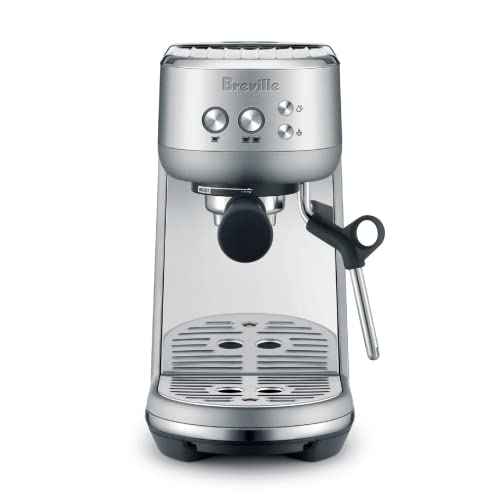
Breville’s Bambino® BES450BSS packs pro-level features into a compact design, making it ideal for home baristas who want rich espresso without the wait. I love that it heats up in just 3 seconds thanks to its thermojet system, and the 54mm portafilter handles 19 grams of coffee for full extraction. The PID control keeps water temperature steady, while low-pressure pre-infusion improves flavor. Its automatic steam wand textures milk into microfoam with minimal effort-great for lattes. It’s small, stainless steel, and semi-automatic, so I still control the grind and tamp. At 1560 watts and 120 volts, it’s built for U.S. outlets. I’d say it’s best for daily users who want speed and quality without a bulky machine.
Best For: Home baristas who want fast, high-quality espresso with minimal effort and counter space.
Pros:
- Heats up in just 3 seconds thanks to the thermojet heating system
- Delivers consistent extraction with PID temperature control and 54mm 19-gram portafilter
- Automatic steam wand creates barista-quality microfoam with ease
Cons:
- Limited to semi-automatic operation, requiring manual grind and tamp
- Smaller water tank may require frequent refills during heavy use
- Higher price point compared to entry-level espresso machines
Breville Barista Express Espresso Machine BES870XL, Brushed Stainless Steel

A solid pick for home baristas who want control without complexity, the Breville Barista Express BES870XL combines a built-in conical burr grinder and PID temperature control to deliver consistent, café-quality espresso. I use it to grind beans on demand and dial in dose size, then manually tamp and pull shots with pre-infusion for even extraction. It’s semi-automatic, so I stay in control but skip separate grinder setup. The stainless steel build fits my kitchen, and accessories-like the built-in tamper and dose trimmer-stay neatly stored. While it’s not compact or dishwasher-safe, it’s built to teach real skills. Registering even gets you two free specialty coffee bags.
Best For: Home baristas who want hands-on control over their espresso-making process with the convenience of an integrated grinder and precision brewing technology.
Pros:
- Integrated conical burr grinder delivers consistent, on-demand grinding for fresh espresso
- PID temperature control and pre-infusion ensure precise, even extraction for café-quality results
- Compact design with built-in storage for tools like tamper and dose trimmer enhances usability and convenience
Cons:
- Not dishwasher-safe, requiring manual cleaning of components
- Bulky footprint may not suit smaller kitchens
- Steeper learning curve for beginners unfamiliar with manual espresso techniques
CASABREWS 20 Bar Espresso Machine with Steam Frother

The CASABREWS 3700 Essential Espresso Machine stands out for those who want reliable, barista-style espresso without a steep learning curve or commercial-grade footprint. I’ve found its 20-bar pump and 1350W motor deliver consistent extraction, pulling rich, flavorful shots every time. The steam wand heats up quickly and creates creamy microfoam-great for lattes or cappuccinos, especially with cold whole milk. It’s compact at 12.6 inches deep, fits neatly on most counters, and the 43.9-oz water tank is easy to remove and refill. Just clean the steam wand after each use to avoid clogs. While it’s not dishwasher safe, the included tamper, filters, and portafilter make setup simple. I’d recommend it as a practical gift or starter machine-ideal for home use, especially if you want quality without complexity.
Best For: Home baristas and coffee lovers seeking a compact, easy-to-use espresso machine that delivers consistent, high-quality espresso and steamed milk without complexity.
Pros:
- Powerful 20-bar pump and 1350W motor ensure rich, flavorful espresso extraction
- Steam wand produces creamy microfoam ideal for lattes, cappuccinos, and latte art
- Compact design with a removable water tank and intuitive controls fits well in small spaces
Cons:
- Not dishwasher safe, requiring hand cleaning for all components
- Steam wand must be cleaned immediately after use to prevent milk buildup and clogs
- 51mm portafilter may limit compatibility with some aftermarket accessories
20Bar Espresso Machine with Milk Frother

If you’re after café-quality espresso and silky steamed milk without the wait, this 20Bar espresso machine with a milk frother delivers real performance in a compact setup. I use the 20BAR pump for consistent extraction and thick crema, and the instant heating means I switch fast from brewing to steaming. The upgraded steam wand gives me dense microfoam, and the 360° detachable nozzle makes cleaning easy-just purge and wipe. Its stainless steel body saves space, and the 42oz tank has a clear window. I watch the pressure gauge to fine-tune shots. It’s semi-automatic, supports custom volumes, and shuts off automatically. I clean it by hand, avoiding harsh cleaners. Includes milk jug, tamper, filters, and portafilter. Model: EM720 (CM5200) by XIXUBX, 120V, 7.5 lbs. Makes espresso, cappuccino, latte, macchiato, iced coffee. Not dishwasher safe.
Best For: Home and office users seeking a compact, high-performance espresso machine that delivers café-quality espresso and steamed milk with quick heat-up and easy cleaning.
Pros:
- 20BAR pressure pump ensures rich espresso with thick, lasting crema
- Instant heating and dual heating system allow fast, seamless switching between brewing and steaming
- Upgraded 360° detachable steam wand with microfoam performance and easy cleanup
Cons:
- Requires manual setup, priming, and post-use purging for optimal performance
- Not dishwasher safe-requires careful hand cleaning with mild detergents
- Limited to 51mm portafilter and filters, which may restrict customization options
KEENSTAR 3.5Bar Espresso Machine with Milk Frother

You’ll find the KEENSTAR 3.5Bar Espresso Machine with Milk Frother works best if you want a compact, manual setup that brews small batches quickly-think one to four cups in under two minutes-without complex controls or high pressure. I use it for simple, fast espresso with medium grounds and the #4 filter, locking it securely each time. Its 800W steam wand froths milk in about 40 seconds, good for cappuccinos, though I clean it right after to prevent clogs. It’s small-under 10 inches deep-so it fits my tight kitchen. Just don’t add water post-brew; it can cause burns. Not dishwasher safe, but easy to wipe down.
Best For: Coffee lovers seeking a compact, manual espresso machine for quick small-batch brewing with basic frothing capability.
Pros:
- Brews espresso in under 2 minutes with a simple single-knob operation
- 800W steam wand creates micro-foam in 40 seconds, ideal for cappuccinos
- Compact design fits comfortably in small kitchens or tight countertop spaces
Cons:
- Low 3.5 bar pressure limits espresso quality compared to higher-pressure machines
- Not dishwasher safe, requiring manual cleaning after each use
- Risk of burns if water is added immediately after brewing due to residual heat
Espresso Machine with Milk Frother 20 Bar

This espresso machine suits home baristas who want café-quality results without complex operation. I rely on its 20-bar pump to deliver 9–10 bars during extraction, pulling rich shots with golden crema. The NTC system heats fast-just 30 seconds-and holds temperatures steady for any roast. Its steam wand blasts dry, focused steam, creating silky microfoam perfect for lattes or cappuccinos. I use auto mode for consistency: 28 seconds for singles, 42 for doubles, but I can go manual up to 102 seconds for stronger brews. It’s compact, built with durable, food-safe materials, and fits neatly on small counters.
Best For: Home baristas seeking café-quality espresso and milk drinks with minimal setup and consistent results.
Pros:
- 20-bar pressure system with stable 9–10 bar extraction delivers rich crema and deep flavor
- Rapid 30-second preheat and precise NTC temperature control for consistent brewing across roast profiles
- Powerful steam wand produces dry, dense microfoam ideal for latte art and enhanced espresso drink texture
Cons:
- Not dishwasher safe, requiring manual cleaning of components
- Manual extraction limited to 102 seconds, which may not suit advanced brewing techniques
- Plastic (ABS) construction, while durable, may feel less premium compared to all-metal designs
Factors to Consider When Choosing an Espresso Maker
You’ll want to evaluate your preferred brewing method, since machines range from manual levers to fully automatic with push-button convenience. Look at pressure-most pros agree 15 to 20 bars is ideal, and a solid pump system keeps shots consistent. Don’t overlook build quality, size, and whether it fits your counter, especially if you plan to use steam wand features for milk drinks.
Brewing Method Options
How do you want to pull your espresso? If you like control, go manual-lever machines let you manage pressure and flow with a physical lever, offering a hands-on experience great for enthusiasts. Prefer ease? Fully automatic models handle timing and extraction start to finish. Most home users land on semi-automatic machines, which maintain steady pump pressure (usually 9–20 bars) but let you control shot length. These give consistent results with some involvement. Don’t overlook stovetop makers-they’re manual, use no electricity, and create strong, rich coffee using steam pressure, though not true espresso. Some machines also include pre-infusion, gently wetting grounds before full blast, which improves flavor and crema. Think about how much effort you want: more control means more work, while automation trades customization for convenience. Match the method to your routine, not just your dreams of café artistry.
Pressure System Efficiency
While extraction pressure is critical to pulling a balanced shot, not all machines deliver it consistently. You want 9–10 bars during extraction-it’s the sweet spot for even saturation and rich crema. Look for models with a pressure gauge so you can monitor output in real time and catch drops or spikes. Pre-infusion matters too; machines that ramp up pressure gradually improve water distribution and flavor. Stability is key: systems with NTC temperature control maintain steady pressure and heat, boosting shot repeatability. If you’re making multiple drinks, dual boilers or rapid heat-up tech help the machine recover quickly between brewing and steaming without lagging. These features work together so each shot pulls evenly and efficiently. Skip machines that can’t hold steady-your espresso suffers. Prioritize consistent delivery, real-time feedback, and smart pressure ramping for best results.
Material And Build Quality
A stable pressure system sets the foundation for a good shot, but the materials and construction of the machine play a direct role in maintaining that performance over time. You’ll want stainless steel exteriors-they’re durable, resist scratches, and help keep heat consistent during use. Machines with full metal bodies, especially those using die-cast aluminum or brass boilers, retain heat better and last longer than models loaded with plastic. If you’re after a clean look, brushed finishes hide fingerprints and smudges, making maintenance easier. Look for a non-slip base made of silicone or rubber to keep the machine stable during high-pressure extraction. Not only does it stay put, but it also adds safety. Choose models with BPA-free plastics and food-grade stainless steel where water or steam flows-those materials are safer and more reliable over years of daily use.
Milk Frothing Capability
If you enjoy lattes or cappuccinos, you’ll want an espresso machine that delivers reliable milk frothing performance. Models with 20-bar pressure pumps and dedicated steam wands produce dry, focused steam, creating dense, glossy microfoam perfect for latte art. Look for a 360° adjustable nozzle-it gives you precise control over texture and temperature. Automatic steam wands offer hands-free frothing with consistent results, great if you value convenience, though they’re often pricier. Whichever system you choose, purge the wand before and after use to prevent clogs and maintain performance. Clean it right away-milk residue can damage the mechanism over time. For best results, use cold whole milk; it froths better, yielding creamier foam with more volume and stability. Manual wands need practice but offer more control, while automatic systems suit beginners. Pick based on your skill level and how much daily effort you’re willing to invest.
Size And Kitchen Fit
Before buying an espresso maker, measure your counter space to make sure it fits within the depth, width, and height of your kitchen layout. Look for compact models under 13 inches deep and 6 inches wide if space is tight-machines like the Breville Bambino Plus save room without sacrificing performance. Check the water tank’s capacity and placement; top-mounted tanks are easier to refill but may increase height, while rear-placed tanks streamline access but need rear clearance. Make sure your countertop or cabinetry can handle the machine’s weight, especially if it’s heavy or going under upper cabinets. Opt for features like removable water tanks, foldable steam wands, or side-mounted parts to reduce space needs during use and storage. These small design choices make a big difference in tight kitchens.
Ease Of Cleaning
Since cleaning can take up more time than brewing if the machine isn’t designed with maintenance in mind, focus on models that simplify the process. Choose espresso makers with removable water tanks and drip trays for quick rinsing and refilling. A three-way solenoid valve helps by releasing pressure automatically and pushing out spent coffee grounds, making puck ejection cleaner and faster. If you steam milk often, pick machines with swivel or detachable steam wand tips so you can clean inside the nozzle and prevent clogs. Look for units with an automatic backflush or built-in cleaning cycle-they clear out coffee oils from internal parts with less hands-on effort. Avoid overly complex exteriors; fewer seams and crevices mean less buildup of residue and quicker wipe-downs. Machines like the Breville Barista Express or Gaggia Classic Pro balance these features well, saving time and keeping performance consistent with minimal fuss.
Temperature Control Features
When pulling a great shot of espresso, keeping the water temperature steady makes all the difference, and that’s where precise temperature control comes in. You’ll want your machine to maintain water between 90–96°C, the sweet spot for balanced extraction. Machines with PID (proportional-integral-derivative) control cut down on fluctuations, giving you consistent shots every time. NTC sensors monitor the heat in real time and adjust on the fly, so you’re not guessing if the temperature’s right. Pre-infusion at a controlled temp helps soak the puck evenly before full pressure kicks in, reducing channeling. If you hate waiting, look for rapid heating tech-some models hit ideal temp in under 30 seconds. Entry-level machines may lack fine temp tuning, but mid-range and high-end models often include adjustable settings. Don’t overlook this feature-stable heat means better flavor, shot after shot.
Espresso Customization Options
You’ve seen how stable temperature control keeps your shots consistent, but true precision starts when you take full command of the brewing variables. Adjust the pressure between 9–10 bar to fine-tune flavor intensity and crema thickness-lower pressure can soften bitterness, while higher pressure boosts richness. Use pre-infusion to wet grounds evenly before full pressure kicks in, improving flavor balance, especially with finicky beans. Manual mode lets you extend extraction up to 102 seconds, dialing in shots from 25–350g, ideal for testing strength or volume. Set exact shot times: 28 seconds for a single, 42 for a double, with auto-stop for consistency. Digital temperature control (PID or NTC) keeps water between 90–96°C, so each brew hits the same mark. These features give you repeatable, restaurant-quality results-no guesswork, just better espresso.
Frequently Asked Questions
Can I Use Regular Coffee in Espresso Machines?
You can’t use regular coffee grounds in espresso machines-they’re too coarse. You need finely ground coffee for proper extraction. Using pre-ground bagged coffee meant for drip machines clogs filters and ruins flavor. Instead, buy beans and grind them fresh with a burr grinder. Brands like Breville or Baratza offer affordable grinders. Always adjust grind size: too coarse causes weak shots, too fine leads to bitterness. Fresh, dark roast beans work best for rich, balanced espresso.
Do I Need a Grinder for Espresso?
Yes, you need a grinder for espresso. Pre-ground coffee loses freshness fast, and espresso demands freshly ground beans for proper extraction. A good burr grinder gives you consistent particle size, which is essential for balanced flavor. Blade grinders won’t cut it-go for a burr model like the Baratza Encore or Timemore C2. Freshly grinding lets you control the dose and timing, making your shots taste sharper and more nuanced. It’s not optional if you want real espresso.
How Often Should I Descale My Machine?
You should descale your espresso machine every 1–3 months, depending on use and water hardness. If you brew daily or have hard water, descale monthly. Machines like Breville or Gaggia give alerts, but check manuals for specifics. Use approved descaling solutions-vinegar can damage seals. Skip it, and buildup clogs parts, hurts performance. Run clean water after to flush residue. Regular descaling keeps pressure steady, extends machine life, and guarantees clean, consistent shots every time.
Are Espresso Makers Hard to Clean?
No, espresso makers aren’t hard to clean if you stay on top of it. You’ll wipe the steam wand after each use, dump the portafilter, and rinse the drip tray daily. Run a water flush after brewing, and backflush with a blind basket if yours has a three-way valve. Machines like Breville or Gaggia need monthly deep cleans and regular descaling. Stick to a routine, and maintenance takes just minutes.
Can I Make Espresso Without Electricity?
You can make espresso without electricity using manual devices like the hand-powered Flair Neo or the Wacaco Minipresso. These lever or pump-driven tools force hot water through finely-ground coffee at high pressure, mimicking traditional espresso. They’re portable, easy to clean, and great for travel or power outages. You’ll need to heat water separately, but they deliver real espresso shots anywhere-no cords, no noise, just control and consistency with a little practice.