Best Decaf Ground Coffee That Tastes Like the Real Deal
You want decaf that still delivers bold flavor and depth, and Peet’s Major Dickason’s Blend or Starbucks Decaf Caffè Verona give you just that-rich, dark roasts with full body and notes of cocoa and spice. Both use high-quality Arabica beans and gentle decaf methods to preserve taste. If you prefer milder options, go for Lavazza or Amazon Fresh Colombia. There’s more to contemplate about roast, origin, and freshness.
We are supported by our audience. When you purchase through links on our site, we may earn an affiliate commission, at no extra cost for you. Learn more. Last update on 10th July 2026 / Images from Amazon Product Advertising API.
Notable Insights
- Peet’s Major Dickason’s Blend Decaf delivers a rich, full-bodied dark roast flavor using 100% Arabica beans and chemical-free water processing.
- Starbucks Decaf Caffè Verona offers bold, dessert-like notes of dark cocoa and caramelized sugar for a premium decaf experience.
- Dunkin’ Decaffeinated Medium Roast provides a smooth, balanced taste that closely mimics regular coffee with consistent flavor.
- Maxwell House Decaf Original uses a 99.7% caffeine-free process while maintaining a smooth, full-bodied taste and rich aroma.
- 365 Buzz Free Decaf features Swiss Water Process decaffeination and full-bodied flavor from ethically sourced Latin American beans.
Maxwell House Decaf Original Ground Coffee

If you’re looking for a reliable, no-fuss decaf that delivers a solid medium roast flavor without the caffeine, Maxwell House Decaf Original Ground Coffee is a practical choice-especially if you value convenience and consistency over gourmet notes. I use it daily in my drip brewer, and it consistently delivers rich aroma and a smooth, full-bodied taste. At 99.7% caffeine-free, it’s a solid pick for evening cups or caffeine sensitivity. The 29.3-ounce resealable canister keeps coffee fresh if stored in a cool, dry place. Roasted in the USA and Kosher certified, it’s not flashy-but it’s trustworthy, widely available, and works well in standard coffee makers without special gear.
Best For: Those seeking a dependable, everyday decaf coffee with classic medium roast flavor and consistent performance in standard drip brewers.
Pros:
- Delivers a smooth, full-bodied taste with rich aroma and reliable consistency brew after brew
- 99.7% caffeine-free, making it ideal for evening use or individuals sensitive to caffeine
- Convenient 29.3-ounce resealable canister preserves freshness and is widely available
Cons:
- Lacks complex or gourmet flavor notes, appealing more to traditional than adventurous palates
- Ground format may result in quicker flavor degradation compared to whole bean
- Packaging, while functional, offers minimal protection against light and moisture if not stored carefully
New England Coffee Decaf Breakfast Blend

You’ll want to take into account the New England Coffee Decaf Breakfast Blend if you’re after a reliably smooth, full-flavored decaf that doesn’t skimp on quality, especially since it’s made from 100% Arabica beans sourced from top growing regions in Africa, Central, and South America. I find it’s roasted in small batches in New England using century-old methods, which helps lock in freshness and consistency. It’s 97% caffeine-free but still delivers a rich, balanced taste. The medium roast works well with standard drip machines, and since it’s gluten-free and Kosher, it fits various dietary needs. For best results, use fresh, clean water. It’s part of the Sustainable Cup Project, so your purchase supports environmental and community efforts.
Best For: Coffee lovers seeking a smooth, full-flavored decaf made from 100% Arabica beans that supports sustainability and fits dietary restrictions.
Pros:
- Made from 100% Arabica beans with a balanced medium roast for rich, consistent flavor
- Roasted in small batches using century-old methods for freshness and quality
- Part of the Sustainable Cup Project, supporting environmental and community initiatives
Cons:
- Only 97% caffeine-free, which may not suit those extremely sensitive to caffeine
- Sold in a single 10oz bag, offering limited quantity per purchase
- May not appeal to those who prefer dark roast or flavored coffee options
Amazon Fresh Decaf Colombia Ground Coffee, Medium Roast, 12 Ounce

Amazon Fresh Decaf Colombia Ground Coffee suits anyone who wants reliable, everyday decaf without sacrificing origin quality or roast balance. I use 100% Arabica beans from Colombia, decaffeinated and medium roasted for a full-bodied cup with a smooth finish. You’ll taste balanced notes of cocoa and brown sugar, with a subtle citrus aroma that adds brightness. The 12-ounce bag is pre-ground and packed in the U.S.A. right after roasting, so freshness is locked in. Since it’s an Amazon brand, you get consistent quality at a fair price. It works well in drip machines and isn’t overly complex-ideal for morning routines where flavor and convenience matter.
Best For: Those seeking a consistently fresh, smooth, and balanced decaf coffee for everyday mornings without compromising on origin quality or flavor.
Pros:
- Made with 100% Arabica beans from Colombia for authentic, high-quality taste
- Medium roast delivers a full-bodied cup with balanced notes of cocoa, brown sugar, and a bright citrus aroma
- Pre-ground and packed immediately after roasting in the U.S.A. to lock in freshness
Cons:
- Limited roast variety, as it’s only available as medium roast
- Pre-ground format may not suit those who prefer freshly grinding whole beans
- Flavor profile is mild and may lack depth for bold coffee enthusiasts
New England French Vanilla Decaf Coffee

This decaf ground coffee stands out for those who want a flavorful, aromatic experience without the caffeine, and New England French Vanilla Decaf Coffee fits the bill with its smooth, consistent profile. I’ve found it delivers a rich, medium-roast taste with a gentle vanilla sweetness that doesn’t overpower. It’s made from 100% Arabica beans, sourced from Central and South America, and small-batch roasted in New England for quality control. The decaf process retains flavor while removing caffeine, and it’s certified Kosher and gluten-free. I recommend using fresh, cold water and grinding just before brewing, though pre-ground works fine in drip machines or French presses. It’s part of the Sustainable Cup Project, supporting farmers and environmental efforts-so you’re getting flavor and ethics in every cup.
Best For: Those seeking a smooth, decaffeinated coffee with a subtle French vanilla flavor and a commitment to sustainability.
Pros:
- Made from 100% Arabica beans with a rich, medium-roast taste and gentle vanilla sweetness
- Decaffeinated without sacrificing flavor, and certified Kosher and gluten-free
- Supports the Sustainable Cup Project, promoting environmental and social initiatives for coffee-growing communities
Cons:
- Pre-ground format may result in less freshness compared to whole beans
- Vanilla flavor, while smooth, may be too mild for those seeking a bolder taste
- Limited origin diversity, sourced only from Central and South America
Peet’s Dark Roast Decaf Ground Coffee
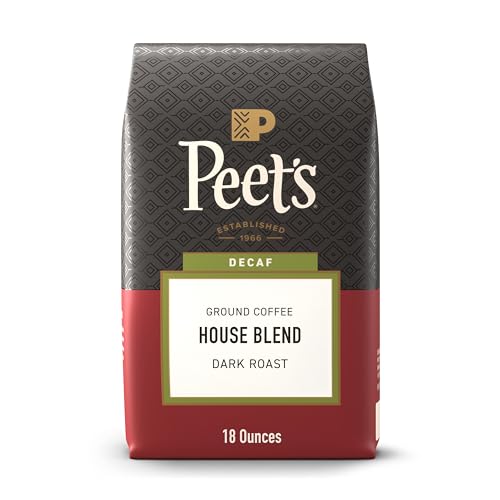
Peet’s Dark Roast Decaf Ground Coffee stands out as a strong choice for those who want a flavorful, no-compromise decaf without the bitterness often found in darker roasts. I’ve found it delivers a rich, balanced cup thanks to 100% premium Arabica beans from Latin America, roasted in small batches for peak flavor. The natural water process removes caffeine while keeping the taste intact-no harsh chemicals involved. It’s got a medium body, subtle spice, and a hint of sweetness that works well with drip or pour-over methods. Just stick to the resealable 18-ounce bag and brew soon after opening. For French press or espresso, grab whole beans instead-pre-ground limits freshness and control.
Best For: Coffee lovers seeking a smooth, flavorful decaf with rich dark roast character and no bitter aftertaste.
Pros:
- Rich, balanced flavor with notes of sweetness and spice, even after decaffeination
- Naturally decaffeinated using a chemical-free water process that preserves taste
- Convenient pre-ground format ideal for drip and pour-over brewing methods
Cons:
- Pre-ground packaging may compromise freshness compared to whole beans
- Less suitable for French press or espresso, where freshly ground coffee is preferred
- Limited to one 18-ounce bag per purchase, which may not suit high-volume users
Peet’s Coffee Dark Roast Decaf Ground
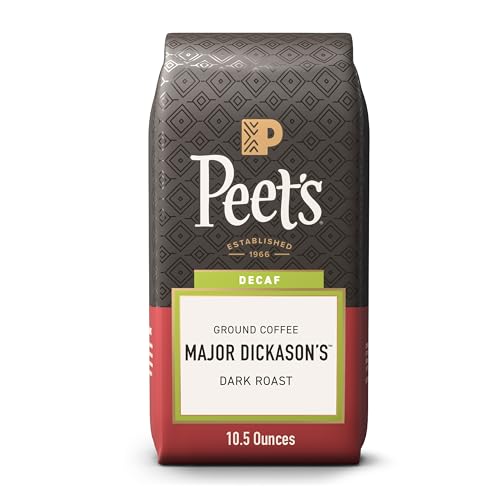
If you’re after a decaf that doesn’t compromise on depth or intensity, Peet’s Coffee Dark Roast Decaf Ground stands out as a go-to for dark roast lovers who want full flavor without the caffeine. I’ve found it delivers a rich, balanced cup with deep roast notes, thanks to premium 100% Arabica beans from top-growing regions. It’s naturally decaffeinated using water processing, which keeps the flavor intact. Best for drip machines or pour-over, though I’d recommend whole beans if you’re using a French press or espresso. It’s based on Peet’s best-selling Major Dickason’s Blend, perfected since 1969-so it’s a proven, no-nonsense choice.
Best For: Dark roast coffee lovers seeking a rich, full-bodied decaf option with authentic flavor and no compromise on intensity.
Pros:
- Made with 100% Arabica beans from premium growing regions for a rich, complex, and deeply roasted flavor
- Naturally decaffeinated using water processing to preserve taste, aroma, and quality
- Based on Peet’s best-selling Major Dickason’s Blend, a time-tested favorite since 1969
Cons:
- Ground format may not be ideal for espresso or French press users who prefer freshly ground whole beans
- Dark roast may be too bold for those who prefer milder decaf profiles
- Limited bag size (10.5 ounces) compared to larger commercial offerings
Dunkins Decaffeinated Medium Roast Ground Coffee, 40 oz
For those who want reliable flavor without the caffeine, Dunkin’s Decaffeinated Medium Roast Ground Coffee delivers a smooth, balanced cup that fits seamlessly into daily routines. I find it works well in drip machines, French press, or pour-over setups-no grinding needed. The 40-ounce canister lasts weeks, making it practical for regular drinkers. It’s not bold or acidic, which keeps the taste clean and approachable any time of day, even at night. You still get Dunkin’s recognizable profile-rich but never bitter-thanks to consistent roasting and quality control. If you prefer stronger or darker flavors, this might feel too mild, but for classic, no-fuss decaf, it’s a dependable choice.
Best For: Those seeking a smooth, approachable decaf coffee with consistent flavor for everyday drinking without caffeine jitters.
Pros:
- Smooth, balanced medium roast with rich flavor and no bitterness
- Convenient pre-ground format compatible with drip machines, French press, and pour-over
- Generous 40-ounce canister offers long-lasting supply for daily use
Cons:
- Flavor may be too mild for those who prefer bold or dark roasts
- Not suitable for whole-bean enthusiasts who prefer grinding fresh
- Limited complexity for specialty coffee lovers seeking nuanced notes
365 Buzz Free Decaf Ground Coffee

Though I prefer my coffee without caffeine, I still want rich flavor and ethical sourcing, which is why 365 by Whole Foods Market Buzz Free Decaf Ground Coffee stands out. This 24-ounce medium roast uses the Swiss Water Process-100% chemical-free-so it keeps the integrity of the bean. Sourced from small Latin American co-ops, it’s sustainably grown and supports fair farming. It’s kosher certified, with a full-bodied, hearty taste that works well in drip machines or French press. You get consistent quality without bitterness. While it lacks the boldness of dark roasts, it’s ideal for all-day sipping. It’s one of the most reliable, transparent decaf options on the market.
Best For: Those seeking a flavorful, ethically sourced decaf coffee with a clean, chemical-free decaffeination process and consistent medium roast quality.
Pros:
- Uses the natural, chemical-free Swiss Water Process for decaffeination
- Sourced from sustainable small farms in Latin American co-ops, supporting fair trade practices
- Kosher certified with a full-bodied, hearty flavor suitable for drip machines and French press
Cons:
- Lacks the bold intensity of dark roast coffee lovers may prefer
- Limited origin variety information beyond regional sourcing
- May be pricier than conventional decaf options in non-specialty stores
Lavazza Decaf Ground Coffee 12 oz

Lavazza Decaf Ground Coffee, a medium roast with an intensity level of 3, delivers a smooth and balanced cup that suits coffee drinkers who want flavor without the buzz. I use it in my drip machine most often, but it works well with French press and pour over too. The 100% Arabica beans come from South America and are naturally decaffeinated, so you get clean taste without chemicals. It’s mild enough for mornings, yet rich enough for after meals. The 12 oz bag stays fresh for weeks if I seal it tight and keep it in a cool, dry spot.
Best For: Coffee lovers seeking a smooth, flavorful decaf option that’s versatile for multiple brewing methods and ideal for any time of day.
Pros:
- Made from 100% Arabica beans, naturally decaffeinated for a clean, chemical-free taste
- Medium roast with balanced intensity (level 3) suitable for morning or after-dinner enjoyment
- Works well across various brewing methods including drip, French press, and pour over
Cons:
- Ground format may lose freshness faster compared to whole bean
- Limited to 12 oz per bag, which may require frequent repurchasing for heavy users
- May be too mild for those who prefer bold, dark roast flavors
Starbucks Decaf Caffè Verona Dark Roast (6-Pack)

Starbucks Decaf Caffè Verona Dark Roast (6-Pack) stands out as a reliable choice for coffee lovers who want a smooth, full-bodied decaf without sacrificing flavor or quality. I’ve found it delivers a rich, velvety brew with notes of dark cocoa and caramelized sugar-perfect after dinner or with chocolate treats. It’s made from the same multi-region Arabica beans Starbucks uses in its cafes, so you get consistent taste and freshness. The 6-pack gives you variety in brewing: it works well in drip machines, French press, or poured over ice. Just don’t expect high caffeine-this is decaf, after all-but if you want café-level depth without the jolt, it’s a solid pick.
Best For: Coffee lovers seeking a smooth, full-bodied decaf with rich flavor and café-quality consistency, ideal for evening enjoyment or pairing with desserts.
Pros:
- Delivers a rich, velvety mouthfeel with notes of dark cocoa and caramelized sugar
- Brews well across multiple methods including drip, French press, and iced
- Made from high-quality, multi-region Arabica beans meeting Starbucks’ standards
Cons:
- Lacks the caffeine boost desired by regular coffee drinkers
- Flavor profile may be too mellow for those who prefer bold, smoky dark roasts
- Higher price point compared to generic decaf coffee brands
Factors to Consider When Choosing Decaf Ground Coffee
You’ll want to take into account roast level, since darker roasts often mask bitterness but can lose some origin character. The bean’s origin and decaffeination method matter-Swiss Water Process preserves flavor well, while CO2 or chemical methods may alter the taste slightly. Match the coffee’s flavor profile and grind size to your brewing method, whether it’s drip, French press, or espresso, for the best results.
Roast Level Importance
While roast level doesn’t affect caffeine content-since decaffeination happens before roasting-it plays a key role in shaping flavor, body, and overall drinking experience. You’ll find medium roasts strike a balance, offering smooth acidity and steady aroma without overpowering your palate. These are great for everyday sipping and tend to finish clean. If you like bolder taste, go dark: longer roasting brings out rich chocolate, caramel, or spicy notes with a heavier mouthfeel and less perceived acidity. Dark roasts mask subtle bean traits but deliver consistency and depth. Light roasts preserve floral or citrus hints but are rare in decaf and can taste thin or sharp. Most decaf drinkers prefer medium for its approachable, even profile. Pick based on your flavor preference-mild, balanced, or bold-since roast level won’t change caffeine, just taste and body.
Bean Origin Impact
Roast level shapes the flavor and body of your decaf, but where the beans come from plays just as big a role. You’re tasting the soil, altitude, and climate with every sip-factors that define a bean’s natural chemistry. High-altitude farms, like those in Colombia or Ethiopia, grow Arabica beans known for bright acidity and layered notes of fruit or florals, and these traits can survive decaffeination when handled well. The region’s influence shows in sweetness and complexity, thanks to higher sugar development in cooler climates. Single-origin decaf lets you explore distinct profiles: a Mexican bean might taste nutty and smooth, while a Kenyan offers citrusy punch. Arabica dominates the decaf market for good reason-it’s naturally more refined than robusta. If you want clarity and character, origin matters as much as roast. Pick beans from reputable growing regions to guarantee quality starts long before processing.
Decaffeination Method Matters
When choosing decaf ground coffee, the method used to remove caffeine affects both flavor and purity. If you want a clean taste and no chemical residues, go for the Swiss Water Process-it uses only water and osmosis to remove caffeine, preserving the bean’s original aroma. The natural water process works similarly and keeps flavor intact. You’ll also find solvent-based methods using methylene chloride or ethyl acetate; they’re FDA-approved and remove 97%+ of caffeine, but some people avoid them due to trace residues. CO₂ processing is another clean option, selectively targeting caffeine without harming the coffee’s body. All decaf must lose at least 97% of its caffeine, no matter the method. For better taste and peace of mind, choose water- or CO₂-processed coffees-they’re pricier but worth it if you value purity and rich, authentic flavor.
Flavor Profile Balance
A well-balanced flavor profile in decaf ground coffee means the acidity, sweetness, and bitterness work together without one overpowering the rest. You’ll get the smoothest results from medium roasts, which tend to have balanced body and mild acidity. These roasts preserve flavor clarity, letting you taste subtle notes like citrus, cocoa, or brown sugar in harmony. The decaffeination method matters-Swiss Water and CO₂ processes usually retain more of the bean’s original balance than older solvent-based techniques. Roasting plays a key role, too; precise heat control and timing help develop flavors evenly. If the roast is too light, acidity might dominate. Too dark, and bitterness takes over. Look for brands like Swiss Water Decaf or Eight O’Clock Decaf Select, known for consistency. Always check the roast date-freshness guarantees the balance you paid for doesn’t fade.
Brewing Method Compatibility
If you want the best results from your decaf ground coffee, match the grind size and roast level to your brewing method. For drip machines, French press, and pour-over, choose medium roast decaf with a balanced intensity-it extracts evenly and tastes clean. Use coarse grounds for French press to avoid sludge and over-extraction; fine grounds work better in drip or pour-over systems for fuller flavor. If you’re making cold brew, pick decaf labeled for it-typically coarse-ground with low acidity to handle long steeping. Avoid using finely ground espresso decaf in drip machines; it brews too slowly and turns bitter. Medium to coarse grinds suit press-style brewers, while filter systems need finer particles for proper flow. Always check the label-some decaf grounds are pre-optimized for specific brewers, saving you guesswork and ensuring consistent, drinkable results every time.
Frequently Asked Questions
Is Decaf Coffee Completely Caffeine-Free?
No, decaf coffee isn’t completely caffeine-free. You’re still getting about 2–5 milligrams per cup, compared to 80–100 in regular coffee. U.S. rules only require 97% caffeine removal, so trace amounts remain. If you’re highly sensitive or avoiding caffeine entirely, that small amount might affect you. But for most people, it’s negligible. Look for Swiss Water Process decaf if you want a chemical-free method that preserves flavor without the buzz.
How Is Caffeine Removed From Coffee Beans?
You remove caffeine from coffee beans using water, solvents, or carbon dioxide. The most common methods are the Swiss Water Process, which uses only water and osmosis, and chemical methods with methylene chloride or ethyl acetate. These solvents bind to caffeine and are washed away. The CO₂ method uses pressurized carbon dioxide to pull caffeine out. Each technique preserves flavor to varying degrees, but Swiss Water is widely seen as effective and clean.
Does Decaf Coffee Have Fewer Antioxidants Than Regular Coffee?
You’ll get slightly fewer antioxidants in decaf than regular coffee, but the difference isn’t dramatic. Decaffeination removes some polyphenols, especially with solvent-based methods. The Swiss Water Process preserves more antioxidants since it uses only water and charcoal. If you’re drinking coffee for health benefits, you’re still getting useful compounds in decaf-just not quite as much. For maximum retention, choose Swiss Water Processed beans from trusted roasters like Glory Beans or Lifeboost.
Can Decaf Coffee Cause Stomach Issues?
Yes, decaf coffee can cause stomach issues in some people, even though it lacks most caffeine. You might react to its acidity or oils, especially with darker roasts or lower-quality beans. Switching to a smoother, Swiss Water Process decaf like Puroast orilly Organic Decaf can help. These are easier on the stomach and still taste full-bodied. Always pair with a balanced diet and monitor symptoms.
Is Decaf Safe to Drink During Pregnancy?
Yes, decaf is generally safe to drink during pregnancy. You can consume it in moderation since it contains only a tiny amount of caffeine-usually 2–5 milligrams per cup. Experts say limiting caffeine to under 200 milligrams daily is wise, so decaf helps you stay well under that. Just check the decaf process; Swiss Water or CO2 methods avoid chemical solvents, which some prefer for health reasons.