Top-Rated Plumbed Coffee Machines for a Perfect Brew
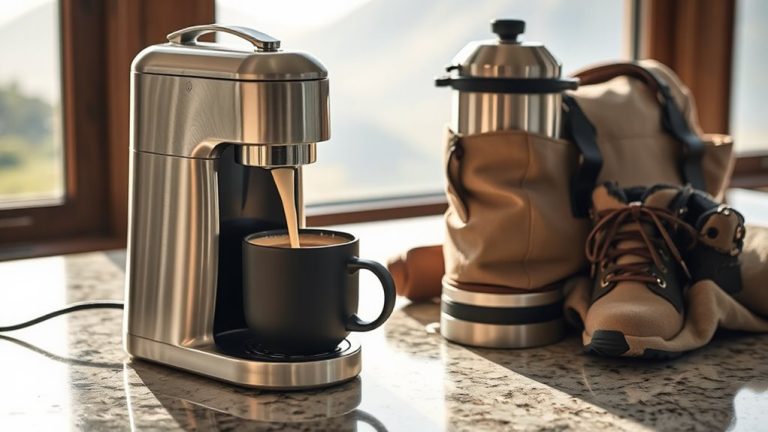
You get consistent, high-quality brews with top-rated plumbed coffee machines like the Thermador TCM24PS or Keurig K2550, which tap directly into your water line for automatic refills and fewer interruptions. These models handle heavy use, offer precise temperature control, and often include built-in filtration. Stainless steel builds and auto-fill features suit busy offices or kitchens. For continuous service, consider brew time, wattage, and available space. The right setup improves reliability and taste over time. More details on matching features to your needs follow.
We are supported by our audience. When you purchase through links on our site, we may earn an affiliate commission, at no extra cost for you. Learn more. Last update on 10th July 2026 / Images from Amazon Product Advertising API.
Notable Insights
- Plumbed coffee machines like the Thermador TCM24PS offer 28 drink options and precise extraction for consistent, high-quality brews.
- Models such as the Crosson Auto-Fill brew a full 2.2L pot in 10 minutes at optimal 195℉–205℉ for ideal flavor extraction.
- Built-in water filtration in Keurig K2550 and Thermador systems removes impurities and prevents scale in hard water environments.
- Direct water line connection with auto-fill enables continuous brewing, ideal for high-demand settings like offices or lobbies.
- Commercial-grade stainless steel construction and 1,600+ watt power ensure durability and stable temperatures for back-to-back brewing.
Built-in Coffee Machine Stainless Steel, Plumbed

If you want a coffee machine that integrates seamlessly into your kitchen and handles everything from espresso to lattes without fuss, the Thermador TCM24PS is one of the best choices among plumbed coffee machines. I’ve used it daily, and it delivers 28 drinks-from cappuccinos to espressos-thanks to its built-in milk system and frother. It’s fully automatic, pulls from whole beans, and connects directly to your water line, so no refilling tanks. The stainless steel build fits pro-style kitchens, and it’s quiet. You can customize drinks remotely, save eight presets, and it includes a water filter. It’s a permanent install, so think carefully.
Best For: Home baristas and coffee enthusiasts seeking a premium, fully automatic built-in coffee machine with seamless kitchen integration and a wide variety of specialty drink options.
Pros:
- Fully automatic with 28 beverage options, including espresso, cappuccino, and latte, thanks to an integrated milk system and frother
- Plumbed directly to the water line for continuous use without needing to refill a tank, and includes a water filter for improved taste
- Offers remote customization, eight personalized drink presets, and quiet operation with a sleek stainless steel design
Cons:
- Requires permanent installation with cabinetry modifications and direct water line connection, limiting portability
- High upfront cost typical of premium built-in models, which may not suit budget-conscious buyers
- Dependent on regular maintenance and professional support for optimal performance and longevity
10 CUP BUILT-IN-THE-WALL – SELF FILLING COFFEE SYSTEM

Who wouldn’t want a coffee system that fills itself? I’ve used the 10-cup Brew Express BE-110 BS, and it’s fully automatic-plumbed right into my home’s water line, so I never refill a reservoir. It runs on 120-volt AC power and mounts recessed in the wall, giving a clean, modern look. The touchscreen lets me program single cups or a full pot with precise water control, and it brews in half the time of my old drip machine. The pause-n-brew sensor stops flow when I lift the carafe, which prevents messes. It’s not dishwasher safe, but the optional carafe lock helps with safety in RVs or boats.
Best For: Homeowners seeking a sleek, fully automatic coffee system that integrates into their kitchen’s water supply for hands-free brewing and modern, space-saving design.
Pros:
- Self-filling design connected to home water line eliminates manual refills and saves time
- Fast brewing with precise water control and pause-n-brew feature prevents spills
- Recessed wall-mount installation offers a clean, modern aesthetic and saves counter space
Cons:
- Requires hardwiring and plumbing installation, making setup complex and potentially costly
- Not dishwasher safe, increasing maintenance effort
- Limited compatibility with non-standard setups despite retrofit capability for older models
Keurig K2550 Plumbed Coffee Maker

The Keurig K2550 Plumbed Coffee Maker stands out for offices or small businesses that need reliable, continuous brewing without the hassle of refilling water tanks. I’ve found it’s built for heavy daily use, with a direct water line setup that keeps brewing smooth and uninterrupted. Its touchscreen display is intuitive, offering five cup sizes, strong brew, and ice brew options. It’s NSF-certified, commercial-grade, and fits under most cabinets. The included filtration guarantees clean taste, and the internal tank drains fully for maintenance. Quiet and efficient, it’s ideal when space and consistency matter. I recommend it for workplaces wanting hassle-free pod brewing.
Best For: Offices and small businesses needing a reliable, plumbed-in coffee maker for continuous, low-maintenance brewing in high-traffic environments.
Pros:
- Direct water line connection eliminates frequent refills and supports uninterrupted brewing
- Commercial-grade build with NSF certification ensures durability and consistent beverage quality
- Intuitive touchscreen interface with programmable settings, quiet brew technology, and brew-over-ice function
Cons:
- Requires professional or advanced DIY installation for plumbing, which may deter some users
- Higher initial cost compared to non-plumbed models
- Not dishwasher safe, requiring manual cleaning for maintenance
Crosson Auto-Fill Commercial Coffee Brewer

Since it connects directly to a waterline and refills automatically, the Crosson Auto-Fill Commercial Coffee Brewer works best for offices or high-traffic environments where convenience and consistent brewing matter most. I rely on its 2.2L capacity and 10-minute brew time to keep coffee flowing. The 304 stainless steel funnel and rain-style infusion guarantee even extraction between 195℉ and 205℉. Its digital interface and programmable settings make scheduling easy. The airpot carafe keeps coffee hot for 24 hours and moves effortlessly to meetings. Weighing 16.3 pounds, it’s compact but sturdy. Just remember, it needs professional plumbing installation.
Best For: Offices or high-traffic environments where convenience, continuous brewing, and minimal maintenance are priorities.
Pros:
- Automatically refills via direct waterline connection, eliminating manual water loading
- Fast 10-minute brew time for 2.2L capacity with consistent temperature control (195℉–205℉)
- Airpot carafe maintains heat for 24 hours and allows easy transport to meetings or service areas
Cons:
- Requires professional plumbing installation, limiting portability and setup flexibility
- Higher upfront cost due to specialized auto-fill and commercial-grade components
- Digital interface and programmable features may be overly complex for basic users
12-Cup Commercial Coffee Maker with Auto-Fill
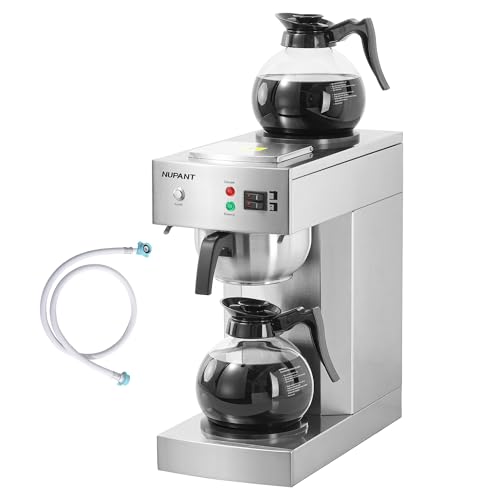
If you run a busy office or café and need reliable, continuous brewing without constant refills, a plumbed 12-cup commercial coffee maker like the NUPANT ARB-386-BD2 is your best bet. I use its 1610 watts to brew two 1.8L pots in just seven minutes, perfect for high-volume spots. The auto-fill feature connects directly to a water line, so I never worry about refilling by hand. Its stainless steel build lasts, and the dual warming plates keep coffee hot. I do wish it had auto-off, but manual controls give me full power. At nearly 21 pounds, it’s heavy but sturdy. I recommend descaling every 2,800 brews to keep it running.
Best For: Busy offices, cafés, or restaurants needing high-volume, continuous coffee brewing with minimal manual intervention.
Pros:
- Powerful 1610-watt system brews two 12-cup (1.8L) pots in just 7 minutes for fast, efficient service
- Auto-fill connects directly to a water line, enabling uninterrupted brewing without manual refills
- Durable stainless steel construction with dual warming plates ensures longevity and consistent coffee temperature
Cons:
- No auto-off function, requiring users to manually turn off the machine and warming plates
- Heavy at 20.7 pounds, making it less portable and harder to move once installed
- Requires regular descaling (every 2,800 brews) and professional plumbing for auto-fill setup
Factors to Consider When Choosing a Plumbed Coffee Machine
You’ll want to match the brew capacity and volume to how many people use the machine daily-small offices might need just 20 cups, while busy cafes run through hundreds. Make sure your space meets installation requirements and has access to a water line, power source, and proper drainage, since not all setups are compatible out of the box. Features like built-in water filtration, intuitive controls, and durable stainless steel construction can save time and repairs down the road.
Brew Capacity And Volume
Brew volume matters when you’re serving multiple people throughout the day. Plumbed coffee machines typically offer 10 to 15 cups (1.8L–2.2L), letting you pick based on your demand-smaller for offices, larger for busy lobbies. Some models brew a full 2.2L pot in just 10 minutes, which keeps up with rush periods without lag. If you need to serve while brewing, go for dual carafe systems that hold up to 12 cups each, so one pot dispenses while the other brews. Auto-fill is a must for nonstop use since it pulls water directly from the line, eliminating manual refills. Temperature stays locked between 195°F and 205°F across batch sizes, ensuring even extraction. You won’t sacrifice flavor when scaling up. Choose capacity based on peak demand, not just convenience. Higher volume means faster turnover and fewer service gaps.
Installation Requirements And Compatibility
Matching high brew capacity with reliable performance means checking what’s required to get your machine up and running. You’ll need a direct water line, usually connected with 1/4-inch or 3/8-inch tubing to a standard valve. Make sure your water pressure stays between 20 and 80 psi-too low or too high can disrupt automatic fills. Most units require hardwiring into a 120-volt AC power source, so you might need an electrician. Position the machine near both the water supply and a drain, especially if it discharges wastewater continuously. Keep in mind space needs: depth ranges from 7.5 to 16.5 inches, and you’ll want side and rear clearance for lines, filters, and airflow. Measure your area before buying-compact models like the Nuova Simonelli Microbari fit tight spaces, while larger units need room to function safely.
Water Filtration And Quality
While great coffee starts with fresh beans and proper grinding, the water feeding your plumbed machine plays an equally critical role in both taste and longevity. You need a built-in filtration system to remove chlorine, sediment, and impurities that ruin flavor and cause scale buildup. Without it, mineral deposits shorten the life of pumps, valves, and boilers. Look for filters rated for at least 500 gallons-smaller ones won’t last under daily use. If your water’s hardness exceeds 3 grains per gallon, you’ll need softening or advanced filtration to protect heating elements. Aim for a pH between 6.5 and 7.5; more acidic or alkaline levels hurt extraction and corrode parts. Good filtration isn’t optional-it’s essential for consistent performance and machine durability. Choose models with reliable, replaceable filters designed for your water conditions.
Operation Mode And Controls
How much control do you really need over your coffee? If you want simplicity, go for fully automatic operation-one touch starts the brew with zero effort, perfect for busy offices or high traffic. But if you prefer some involvement, semi-automatic models let you start the cycle while still using the water line for consistent supply. Touchscreen controls give you full customization: set brew strength, adjust temp, and schedule starts with ease. For straightforward use, button-based digital panels offer dedicated functions like auto-fill, pause brewing, or heating plate control. Programmable timers let you wake up to fresh coffee, with brewing starting at the same time every day without lifting a finger. Choose based on how much daily interaction you want-more tech means more control, but also more complexity. Keep it simple if you value reliability over features.
Durability And Build Quality
Durability starts with materials, and when it comes to plumbed coffee machines, stainless steel is your best bet. You’ll want SS304 grade-it resists corrosion and holds up in high-use settings. Machines with fully stainless internal funnels retain heat better, giving you consistent brews over time. If you’re using the machine daily, look for commercial-grade models built to handle 2,800+ brewing cycles before descaling. That kind of endurance means less downtime and fewer repairs. Heavier units, especially those weighing 16 pounds or more, usually mean better build quality and longer life. Also, go for models with at least 1,600 watts-higher power means faster heating and steady temps during back-to-back brewing. You won’t get cold coffee or delays during rush hours. Cut corners on build, and you’ll pay more long-term. Invest in solid construction now, and it pays off in reliability.
Frequently Asked Questions
How Often Should I Descale My Plumbed Coffee Machine?
You should descale your plumbed coffee machine every 1 to 3 months, depending on water hardness and usage. Hard water clogs lines faster, so areas with high mineral content need more frequent cleaning. Most machines, like the Breville Oracle or Jura S8, have alerts to remind you. Use manufacturer-approved descaling solutions or citric acid mixtures. Skip this step, and you’ll see slower brews, lower temperatures, and eventual damage. Regular descaling keeps your machine running efficiently and extends its life.
Can I Use Flavored Water With My Plumbed Coffee Maker?
No, you shouldn’t use flavored water in your plumbed coffee maker. It can leave residues that clog internal lines or damage pumps, especially in models like the Breville Infuser or Rocket Espresso. Stick to clean, filtered water to maintain performance and extend machine life. If you want flavor, add it after brewing-vanilla, hazelnut, or cinnamon syrups work well. This keeps your machine running smoothly and guarantees every cup tastes fresh.
Do Plumbed Coffee Machines Require a Water Filter?
Yes, you should use a water filter with your plumbed coffee machine. It protects internal parts from mineral buildup and improves taste. Without filtered water, scale and sediment can clog valves and damage the pump over time. Machines like the Nuova Simonelli Appia II or La Marzocco Linea Mini last longer with filtration. Check your water hardness-if it’s high, a filter isn’t optional. Carbon filters remove chlorine; reverse osmosis systems handle hard water better. Always follow the manufacturer’s filter recommendations.
Are Plumbed Coffee Makers More Expensive to Maintain?
You’ll likely spend more on upkeep with a plumbed coffee maker. These machines run constantly, so parts like pumps and valves wear faster, and you’re replacing filters and descaling regularly. While they save time on refills, the cost adds up-especially if you skip water filtration, which strains internal components. Models like the Rocket R55 or Slayer Steam need professional servicing yearly, unlike simpler drip brewers. Plan for higher long-term costs.
Can I Install a Plumbed Coffee Machine Myself?
You can install a plumbed coffee machine yourself if you’re comfortable with basic plumbing and electrical work. You’ll need to connect water supply lines, secure proper drainage, and guarantee power compatibility. Mistakes risk leaks or damage, so if you’re unsure, hire a licensed plumber. Models like the Rocket R58 or Slayer Steam require precise hookups-follow the manual closely. Improper installation voids warranties, so double-check local codes and connections before powering on.