Best Vintage Coffee Percolators for Timeless Brewing Moments
You get rich, full-bodied coffee using vintage percolators built to last, like the stainless steel STANLEY 1.1QT or COLETTI Bozeman, both ideal for stovetop or campfire use. Aluminum models like the Primula work well on most burners but avoid induction. For electric convenience, the Elite Gourmet 12-cup offers fast brewing and a keep-warm function, though it’s less portable. Enamel options like Toughty add charm but risk chipping. Each pick balances durability, heat compatibility, and ease of use-your next brew choice depends on where and how you plan to use it.
We are supported by our audience. When you purchase through links on our site, we may earn an affiliate commission, at no extra cost for you. Learn more. Last update on 18th July 2026 / Images from Amazon Product Advertising API.
Notable Insights
- Vintage-style percolators like the COLETTI 12-Cup and Toughty Enamel combine classic aesthetics with durable, high-heat materials for timeless brewing.
- Enamel-coated steel models, such as the Toughty and COLETTI, offer retro appeal but require care to avoid chipping from impacts or thermal shock.
- Stainless steel percolators like Farberware and Elite Gourmet provide a vintage look with modern durability and induction or stovetop compatibility.
- Classic camping percolators from Stanley and GSI Outdoors deliver authentic outdoor brewing experiences with rugged, flame-friendly construction.
- Many vintage-style percolators feature glass knobs and stay-cool handles, blending nostalgic design with practical safety and brew monitoring.
Primula 9-Cup Aluminum Stove Top Percolator

If you’re after a reliable, no-frills percolator that works just as well on a kitchen stovetop as it does over a campfire, the Primula 9-Cup Aluminum Stove Top Percolator stands out as a solid choice-especially if you value simplicity and portability. I use it on gas, electric, and even camping stoves without issues. It’s lightweight, built with durable aluminum, and brews up to 9 cups of strong, smooth coffee. The clear knob lets me watch the perking action, and the stay-cool handle makes handling safe. It’s not dishwasher safe, so I clean it by hand. I skip paper filters-this one uses reusable baskets. It’s a no-electricity option, which saves money and cuts waste. Compared to bulky machines or pod brewers, this one’s a no-brainer for home or outdoor use.
Best For: Outdoor enthusiasts, campers, and home users seeking a portable, electricity-free coffee brewing solution that delivers consistent, rich flavor.
Pros:
- Lightweight, durable aluminum construction works on gas, electric, and induction stoves, as well as campfires
- Reusable filter basket eliminates need for paper filters, reducing waste and saving money
- Clear knob allows monitoring of brewing process, and stay-cool handle ensures safe handling
Cons:
- Not dishwasher safe, requiring hand washing for maintenance
- Aluminum material may react with acidic coffee if not cleaned properly
- Brewing quality highly dependent on user technique, including grind size and heat control
COLETTI Bozeman Percolator Coffee Pot - NO Aluminum or Plastic [9 cup]

The COLETTI Bozeman Percolator is a solid pick for campers, off-grid enthusiasts, and anyone who wants reliable stovetop coffee without aluminum or plastic near their brew. I trust its pure stainless steel build-it’s tough, doesn’t taint the flavor, and handles high heat well. The glass top lets me watch the brew cycle, so I never over-perk. It holds 9 cups, works on gas, electric, or campfire, but not induction-there’s a separate model for that. It comes with a 15-pack of #4 filters and cleans up easy, even outdoors. I toss it in the dishwasher at home. Durable, simple, and built for real use.
Best For: Campers, off-grid enthusiasts, and anyone seeking a durable, non-toxic stovetop coffee maker that delivers bold flavor without aluminum or plastic.
Pros:
- Constructed from pure stainless steel with no aluminum or plastic for safe, flavor-safe brewing
- Glass view top allows real-time monitoring of brew progress to prevent over-extraction
- Comes with 15-pack of #4 filters and is dishwasher safe for easy cleanup
Cons:
- Not compatible with induction stoves, requiring a separate model for induction users
- Metal parts become very hot during use, posing a burn risk if handled improperly
- Limited capacity at 9 cups, which may be insufficient for larger groups
Presto 12-Cup Stainless Steel Coffee Percolator

I rely on the Presto 12-Cup Stainless Steel Coffee Percolator when I need a durable, no-fuss option that consistently delivers hot coffee for both solo mornings and small gatherings. It brews 2 to 12 five-ounce cups in about a minute per cup, using ground coffee with fully automatic operation. The stainless steel build resists dents and corrosion, and it’s dishwasher safe for easy cleanup-just avoid abrasive pads. Its stay-cool handle and easy-pour spout make serving safe, while the indicator light tells me when it’s ready. The removable cord saves space, and at nearly 3 pounds, it’s stable but not heavy. I’ve found it outlasts plastic models, especially since it’s still in production with a one-year warranty. For reliable, everyday perking without complications, this is my go-to.
Best For: Home users seeking a durable, easy-to-clean coffee percolator for both individual use and small gatherings.
Pros:
- Brews 2 to 12 cups quickly with automatic operation and indicator light for convenience
- Stainless steel construction ensures durability, resists corrosion, and allows dishwasher-safe cleaning
- Stay-cool handle and easy-pour spout enhance safety and usability during serving
Cons:
- Heavier than plastic models, which may reduce portability despite stable design
- Uses 5-ounce cups, which are smaller than standard 8-ounce measuring cups, requiring adjustment in expectations
- Removable cord, while convenient for storage, may be prone to loss or damage over time
STANLEY 1.1QT Stainless Steel Coffee Percolator

Built for adventurers and morning ritualists who refuse to compromise on durability, the STANLEY 1.1QT Stainless Steel Coffee Percolator stands out in the lineup of vintage-style brewers by delivering reliable performance in rugged conditions. I use it on campfires and stovetops, and it consistently brews six cups of strong, hot coffee. Its stainless steel build resists rust and dents, and the wide mouth makes filling and cleaning easy-plus, it’s dishwasher safe. The removable silicone grip helps avoid burns, though the handle isn’t foldable, which slightly limits packability. Backed by a lifetime warranty, this percolator is a solid pick for anyone who values function, simplicity, and long-term reliability outdoors or at home.
Best For: Outdoor enthusiasts and home brewers who want a durable, no-frills coffee percolator that delivers consistent performance on stovetops and campfires.
Pros:
- Durable stainless steel construction resists rust and dents, ideal for rugged outdoor use
- Easy to clean with a wide mouth and 100% dishwasher-safe design
- Backed by a lifetime warranty for long-term reliability
Cons:
- Handle is not foldable, slightly reducing portability and packability
- Silicone grip is removable but may degrade over extended high-heat use
- Manual operation lacks built-in temperature controls for precise brewing
Elite Gourmet 8-Cup Stainless Steel Percolator
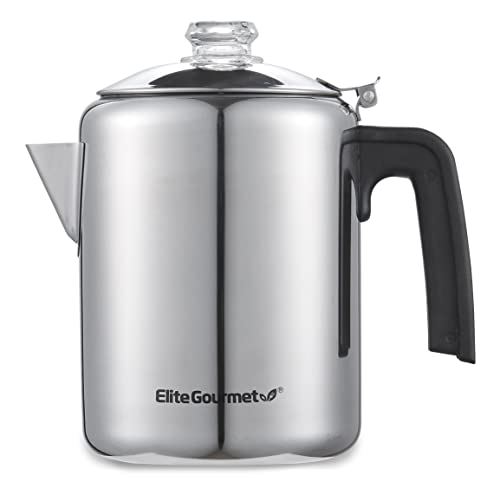
If you’re after a percolator that handles both modern kitchens and rugged outdoor trips without fuss, the Elite Gourmet 8-Cup Stainless Steel Percolator stands out as a solid pick for campers, RV travelers, and coffee lovers who value simplicity. I use mine on gas stoves and campfires-it’s built with durable 304 stainless steel and has no electronics to fail. The clear knob lets me watch the brew cycle, and the cool-touch handle makes pouring safe. It’s dishwasher-safe, needs no paper filters, and brews up to 8 cups. Just don’t overload past 6 cups for best results.
Best For: Campers, RV travelers, and coffee lovers who want a durable, no-fuss percolator for both indoor and outdoor use.
Pros:
- Durable 304 stainless steel construction built for stovetops and campfires
- Clear brew knob allows real-time monitoring and cool-touch handle ensures safe handling
- Dishwasher-safe parts and reusable filter eliminate the need for paper filters
Cons:
- Brewing more than 6 cups may reduce coffee quality despite 8-cup capacity
- Requires manual operation and close supervision to avoid over-percolation
- Stainless steel finish may show water spots or scratches over time without polishing
COLETTI 12-Cup Percolator Coffee Pot (Blue)

The COLETTI 12-Cup Percolator Coffee Pot in blue enamel is a solid pick for campers, outdoor enthusiasts, and anyone who values durable, no-fuss coffee making with a retro touch. I rely on its heavy-gauge steel construction, kiln-hardened twice at 1,000℉, to handle campfires, stoves, or grills without warping. It’s 100% steel with stainless steel internals-no aluminum or plastic-so I never worry about toxins. The heat-toughened glass knob lets me monitor brewing, and it works on gas, electric, or open flames. I can run it through the dishwasher, and at 2 pounds, it’s light enough for backpacking. I skip the included medical-grade filter if I want a richer brew, but it’s there if needed.
Best For: Outdoor adventurers, campers, and retro-style coffee lovers who want a durable, toxin-free percolator that performs reliably on any heat source.
Pros:
- Heavy-gauge steel construction kiln-hardened at 1,000℉ ensures durability and resilience over open flames
- Compatible with gas, electric, campfire, and grill use, making it highly versatile for indoor and outdoor brewing
- Dishwasher safe and lightweight (2 pounds), combining convenience with portability
Cons:
- Blue enamel exterior may chip over time with rough handling or improper cleaning
- Requires manual monitoring during brewing to prevent over-percolation and bitter coffee
- Smaller capacity (60 fl oz) may not suffice for large groups despite being labeled 12 cups
Farberware 12-Cup Stainless Coffee Percolator
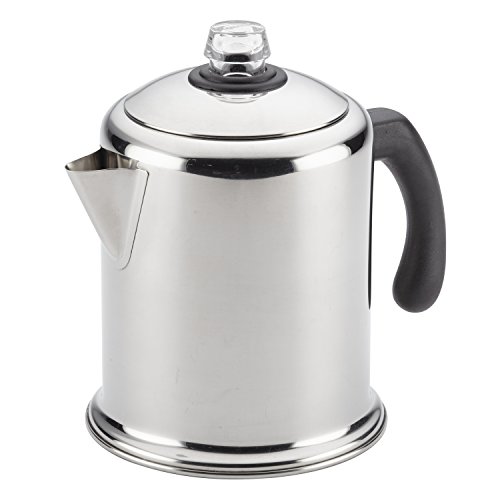
You’ll want something durable and straightforward if you’re looking to brew rich, full-bodied coffee without relying on modern electronics, and the Farberware 12-Cup Stainless Coffee Percolator fits that need perfectly. I use it on my stovetop, and its heavy-duty stainless steel body holds up well over time. The polished finish resists corrosion, and the non-reactive interior keeps flavors clean. I like that it doesn’t need paper filters-its permanent basket works fine with coarse grounds. The glass knob lets me watch the brew cycle, so I know when it’s done. It’s dishwasher safe, which makes cleanup easy, and it works with gas, electric, and induction stoves. Just don’t leave it unattended. Compared to coated models, this one’s simpler and more reliable, though it’s not for making light brews. If you want consistent, no-fuss coffee with a classic look, this percolator delivers.
Best For: Those who want a durable, no-frills stovetop coffee percolator for rich, full-bodied coffee with classic styling and reliable performance.
Pros:
- Durable heavy-duty stainless steel construction with a non-reactive interior for pure flavor
- Permanent filter eliminates need for paper filters and is eco-friendly
- Dishwasher-safe and compatible with gas, electric, and induction stoves
Cons:
- Not ideal for those who prefer light or mild coffee brews
- Requires monitoring during brewing to prevent over-percolation
- Glass knob may be fragile if not handled carefully
Moss & Stone 10 Cup Electric Coffee Percolator

A solid pick for those who want a reliable electric percolator with a classic look is the Moss & Stone 10 Cup Copper Percolator. I use it for brewing 54 oz of bold coffee at home or in the office, and it works well while camping if I’ve got power. Its stainless steel body with a copper finish resists rust, and the cool-touch handle makes pouring safe. I appreciate the keep-warm function and ready-light indicator-brewing takes just 7–10 minutes. It’s not dishwasher-safe, so I hand wash it. The 24-inch cord detaches for easy storage.
Best For: Home, office, or camping users seeking a durable, stylish electric percolator that brews bold coffee quickly and keeps it warm.
Pros:
- Brews 54 oz of coffee in 7–10 minutes with a keep-warm function and ready-light indicator
- Stylish copper finish with stainless steel construction and cool-touch handle for safety
- Portable design with detachable power cord, ideal for home, office, or travel use
Cons:
- Not dishwasher safe-requires hand washing for cleaning
- Limited capacity for larger gatherings (max 10 cups)
- Requires access to electrical outlet, limiting off-grid camping use
Toughty Enamel Coffee Percolator (Black)
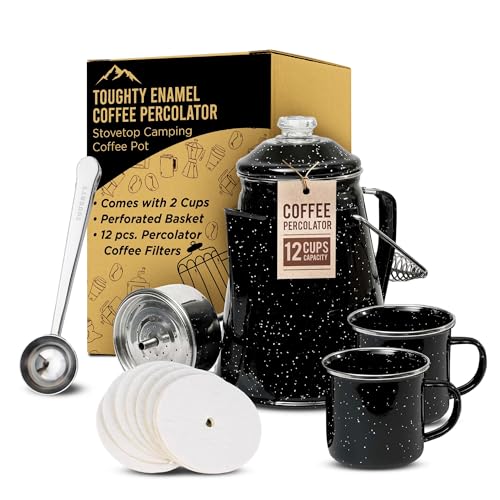
Built for durability and timeless appeal, the Toughty Enamel Coffee Percolator (Black) stands out as a top pick for outdoor enthusiasts and vintage gear lovers who want reliable coffee without electricity. I use it on gas, induction, or over a campfire, and it holds up to 12 cups-perfect for groups. The speckled enamel resists chips and scratches, and the glass knob lets me watch the brew. It includes two enamel cups and disposable filters, so I’m ready to go right out of the box. I toss it in my pack for backpacking-it’s light and tough. I clean it easily, even outdoors.
Best For: Outdoor enthusiasts, vintage gear lovers, and campers who want a durable, stovetop coffee percolator that works without electricity.
Pros:
- Durable enamel-coated construction resists chips, scratches, and wear, ideal for rugged outdoor use
- Compatible with gas, electric, induction stoves, and open fires, offering versatile brewing options
- Includes two enamel mugs and disposable filters, providing a complete brewing setup out of the box
Cons:
- Manual operation requires monitoring during brewing, which may not suit those seeking convenience
- Enamel surface, while durable, can chip if subjected to sharp impacts or extreme thermal shock
- Limited color options, potentially less appealing to those who prefer modern aesthetics
Elite Gourmet 12-Cup Electric Coffee Percolator

The Elite Gourmet 12-Cup Electric Coffee Percolator suits anyone needing a quick, reliable brew for small gatherings or family mornings without sacrificing the classic percolator look. I use it when I want strong, consistent coffee in under 5 minutes-less than a minute per cup on average. It holds 4 to 12 cups, with clear markings for precise water levels. The retro green finish, cool-touch handle, and 360° swivel base make serving easy and safe. I leave it on the Keep Warm setting for up to 2 hours, and the indicator lights tell me when it’s ready. My favorite part? All removable parts are dishwasher-safe.
Best For: Home users seeking a fast, easy-to-use coffee percolator with classic style and reliable performance for small to medium gatherings.
Pros:
- Brews up to 12 cups in under 5 minutes with a keep-warm function for up to 2 hours
- Cool-touch handle, 360° swivel base, and non-slip feet enhance safety and convenience
- Dishwasher-safe removable parts make cleanup quick and easy
Cons:
- Limited to retro design aesthetic, which may not suit modern kitchens
- No programmable brewing options or timer settings
- Plastic components may feel less durable despite overall lightweight portability
Factors to Consider When Choosing a Vintage Coffee Percolator
You’ll want to check the material durability and safety first-many vintage percolators are made from stainless steel or enameled metal, but older enamel models can chip over time. Make sure the brew capacity and size match your needs, since these pots range from 4 to 12 cups and need space on your stovetop or outlet. Don’t overlook heat source compatibility, ease of cleaning, and solid build quality, as those factors直接影响 how reliably your percolator works today.
Material Durability And Safety
When choosing a vintage coffee percolator, material matters more than you might think-it directly affects durability, safety, and how your coffee tastes over time. You’ll often find aluminum models; they’re lightweight and heat evenly, but can react with acidic coffee and need hand washing to prevent wear. Stainless steel is a smarter pick-it’s tough, won’t corrode, and won’t leach chemicals, making it safe and long-lasting. Enamel-coated steel looks great and resists stains, but chips easily if dropped or exposed to sudden temperature shifts. Watch out for glass parts like knobs or lids: they let you monitor brewing, but can crack from thermal shock or impact. Avoid any percolator with plastic or BPA-containing pieces near heat-they can warp and leach toxins. Stick with metal and tempered glass for safer, more reliable brewing.
Brew Capacity And Size
Think about how many people you’re brewing for-vintage percolators usually hold 6 to 12 cups, but don’t be fooled by the size label. One “cup” means 5 ounces, so a 12-cup model makes just 60 fluid ounces. If you’re serving a crowd or hosting weekends with friends, go for a 9- to 12-cup percolator-it’s your best bet. But for one or two people, a 6-cup version saves time, energy, and cleanup. Size matters beyond capacity: 12-cup models often top 10 inches high and 9 inches wide, needing plenty of stovetop or cabinet space. Smaller 6- to 8-cup units are compact, great for camping, RVs, or tiny kitchens. Look for capacity markings inside the pot or on the filter basket-they help you keep the water-to-coffee ratio accurate, no matter the size. Pick the right fit, and you’ll brew smarter every time.
Heat Source Compatibility
Matching your percolator to your heat source keeps brewing safe and effective. You should confirm whether your model works on gas, electric, or open flames-some aren’t suitable for induction stoves. Aluminum and enamel percolators handle direct flame well, making them great for campfires or propane burners. Stainless steel versions without plastic or rubber parts also tolerate high, uneven heat, so they’re solid choices for outdoor use. You’ll want to avoid any with plastic knobs, handles, or cords if using open flames-they can melt or warp under high heat. On electric or ceramic stovetops, look for models that distribute heat evenly to prevent hot spots that burn coffee or damage the pot. Always check the construction: a solid base and compatible material mean better performance and longer life. Choose wisely based on where and how you plan to brew.
Ease Of Cleaning
A clean percolator brews better coffee, and choosing one that’s easy to clean makes a big difference in your routine. Look for models with dishwasher-safe parts like stainless steel filter baskets and lids-you’ll save time and avoid buildup. Removable brewing stems and baskets let you scrub every corner by hand, which prevents stale oils from ruining your next pot. Percolators with smooth interiors and few crevices clean faster with just warm, soapy water. Avoid ones with non-stick coatings or plastic parts-they stain easily, demand hand washing, and wear out faster. Glass or transparent knobs on the lid help you check brewing without lifting the top, cutting down on mess and spills. Stick to all-metal builds with simple, open designs. They’re easier to take apart, clean thoroughly, and keep in rotation long-term. Cleanability isn’t just about convenience-it’s key to consistent flavor.
Build Quality And Design
Just as clean components support consistent brewing, a percolator’s overall construction directly affects its performance and lifespan. You want durable, non-reactive materials like stainless steel or heavy-gauge metal-they handle repeated heating and resist corrosion far better than thinner alloys. Look for reinforced seams, thick walls, and a sturdy base to prevent warping and promote even heat distribution. A tight-fitting lid with a secure locking mechanism keeps steam and heat in, boosting efficiency. Check that the handle and knob use heat-insulating materials or smart ergonomics so they stay cool during use-burns aren’t part of the brew process. Opt for models with heat-resistant glass knobs or clear lids; they let you track brewing without losing heat. Avoid percolators with flimsy welds or thin metal, especially under high heat. Solid build means better results and longer service-no shortcuts.
Brew Control And Monitoring
Every detail in a vintage coffee percolator affects your control over the final brew, and smart design makes all the difference when fine-tuning strength and timing. You can watch the percolation cycle through a clear glass lid or transparent knob, letting you see the pulse height and frequency to judge brew strength. Adjusting the stove’s heat lets you control how fast water cycles through the central tube-lower heat slows extraction and prevents boiling over. Stainless steel or heat-resistant knobs won’t crack under prolonged use. Interior measurement markings help you keep consistent water-to-coffee ratios every time. You’re in charge of duration and temperature, so you can stop brewing at the ideal moment. This hands-on approach gives repeatable results and avoids the guesswork that cheaper models often bring.
Portability And Use Case
You’re already in control of brew strength and timing-now think about where that control travels with you. If you’re hiking or backpacking, go for lightweight models under 10 inches tall and under 3 pounds-they pack easy and won’t weigh you down. For camping, RV trips, or cabin stays without reliable power, choose a stovetop percolator; it works on a campfire, propane stove, or grill. Look for ones built from enamel-coated steel or stainless steel-they handle high heat and bumps without cracking. Models with clear measurement markings and simple parts mean no guesswork and quick setup, even off-grid. When cleanup’s a challenge, pick a percolator with dishwasher-safe pieces or fast disassembly to save time and water. These features make brewing outdoors efficient, reliable, and hassle-free-exactly what you need when you’re far from home.
Frequently Asked Questions
Can I Use a Percolator on an Induction Stove?
You can’t use most vintage percolators on an induction stove unless they have a magnetic base. Induction needs ferromagnetic metal to generate heat, so check if a magnet sticks to the bottom. Many old percolators are aluminum or non-magnetic stainless steel, which won’t work. If yours isn’t compatible, use an induction interface disk-but that reduces efficiency. For reliable results, pick a modern percolator labeled induction-ready, like those from Farberware or Presto with magnetic bases.
Are Vintage Percolators Safe for Daily Use?
You can use vintage percolators daily, but check for worn gaskets, cracks, or metal fatigue first. Older models may have loose seams or degraded seals that risk leaks or uneven heating. Avoid ones with lead solder or heavy tarnish. Clean thoroughly and test before regular use. Stainless steel versions from brands like Coleman or Farberware tend to hold up better. Still, monitor them closely-older isn’t always safer. Modern percolators often meet stricter safety standards, so consider upgrading if reliability’s a priority.
How Do I Remove Mineral Buildup From My Percolator?
You remove mineral buildup by filling the percolator with equal parts white vinegar and water, then running it through a brew cycle. Let it cool, scrub the inside with a soft brush, and rinse thoroughly. Repeat if needed. For stubborn deposits, citric acid works well. Always descale monthly if you use hard water. Avoid abrasive pads-they damage metal. Rinse twice before brewing coffee to eliminate lingering odors.
Can I Brew Tea in a Coffee Percolator?
You can brew tea in a coffee percolator, but it’s not ideal. The machine’s high heat and cycling water boil tea too long, making it bitter. Loose-leaf or bagged tea breaks down under repeated boiling. For better results, use an electric kettle or stovetop pot where you control the temperature. If you must use the percolator, turn it off immediately after the first boil cycle to avoid over-extraction.
Do Percolators Make Stronger Coffee Than Drip Machines?
Yes, percolators make stronger coffee than drip machines because they recirculate boiling water through the grounds multiple times, extracting more flavor and caffeine. You end up with a bolder, more robust cup, but it can also become bitter if over-brewed. Drip machines use a single pass of hot water, producing a cleaner, milder brew. Choose percolators for intensity; pick drip for consistency and smoothness.