Best Camping Coffee Makers for Your Ultimate Outdoor Brew
You want a durable, easy-to-use camping coffee maker that handles rough conditions and brews well without hassle. Stainless steel models like the STANLEY 32 oz French Press or OARSE 16oz Camping Coffee Maker resist rust and drops, while the COLETTI Bozeman avoids plastic and aluminum for safer, long-term use. Percolators work over campfires, but pour overs offer cleaner flavor with pre-boiled water. Compact, lightweight options save space, especially if you’re hiking solo. There’s more to take into account based on your trip’s length, group size, and cooking setup.
We are supported by our audience. When you purchase through links on our site, we may earn an affiliate commission, at no extra cost for you. Learn more. Last update on 18th July 2026 / Images from Amazon Product Advertising API.
Notable Insights
- Stainless steel coffee makers like the STANLEY and OARSE sets offer durability, rust resistance, and safe, long-term use in rugged conditions.
- Percolators with 9 to 12-cup capacities, such as the COLETTI Classic, are ideal for groups of 4–6 campers.
- Compact, lightweight designs under 1.5 pounds with nesting or collapsible parts enhance portability for backpacking trips.
- French press and pour over methods require coarse grounds and deliver rich flavor, with stainless steel options eliminating paper waste.
- Anodized aluminum or BPA-free materials ensure safe brewing, but only anodized aluminum should be used to prevent metallic taste and corrosion.
STANLEY 32 oz French Press Coffee Maker

If you’re looking for one reliable tool that handles brewing, boiling, and even light cooking on the trail, the STANLEY 32 oz French Press Coffee Maker stands out as a top pick for campers who value simplicity and durability. I use it daily-its stainless steel build withstands heat and drops, and the foldable handle saves space. You boil water right in the pot, add medium-coarse grounds, steep for five minutes, then press. The mesh filter works well, but tamping too hard or using a fine grind can clog it. It retains heat for four hours, which helps on cold mornings. Just don’t toss it in the dishwasher-it’s handwash only. Compared to pour-overs or AeroPress models, it’s bulkier but more versatile. I keep a small coffee container inside for convenience. At 14.9 ounces, it’s light enough for backpacking, and the BPA-free materials give me peace of mind. When I’m out camping, this one tool covers brewing, heating water, and even simmering oatmeal-few alternatives do that without extra gear.
Best For: Campers, backpackers, and outdoor enthusiasts who want a durable, multi-functional tool for brewing coffee, boiling water, and light cooking in one compact, portable device.
Pros:
- Doubles as a kettle, coffee brewer, and cooking pot for versatile outdoor use
- Foldable handle and lightweight 14.9 oz design make it ideal for packing and travel
- Retains heat for up to 4 hours and features durable, BPA-free stainless steel construction
Cons:
- Not dishwasher safe, requiring hand washing after each use
- Mesh filter can clog if coffee grounds are too fine or over-pressed
- Bulkier than dedicated pour-over or AeroPress systems, taking up more pack space
Primula Aluminum Stove Top Percolator 9 Cup

The Primula Aluminum Stove Top Percolator 9 Cup is a solid pick for campers and travelers who want reliable coffee without relying on electricity. I use it on gas stoves, propane burners, and even campfires-it works anywhere. It holds 9 cups, which is great for sharing, and the clear knob on the lid lets me check the brew without losing heat. I grind my coffee medium-coarse and avoid over-tamping to keep pressure steady. The aluminum body is lightweight but durable, and the black handle stays cool enough to touch. I hand-wash it since it’s not dishwasher safe. It’s simple, classic, and gets the job done.
Best For: Campers, travelers, and outdoor enthusiasts who want a reliable, stovetop coffee solution that works without electricity.
Pros:
- Durable, lightweight aluminum construction ideal for camping and travel
- Compatible with gas, electric, ceramic stovetops, propane, grills, and campfires
- Clear knob on lid allows brew monitoring without releasing heat
Cons:
- Not dishwasher safe, requiring hand washing for maintenance
- Aluminum material may impart a metallic taste if not properly seasoned or cleaned
- Brew quality depends heavily on user technique and grind consistency
COLETTI Bozeman Percolator Coffee Pot - NO Aluminum or Plastic [9 cup]

I rely on the COLETTI Bozeman Percolator when I need durable, no-fuss coffee in remote or rugged settings, and its all-stainless-steel build-free of aluminum and plastic-makes it a top pick for campers who prioritize safety and longevity. I use it on gas, electric, and campfire stoves, though it won’t work on induction (try their Induction model for that). The 9-cup capacity and glass knob let me monitor brewing without guessing. It’s dishwasher safe, but I usually just rinse it-it’s built for fast cleanup. I’ve found it delivers bold, smooth coffee without the burnt taste some percs get. No fragile parts, just solid steel that lasts.
Best For: Outdoor enthusiasts, campers, and home brewers seeking a durable, non-toxic stovetop percolator for making bold, full-bodied coffee in rugged environments.
Pros:
- Constructed entirely of stainless steel with no aluminum or plastic for long-term safety and durability
- Glass view knob allows real-time monitoring of brew progress without losing heat or flavor
- Compatible with gas, electric, and campfire heat sources, making it ideal for off-grid and outdoor use
Cons:
- Not compatible with induction stovetops, requiring a separate model for induction users
- Manual operation requires attention to heat and timing to avoid over-percolation
- 9-cup capacity may be larger than ideal for solo or small-group use
STANLEY Perfect Brew Pour Over Set

You’ll want the STANLEY Perfect Brew Pour Over Set if you’re after durable, no-fuss coffee that holds heat well during early mornings or off-grid trips. I use it with 3–5 tablespoons of coarse grounds and 20 oz of boiled water, blooming first, then pouring in slow circles. It brews in 2–3 minutes, and the stainless steel filter brings out richer flavors than paper ones. The 12 oz insulated mug keeps coffee hot, and the whole set-weighing just 1.56 lbs-is built to last, backed by Stanley’s lifetime warranty. It’s not dishwasher safe, but a quick hand rinse gets it ready again fast. Perfect for campers who want real pour over taste without breakable parts or extra hassle.
Best For: Outdoor enthusiasts and campers who want a durable, portable pour over coffee experience with rich flavor and excellent heat retention.
Pros:
- Durable stainless steel construction with a lifetime warranty, ideal for rugged use
- Reusable filter enhances coffee flavor compared to paper filters and reduces waste
- Insulated mug effectively retains heat and the lightweight design is perfect for travel
Cons:
- Not dishwasher safe, requiring hand cleaning after each use
- Limited to 12 oz capacity, which may not satisfy those needing larger servings
- Requires coarse ground coffee and manual pouring for optimal results, less convenient than automated brewers
Odoland Camping Coffee Pot 1.2L

A solid pick for backpackers who want hot coffee without hauling bulky gear, the Odoland Camping Coffee Pot 1.2L packs down small but still handles a full boil fast. I’ve used it over gas stoves and open flames, and it consistently gets water to hot in under five minutes. The hard anodized aluminum body heats quickly and resists dents, while the non-stick interior makes cleanup easy. Its 1.2L kettle, foldable mug, and percolator nest neatly in a mesh bag-I’ve fit the whole set in a tight pack. Just don’t toss it in the dishwasher; hand wash keeps it lasting longer.
Best For: Backpackers and outdoor enthusiasts who want a lightweight, fast-heating coffee solution for camping trips.
Pros:
- Durable hard anodized aluminum construction heats quickly and resists dents
- Compact, nested design with a foldable mug for easy packing and portability
- Non-stick interior and efficient boiling performance make brewing and cleaning simple
Cons:
- Not dishwasher safe, requiring hand washing for maintenance
- Manual coffee input means less convenience for automated brewing
- Limited to open fire or gas stove use, not compatible with electric sources
STANLEY Perfect Brew Pour Over Set
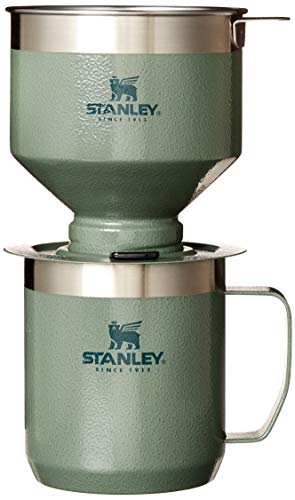
The STANLEY Perfect Brew Pour Over Set is ideal for campers and outdoor enthusiasts who prioritize durability, simplicity, and consistent coffee quality in rugged environments. I use it with the included 12 oz stainless steel Camp Mug, and the reusable filter delivers rich flavor without paper waste. It’s lightweight, manual, and easy to pack-perfect for camping or backpacking. I pour hot water in a slow spiral and get great brew in 2–3 minutes. The stainless steel build won’t break, and it’s built to last with a lifetime warranty. I hand wash it since it’s not dishwasher safe, but the cleanup is simple. No plastic here-just sturdy, sustainable materials that work reliably.
Best For: Outdoor enthusiasts and campers who want a durable, portable, and eco-friendly pour over coffee solution that delivers rich flavor without disposable filters.
Pros:
- Durable stainless steel construction built to last, with a lifetime warranty for long-term reliability
- Reusable stainless steel filter enhances flavor by preserving aromatic oils and eliminates paper waste
- Lightweight, compact, and manual design makes it ideal for camping, backpacking, and off-grid use
Cons:
- Not dishwasher safe, requiring hand washing for maintenance
- Limited to manual brewing, which may be less convenient for users seeking speed or automation
- Brew capacity restricted to 12 oz, which may be insufficient for multiple servings
COLETTI Classic Percolator Coffee Pot (12 Cup)

I rely on the COLETTI Classic Percolator Coffee Pot when I need dependable, no-frills brewing over a campfire or stove, especially for groups of four to six people. Made from heavy-gauge steel with a durable blue enamel finish, it’s built to last and handle direct heat. The heat-toughened glass top lets me watch the brew, and the included medical-grade filter reduces grit. It works on any heat source-campfire, stove, grill-and cleans up easily, even in the wild. At 2 pounds, it’s not the lightest, but its 12-cup capacity and simple design make it reliable for outdoor use where gadgets fail.
Best For: Outdoor enthusiasts and campers who need a durable, reliable coffee maker that performs well over a campfire or stove for small groups.
Pros:
- Durable heavy-gauge steel construction with a kiln-hardened enamel finish withstands rugged outdoor use
- Compatible with all heat sources including campfire, grill, gas, and electric stoves
- Includes medical-grade filter to reduce coffee grounds and improve brew clarity
Cons:
- At 2 pounds, it’s heavier than some portable coffee solutions
- Enamel finish may chip if dropped or subjected to impact
- Requires manual monitoring during brewing to prevent over-percolation
Camping Coffee Pot, 9-Cup Stainless Steel

You’ll find the Cididu 9-cup stainless steel camping coffee pot works best if you’re brewing for a small group or want a single device that handles everything from morning campfire coffee to RV trips and outdoor gatherings. It holds 40.6 oz-about nine 4.5-oz cups-and uses ground coffee with a built-in percolator basket. The stainless steel body resists corrosion and stands up to rough handling, though it’s not dishwasher safe or induction-compatible. I use it on my camp stove or over open flames without issue. The rubber-covered handle stays cool, making pouring safer, and the hinged lid prevents loss. It’s simple, durable, and gets the job done.
Best For: Outdoor enthusiasts and small groups who want a durable, portable coffee solution for camping, RV trips, and open-fire brewing.
Pros:
- Durable stainless steel construction resists corrosion and withstands rough outdoor use
- Rubber-covered handle stays cool for safer pouring over flames or stoves
- Hinged lid and built-in percolator basket simplify brewing and reduce the risk of lost parts
Cons:
- Not dishwasher safe, requiring hand cleaning after use
- Incompatible with induction cooktops, limiting indoor use
- May require careful heat management to avoid over-percolation or bitter coffee
Collapsible Pour Over Coffee Dripper for Camping
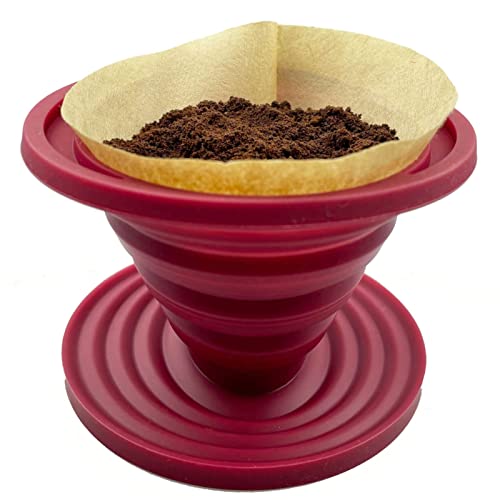
A collapsible pour over coffee dripper suits travelers and outdoor enthusiasts who want fresh, hand-brewed coffee without carrying bulky gear. I use the Attsky model-it’s made of food-grade silicone, BPA-free, and handles heat up to 464°F. It weighs just 3.2 ounces and folds down to 4.5 inches, so it fits in any pack. It works best with #2 cone filters and fits most mugs or camping pots. I’ve used it backpacking and in my office-it’s versatile. It’s dishwasher safe, but I usually rinse it by hand. No weird tastes, and cleanup is fast.
Best For: Outdoor enthusiasts and travelers seeking a lightweight, portable pour over coffee solution for camping, backpacking, or daily use.
Pros:
- Made of durable, food-grade silicone that’s BPA-free, odorless, and heat resistant up to 464°F
- Compact, foldable design for easy packing and storage, weighing only 3.2 ounces
- Versatile compatibility with #2 cone filters and most mugs or camping pots; dishwasher and hand-wash safe
Cons:
- May require precise filter placement for optimal brewing performance
- Less structural rigidity compared to rigid metal or plastic drippers
- Limited capacity-best suited for 1–2 cups, not larger groups
OARSE 16oz Camping Coffee Maker Set

The OARSE 16oz Camping Coffee Maker Set stands out for backpackers and solo travelers who want a lightweight, all-in-one system that skips disposable filters without sacrificing brew quality. I use the double-layer micro mesh filter-it’s paperless, prevents clogs, and fits #2 cone size standards. Made from durable 304 stainless steel, the whole kit resists rust and handles rough use. The vacuum-insulated mug keeps coffee hot while staying cool to the touch. At just 12.8 oz, it packs small, with the collapsible filter tucking inside. The flip-top lid seals well and works one-handed, great for morning routines on the trail.
Best For: Solo travelers, backpackers, and outdoor enthusiasts seeking a lightweight, durable, and filter-free pour over coffee setup for on-the-go brewing.
Pros:
- Durable 304 stainless steel construction resists rust and withstands rugged outdoor use
- Paperless double-layer micro mesh filter eliminates need for disposable filters and prevents clogging
- Collapsible design with vacuum-insulated mug allows for compact storage and excellent temperature retention
Cons:
- Limited capacity at 16oz may not be sufficient for sharing or multiple servings
- Manual brewing requires user skill and time, less convenient than automated systems
- Black finish may show scratches over time despite scratch-resistant coating
Factors to Consider When Choosing Camping Coffee Makers
You’ll want to match your coffee maker to your camp setup-whether you’re using a portable stove, open fire, or battery-powered heater-since heat source compatibility affects how well your brew heats up. Think about how much you’re carrying: lightweight, compact designs like the OARSE 16oz set save space, but sturdier materials like stainless steel may add weight while lasting longer. Finally, consider how easy it is to clean and whether the brewing method (pour-over, French press, or percolator) fits your routine, especially when water’s limited and cleanup’s a chore.
Brewing Method Compatibility
Matching your camping coffee maker to your preferred brewing method matters, because grind size, heat source, and equipment durability directly impact how well it works outdoors. You’ll need coarse grounds for French press or pour over, but percolators work best with medium to fine grinds. If you’re using a percolator, you’ll need a direct flame or electric coil-stovetop models won’t work over a campfire without proper support. Pour over setups require you to boil water separately, adding steps and gear like a gooseneck kettle. Immersion methods like French press give you control over brew time, while percolators constantly cycle hot water, risking over-extraction. You’ll also need filters, filter holders, or built-in screens depending on the system-plan for extra parts. Choose a method that aligns with your gear, coffee style, and how much cleanup you’re willing to do.
Durability And Materials
A solid camping coffee maker withstands heat, drops, and damp conditions without failing, and material choice plays a key role in its resilience. You’ll want stainless steel-it handles heat and moisture well, resists rust, and endures rough handling. If you go with aluminum, make sure it’s anodized; otherwise, it might wear faster or give your coffee a metallic taste. Avoid any parts with BPA, especially where water or steam flows, since high heat can release harmful chemicals. Look for reinforced seams, sturdy hinges, and impact-resistant builds so your brewer survives trail drops and rocky campsites. Components made from heat-treated glass or food-grade silicone hold up better near flames or boiling temps. These materials won’t warp or crack easily. While no material is perfect, pairing smart design with tough, safe materials means you’ll keep brewing, trip after trip, without surprises.
Portability And Weight
Sturdy materials like stainless steel and anodized aluminum not only stand up to heat and rough handling but also contribute to a lighter, more packable design. You’ll want a coffee maker under 1.5 pounds to avoid adding strain on long hikes. Compact models-under 7 inches in height and diameter-fit easily in your backpack or cook kit. Look for collapsible parts like folding handles or removable filters that take up less space. Some designs nest components together, such as a pot that holds the filter inside, cutting down on bulk. While titanium options exist, they often cost more and don’t necessarily improve function. For backpacking, weight and size matter most, so prioritize integrated, space-saving builds. Canister stoves with built-in supports work well with compact brewers, but always test fit your gear beforehand. Smart design means you won’t sacrifice performance for portability.
Ease Of Cleaning
When you’re out in the backcountry, cleaning your coffee maker often means rinsing with water and moving on-so simpler designs with fewer parts are easier to handle. You’ll want stainless steel components since they resist stains and odors, needing little to no soap. Models like the Aeropress or a simple pour-over cone wash clean fast with just water. Avoid units with hidden crevices or lots of small pieces-they trap grounds and make rinsing a chore. If your brewer is hand-wash only, rinse it immediately to prevent gunk from hardening. Reusable metal filters cut down on mess and waste compared to paper ones, and they’re easy to shake out and reuse. While dishwasher-safe parts help at home, they don’t matter much when camping. Focus on gear that’s practical in the field-because out there, cleanup time is better spent hiking.
Heat Source Compatibility
Since you’ll likely be brewing over whatever heat source you’ve got on hand, check that your coffee maker matches up with your setup. Most stovetop percolators need direct heat and work well on gas, propane, or campfires, but avoid glass models-they can crack from sudden temperature shifts. Aluminum and stainless steel pots handle open flames and portable stoves reliably, though aluminum may warp under intense heat. Stainless steel heats more evenly and lasts longer. Avoid plastic or silicone parts if you’re cooking over fire-they can melt. Some devices aren’t induction-compatible due to material limits, so if you’re using an induction stove, confirm the base is magnetic. Multi-fuel compatibility gives you flexibility, especially when switching between campfires and stoves. Always match your brewer’s materials and design to your usual heat source to avoid damage and guarantee safe, consistent brewing.
Capacity And Serving Size
Most camping coffee makers hold between 12 and 60 fluid ounces, so picking the right size starts with knowing how many people you’re brewing for. If you’re solo, a compact 12–16 oz model like a single-serve French press or pour-over fits your pack and brews one to two cups fast. These are light and efficient, perfect for backpacking. For two to three campers, a 20–30 oz option gives enough coffee without waste. When you’re with a group or family, go for 40–60 oz-this means a 9- to 12-cup capacity, yielding up to nine 4.5-oz servings per batch. Larger units save fuel and time over multiple brews but need more space and cleanup. Match the capacity to your group size so you’re not stuck with weak coffee or leftover grounds. Proper sizing keeps your mornings smooth and gear use efficient.
Setup And Operation
Choosing the right capacity sets the foundation, but how a coffee maker functions in the field shapes your morning routine just as much. If you’re using loose grounds, you’ll need to measure carefully and time your brew-especially with pour over or French press models, which require blooming, steady pouring, and steeping. These demand your full attention. Percolators are hands-on too; you’ve got to watch the strength through the lid’s knob to avoid bitterness. Simpler options, like all-in-one boil-and-brew systems, cut setup time and reduce gear. Models with collapsible filters or built-in mugs streamline packing and assembly. Integrated designs often trade some control for convenience, but they’re ideal when you’re moving fast or space is tight. Think about how much effort you want each morning-some setups need precision, while others let you boil, press, and go. Pick based on your pace and tolerance for fuss.
Frequently Asked Questions
Can I Use Electric Coffee Makers With a Car Battery?
You can use electric coffee makers with a car battery, but it’s not always practical. Most standard electric models draw too much power for sustained use without draining your battery. If you try it, use a power inverter and monitor battery levels closely. A 12V travel coffee maker, like the Mr. Coffee Car Café, is a smarter choice-it’s designed for vehicles and uses less energy. For off-grid trips, consider manual options like a French press or pour-over instead.
Are Camping Coffee Makers Safe for Open Fire Use?
Yes, you can use some camping coffee makers over open fires, but not all. Stainless steel percolators and classic camp coffee pots like the percolator-style Coleman work well with direct flame. Avoid plastic or electric models. Never use a French press or glass Chemex over fire-it’ll break. Always check manufacturer guidelines. If you’re using fire, stick to metal gear built for high heat, and monitor it closely to avoid burning your brew or damaging the equipment.
How Do I Clean Coffee Residue From Metal Pots?
you clean coffee residue from metal pots by scrubbing with hot water and a non-abrasive sponge while the pot’s still warm. for stubborn buildup, boil water with a splash of white vinegar or a tablespoon of baking soda for 5–10 minutes, then scrub again. avoid steel wool on nonstick coatings. rinse well and dry completely to prevent rust. regular rinsing after use cuts future cleaning time.
Can I Make Cold Brew With a French Press Outdoors?
Yes, you can make cold brew with a French press outdoors. Just add coarsely ground coffee and cold water, stir, and steep for 12–16 hours in a cool spot. Press the plunger slowly before pouring. It’s simple and doesn’t need power, but it takes time and space. A dedicated cold brew pitcher might save room, but the French press works fine if you’re patient and have secure storage.
Do Percolators Work at High Altitudes?
Yes, percolators work at high altitudes, but you’ll need to adjust. Lower air pressure means water boils at cooler temps, so your brew might under-extract and taste weak. You can compensate by grinding finer or extending brew time. Stainless steel percs like the Coleman or Bialetti work reliably in thin air. They’re durable and simple, though they can over-extract and get bitter if overused. Keep heat moderate and monitor closely.