Best Coffee Costa Rica Brews That Taste Like Paradise
You get vibrant, clean cups when you brew Costa Rican coffee from high-altitude farms above 1,100 meters, like Café 1820 or Liquid Gold Coffee. These beans, grown in volcanic soil, deliver bright acidity with notes of honey, citrus, and stone fruit. Medium roasts preserve clarity, while light roasts retain delicate aromatics-ideal for pour-over or drip. Opt for freshly ground, single-origin lots from Tarrazú for authenticity and balance. Fair Trade and organic options, like Lifeboost or Whole Foods, add ethical value. The right choice sharpens your morning ritual.
We are supported by our audience. When you purchase through links on our site, we may earn an affiliate commission, at no extra cost for you. Learn more. Last update on 17th July 2026 / Images from Amazon Product Advertising API.
Notable Insights
- Costa Rican coffees from Tarrazú and West Valley offer bright acidity and complex notes of peach, honey, and citrus.
- Grown at 1,200+ meters in volcanic soil, these beans are dense, flavorful, and labeled as Strictly Hard Bean.
- Medium roast preserves vibrant flavors like mandarin and dark chocolate while ensuring a smooth, balanced cup.
- Single-origin, 100% Arabica beans are expertly washed and roasted for purity, consistency, and clean taste.
- Ethically sourced and certified Fair Trade, Rainforest Alliance, or Organic, ensuring sustainability and premium quality.
Café 1820 Costa Rican Ground Coffee (2 Pack)

If you’re after a rich, full-bodied cup with nuanced fruity and chocolate notes, Café 1820 Costa Rican Ground Coffee (2 Pack) stands out as a top choice-especially if you value high-altitude Arabica beans. I brew it straight in my drip machine, and it delivers consistent flavor every time. The beans come from Costa Rica’s top regions, grown above 1,300 meters, which boosts acidity and complexity. You’ll taste apricot, peach, and dark chocolate-smooth, not sharp. The medium/dark roast balances brightness and depth. Packaged to lock in freshness, it stays aromatic for weeks. It works with any brewer, no fuss. Compared to lower-altitude blends, this one’s cleaner and more defined. If you want quality without grinding whole beans, this ground option is a solid, no-guesswork pick for daily gourmet coffee.
Best For: Discerning coffee drinkers who want a consistently flavorful, high-altitude Arabica coffee with nuanced fruity and chocolate notes without the need to grind beans.
Pros:
- Rich, well-balanced flavor with distinct apricot, peach, and dark chocolate notes from premium high-altitude Costa Rican beans
- Convenient ground format that maintains freshness and works with any coffee maker
- Meticulously sourced 100% Arabica beans and packaged to preserve aroma and quality over time
Cons:
- Ground coffee inherently loses freshness faster than whole beans, despite packaging innovations
- Medium/dark roast may be too bold for those who prefer lighter, more floral profiles
- Limited origin variety-specific to Costa Rica, which may not appeal to those seeking blended or global bean experiences
Café 1820 Premium Costa Rican Ground Coffee

Café 1820 Premium Costa Rican Ground Coffee stands out as the best choice for coffee lovers who prioritize a balanced, full-bodied cup with nuanced flavor-without needing specialty brewing equipment. I use it daily in my drip brewer, and it consistently delivers rich taste with fruity notes, chocolate hints, and a smooth, subtle sweetness. Grown at high altitudes in volcanic soil, the 100% Arabica beans have excellent body and balanced acidity. The vacuum-sealed packaging locks in freshness, so I always get an aromatic, flavorful cup. It works great anytime-morning or afternoon-and suits any standard coffee maker.
Best For: Coffee enthusiasts seeking a consistently smooth, full-flavored daily brew with nuanced notes of fruit and chocolate, without requiring specialty equipment.
Pros:
- Rich, balanced flavor with fruity notes, chocolate hints, and subtle sweetness
- Made from 100% high-altitude Arabica beans grown in nutrient-rich volcanic soil
- Vacuum-sealed packaging preserves freshness and aroma
Cons:
- Limited roast variety for those who prefer lighter or flavored options
- May be pricier than standard grocery store coffee brands
- Ground format limits freshness control compared to whole bean
Costa Rican Tarrazu Coffee 2 lb

I reach for Costa Rican Tarrazu Coffee 2 lb when I want a clean, consistent single-origin that delivers on both sweetness and balance. Grown at 1,300–1,600 meters in Tarrazú, it uses Caturra and Catuai beans, washed fully for clarity. The medium roast, done in a Loring roaster, keeps flavors intact while reducing emissions. I taste distinct honey and chocolate notes, with a medium body that works for pour-over or drip. It’s kosher certified, sustainably sourced, and packed in the USA. The 2 lb bag cuts cost per ounce, ideal if you drink daily and store coffee properly.
Best For: Daily coffee drinkers seeking a sustainable, kosher-certified single-origin medium roast with balanced sweetness and rich flavor from high-elevation Costa Rican beans.
Pros:
- Rich, well-defined flavor profile with honey and chocolate notes from carefully washed and medium-roasted Caturra and Catuai beans
- Eco-conscious processing and roasting using a Loring roaster to reduce emissions while preserving taste integrity
- Cost-effective 2 lb packaging ideal for regular use, with whole beans to maintain freshness when stored properly
Cons:
- Larger 2 lb size may not suit casual drinkers or those who prefer smaller batches for peak freshness
- Limited to whole bean format, which requires a grinder for certain brew methods
- Flavor nuances may be less pronounced over time if not stored in optimal conditions
Costa Rica Tarrazu Coffee Ground Medium Roast

For anyone who values a consistently clean and flavorful cup without the guesswork, Costa Rica Tarrazú Coffee Ground Medium Roast is a solid go-to. Grown at high altitudes in volcanic soil, the slow-ripened cherries develop a rich, balanced flavor with subtle chocolate hints. The medium roast preserves those traits without bitterness. It’s pre-ground and sealed right after roasting, so freshness stays locked in. Since it’s Fair Trade, Rain Forest Alliance, and shade-grown certified, you’re supporting ethical farming. Each batch undergoes phytosanitary checks and lab tests for mold and mycotoxins. Roasting above 400°F guarantees safety and purity.
Best For: Coffee lovers seeking a consistently smooth, ethically sourced medium roast with balanced flavor and reliable freshness.
Pros:
- Rich, well-balanced flavor with subtle chocolate notes enhanced by high-altitude volcanic growing conditions
- Certified Fair Trade, Rain Forest Alliance, and Shade Grown, supporting sustainability and ethical farming practices
- Pre-ground and sealed immediately after roasting, with rigorous lab testing for mold and mycotoxins to ensure freshness and safety
Cons:
- Pre-ground format may appeal less to enthusiasts who prefer grinding beans fresh
- Flavor profile, while smooth, may be less complex compared to single-origin specialty coffees
- Medium roast may not satisfy those who prefer bolder, darker roast characteristics
Café 1820 Classic Costa Rican Ground Coffee

If you’re after a coffee that delivers depth without overwhelming acidity, Café 1820 Classic Costa Rican Ground Coffee stands out as a strong choice, especially for those who appreciate a well-balanced dark roast. I’ve found it delivers rich body and a nuanced mix of chocolate and fruit notes, with a slight sweetness that lingers. Grown over 1,100 meters in volcanic soil, its high-altitude origin boosts flavor clarity. The beans are 100% Arabica, carefully selected and roasted for complexity. Packaged to lock in freshness, it stays aromatic. It works in any brewer-drip, French press, or espresso-and suits mornings or afternoons when you want quality without fuss.
Best For: Discerning coffee lovers seeking a premium, well-balanced dark roast with rich body and nuanced flavor notes of chocolate and fruit.
Pros:
- Crafted from 100% Arabica beans grown at high altitudes in volcanic soil for superior flavor and aroma
- Offers a complex, robust taste profile with balanced acidity, subtle sweetness, and notes of chocolate and fruit
- Packaged to preserve freshness and compatible with all brewing methods, from drip to French press to espresso
Cons:
- May be too intense for those who prefer mild or medium roasts
- Ground format limits control over grind size for specialized brewing methods
- Slight sweetness may not appeal to those who favor purely bold, bitter dark roasts
Costa Rica Tarrazu Coffee (16 oz)
Costa Rica Tarrazu Coffee (16 oz) stands out for those who prioritize origin integrity and balanced flavor in their daily brew. I grow this 100% pure bean at high altitudes on volcanic soil, where slow cherry ripening builds rich, hearty depth. The medium roast preserves brightness and balance, with subtle chocolate notes you’ll notice in a smooth cup. It’s Fair Trade and Rain Forest Alliance Certified, plus shade-grown-good for ecosystems and workers. Whole beans stay fresh, sealed right after roasting. I test for mycotoxins and mold, roast above 400°F, and guarantee every batch meets safety standards. Grinding just before brewing gives the cleanest, truest taste.
Best For: Coffee lovers who value sustainably sourced, high-altitude beans with a balanced, smooth flavor and clean safety standards.
Pros:
- 100% pure Costa Rica Tarrazu beans grown in volcanic soil for rich, hearty flavor
- Fair Trade and Rain Forest Alliance Certified, supporting ethical and environmental practices
- Whole bean, fresh roasted and sealed to preserve flavor and rigorously tested for purity and safety
Cons:
- Requires grinding before brewing, less convenient for those seeking pre-ground coffee
- Medium roast may not satisfy those preferring bold, dark roast intensity
- Single-origin profile might lack the complexity some seek in blended coffees
Liquid Gold Coffee – Costa Rica Medium Roast

I reach for Liquid Gold Coffee – Costa Rica Medium Roast when I want a dependable, high-quality brew that delivers consistent flavor without demanding fancy equipment or a barista’s skill. Sourced from Coopeagri Farm in Costa Rica at 1,200+ meters, these Strictly Hard Bean Arabica beans mature slowly, giving denser, more flavorful results. Certified Fair Trade, Kosher, and gluten-free, it’s ethical and safe for many diets. Roasted in small batches in the USA, it comes fresh in a 12-ounce resealable bag that locks in quality. The pre-ground format works straight in standard drip machines. You’ll get at least 22 twelve-ounce cups with balanced, clean taste-no fuss, no extras needed.
Best For: Coffee lovers seeking a consistently smooth, high-quality brew with ethical sourcing and effortless preparation using standard drip machines.
Pros:
- Single-origin, 100% certified Arabica beans grown at high altitude for superior flavor and density
- Certified Fair Trade, Kosher, and gluten-free, supporting ethical farming and accommodating various dietary needs
- Small batch roasted in the USA and packaged in resealable bags to ensure maximum freshness and convenience
Cons:
- Pre-ground format may not suit enthusiasts who prefer grinding beans fresh for each brew
- Limited to a single roast profile (medium), offering less variety for those who enjoy experimenting with roast levels
- Sourced exclusively from one farm, which may result in less flavor variation across batches over time
Whole Foods Costa Rica Light Roast Coffee

This light roast is a go-to for those who savor bright, clean flavors without heavy bitterness, making it a smart pick for coffee lovers who prefer a morning brew that’s both smooth and lively. I grind these whole beans fresh for pour-over or French press, which pulls out the orange and chocolate notes best. Sourced from Costa Rican farms, it’s certified by Fair Trade USA and Rainforest Alliance, so I know it meets strong ethical standards. The 12-ounce bag stays fresh thanks to the whole bean format and small-batch roasting. Whole Foods bans artificial sweeteners and unhealthy fats, so I trust what’s in my cup. It’s simple, clean, and built for daily use.
Best For: Coffee enthusiasts who prefer a smooth, bright morning brew with clean, vibrant flavors and value ethically sourced, additive-free coffee.
Pros:
- Bright flavor profile with distinct notes of orange and chocolate, ideal for pour-over and French press
- Ethically sourced and certified by Fair Trade USA and Rainforest Alliance, supporting sustainable farming
- Whole bean format and small-batch roasting preserve freshness and flavor, with no artificial sweeteners or unhealthy fats
Cons:
- Limited to single-origin Costa Rican beans, which may lack the complexity some prefer in blended coffees
- Light roast may be too mild for those who enjoy bold, dark roast intensity
- Availability may be restricted to Whole Foods stores or online, limiting access for some consumers
Allegro Coffee, Coffee Costa Rica El Volcan Ground, 12 Ounce

If you’re after a light roast that’s both smooth and flavorful without overpowering your morning routine, Allegro Coffee’s Costa Rica El Volcan Ground is a solid pick. I’ve tried it side by side with other supermarket light roasts, and it holds up-sweet, balanced, with hints of panela, honey, and mandarin. It’s Kosher certified and sourced from volcanic regions in Costa Rica where ideal microclimates and two centuries of cultivation sharpen its quality. The volcanic soil isn’t just a marketing point-it does boost flavor clarity. Pre-ground in 12-ounce bags, it’s convenient, though you’ll want to use it fast to keep peak freshness. Not the cheapest, but it’s consistently good.
Best For: Coffee lovers seeking a smooth, flavorful light roast with natural sweetness and bright citrus notes that enhances their morning routine without overwhelming it.
Pros:
- Exceptional flavor profile with distinct notes of panela, honey, and mandarin orange
- Sustainably sourced from volcanic microclimates in Costa Rica, enhancing quality and clarity
- Kosher certified and convenient pre-ground format in a 12-ounce resealable bag
Cons:
- Pre-ground coffee loses freshness faster than whole bean; best consumed quickly
- Priced higher than typical supermarket light roast options
- Flavor nuances may be subtle for those preferring bold, intense roasts
Café 1820 Costa Rican Coffee Ground (3-Pack)
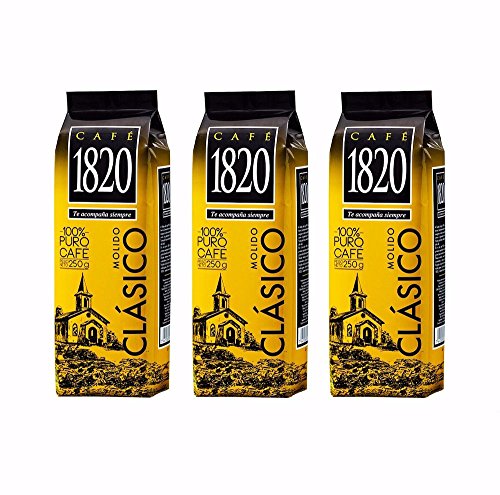
Café 1820 Costa Rican Coffee Ground (3-Pack) is best suited for coffee drinkers who value origin authenticity and consistent quality in their daily brew, especially those who prefer a clean, additive-free Arabica experience. I rely on its 100% pure Arabica beans, sourced from seven regions and grown above 1,000 meters in volcanic soil. The medium roast delivers rich flavor with slight bitterness, a hallmark of quality. Each pack has uniform grind size for even extraction. Expert tasters test every batch, ensuring consistency. It works well in drip machines or French press. Avoid dark roast lovers-it won’t satisfy bold, smoky cravings. For freshness, store it in an airtight container away from light.
Best For: Coffee enthusiasts who prioritize origin authenticity, a clean 100% Arabica profile, and consistent medium-roast flavor with nuanced bitterness.
Pros:
- Made from 100% pure Arabica beans grown in nutrient-rich volcanic soil across seven Costa Rican regions
- Medium roast with balanced flavor and aromatic complexity, ideal for drip coffee makers and French press
- Rigorous sensory testing by expert tasters ensures batch consistency and high-quality grind uniformity
Cons:
- Not suitable for those who prefer dark, bold, or smoky coffee profiles
- Pre-ground format limits freshness compared to whole bean
- May be less appealing to drinkers who enjoy flavored or additive-enhanced coffees
Factors to Consider When Choosing Coffee Costa Rica
You’ll want to check where your Costa Rican coffee beans come from-regions like Tarrazú or West Valley offer distinct flavors thanks to altitude and soil. Pick the roast level that matches your taste: lighter for brightness, darker for richness, and always look for a roast date, not just a best-by. Don’t skip the label details; certifications like Rainforest Alliance or Organic matter, and resealable bags with degassing valves keep your coffee fresh longer.
Bean Origin Matters
Terroir isn’t just for wine-when it comes to Costa Rican coffee, where the beans grow directly shapes what ends up in your cup. You’ll taste the difference when beans come from elevations above 1,100 meters; the slower development produces denser, more flavorful beans. At 1,300 meters or higher, expect brighter acidity, cleaner flavors, and more complex aromas thanks to cooler temps and longer maturation. Volcanic soils feed the plants with rich minerals, boosting quality and consistency. Look for Strictly Hard Bean (SHB) labels-these beans, grown at 1,200+ meters, meet high-density standards. Single-origin lots from regions like Tarrazú or West Valley give you distinct profiles shaped by local microclimates. Choosing by origin lets you target specific traits: richness, brightness, or balance. If you want clarity and precision in flavor, prioritize high-grown, volcanic-origin beans. Your brewing method won’t fix low-grade sourcing-start right with the bean’s origin.
Roast Level Choice
While origin sets the foundation, choosing the right roast level is critical for bringing out the best in Costa Rican coffee. If you want bright acidity and clear notes of citrus or chocolate, go with a medium roast-it preserves the bean’s natural traits without adding heavy char. Prefer more delicate, floral, and fruity flavors? Choose a light roast, which uses lower heat to keep the original profile intact, especially from high-altitude farms above 1,100 meters. For a heavier body and bold sweetness with stronger chocolatey tones, dark roast works, though it can mask subtle varietal details. Roasting past 400°F guarantees safety and develops flavor, but time matters-too long and you lose balance. Match the roast to your taste: light for vibrancy, medium for balance, dark for intensity.
Flavor Profile Focus
Because the flavor of Costa Rican coffee depends on several key factors, knowing what shapes its profile helps you choose wisely. Grown at 1,100–1,600 meters, the high altitude and volcanic soil slow bean development, boosting complexity and density. You’ll often taste bright acidity balanced with citrus, honey, chocolate, or stone fruit notes. Most beans are washed processed, giving you a clean, bright cup with clarity and consistency. If you prefer nuanced, medium-bodied coffee with subtle sweetness, look for varietals like Caturra or Catuai. Medium roasts are standard-they preserve the bean’s natural aromatics instead of masking them with roast flavor. You won’t get smoky or charred notes here, just a smooth, lively cup. Choosing based on origin traits like these guarantees you get the crisp, refined profile Costa Rica is known for.
Certifications To Consider
When you’re choosing Costa Rican coffee, certifications can give you clear insight into how the beans were grown and processed. Fair Trade means farmers got fair pay and safe working conditions, which supports long-term community stability. If you care about wildlife and ecosystems, look for Rainforest Alliance Certified-it requires biodiversity protection and limits chemical use. Shade-Grown labeled coffee grows under tree canopies, helping birds and maintaining ecological balance. For those following dietary laws, Kosher certification guarantees the beans were processed on approved equipment and meet strict guidelines. Organic certification guarantees no synthetic pesticides or fertilizers were used and confirms inspections by third parties. While these labels often mean higher prices, they reflect verified practices-not just marketing. Each has clear standards, so choose based on what matters most: people, environment, or dietary needs.
Freshness And Packaging
If you want to taste Costa Rican coffee at its best, start with how it’s packaged-because freshness begins the moment the beans are roasted. Look for vacuum-sealed or nitrogen-flushed bags; they block oxygen, light, and moisture, all of which degrade flavor fast. Bags with one-way degassing valves are ideal: they let built-up CO₂ escape without letting air in. Always choose whole bean over pre-ground-less surface area means slower staling. Since Costa Rican beans often grow at high altitudes and ripen slowly, they’re more delicate and prone to losing their nuanced flavors if not properly protected. Resealable packaging helps maintain quality after opening, but you’ll still want to use the beans within 2–3 weeks. Store them in a cool, dark place-never in the fridge. Good packaging isn’t a luxury; it’s essential for preserving the bright, clean taste these beans are known for.
Frequently Asked Questions
What Is the History of Coffee Farming in Costa Rica?
You started growing coffee in Costa Rica in the late 1700s, and by the 1800s, it became a key export. Farmers used rich volcanic soil and high altitudes to their advantage. The government once required cultivation to guarantee quality. You avoid chemicals by law, promoting clean, washed processing. While other countries chase quantity, you focus on consistency, using established varietals like Caturra and Catuaí for balanced, bright cups.
How Does Altitude Affect Costa Rican Coffee Flavor?
You’ll find higher altitudes give Costa Rican coffee brighter acidity and more complex flavors because cooler temperatures slow bean development, increasing density. Farms above 4,000 feet, like those in Tarrazú, produce beans with clean citrus or floral notes. Lower elevations yield milder, less vibrant cups. For best results, choose high-grown beans and use a pour-over or precision brewer to highlight clarity and subtle tones.
Are Costa Rican Coffee Farms Typically Organic or Sustainable?
You’ll find most Costa Rican coffee farms aren’t certified organic, but many use sustainable practices. Farmers often avoid synthetic pesticides, relying instead on compost and shade-grown methods that protect ecosystems. While organic certification is costly and less common, sustainability is a national priority. You’ll see farms with Rainforest Alliance or UTZ certifications more often. If you want organic, check labels carefully-some smaller producers follow organic methods without official certification, so ask when possible.
What Makes Tarrazú Region Coffee Unique Compared to Others?
You get bright acidity and full body from Tarrazú coffee because of its high elevation and volcanic soil. You’ll notice clean, crisp flavors-often citrus or stone fruit-with a tea-like finish. Compared to other regions, Tarrazú beans are denser, leading to a more complex roast. They’re often washed, which enhances clarity. If you prefer balanced, vibrant cups, go for Tarrazú over lower-grown, milder Central American coffees.
Does Costa Rican Coffee Have More Caffeine Than Other Beans?
No, Costa Rican coffee doesn’t have more caffeine than other beans. Caffeine levels depend more on bean type than origin. Most Costa Rican coffee is Arabica, which has less caffeine than Robusta. If you’re after stronger caffeine, choose Robusta beans from places like Vietnam or Indonesia. For Costa Rican Arabica, expect a clean, bright cup with moderate caffeine-great for flavor, not for maximum kick. Grind fresh and brew medium to highlight its balanced profile.