Best Coffee for Sensitive Stomachs That Won’t Upset Your Gut
Try low-acid coffees like Folgers Simply Smooth or Lucy Jo’s Organic, which use gentle roasting to reduce stomach irritation. Opt for dark roasts such as Cafe Don Pedro French Roast, since they’re naturally lower in acidity. Choose USDA Organic or third-party tested brands like Happy Gut or Four Sigmatic to avoid contaminants. These options are smoother, less bitter, and kinder to your digestive system-especially if you brew them correctly. There’s more to reflect on about the best fit for your routine and taste.
We are supported by our audience. When you purchase through links on our site, we may earn an affiliate commission, at no extra cost for you. Learn more. Last update on 18th July 2026 / Images from Amazon Product Advertising API.
Notable Insights
- Choose low-acid coffees like Folgers Simply Smooth or Lucy Jo’s Organic, which use special roasting to reduce stomach irritants.
- Opt for dark roasts such as Cafe Don Pedro French Roast, as higher heat lowers acidity and chlorogenic acid content.
- Select 100% pure Arabica beans, like those in Happy Gut Coffee, for naturally lower acidity and fewer digestive irritants.
- Look for washed process and high-altitude sourced beans, which reduce fermentation byproducts that may upset sensitive stomachs.
- Consider mushroom-infused or probiotic-enhanced options like Four Sigmatic Gut Health Coffee to support digestion and reduce irritation.
Folgers Simply Smooth Ground Coffee, Mild Roast, 27 Ounces

If you’re someone who loves coffee but often pays for it with stomach discomfort, Folgers Simply Smooth Ground Coffee might be your best bet. I’ve found this mild roast actually lives up to its promise-its special roasting process reduces irritants that bother sensitive stomachs. At 27 ounces, the canister offers decent value and stays fresh if stored properly. It brews well in drip machines or a French press, delivering a light, balanced flavor without bitterness. Roasted in New Orleans, it’s consistent across batches. While it’s not bold or complex like specialty single-origins, it’s reliable, accessible, and practical for everyday use-especially when comfort matters most.
Best For: Those who enjoy daily coffee but have sensitive stomachs and seek a smooth, mild brew without irritation.
Pros:
- Specially roasted to reduce stomach irritants, ideal for sensitive digestive systems
- Mild, balanced flavor that’s easy to drink with low bitterness
- Versatile for use in drip machines, French press, and other common brewing methods
Cons:
- Lacks the bold, complex flavors preferred by aficionados of dark or single-origin roasts
- Packaging is not resealable, requiring transfer for optimal freshness
- May taste too light or平淡 for fans of stronger coffee profiles
Lucy Jo’s Organic Low Acid Coffee (11 oz)
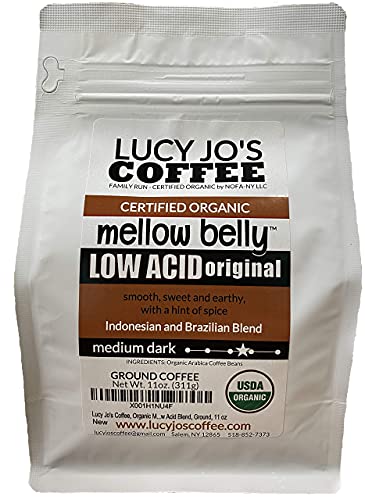
Lucy Jo’s Organic Low Acid Coffee is my go-to pick for anyone whose stomach balks at regular coffee but still wants a rich, flavorful cup. I like that it’s made from 100% organic Arabica beans sourced from Brazil and Indonesia, roasted in small batches in Upstate New York. The medium-dark roast delivers a smooth, earthy taste with a subtle spice and sweet finish-no harsh acids. It’s certified organic, with no fillers, so you know you’re getting clean, premium beans. I’ve seen folks with acid sensitivity switch to this and actually enjoy coffee again. It’s pricier and sold in smaller 11 oz bags, but the freshness and quality justify it.
Best For: Coffee drinkers with sensitive stomachs who want a smooth, low-acid brew without sacrificing flavor or organic quality.
Pros:
- Smooth, earthy flavor with a sweet finish and subtle spice-great for those avoiding harsh acidity
- Made from 100% certified organic Arabica beans with no fillers, sourced from premium origins
- Small-batch, hand-roasted for maximum freshness and quality control in a family-run facility
Cons:
- Higher price point compared to conventional coffee brands
- Smaller 11 oz bag size offers less volume than standard coffee packages
- Limited availability outside local and regional markets
Folgers Simply Smooth® Coffee

Folgers Simply Smooth® Coffee works best for those who want a reliable, easy-to-digest coffee without sacrificing familiar flavor or switching brands. I’ve found it’s roasted to reduce irritants that can upset your stomach, delivering a mellow, balanced taste. It’s now labeled as Mild, though the formula hasn’t changed. You can buy it in 11.5 oz, 23 oz, 27 oz cans, or 31.1 oz sizes-most packaging is recyclable, but check your local rules. It’s the same consistent coffee I trust, so if you’re sensitive but loyal to classic blends, this is a practical choice that fits seamlessly into your routine.
Best For: Those seeking a gentle, easy-to-digest coffee with a mellow flavor who want to stay with a trusted brand they already know.
Pros:
- Roasted to reduce irritants that may cause stomach discomfort
- Maintains the same consistent taste and quality with a balanced, mellow flavor
- Packaging is recyclable, supporting sustainable choices where facilities exist
Cons:
- Flavor profile may be too mild for those who prefer bolder or richer roasts
- Recyclability depends on local infrastructure, limiting eco-benefits in some areas
- Rebranding from “Medium” to “Mild” may cause confusion despite unchanged formula
Four Sigmatic Gut Health Coffee 12oz
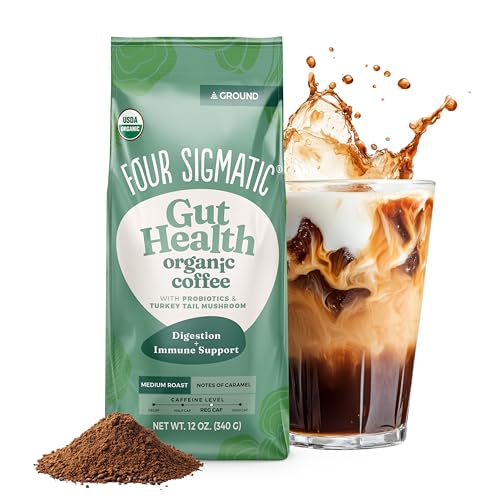
Four Sigmatic Gut Health Coffee 12oz stands out as a top choice for people with sensitive stomachs who still want a functional morning brew. I’ve found it easy on digestion thanks to its low-acid, Honduran-grown beans and added probiotics. The blend includes Chaga and Turkey Tail mushrooms-both backed by science for immune and gut support. Each serving delivers 250mg of wild-harvested Chaga, one of the most antioxidant-rich foods around. Prebiotics feed good gut bacteria, while the smooth, full-bodied taste lacks the bitter aftertaste many coffees have. It’s organic, single-origin, and works well for anyone wanting wellness benefits without changing their daily routine.
Best For: People with sensitive stomachs who want a low-acid, functional coffee that supports gut and immune health without sacrificing flavor.
Pros:
- Combines organic, low-acid coffee with probiotics and prebiotics for digestive balance
- Infused with 250mg of wild-harvested Chaga and Turkey Tail mushrooms for immune and antioxidant support
- Smooth, full-bodied taste with no bitter aftertaste, sourced from single-origin, specialty-grade beans
Cons:
- Premium price point compared to conventional coffee
- Mushroom-infused coffee may have an earthy flavor not preferred by all
- Limited availability outside online or specialty health stores
Lucy Jo’s Organic Low Acid Coffee 11 oz

If you’ve struggled to enjoy coffee without stomach discomfort, a low-acid blend like Lucy Jo’s Organic Mellow Belly might be your best bet-especially if you prioritize organic ingredients and rich flavor without the burn. I’ve found this medium dark roast smooth and easy to drink, with earthy, sweet notes and a subtle spicy kick. It’s made from 100% organic Arabica beans from Indonesia and Brazil-no fillers, just quality. Roasted by hand in small batches in Upstate New York, the 11 oz whole bean pack stays fresh and flavorful. You’ll need a grinder, but the control over grind size helps tailor your brew. It’s pricier than standard brands, but if you want clean, organic coffee that’s gentle on the gut, it’s a solid choice.
Best For: Individuals seeking a smooth, organic, low-acid coffee that’s gentle on the stomach without sacrificing rich flavor.
Pros:
- Made from 100% organic Arabica beans with no filler, ensuring high quality and clean ingredients
- Smooth, earthy flavor with sweet and spicy notes, ideal for sensitive stomachs
- Small-batch, hand-roasted in Upstate New York for maximum freshness and quality control
Cons:
- Higher price point compared to conventional coffee brands
- Sold as whole bean only, requiring a grinder for brewing
- Limited origin variety despite high-quality sourcing
Lavazza Costiera Light Roast Ground Coffee 12oz

When you’re looking for a coffee that’s easy on the stomach but still delivers a bright, clean flavor, Lavazza Costiera Light Roast Ground Coffee stands out as a solid choice. I’ve found this 12oz ground blend smooth and gentle, thanks to its light roast (intensity 2/5) and 100% Arabica beans from Central America. It’s finely ground for drip machines, so it brews cleanly without bitterness. You’ll notice floral aromas and a touch of citrus-pleasant, not sharp. Lavazza’s quality is consistent, and this option is sustainable and accessible. If you want mild acidity without flat flavor, it’s a reliable pick.
Best For: Those seeking a smooth, low-acidity light roast coffee with floral and citrus notes, ideal for morning drip brewing.
Pros:
- Smooth, aromatic flavor with low bitterness and mild acidity
- Made from 100% Arabica beans, sustainably sourced
- Finely ground for optimal performance in drip coffee makers
Cons:
- Light roast may lack depth for those preferring bold flavor
- Limited availability in some regions
- Packaging design may vary, offering less shelf consistency
VitaCup Organic Low Acid Coffee (11 oz)

I’ve found VitaCup Organic Low Acid Coffee (11 oz) works best for anyone struggling with acid-related digestive issues without wanting to sacrifice flavor or quality. Sourced from single-origin, high-altitude Guatemala, it’s USDA Organic and Fair Trade certified, so you know it’s ethically produced. The beans are dark roasted and specially processed to reduce acidity, and third-party lab tests confirm it’s free of mycotoxins. You’ll notice a smooth, chocolaty taste with a clean finish-no bitter aftertaste. It’s ground for versatility, working in drip machines, French presses, or even cold brew. Each 11-ounce bag is sealed fresh, locking in aroma and antioxidants like chlorogenic acid for added health support.
Best For: Individuals with acid-sensitive stomachs who want a smooth, high-quality coffee without compromising on flavor or ethical sourcing.
Pros:
- USDA Organic and Fair Trade certified, ensuring ethical and sustainable sourcing from single-origin Guatemalan beans
- Low acid and mycotoxin-free formula, ideal for digestive comfort and clean, lasting energy
- Versatile grind works with all brewing methods while delivering a rich, chocolaty flavor and high antioxidant content
Cons:
- Limited to one roast profile (dark roast), which may not appeal to light roast enthusiasts
- Smaller 11-ounce bag size compared to standard 12-ounce coffee packages
- Premium pricing due to organic, single-origin, and lab-tested quality standards
Cafe Don Pedro French Roast Coffee

Cafe Don Pedro French Roast Coffee stands out for those who want a smooth, full-flavored dark roast without the stomach irritation often tied to standard brews, since its naturally low acidity comes from careful roasting, not chemical processing. I find it works well in drip machines, French press, or pour-over setups-its medium grind extracts evenly. The 100% Arabica beans are stone-ground, preserving flavor and reducing irritants, thanks to chaff removal and a long, traditional roast that brings out smoky, oil-rich depth. You’ll notice a smooth, balanced taste without bitterness. Each 12-ounce can delivers a pH closer to water, making it gentler than average coffee (pH 4.85–5.10). I recommend buying multi-can packs for savings-4 cans total 3 lbs. It’s caffeine-friendly if you’re sensitive to acid but not caffeine. No chemicals alter the roast, so you get a natural, stomach-safe cup every time.
Best For: Those seeking a smooth, naturally low-acid dark roast coffee that’s gentle on sensitive stomachs and acid reflux sufferers without sacrificing rich flavor or using chemical processing.
Pros:
- Naturally low acidity achieved through traditional roasting and chaff removal, making it easier on the digestive system
- Smooth, smoky flavor with no bitterness, ideal for those who enjoy gourmet dark roast without stomach irritation
- Versatile medium grind works well in drip machines, French press, and pour-over methods
Cons:
- Limited availability in multi-can packs only, which may not suit those wanting smaller quantities
- No decaffeinated version offered for those also sensitive to caffeine
- Higher price point compared to conventional dark roasts due to artisan processing
Low Acid Coffee Ground Medium Roast 16oz

If you deal with acid reflux, heartburn, or a sensitive stomach, this low acid coffee is a practical choice-its pH of 5.3 is noticeably higher than standard coffees that can dip to 4.7, meaning it’s less likely to irritate your digestive tract. I find the medium roast strikes a solid balance-smooth and mellow, with subtle notes of chocolate, nuts, and tangerine, minus the sharp bitterness. It’s washed processed and roasted above 400°F, which helps reduce acid while preserving flavor. Each 16oz bag is lab-tested for mold and mycotoxins, so I trust what I’m brewing. It’s not flashiest, but it’s reliable, clean, and kind to my stomach.
Best For: Individuals with acid reflux, heartburn, or sensitive stomachs seeking a smooth, low-acid coffee that’s gentle on digestion.
Pros:
- Low acidity (pH 5.3) reduces gastrointestinal irritation and is ideal for sensitive stomachs
- Smooth, mellow flavor with pleasant notes of chocolate, nuts, and tangerine without harsh bitterness
- Rigorously tested for mold and mycotoxins, ensuring safety, purity, and quality
Cons:
- Flavor profile may be too mild for those who prefer bold, intense coffee
- Higher pH level might not appeal to fans of traditional, more acidic coffee tastes
- No single-serve or whole bean options mentioned, limiting format versatility
Happy Gut Coffee – Doctor-Formulated Organic Roast
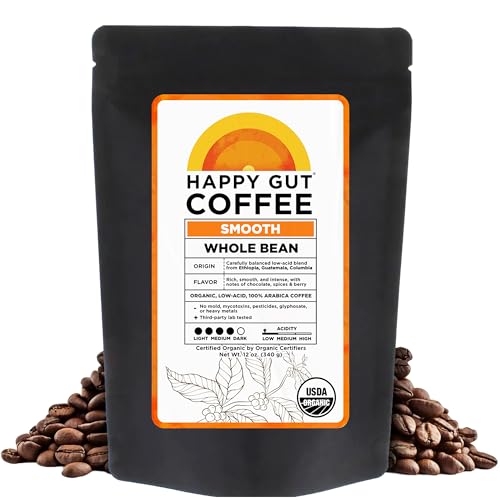
Though coffee often aggravates sensitive stomachs, Happy Gut Coffee-doctor-formulated by gut health expert Dr. Vincent Pedre-was made to change that. It uses organic, low-acid beans from Ethiopia, Guatemala, and Colombia, air-roasted in small batches to reduce chlorogenic acid and irritation. The longer roast cuts acidity naturally, so it’s easier on your gut, teeth, and digestion. Every batch is third-party tested, free from chemicals and contaminants. You get a rich, smooth cup with notes of dark chocolate, berries, and spice-bold but never bitter. It’s USDA organic, gluten-free, and comes in 12oz ground or whole bean. If regular coffee bothers you, this is a reliable, science-backed fix.
Best For: Individuals with sensitive stomachs or digestive issues who want a smooth, low-acid coffee that’s gentler on the gut without sacrificing flavor.
Pros:
- Doctor-formulated by gut health expert Dr. Vincent Pedre to reduce digestive discomfort
- USDA organic, low-acid coffee with third-party tested purity and clean ingredients
- Smooth, rich flavor with notes of dark chocolate, berries, and spice-bold yet non-bitter
Cons:
- Higher price point compared to conventional coffee brands
- Limited availability outside online channels
- Air-roasting process may result in a less intense coffee flavor for those who prefer traditional dark roasts
Factors to Consider When Choosing Coffee for Sensitive Stomach
You’ll want to pay attention to acidity levels, since high acid coffees often irritate sensitive stomachs-opt for low-acid options like Puroast or Hevla for gentler digestion. Roast type matters too, as darker roasts typically have less acid than light or medium ones, making them a go-to choice for many with digestive concerns. Beyond that, bean quality, processing methods, and specialty blends formulated for stomach comfort all play a real role in how your body responds, so it’s worth checking labels for organic beans, slow-roasted batches, or blends with added gut-friendly ingredients.
Acidity Level Matters
Since acidity plays a major role in how coffee affects your stomach, choosing a brew with a higher pH-5.3 or above-can make a real difference in reducing irritation. Regular coffee often dips to pH 4.7, which can trigger acid reflux or discomfort, especially if you’re sensitive. The key culprit? Chlorogenic acid, which boosts gastric acid production. Lower-acid coffees reduce this compound through methods like longer roasting or air roasting. Beans from low-altitude farms or volcanic soil also tend to be gentler. Look for washed-process coffees, as this step removes irritants and lowers mycotoxin levels. Brands like Puroast or Bulletproof use these methods and list pH levels on packaging. You’ll find smoother digestion without sacrificing flavor. While not a cure-all, picking a less acidic coffee is a practical, science-backed move. It’s a change you can test quickly-and one that often brings fast relief.
Roast Type Influence
When choosing coffee for a sensitive stomach, the roast type makes a real difference in how your body responds. Darker roasts lower chlorogenic acid, which can trigger stomach acid and irritation. The longer, hotter roasting breaks down acid-forming compounds, resulting in a smoother cup. Dark roast coffee usually has a higher pH-closer to neutral-than light or medium roasts, so it’s easier on your gut. Light roasts keep more natural acids like citric and malic acid, which might bother sensitive digestion. If you’re prone to discomfort, go for dark roasts, especially those using extended air-roasting. This method cuts acidity naturally, no chemicals needed. You’ll get a bolder, less acidic brew that’s gentler on the stomach. Try brands like Gentle Java or Puroast, known for low-acid dark roasts. Not all dark roasts are equal-check the process and roast level.
Bean Quality Importance
Opting for high-quality coffee beans matters more than most realize, especially if you’re dealing with a sensitive stomach. You’ll want 100% pure Arabica beans-they’re naturally lower in chlorogenic acid than Robusta, which means less gastric irritation. Look for specialty-grade beans; they’re sorted rigorously to remove defects and contaminants like mold or mycotoxins that can worsen digestive issues. Beans grown at higher altitudes mature slowly, creating a denser, more consistent bean with fewer irritants. Avoid cheap blends or unknown sources-impurities and foreign matter in low-grade coffee often trigger discomfort. Always check for transparent sourcing and recent harvest dates, as freshness supports better digestion. While price can be higher, investing in clean, high-quality beans reduces the risk of stomach upset and improves overall tolerance. Make quality a non-negotiable part of your coffee selection-it directly affects how your body responds.
Processing Method Impact
You’ve already seen how bean quality can make or break your coffee experience with a sensitive stomach-now it’s time to look at how the coffee is processed and roasted. Dark roasts help because longer, hotter roasting lowers chlorogenic acid, a compound tied to stomach irritation. This also reduces overall acidity, making the coffee gentler on your gut. Air roasting, like that used in some specialty machines, spreads heat more evenly than drum roasting and cuts acid-forming compounds more effectively. If you’re grinding at home, stone grinders are better than high-speed metal ones-they keep oils stable and reduce oxidation, which may lower gut irritants. Go for washed-process beans, too. They remove mucilage before drying, cutting down on fermentation byproducts that can increase acidity and discomfort. These steps don’t eliminate issues completely, but they lower the odds of upset-especially if you already react to bright or sour coffees.
Specialty Blends Benefit
Though not all low-acid coffees are created equal, specialty blends made for sensitive stomachs often use targeted roasting methods to cut down on chlorogenic acid, the main compound tied to gastric discomfort. You’ll find these blends roast longer or use air-roasting techniques, lowering acidity while preserving caffeine. Most run at a pH of 5.3 or higher, making them gentler than standard coffee that can drop below 5.0. They’re typically 100% Arabica, which is smoother and naturally less acidic than Robusta. That matters if you’re prone to heartburn or acid reflux. Some brands also test their beans through third parties to rule out mold, mycotoxins, or other irritants-common triggers you might not even know are affecting you. These steps mean fewer surprises and more consistency in every cup. While they cost a bit more, the trade-off is often worth it when your stomach reacts poorly to regular coffee.
Certifications Ensure Safety
When choosing coffee for a sensitive stomach, looking for trusted certifications can make a real difference in what ends up in your cup. USDA Organic means no synthetic pesticides or fertilizers were used, reducing chemical exposure that might irritate your gut. Fair Trade certification doesn’t just support ethical farming-it often signals better bean handling and cleaner processing. If you’re prone to digestive issues, go for brands with third-party lab testing; it verifies low or no mycotoxins and mold, common triggers. Certified low-acid coffees, like those labeled pH-balanced above 5.0, are less acidic than average coffee (pH 4.7–5.1) and easier on the stomach. Look for the Non-GMO Project Verified mark too-it guarantees no genetically modified ingredients, giving you a more predictable, cleaner cup. These certifications aren’t just labels-they’re actionable assurances that matter for sensitive digestion.
Frequently Asked Questions
Can I Drink Low Acid Coffee Every Day?
Yes, you can drink low acid coffee every day if it agrees with your stomach. Brands like Puroast and Simpatico use special roasting or water processes to reduce acidity, which may help sensitive digestive systems. You’ll want to monitor how your body reacts, though-some people still experience discomfort. It’s not a cure-all, but it’s a practical option worth trying. Balance benefits with personal tolerance.
Does Low Acid Coffee Taste Different From Regular Coffee?
Yes, low acid coffee does taste different from regular coffee. It’s usually smoother and less sharp, with fewer bitter or sour notes. You’ll notice a mellow flavor, often with mild sweetness or earthy tones. Some brands, like Puroast or HealthWise, use special roasting or water processing to reduce acidity while preserving body. If you’re used to bright, bold coffee, the change might feel subtle but distinct-especially on the finish.
Is Low Acid Coffee Safe for Acid Reflux?
Yes, low acid coffee is generally safer for acid reflux than regular coffee. You’ll find it easier on your stomach because producers steam or roast beans to reduce acidity, like in brands such as Puroast or Gentle Java. While it won’t stop reflux entirely, it helps minimize triggers. Choose dark roasts-they’re naturally lower in acid. Avoid adding citrus or spicy flavors. Monitor your response, since individual results vary.
How Is Low Acid Coffee Processed to Reduce Acidity?
You reduce coffee’s acidity through water-based processing or steam treatment before roasting. Methods like the Swiss Water Process remove chlorogenic acids, while others use steam to alter acid structure. Some brands, like Puroast or HealthWise, use slow roasting to naturally lower acidity. These methods don’t strip flavor entirely but can dull brightness. Regular dark roasts also reduce acid, though less consistently. Always check pH labels-true low-acid coffees test below 5.0.
Can I Brew Low Acid Coffee in a Keurig?
Yes, you can brew low acid coffee in a Keurig. Just use pods labeled as low acid, like Puroast or McCafé Low Acid, or fill a reusable K-Cup with your preferred low acid ground coffee. Regular Keurig settings work fine, but brewing with cold water or using a cold brew pod yields even smoother, less acidic results. Make sure the pod is compatible with your model to avoid leaks or poor extraction.