Best Coffee Grinders for Chemex That Deliver Perfect Brews
You’ll want a burr grinder for consistent medium-coarse grinds, since blade models like the SHARDOR or Amazon Basics can’t deliver the uniformity Chemex needs. The OXO Brew Conical Burr offers 15 settings, a low-profile design, and a memory function that saves your preferred grind. Manual grinders like the 40-setting Mini offer precision and portability but suit smaller batches. Even entry-level burrs outperform blades by reducing fines and boulders. For repeatable results, adjust in small steps and clean regularly. Choosing the right model means matching grind quality, capacity, and ease of use to your routine. Different grinders suit different needs-your ideal setup depends on dose size, noise tolerance, and how often you brew.
We are supported by our audience. When you purchase through links on our site, we may earn an affiliate commission, at no extra cost for you. Learn more. Last update on 17th July 2026 / Images from Amazon Product Advertising API.
Notable Insights
- Conical burr grinders deliver the uniform medium-coarse grind essential for balanced Chemex brewing.
- Aim for grinders with 15+ settings and micro-adjustments to precisely target 700–800 micron particles.
- OXO Brew Conical Burr Grinder offers consistent results, a 12-ounce hopper, and user-friendly timing.
- SHARDOR’s 16-setting burr grinder provides portion control and easy cleaning for repeatable Chemex batches.
- Manual grinders like the 40-setting ceramic burr model offer portability and precision for small Chemex brews.
SHARDOR Electric Coffee Grinder with Timed Grind

If you’re looking for a no-fuss grinder that delivers consistent coarse grounds ideal for Chemex brewing-without waking the household-this SHARDOR model is a solid pick. I use it daily, and the 63 dB motor stays quiet, unlike louder blade grinders. The timed rotary knob lets me dial in 10–30 seconds for 8–10 cups, and the dual stainless steel blades crush beans evenly. It handles spices like cumin or cinnamon too, which saves me counter space. Just don’t wash the base-only the removable bowl is hand-wash safe. At 2.5 oz capacity, it’s best for one brew at a time. With a 2-year warranty and simple care, it’s a pragmatic staple.
Best For: Home brewers seeking a quiet, no-fuss electric grinder with consistent coarse grinding and multi-use functionality for coffee and dry spices.
Pros:
- Super quiet 63 dB motor ideal for early mornings or shared spaces
- Timed rotary knob with precision control for consistent grind size
- Multi-functional with dual stainless steel blades for coffee, spices, and grains
Cons:
- Limited 2.5 oz capacity, suitable only for single brews
- Base is not washable-only removable bowl is hand-wash safe
- Not ideal for espresso due to coarse-to-fine range limitations
Amazon Basics Electric Coffee Grinder

The Amazon Basics Electric Coffee Grinder is a solid choice if you’re new to pour-over brewing or need an affordable, no-frills grinder for your Chemex. It’s compact, lightweight, and fits easily on most countertops. With stainless steel blades and a 2.1-ounce capacity, it grinds 30 grams of beans in about 10 seconds-fast enough for daily use. The clear safety lid lets you see the grind level, which helps avoid uneven results. While it lacks precise settings, it’s consistent for drip-style coffee. I’ve used it for spices and herbs too, which adds versatility. It’s not fancy, but for under $20, it gets the job done without fuss.
Best For: Beginners or budget-conscious coffee lovers who want a simple, compact grinder for pour-over or drip coffee without spending much.
Pros:
- Grinds 30 grams of coffee beans in 10 seconds with consistent results for drip-style brewing
- Clear safety lid allows visibility during grinding to monitor consistency
- Versatile enough to grind spices, herbs, and nuts in addition to coffee beans
Cons:
- Lacks adjustable grind settings for precision brewing methods like espresso or French press
- Plastic construction feels lightweight and less durable over time
- Can produce inconsistent grind size with longer grinding sessions due to blade design
OXO Brew Conical Burr Grinder

You’ll want a grinder that delivers consistent, coarse grinds with precision if you’re brewing pour-over coffee like Chemex, and the OXO Brew Conical Burr Grinder fits that need well. I use its 15 settings to fine-tune grinds, and the stainless steel burrs give even results every time. The timer remembers my last grind, so I just press one button. It holds 12 ounces of beans, and the tinted hopper blocks UV light to keep them fresh. The catch? It’s pricier than blade grinders, but it’s built to last and works cleanly thanks to its static-reducing design.
Best For: Coffee enthusiasts who prioritize consistent grind quality and convenience for pour-over, drip, or French press brewing.
Pros:
- Stainless steel conical burrs deliver uniform grinds across 15 precision settings
- One-touch automatic timer remembers last setting for quick, consistent use
- UV-blocking hopper and static-reducing design preserve bean freshness and minimize mess
Cons:
- Higher price point compared to blade grinders and entry-level burr models
- Limited grind speed for high-volume or commercial use
- Matte finish may show fingerprints or smudges over time
Mini Manual Coffee Grinder with 40 Settings

Compact and precision-built, the Mini Manual Coffee Grinder with 40 Settings suits coffee lovers who value control and portability without sacrificing grind quality. I use it for Chemex, and the ceramic conical burr delivers consistent results with minimal heat. Its 40 external settings let me fine-tune the grind fast, which matters for pour-over. At just 325g, it’s light enough to toss in a bag for travel or camping. The 30g capacity works for one or two cups, but if you’re brewing for more, you’ll need an electric grinder. I clean it with the included brush-never water-to protect flavor. Made by CEVING, this model (MCG-01) focuses on practical innovation.
Best For: Coffee enthusiasts who prioritize portability, precision grind control, and manual brewing across various methods like pour-over, espresso, and French press.
Pros:
- 40 external grind settings allow quick, precise adjustments for different brewing methods
- Ceramic conical burr ensures consistent grinding with minimal heat buildup, preserving coffee flavor
- Ultra-lightweight and compact design makes it ideal for travel, camping, and on-the-go use
Cons:
- 30g capacity limits use to one or two servings, not suitable for larger groups
- Manual operation requires more effort and time compared to electric grinders
- Not dishwasher-safe; requires dry cleaning to maintain flavor integrity, which may limit deep cleaning options
Cuisinart Electric Burr Coffee Grinder (DBM-8P1)
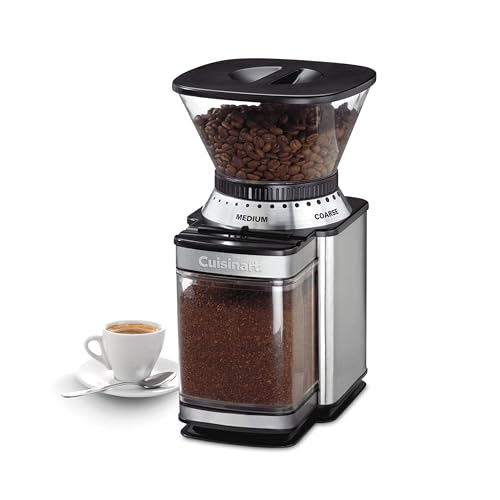
While it’s discontinued, the Cuisinart DBM-8P1 was a solid pick for home brewers who wanted consistent, uniform grounds without spending top dollar-especially useful for Chemex, where a steady medium-coarse grind matters most. I liked its 18-setting dial, which gave me precise control, and the flat burr mill delivered even particles. The 8 oz. hopper held enough beans for up to 18 cups, and the automatic shutoff kept grinds from overheating. It’s BPA-free, easy to clean with removable parts, and includes a brush and scoop. Though it’s out of production, you might find one used-just check for wear on the burrs.
Best For: Home brewers seeking a reliable, mid-range electric burr grinder for consistent results across various brewing methods, especially Chemex.
Pros:
- 18-position grind dial with flat burr mill ensures precise, uniform grounds for optimal flavor extraction
- Automatic shutoff and BPA-free construction enhance safety and convenience
- Removable parts, included cleaning tools, and compact design make maintenance and storage easy
Cons:
- Discontinued by manufacturer, limiting availability to used or refurbished units
- Potential for burr wear in used models, affecting grind consistency
- Hopper capacity (8 oz) may require refilling for larger brewing batches
SHARDOR Electric Burr Coffee Grinder (16 Settings)
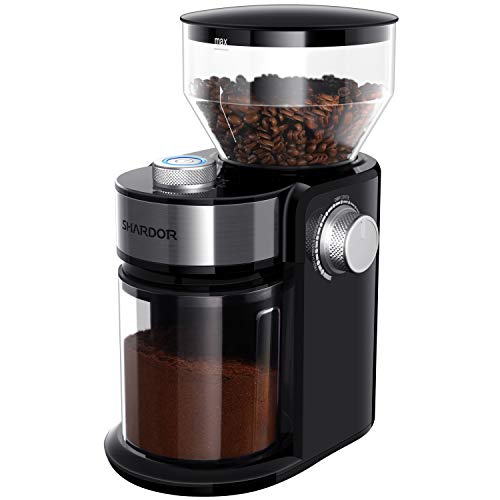
If you’re using a Chemex and want consistency without spending too much, the SHARDOR Electric Burr Coffee Grinder stands out for its 16 precise grind settings and flat burr system, which deliver uniform particles that help control extraction. I’ve found it handles everything from coarse French press to fine espresso, though Chemex works best in the medium range. The 2-14 cup selector prevents waste, and cleanup’s easy-just remove the burr and hopper, use the included brush. At just over 2 pounds and compact dimensions, it fits small kitchens. It’s not the quietest, but for under $50, it’s reliable and gets the job done without fuss.
Best For: Home coffee enthusiasts seeking an affordable, compact, and consistent electric burr grinder for multiple brewing methods, especially pour-over like Chemex.
Pros:
- 16 precise grind settings with flat burrs ensure uniform particle size for balanced extraction
- Adjustable 2-14 cup selector minimizes waste and supports portion control
- Easy to clean with removable burr, hopper, and included cleaning brush
Cons:
- Not the quietest grinder, which may be disruptive in quiet environments
- Plastic build feels lightweight, potentially less durable over time
- Limited grind size range for very fine espresso or ultra-coarse French press extremes
OXO Brew Compact Conical Burr Coffee Grinder

I reach for the OXO Brew Compact Conical Burr Coffee Grinder when I need consistent, Chemex-ready grinds without sacrificing counter space or control. It’s small-just 4 inches wide and under 11 inches tall-but holds 50 grams of beans, enough for 6 cups. Stainless steel conical burrs and 15 settings with 29 micro-adjustments let me fine-tune for a perfect medium-coarse Chemex grind. The chuteless design and removable burrs make cleaning simple. I appreciate the integrated spout for mess-free pouring and the cord storage for tidiness. Tritan™ Renew parts use recycled materials, which helps reduce waste. It’s built for everyday use and works well under standard 120V power.
Best For: Coffee lovers who want consistent, high-quality grinds with precise settings in a compact, eco-conscious design that fits small kitchens or minimalist countertops.
Pros:
- Compact size and cord storage make it ideal for small spaces while still delivering consistent, precise grinds
- Stainless steel conical burrs with 15 settings and 29 micro-adjustments ensure excellent grind quality for various brew methods
- Made with Tritan™ Renew from recycled materials and features removable, easy-to-clean components for better sustainability and maintenance
Cons:
- Limited hopper capacity of 50 grams may require refills for larger batches
- No built-in timer or dosing system, requiring manual weighing or estimation
- Higher price point compared to blade grinders or basic burr models
Wancle Electric Coffee Grinder (Black)
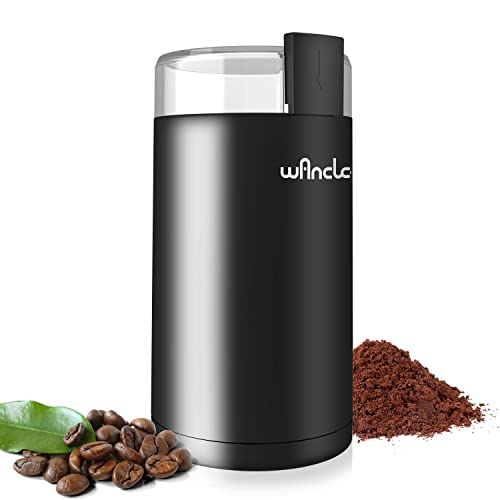
The Wancle Electric Coffee Grinder (Black) is a solid pick for Chemex brewers who want consistent coarse grinding without spending a lot. I use it daily, and its 150-watt pure copper motor powers through beans quickly. The stainless steel blade and bowl prevent overheating, which helps preserve flavor. I appreciate the transparent lid-it lets me see when I’ve hit the right grind size. With one button, I start and stop the grinding exactly when needed, giving me control over texture. It’s compact, lightweight, and fits neatly on my countertop. While it’s not a burr grinder, it handles coffee, spices, and herbs well, making it a practical, budget-friendly choice for simple, reliable performance.
Best For: Home coffee enthusiasts seeking an affordable, compact electric grinder for consistent coarse grinding, especially Chemex and drip coffee brewers.
Pros:
- Powerful 150-watt pure copper motor delivers quick, efficient grinding without overheating
- Transparent lid and one-button control allow real-time monitoring and precise texture customization
- Compact, lightweight design with stainless steel components makes it durable and space-saving for multi-use grinding
Cons:
- Blade grinder design may produce inconsistent particle size compared to burr grinders
- Limited capacity of 60 grams may require multiple batches for larger brewing needs
- Not ideal for espresso due to inability to achieve very fine, uniform grinds
Hamilton Beach Fresh Grind Coffee Grinder

Hamilton Beach Fresh Grind Coffee Grinder suits those who want a no-frills, budget-friendly option for grinding beans for Chemex without sacrificing reliability. I use it daily, and the stainless steel blades deliver consistent results for 8–12 cup batches. It’s simple: press the button to grind, release to stop-nothing fancy, but it works. The lid locks in place, which is a safety plus. I toss the removable bowl and lid in the dishwasher, saving time. At under 1.5 pounds, it’s light but stable. While it’s a blade grinder, so grind uniformity isn’t perfect, it’s solid for the price.
Best For: Budget-conscious coffee lovers seeking a reliable, no-frills grinder for daily use with easy cleanup.
Pros:
- Durable stainless steel blades handle 8–12 cup batches consistently
- Simple one-button operation with safety-lock lid
- Dishwasher-safe removable bowl and lid for quick cleaning
Cons:
- Blade grinder design means less uniform grind compared to burr grinders
- Limited grind size control, not ideal for espresso or pour-over precision
- Plastic build feels light, may lack durability over time
OXO Brew Conical Burr Coffee Grinder
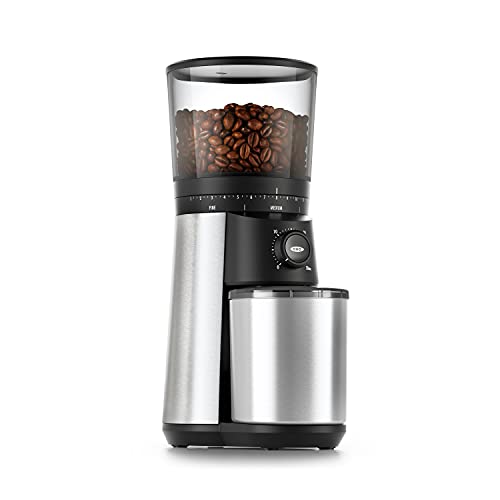
When you need a grinder that consistently delivers the right coarseness for a clean, balanced Chemex brew, the OXO Brew Conical Burr Coffee Grinder stands out as a top choice. I rely on its stainless steel conical burrs for uniform grounds, which improve flavor extraction. With 15 settings, I can fine-tune from espresso to coarse Chemex grinds. The 12-ounce hopper has a tinted cover that blocks UV light, keeping beans fresh. It fits under cabinets at just over 12 inches tall. A one-touch start and memory function save time, and the DC motor won’t overheat. Wirecutter named it “Our Pick” in 2025 for its balance of performance, build, and ease of use.
Best For: Home coffee enthusiasts who want consistent, high-quality grinds for a variety of brew methods with a sleek, space-saving design.
Pros:
- Uniform grind quality thanks to stainless steel conical burrs and 15 precise settings, ideal for methods like Chemex, French press, and espresso
- UV-blocking hopper lid and airtight trap door preserve bean freshness and prevent spills
- Compact, cabinet-friendly design with one-touch operation and memory function for ease of use
Cons:
- Upper-end price point compared to blade grinders or entry-level burr grinders
- Plastic components in the hopper may feel less durable compared to all-metal builds
- Not suitable for grinding directly into small portafilters without removing the hopper
Factors to Consider When Choosing a Coffee Grinder for Chemex
You need a grinder that gives you precise control over grind size since Chemex brewing works best with a consistent medium-coarse setting. Look for models with quality burr types-like flat or conical burrs-that crush beans evenly, because inconsistent grinds can lead to under or over-extraction. Also consider how much beans you’ll grind at once, how easy it is to clean, and whether features like dosing cups or removable chambers save you time in daily use.
Grind Size Precision
While achieving the right grind size matters for any brew method, it’s especially important with a Chemex due to its medium-coarse requirement-typically 700 to 800 microns-to match the 3–4 minute brew window. You need consistent particles so water flows evenly through the bed, which the Chemex’s thick filter already slows. If your grind isn’t uniform, fines over-extract while larger bits under-extract, leading to bitter, weak flavors. Blade grinders won’t cut it-they chop unevenly and create inconsistent results. You’ll want a burr grinder with micro-adjustments instead, letting you tweak the grind in ~25-micron steps for accuracy. This control helps you hit and maintain that ideal medium-coarse range. A stable grind profile keeps extraction balanced, so your coffee tastes clean and bright without off-notes. For Chemex, precision isn’t overkill-it’s essential.
Burr Type Quality
Grind consistency starts with the burrs. Choose conical burrs-they crush beans gently, creating uniform particles while preserving essential oils, critical for Chemex’s clean, bright brews. They generate less heat, preventing flavor distortion. Flat burrs also deliver even grinds but tend to hold onto more grounds, risking flavor carryover that can muddy your pour-over clarity. For lasting performance, pick grinders with stainless steel burrs; they stay sharp longer and resist wear, minimizing uneven extraction. Look for precision-adjustable settings with micro-tuning, so you can hit that ideal medium-coarse Chemex grind. Entry-level models may skimp on burr quality, leading to misalignment over time-this disrupts consistency and promotes channeling in the filter. Brands like Baratza (with their Encore) and Fellow (Ode Gen 2) offer reliable conical burr designs built for pour-over excellence. Avoid cheap blade grinders-they simply can’t deliver the control you need.
Consistency Of Grinds
Uniformity in particle size makes or breaks a Chemex brew. You need even grinds so water extracts flavor consistently-no bitter fines or weak chunks. Burr grinders crush beans between two rings, giving you far more uniform particles than blade grinders, which chop unevenly. For Chemex, aim for a medium-coarse setting, around 0.75–1 mm, like sea salt. Inconsistent grinds mess up flow rate, cause channeling, and leave flavor behind. High-end grinders with stable burrs and low runout (under 0.1 mm) deliver the precision you need. Models like the Baratza Encore or Fellow Ode sell well because they maintain tight tolerances and produce balanced, clean cups. Cheap grinders wobble or misalign, creating fines and boulders. That ruins clarity. If your brew tastes off or stalls, check grind consistency first. It’s one of the fastest ways to improve your pour-over.
Bean Capacity Options
Most Chemex brews need 20–30 grams of coffee, so pick a grinder that can handle at least that much in one go. If you’re brewing a full 6- to 8-cup pot, go for a model with a minimum 30-gram capacity to avoid mid-brew refills. For frequent use, bean hoppers holding 8–12 ounces (227–340 grams) let you brew multiple times without topping off-great for mornings with guests. If you’re brewing solo or in smaller batches, grinders like the OE Lido or Niche Zero let you dial in as low as 15 grams, reducing waste and boosting precision. A removable hopper helps you pre-measure beans, making it easier to hit consistent Chemex ratios. Just keep in mind: larger hoppers can let beans stale faster. Look for UV-blocking or airtight designs like those on the Baratza Vario or Fellow Ode to protect freshness between brews.
Ease Of Cleaning
You’ll want a grinder that’s simple to clean, since leftover oils and stuck-on grounds can spoil your Chemex’s clean taste over time. Look for models with removable burrs or grinding chambers-these let you reach hidden spots where residue builds up. A dishwasher-safe grind bowl makes maintenance easier and helps prevent rancid oils from tainting your next batch. Chuteless designs reduce trapped grounds, so wiping down after use takes seconds. Grinders with static-fighting materials in the grounds bin keep coffee from clinging, cutting down mess and extra wiping. Smooth, seamless interiors without nooks or ridges mean fewer places for particles to hide, so a quick brush or wipe works. Brands like Baratza Encore and Fellow Ode offer these features, balancing practicality with performance. You’ll save time and keep flavors pure with smart, easy cleaning built into the design.
Adjustability Features
Since a Chemex relies on a medium-coarse grind for balanced extraction, choosing a grinder with precise adjustability matters more than with less finicky brewing methods. You’ll want at least 15 settings to hit the right grind size, but micro-adjustments between clicks give you better control for tuning to Chemex’s 3-4 minute brew window. Uniform particles are key-uneven grinds cause sour and bitter notes because paper filters highlight inconsistencies. That’s why conical burr grinders outperform blade types; they deliver the evenness you need. Look for grinders with stepless or fine stepped adjustments-models like the Baratza Encore or 1Zpresso J-Max let you repeat settings exactly, so your coffee stays clean and balanced. Consistency and precise tuning aren’t luxuries here-they’re essentials for nailing the Chemex’s bright, full-bodied profile.
Noise Level Consideration
Ever wonder why some grinders feel louder than others, even when they’re both on the countertop? Noise matters, especially if you’re brewing early and don’t want to wake the house. Look for grinders under 65 dB-those are quiet and perfect for stealthy mornings. Blade grinders? They’re loud, often above 80 dB, because they chop beans fast and unevenly. Stick with conical burr grinders instead; they grind slower and quieter than flat burrs. Some models even cut noise by up to 20 dB thanks to insulated bodies and slower motors. Keep in mind: longer grind times add up in sound exposure, even if the dB level is low. So if peace and quiet are priorities, pick a grinder built for low noise-like the Baratza Encore ESP or the 1ZPresso Q2-your ears and household will thank you.
Brew Method Compatibility
When brewing with a Chemex, grind size and consistency directly impact extraction, so choosing a grinder that delivers a uniform medium-coarse texture-like coarse sea salt-is essential. You need consistent particles to avoid channeling, where water flows unevenly through the bed, pulling out bitter or weak flavors. That’s why blade grinders won’t cut it-they chop unevenly and create fines. Stick with a burr grinder, especially conical, and set it between 12 and 15 on most models for the right texture. This grind range supports the 3–4 minute brew time without over-extraction or clogging. Also, pick a grinder with at least a 30-gram hopper capacity so you can handle a full 6- to 8-cup Chemex batch in one go. Less re-grinding means fresher, more even results.
Frequently Asked Questions
Can I Use a Blade Grinder for Chemex?
No, you shouldn’t use a blade grinder for Chemex. It chops beans unevenly, leading to inconsistent grounds that cause over- and under-extraction. You’ll get bitter and weak flavors in the same cup. A burr grinder gives uniform particles, which is essential for Chemex’s pour-over method. Models like the Baratza Encore or OXO Brew offer precise settings and reliable performance. Save the blade grinder for simpler methods, not pour-over.
How Do I Clean My Coffee Grinder?
You clean your coffee grinder by unplugging it first, then removing the hopper and burrs. Brush out coffee grounds with a soft brush-don’t use water unless the model’s manual says it’s safe. For stuck oils, grind uncooked rice or use a food-safe cleaning tablet. Wipe the outside with a dry cloth. Reassemble only when fully dry. Regular cleaning keeps grind consistency sharp and prevents flavor contamination.
Does Grind Size Affect Coffee Strength?
Yes, grind size affects coffee strength-finer grinds increase surface area, extracting more flavor and often making coffee taste stronger. But too fine can cause over-extraction, leading to bitterness. Coarse grinds may under-extract, yielding weak, sour coffee. You need the right balance. For pour-over like Chemex, a medium-coarse grind works best. Adjusting your grinder-say, a Baratza Encore or Fellow Ode-gives you control and better results.
Is It Worth Buying a Manual Grinder?
Yes, it’s worth buying a manual grinder if you value portability, quiet operation, and budget-friendly pricing. You’ll get consistent grind size with models like the 1Zpresso JX or Timemore C2, which suit pour-overs. They take effort and time, though-more than electric grinders. If you brew daily or want convenience, an electric burr grinder may be better. You trade speed for cost and control.
How Often Should I Replace Grinder Burrs?
You should replace grinder burrs every 500 to 1,000 hours of use, depending on how often you grind and how hard the beans are. If you’re using your grinder daily, that’s roughly every 1–2 years. Dull burrs give uneven grounds, which hurt extraction and flavor. You’ll notice your coffee tasting flat or inconsistent. Steel burrs last longer than ceramic, but both wear down. Check your grinder’s manual-Baratza, for example, offers burr replacement services.