Best Coffee Machines for Espresso That Deliver Café-Quality Shots
You’ll get café-quality espresso by choosing machines like the CASABREWS 20 Bar or SHARDOR 20 Bar, which deliver 15–20 bars of pressure and feature solid build, quick heat-up times, and professional steam wands for real microfoam. Avoid lower-pressure models like the KEENSTAR 3.5Bar-they can’t extract properly. Look for temperature control, a sturdy portafilter, and easy maintenance. Machines with removable tanks and auto-purge help daily use. Your needs-space, milk drinks, ease-will shape the best pick. There’s more to think about based on your routine.
We are supported by our audience. When you purchase through links on our site, we may earn an affiliate commission, at no extra cost for you. Learn more. Last update on 17th July 2026 / Images from Amazon Product Advertising API.
Notable Insights
- Look for espresso machines with 20-bar pressure pumps and precise extraction control to achieve café-quality crema and flavor.
- Choose models with pre-infusion and NTC temperature control for consistent, balanced shots across roast profiles.
- Opt for machines with professional steam wands delivering 20-bar pressure to create velvety microfoam for lattes and cappuccinos.
- Select compact, stainless steel designs with removable water tanks and accessible components for easy maintenance and countertop fit.
- Prioritize user-controlled brewing with manual or semi-automatic settings to customize grind, dose, and extraction time for barista-level results.
CASABREWS 20 Bar Espresso Machine with Steam Frother

If you’re looking for a compact, no-fuss espresso machine that still delivers professional-level pressure, the CASABREWS 20 Bar Espresso Machine is a solid pick-especially if you have limited counter space or want a straightforward setup for home or office use. I use its 20-bar Italian pump to pull rich, crema-topped shots daily. The built-in gauge helps me tweak extraction, while the steam wand textures milk well for lattes or cappuccinos. It heats up fast, and the 34 oz tank lets me brew multiple cups. Just remember: after steaming, I run hot water to cool it down-keeps things stable. Not dishwasher-safe, but cleaning’s easy. Perfect for small kitchens.
Best For: Home and office espresso lovers seeking a compact, easy-to-use machine with professional 20-bar pressure and milk-steaming capability in a small footprint.
Pros:
- Delivers rich, crema-rich espresso with a reliable 20-bar Italian pump and real-time pressure monitoring
- Compact design and removable water tank make it ideal for small kitchens or office use
- Steam wand effectively creates microfoam for lattes and cappuccinos, with a hot water function for cleaning or tea
Cons:
- Not dishwasher safe, requiring manual cleaning for maintenance
- Requires cooldown steps after steaming to avoid overheating issues
- Limited to ground coffee input, lacking a built-in grinder for whole beans
Ninja Espresso & Coffee Maker (CFN601)
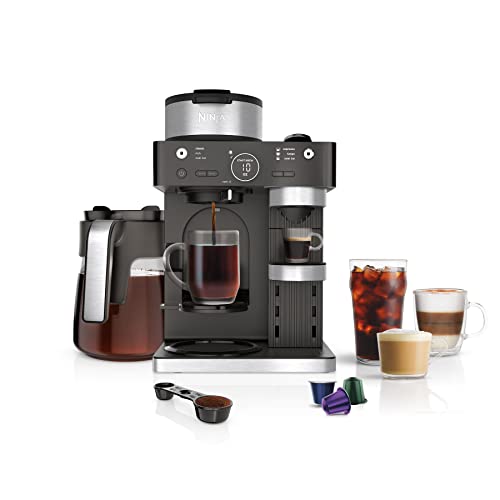
I prefer the Ninja Espresso & Coffee Maker (CFN601) when I need a single machine that handles both espresso and full carafes without taking up extra counter space. It pulls solid espresso with 19-bar pressure and brews everything from single cups to 12-cup carafes. I use Nespresso capsules or ground coffee-switching between them is easy. The fold-away frother makes lattes and cappuccinos without clutter. A removable reservoir, dishwasher-safe parts, and a capsule bin simplify cleanup. It’s compact but fits tall mugs. Just know it only works with Nespresso Original pods, not other types.
Best For: Home baristas seeking a space-saving, versatile machine that brews both high-pressure espresso and full carafes with ease.
Pros:
- Brews both espresso (using Nespresso Original capsules) and coffee (from ground beans) with 19-bar pressure extraction
- Compact design with fold-away frother and adjustable cup tray fits tall mugs and saves counter space
- Removable water reservoir and dishwasher-safe parts simplify cleaning and maintenance
Cons:
- Compatible only with Nespresso Original capsules, not other pod types or brands
- No built-in grinder, requiring separate purchase for fresh coffee bean grinding
- Capsule storage bin holds up to 20 used pods, which may require frequent emptying for heavy users
KEENSTAR 3.5Bar Espresso Machine with Milk Frother

The KEENSTAR 3.5Bar Espresso Machine suits small-space brewers who want a compact, no-frills setup without sacrificing core espresso functions. I use its 800W heater to brew 1–4 cups in under 2 minutes, though it only hits 3.5 bars-less than most semi-automatics. It works best with medium-ground coffee and needs the filter locked in place. The steam wand froths milk in 40 seconds, but I must clean it right after to avoid clogs. I skip the dishwasher since nothing is safe there. At 9.4 x 6.1 x 13.3 inches, it saves counter space, and the single knob makes operation simple. I don’t overload the 240ml tank-it leaks if I do.
Best For: Small-space brewers seeking a compact, straightforward espresso machine with essential features and quick milk frothing.
Pros:
- Compact design saves counter space and fits well in small kitchens
- Fast brewing time of under 2 minutes for 1–4 cups with an 800W heating element
- Efficient steam wand froths milk in 40 seconds and features a heat-resistant silicon pad
Cons:
- Lower 3.5 bar pressure compared to standard espresso machines affects extraction quality
- Not dishwasher safe, requiring manual cleaning and regular maintenance to prevent clogs
- Limited water capacity of 240ml and potential for leakage if overfilled
SHARDOR 20 Bar Espresso Machine with Milk Frother

You’ll find the SHARDOR 20 Bar Espresso Machine with Milk Frother works best if you want strong, café-style espresso without spending a lot on a high-end machine. I use its 20-bar pump and 1350W motor to pull consistent shots, and the NTC temperature control helps avoid bitterness. The 51mm portafilter fits standard grounds, and the steam wand froths milk well for lattes or cappuccinos. It’s compact, fits under cabinets, and heats up fast. I appreciate the one-touch operation and auto shutoff, though cleaning takes a few minutes daily. It’s not dishwasher-safe, so I wipe it down after each use. Great for home or office.
Best For: Home and office users seeking an affordable, compact espresso machine that delivers strong, café-style espresso with manual milk frothing capabilities.
Pros:
- Powerful 20-bar pump and 1350W motor ensure consistent espresso extraction
- Compact stainless steel design fits under cabinets and includes a one-touch brewing system with auto shutoff
- Professional steam wand enables latte art and creamy milk frothing for cappuccinos and lattes
Cons:
- Not dishwasher safe, requiring manual cleaning after each use
- 51mm portafilter is smaller than the commercial standard, limiting puck size
- Daily maintenance and periodic descaling are necessary to maintain performance
Gevi 20 Bar Espresso Maker with Milk Frother

Equipped with a 20-bar pressure pump and NTC temperature control, the Gevi 20 Bar Espresso Maker delivers consistent extraction for those who want café-quality espresso at home without stepping into the high-end machine price range. I use its pre-infusion feature and built-in pressure gauge to fine-tune shots, while the steam wand gives me smooth microfoam for lattes and cappuccinos. It’s compact, fits under most cabinets, and heats quickly. The 51mm portafilter works fine, though it’s smaller than commercial 58mm ones. I clean the frothing nozzle regularly since it’s not dishwasher-safe. For under $200, it’s reliable, especially with the 12-month warranty and lifetime support.
Best For: Home espresso enthusiasts seeking a budget-friendly, compact machine with professional features for café-quality drinks without the high price tag.
Pros:
- Delivers consistent extraction with 20-bar pressure, NTC temperature control, and pre-infusion for rich, barista-quality espresso
- Compact stainless steel design with a powerful steam wand that creates silky microfoam for lattes and cappuccinos
- Includes essential accessories and offers a 12-month warranty with lifetime technical support for reliable performance
Cons:
- 51mm portafilter is smaller than professional 58mm standards, limiting compatibility with some accessories
- Not dishwasher safe, requiring manual cleaning of components like the froth nozzle
- Semi-automatic operation may have a learning curve for beginners seeking fully automated convenience
20Bar Espresso Machine with Milk Frother Silver

A 20-bar pressure pump sets this espresso machine apart, making it a solid pick for anyone who wants café-quality espresso at home without a steep learning curve. I rely on its instant heating to brew and steam back-to-back-no waiting. The upgraded steam wand delivers smooth microfoam, and the 360° detachable nozzle makes cleaning easy. I always purge the wand before and after steaming to keep it clog-free. Its compact silver build fits my counter, and the 42oz tank has a clear gauge. I use the included tamper and pitcher, which help me get consistent shots. Just don’t use harsh cleaners-it can damage the parts.
Best For: Home baristas seeking a compact, user-friendly espresso machine with professional-grade pressure and reliable steam performance for daily café-style drinks.
Pros:
- 20-bar pressure pump and instant heating enable quick, consistent espresso extraction and seamless switch between brewing and steaming
- Upgraded 360° detachable steam wand with included stainless steel pitcher ensures precise milk frothing and easy cleaning
- Compact silver design with a removable 42oz water tank and visible pressure gauge fits well in small kitchens and supports customization
Cons:
- Requires proper priming, grind size, and tamping technique for optimal results, which may challenge complete beginners
- Machine and parts are not dishwasher safe, requiring hand cleaning with mild detergent
- Limited water tank capacity may necessitate frequent refills during extended use or entertaining
Ninja Luxe Café 3-in-1 Espresso Machine
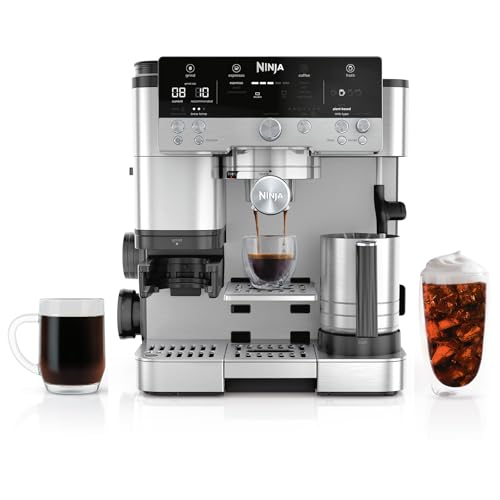
If you want one machine that handles espresso, drip coffee, and cold brew without switching devices, the Ninja Luxe Café 3-in-1 Espresso Machine makes sense. I use it daily, and it delivers consistent, café-quality results. Its Barista Assist Tech adjusts grind size, dosage, temperature, and pressure automatically, so I get balanced shots every time. The built-in conical burr grinder and assisted tamper guarantee fresh, even puck prep. I love the hands-free Dual Froth System-perfect microfoam for lattes or cold foam for iced drinks. It’s large (13.4”W), but the steel build and smart storage keep it tidy. At 31.7 lbs, it’s heavy, but worth it for triple functionality.
Best For: Coffee lovers who want a versatile, all-in-one machine that expertly brews espresso, drip coffee, and cold brew with minimal effort.
Pros:
- Combines three brewing methods (espresso, drip, cold brew) with customizable sizes and styles for maximum versatility
- Barista Assist Technology and built-in conical burr grinder ensure consistent, café-quality results with no guesswork
- Hands-free Dual Froth System creates perfect hot or cold microfoam for lattes and iced specialty drinks
Cons:
- Large footprint and heavy weight (31.7 lbs) may be cumbersome for small kitchens or limited counter space
- High upfront cost compared to single-function coffee machines
- Some advanced users may prefer full manual control over automated brewing parameters
Espresso Machine with Milk Frother 20 Bar

When you’re after rich espresso and creamy milk drinks without switching machines, the 20-bar Espresso Machine with Milk Frother stands out as a practical choice for home brewers who want both performance and consistency. I rely on its 20-bar pump and steady 9–10 bar extraction to pull balanced shots with golden crema. The NTC heating hits 90–96°C fast, in about 30 seconds, and handles light or dark roasts well. I use auto mode for quick doubles or manual for longer pulls up to 102 seconds. The steam wand delivers dry, dense microfoam-great for lattes or cappuccinos. Built with stainless steel and ABS, it’s compact, stable, and BPA-free.
Best For: Home and office users seeking a compact, high-performance espresso machine with reliable 20-bar pressure and a professional-grade steam wand for crafting espresso and milk-based drinks.
Pros:
- Delivers consistent, high-quality espresso with 9–10 bar extraction and precise NTC temperature control (90–96°C)
- Produces dense, glossy microfoam with a powerful steam wand, ideal for latte art and cappuccinos
- Compact, BPA-free design with stainless steel and ABS construction, suitable for small countertops and frequent use
Cons:
- Not dishwasher safe, requiring careful hand cleaning of components
- Manual mode customization may overwhelm beginners
- Limited to ground coffee only, lacking a built-in grinder for whole beans
De’Longhi All-in-One Coffee & Espresso Maker
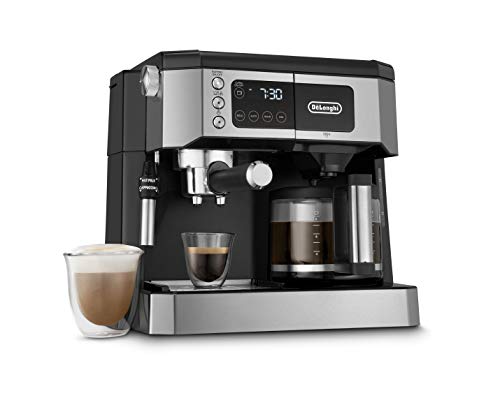
You get the most out of your morning when your coffee machine keeps pace with your routine, and the De’Longhi COM532M All-in-One Coffee & Espresso Maker is built for anyone who wants both drip coffee and real espresso without cluttering the counter with two separate machines. I use the 15-bar pump for espresso and the drip side for mornings when I’m in a rush. The dual heating system lets me brew both at once, and the steam wand froths milk well for lattes or cappuccinos. It’s not dishwasher safe, but cleanup’s easy with the removable parts. The 10-cup carafe keeps coffee warm, and the timer function lets me wake up to fresh brew. At 11 inches deep, it fits neatly on most countertops.
Best For: Home baristas and busy households seeking a compact, dual-function machine that brews both drip coffee and authentic espresso with minimal counter space.
Pros:
- Dual heating system allows simultaneous brewing of espresso and drip coffee
- Adjustable steam wand creates micro-foam for lattes and thick froth for cappuccinos
- Programmable 24-hour timer and auto-shutoff offer convenience and energy efficiency
Cons:
- Not dishwasher safe, requiring hand cleaning for all components
- 15-bar pump may be noisy during espresso extraction
- Charcoal water filter and descaling require ongoing maintenance
CASABREWS 20 Bar Espresso Machine with Steam Frother

The CASABREWS 20 Bar Espresso Machine with Steam Frother stands out as a solid pick for home baristas who want pro-level pressure without cluttering their countertop. I use its 20-bar pump and 1350W motor to pull rich, consistent shots every time. The 51mm portafilter fits standard filters, and the steam wand froths cold whole milk well for lattes or cappuccinos. It’s compact, fits in small kitchens, and the removable 43.9 oz tank makes refills easy. I clean the drip tray quickly after each use. It’s not dishwasher safe, so I wipe it down by hand. I recommend descaling regularly. Comes with a tamper, filters, and spoon-great for beginners and experienced drinkers. Ideal for gifting, especially during holidays.
Best For: Home baristas and coffee enthusiasts seeking a compact, high-pressure espresso machine with steam-frothing capabilities for crafting specialty drinks in small kitchens or offices.
Pros:
- Delivers 20-bar professional pressure for rich, consistent espresso extraction
- Compact brushed stainless steel design with a removable water tank and easy-to-clean drip tray
- Includes essential accessories like a tamper, single/double shot filters, and steam wand for milk frothing
Cons:
- No pressure gauge to monitor extraction in real time
- Not dishwasher safe, requiring hand cleaning for maintenance
- 51mm portafilter may limit compatibility with some aftermarket accessories
Factors to Consider When Choosing a Coffee Machine for Espresso
You’ll want a machine that delivers solid brew pressure-around 15 to 20 bars-since it’s key for pulling rich, balanced espresso shots. Think about the type you need: manual, semi-automatic, or pod-based, each with trade-offs in control, convenience, and price, and don’t overlook milk frothing if you enjoy lattes or cappuccinos. Size, design, and cleanup matter too, especially if counter space is tight or you’d rather skip a long scrub after brewing.
Brew Pressure Importance
Though you’ll often see espresso machines advertised with pump pressures of 15 bars or more, the ideal brewing pressure for balanced extraction falls between 9 and 10 bars. That’s when your coffee dissolves solubles efficiently without pulling out bitter compounds. Machines rated higher-like 15 to 20 bars-use extra pump power to overcome resistance in the puck, but actual brewing should stabilize at the sweet spot. Consistency matters: pressure drops or spikes during the shot can cause under-extraction or channeling, hurting flavor and crema. Look for models with steady pumps and pre-infusion, which starts low to wet the grounds evenly before ramping up. A built-in pressure gauge helps you monitor in real time, so you can tweak grind size, dose, or tamp to stay in the 9–10 bar range. It’s not about max power-it’s about control and stability where it counts.
Machine Type Options
When choosing an espresso machine, matching the type to your routine and skill level makes all the difference. If you want full control, go for a manual lever machine-expect 6–9 bars of pressure and a hands-on process ideal for enthusiasts. For precision and convenience, semi-automatic models give you 15–20 bars and let you control timing, but require grinding and tamping by hand. Super-automatic machines do most of the work with built-in grinders and one-touch brewing, great if speed and consistency matter most. Pod-based systems use pre-measured capsules, deliver 15–19 bars, and clean up fast-perfect for low effort and reliable shots. Dual boiler machines are best for heavy use, allowing brewing and steaming at once with stable temps. They’re pricier but worth it if you make multiple drinks back-to-back. Pick based on your time, skill, and how much control you really need.
Milk Frothing Capability
A good espresso machine should handle more than just pulling shots-it needs to manage milk well, especially if you’re making lattes, cappuccinos, or flat whites. You’ll want a steam wand powered by at least a 20-bar pressure system, which can create velvety microfoam in under 45 seconds-perfect for latte art. Machines with only 3.5-bar pressure will take longer and give less control, producing looser foam that’s not ideal for specialty drinks. Built-in frothers with adjustable settings let you tweak texture and temperature, so you can make dry foam or cooler foam for iced drinks. Always purge and clean the steam wand after use to prevent clogs and guarantee consistent results. Some models include a frothing pitcher and 360° rotating wands, giving you better reach and control for even aeration. Choose based on how much precision you need.
Size And Design
Consider the footprint and build of the espresso machine to guarantee it fits your kitchen space and matches your workflow. Compact models, usually under 13 inches deep and 6 inches wide, work well in tight areas. If you’ve got limited counter space, go small-but don’t sacrifice function. Most machines use stainless steel, which adds durability, resists heat, and gives a clean, professional look. Taller units, often over 14 inches high, house larger boilers for steady steam pressure. Look for one with a non-slip base-rubber or silicone feet keep it steady when the pump runs or you’re steaming milk. Many include a built-in cup warmer on top, so your shots stay hot. That’s useful if you pull multiple drinks. Size and design aren’t just about looks-they directly impact performance and fit in your routine.
Ease Of Cleaning
Keeping your espresso machine clean is essential for flavor and function, so choose one that makes maintenance simple. Look for removable water tanks and drip trays-they let you dry and wash parts easily, reducing mold and mineral buildup. Stainless steel steam wands with detachable tips are easier to wipe down and prevent clogged nozzles from dried milk. Machines with automatic shut-off help minimize residue since they power down after inactivity, cutting down on leftover heat that bakes on oils. You should rinse the portafilter and filter basket right after pulling a shot to stop coffee oils from hardening. Most models need descaling every 3–6 months, depending on how often you use them, so pick one with an alert system to remind you. These features save time and keep your machine running smoothly.
Bean Versus Pod
You’ve just cleaned out the drip tray and wiped down the steam wand-now it’s time to think about what goes into the machine. If you want full control over grind size, dose, and tamping, a bean-focused machine gives you better extraction and richer crema. Freshly ground beans also deliver more complex flavors and stronger aromas than pre-ground pods. Machines like the Breville Barista Express let you experiment with light, medium, or dark roasts from any brand. Pod systems, like Nespresso, are simpler and faster, but limit your coffee choices and generate more waste with disposable capsules. You’ll get less crema and flavor depth compared to well-pulled shots from fresh beans. Pods also restrict compatibility-stick to certain brands or types. Bean machines need more upkeep, like cleaning the grinder and adjusting settings. Pod systems cut cleanup time but trade customization for convenience. Choose based on how much control and freshness matter to you.
Frequently Asked Questions
Can I Use Non-Dairy Milk in These Espresso Machines?
You can use non-dairy milk in most espresso machines, but results vary by type. Machines with steam wands work best with oat or soy milk-they foam more reliably than almond or coconut. Look for barista-blend versions, which are formulated to froth better. Capsule or pod machines often produce weaker steam, making non-dairy foaming harder. If you rely on non-dairy milk, test your preferred brand with your machine’s steaming power to guarantee consistent texture.
How Often Should I Descale My Espresso Machine?
You should descale your espresso machine every 1–3 months, depending on how often you use it and your water hardness. If you brew daily with hard water, monthly descaling keeps scale buildup under control. Models like the Breville Barista Express or Gaggia Classic need this routine to maintain pressure and temperature stability. Use a manufacturer-approved solution, not vinegar, to avoid damaging seals. Skip descaling, and you’ll risk poor extraction, longer brew times, and costly repairs down the line.
Are the Water Tanks Removable for Easy Refilling?
Yes, you can remove the water tanks on most espresso machines for easier refilling. It’s a common feature on models like the Breville Barista Express and Gaggia Classic Pro, letting you top off without moving the whole machine. Some high-end plumbed units skip this for direct water line connections, but for flexibility and convenience, removable tanks save time and reduce spills during daily use.
Do These Machines Work With Coffee Pods or Only Beans?
You’ll find most high-end espresso machines use ground coffee or whole beans, not pods-so they’re built for freshness and control. Some models, like super-automatics, might support pods, but it’s rare among café-quality gear. If you want pod convenience, you’ll likely sacrifice customization. Dual-brew units exist but aren’t common. Stick with beans if flavor and authenticity matter. Pods save time but limit espresso quality. Check specs carefully to confirm compatibility.
Is the Milk Frother Suitable for Making Iced Lattes?
Yes, the milk frother works for iced lattes, but you’ll need to adjust your method. Since cold milk doesn’t froth like steamed milk, you’ll want to froth it first, then pour it over ice to chill quickly. Some machines, like the Breville Bambino Plus, have a cold frothing setting-check your model. Otherwise, a handheld frother or cold-foam pitcher works fine. Cold frothing won’t give you microfoam, but it delivers creamy texture suited for iced drinks.