Best Coffee Machines in India: Filter & Phin Makers Compared
For true brew lovers, manual stainless steel filter coffee makers give you full control and authentic South Indian decoction. Try the 300ml South Indian 5-Cup or compact KERAM 150ml-both use fine filters and slow drip for bold flavor. They’re durable, dishwasher-safe, and work without electricity. Electric options like the Any Morning Turkish maker are faster but can’t replicate traditional drip. Your choice depends on method, capacity, and convenience. The best picks balance build quality, ease of use, and brewing precision.
We are supported by our audience. When you purchase through links on our site, we may earn an affiliate commission, at no extra cost for you. Learn more. Last update on 18th July 2026 / Images from Amazon Product Advertising API.
Notable Insights
- Manual stainless steel South Indian filter coffee makers deliver authentic, strong decoction ideal for traditional milk-based coffee lovers.
- Models with 150ml to 400ml capacity suit small to large servings, offering control over brew strength and serving size.
- Stainless steel filters are reusable, eco-friendly, and eliminate paper waste while ensuring rich, consistent extraction.
- Dishwasher-safe options like KERAM, Eternals, and PAJAKA 200ml simplify cleaning without compromising durability.
- Electric Turkish coffee makers offer convenience but lack authenticity for traditional South Indian filter brew enthusiasts.
South Indian 5-Cup Coffee Maker (300ml)

If you’re after authentic South Indian coffee at home, the South Indian 5-Cup Coffee Maker (300ml) from Raslok is a solid pick. I use it daily, and it delivers consistent decoction through its stainless steel filter. It holds 300ml-enough for five to six small cups-making it practical for families or sharing. The build is durable, dishwasher-safe, and resistant to wear. Unlike electric machines, it’s manual, so you control the brew time and strength. It’s from Singal International, available since April 2024, with a one-year warranty. If you value tradition, simplicity, and real flavor, this brewer beats most electric models for cost and reliability.
Best For: Home brewers seeking authentic, traditional South Indian coffee with full control over brew strength and a durable, manual stainless steel coffee maker.
Pros:
- Durable stainless steel construction ensures longevity and resistance to wear
- Dishwasher-safe design allows for easy cleaning and maintenance
- Manual operation provides precise control over brewing time and coffee strength
Cons:
- Manual process may be less convenient for those accustomed to electric coffee machines
- 300ml capacity may be insufficient for larger gatherings or heavy coffee drinkers
- Requires separate purchase of coffee decoction and hot milk for complete beverage preparation
Nature’s Own Stainless Steel Phin Coffee Maker

I rely on the Nature’s Own Stainless Steel Phin Coffee Maker when I want an authentic South Indian filter coffee without the hassle of electric machines or paper filters. It’s compact, rust-resistant, and made of durable stainless steel, with a simple 3-piece design that’s easy to assemble and clean. I use 1–2 tablespoons of coffee powder and hot water, letting it drip slowly through the reusable metal filter for a strong, rich decoction. Its 250ml capacity serves 3–4 cups, perfect for home or travel. Unlike electric models, it’s fully manual, portable, and needs no power. At just 4.2 ounces, it’s lightweight and practical.
Best For: Coffee lovers seeking an authentic, manual South Indian filter coffee experience without the need for electricity or disposable filters.
Pros:
- Durable, rust-resistant stainless steel construction ensures longevity and easy maintenance
- Compact, lightweight, and portable 3-piece design ideal for home, travel, or on-the-go use
- Reusable metal filter eliminates paper waste and delivers a strong, full-bodied coffee decoction
Cons:
- Manual brewing process requires time and patience, not ideal for quick coffee needs
- Small 250ml capacity may not suit larger households or gatherings
- Learning curve for beginners to master the ideal grind and brewing technique
Eternals Stainless Steel South Indian Filter Coffee Drip Maker
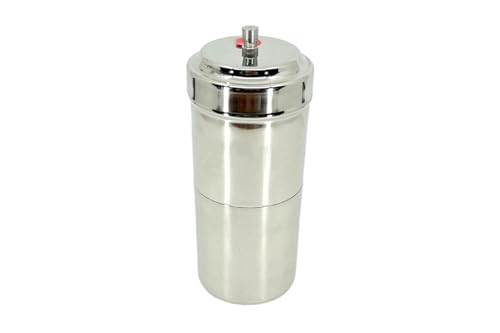
The Eternals Stainless Steel South Indian Filter Coffee Drip Maker is a compact and durable option best suited for those who prefer traditional filter coffee with a hands-on approach. I’ve found it easy to use and clean, thanks to its stainless steel build and simple design. At just 7 ounces and 6.5 inches tall, it’s lightweight and saves space. It’s been available since February 21, 2025, and holds a 4.0-star rating from 5 reviews. While it’s ranked low overall in Home & Kitchen, it’s #861 in Coffee Machines, showing steady niche appeal. I’d recommend it for daily traditional brews, especially if you value authenticity over automation.
Best For: Traditional coffee lovers who prefer a compact, manual brewing method with authentic South Indian filter coffee preparation.
Pros:
- Durable stainless steel construction ensures longevity and easy cleaning
- Compact and lightweight design saves counter space and is travel-friendly
- Ranked #861 in Coffee Machines, indicating solid niche popularity and user satisfaction
Cons:
- Low overall ranking in Home & Kitchen (#1,212,812), suggesting limited market reach
- Limited customer feedback with only 5 reviews, making broader reliability assessment difficult
- Manual operation may not appeal to users seeking automated or modern brewing features
PAJAKA South Indian Filter Coffee Maker
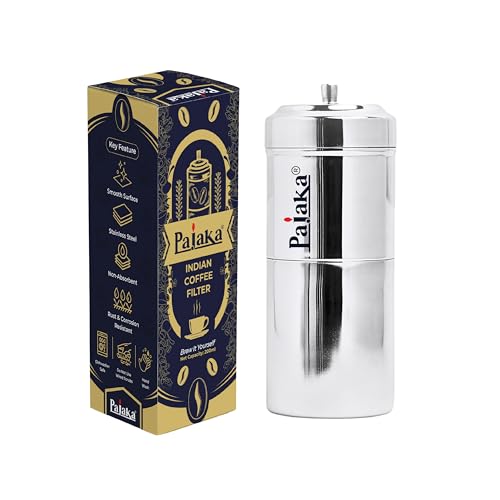
You’ll want this stainless steel filter if you prefer strong, authentic South Indian coffee without relying on electricity, since the PAJAKA South Indian Filter Coffee Maker delivers a traditional drip brew using a durable, rust-resistant design. I use it daily for 2–4 cups, and its 200 ml capacity works well for home brewing or travel. It’s dishwasher safe, made of high-quality stainless steel, and needs no power-perfect for camping or power outages. I add coarse ground coffee, pour hot water slowly, and let it drip. It’s manual, yes, but that gives me control. I’ve even used the decoction in milkshakes or iced coffee. It’s lightweight, simple, and stays clean easily. While it doesn’t make espresso by itself, the concentrated brew comes close when mixed properly. I find it better than paper-filter systems for flavor depth. It’s not flashy, but it’s reliable-built like older models I remember, but with modern finish. If you value tradition, portability, and no electricity, this fits. I’d pick it over electric drip machines for taste any day.
Best For: Coffee lovers who value traditional, manual brewing methods and want strong, authentic South Indian coffee without electricity.
Pros:
- Durable, rust-resistant stainless steel construction ideal for daily use and travel
- Manual non-electric design offers full control over brew strength and preserves rich flavor
- Dishwasher safe and easy to clean, with a 200 ml capacity suitable for 2–4 servings
Cons:
- Requires coarse ground coffee and manual effort, which may not suit those seeking convenience
- Does not brew espresso directly, only a concentrated decoction that mimics strength
- Limited capacity may not be sufficient for larger gatherings or families
South Indian Stainless Steel Coffee Maker 400ml
A stainless steel coffee maker that delivers authentic South Indian filter coffee is essential for daily drinkers who value tradition, durability, and no-fuss brewing. I use the Raslok 400ml model-made by Singal International-and it consistently brews strong, aromatic decoctions. It holds 6–7 cups, thanks to its 400ml capacity, and its stainless steel build feels solid, resists rust, and handles heat well. I clean it easily, since it’s dishwasher safe, and the included filter guarantees slow, even dripping. At just 9.1 ounces, it’s light but sturdy. This no-frills, manual drip maker suits anyone wanting reliable, traditional coffee without electric gadgets.
Best For: Daily coffee drinkers who value traditional South Indian brewing, durability, and a no-fuss, manual stainless steel coffee maker.
Pros:
- Durable, rust-resistant stainless steel construction that handles heat well
- Dishwasher safe with a fine included filter for slow, even dripping and rich decoction
- Lightweight yet sturdy design with a 400ml capacity ideal for 6–7 cups
Cons:
- Manual operation requires stove or external heat source, not suitable for quick automated brewing
- Limited capacity may not meet the needs of larger households or gatherings
- Single filter included, which may wear out over time and require replacement
South Indian Filter Coffee Maker 7 oz

South Indian Filter Coffee Maker 7 oz fits those who want bold, authentic coffee with minimal fuss and no electricity. I use it daily to brew a strong decoction-richer than espresso-by adding one or two tablespoons of ground coffee, pressing down with the included presser, and letting hot water drip slowly through its stainless steel filter. It makes 2–4 cups and works for hot, cold, or even coffee-infused baking. Lightweight (150 grams) and durable, it’s easy to clean and stores neatly. Brand KSJONE (model KSJ0405, ASIN: B0DDJT8XG2) built it for manual use, no power needed. I’ve found it’s reliable, though cleanup takes more effort than electric machines. It’s ranked #229 in Coffee Machines, making it a niche but solid pick for traditionalists who value simplicity over automation. I’d gift it anytime-it’s ideal for birthdays, holidays, or anyone craving real South Indian coffee at home.
Best For: Coffee lovers who prefer bold, authentic South Indian filter coffee with a manual, electricity-free brewing method.
Pros:
- Produces a strong, rich coffee decoction stronger than espresso, ideal for traditional South Indian coffee
- Durable stainless steel construction with a lightweight, compact design for easy storage and cleaning
- Versatile for making hot coffee, cold coffee, espresso-like shots, and coffee-infused recipes
Cons:
- Requires more manual effort and time compared to electric coffee machines
- Cleaning can be more tedious than automated brewers due to small filter holes
- Limited capacity, best suited for 2–4 cups, not ideal for large gatherings
KERAM South Indian Coffee Filter 150ml

Built for those who value tradition without sacrificing convenience, the KERAM South Indian Coffee Filter 150ml delivers an authentic Madras-style brew with minimal effort. I use it daily with a fine coffee-chicory blend, tamping gently with the included press. Pouring hot water (95–100°C) starts a slow 30-minute percolation, yielding a strong decoction. Made from food-grade SS 304 stainless steel, it’s rust-proof, dishwasher-safe, and built to last. No paper filters or electricity needed. I’ve taken it camping-it’s compact and reliable. One brew makes 8–12 milk-based cups. Just avoid coarse grinds to prevent weak output.
Best For: Those who enjoy traditional South Indian coffee and want a durable, portable, and electricity-free brewing method that delivers a strong, concentrated decoction.
Pros:
- Made from food-grade SS 304 stainless steel, ensuring rust resistance, durability, and long-term reuse without degradation
- Compact and portable design ideal for travel, camping, or daily home use with no need for electricity or paper filters
- Produces a rich, authentic Madras-style decoction that can make 8–12 milk-based cups from a single brew
Cons:
- Requires a fine, sugar-like grind for optimal results-coarse grinds lead to weak coffee
- Slow brewing process (30 minutes percolation) may not suit those seeking quick coffee
- Learning curve for first-time users unfamiliar with traditional South Indian filter coffee methods
South Indian Filter Coffee Maker 10 oz
You’ll want this stainless steel 10 oz filter coffee maker if you’re after authentic South Indian coffee with strength and depth no electric machine can replicate. I use it daily for a rich, slow-drip decoction stronger than espresso. It holds 10 oz, makes 4–6 cups, and works with any stove. The two-part design-one chamber with tiny holes, a presser-locks in flavor. I add one or two tablespoons of fine ground coffee, tamp it, pour hot water, and let it drip over 10–15 minutes. I get bold coffee for milk-based drinks, iced brews, or even baking. It’s lightweight (5.3 oz), dishwasher-safe, and durable. Manual operation means no electricity-just heat and patience. Great for gifting too.
Best For: Coffee enthusiasts who value traditional, manual brewing methods and seek a strong, authentic South Indian coffee decoction at home.
Pros:
- Produces a rich, slow-drip coffee decoction stronger than espresso, ideal for traditional milk-based or iced coffee
- Durable, lightweight stainless steel construction with dishwasher-safe convenience
- Compact, electric-free design suitable for all stovetops, perfect for daily use and gifting
Cons:
- Manual process requires patience and attention, not ideal for those seeking fast coffee
- Small 10 oz capacity may not suit larger households or gatherings
- Requires specific fine ground coffee for optimal performance, limiting bean flexibility
Any Morning Turkish Coffee Maker 4-Cup

If you’re after authentic Turkish or Greek coffee without the guesswork of stovetop brewing, the Any Morning LI23201S Electric Coffee Maker is a solid pick. I use it daily, and it consistently delivers rich, foamy coffee thanks to its 400W power and Cook Sense Technology. The 250 ml capacity suits 1–4 cups, and the stainless steel pot feels durable. It has auto shut-off, heat protection, and anti-spill design-safety features I trust. The matte black finish resists smudges, and the BPA-free build keeps me at ease. I appreciate the dual spout and one-touch operation, though I hand-wash it since it’s not dishwasher-safe.
Best For: Coffee lovers seeking authentic Turkish or Greek coffee with consistent results and minimal effort using a compact, automated electric brewer.
Pros:
- Delivers rich, aromatic, foamy coffee with precise Cook Sense Technology for optimal brewing
- Features automatic shut-off, heat protection, and anti-spill design for safe, worry-free operation
- Durable stainless steel pot and 100% BPA-free construction with a sleek, smudge-resistant matte finish
Cons:
- Not dishwasher-safe, requiring hand washing for cleaning
- Limited capacity of 250 ml may not suit larger gatherings
- Only available in one color with a design that may not match all kitchen aesthetics
PAJAKA South Indian Filter Coffee Maker
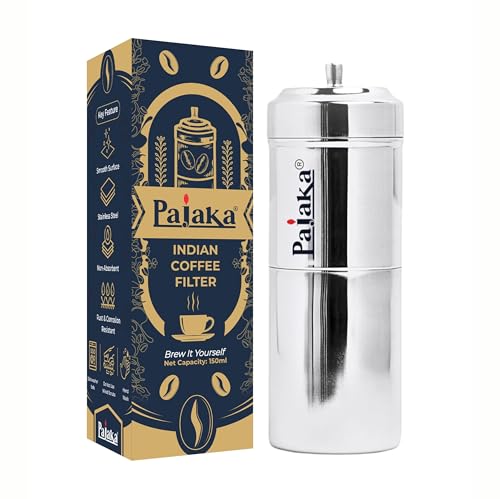
The PAJAKA South Indian Filter Coffee Maker is ideal for those who value authentic, traditional coffee preparation without the need for electric appliances. I use it daily to brew strong, full-bodied South Indian coffee decoction, just like my grandparents did. Made of durable stainless steel, it resists rust and lasts long, though it’s not dishwasher safe. Its manual French press-style design lets me control brew strength, perfect for Madras kaapi, iced coffee, or milkshakes. The kit includes all parts: lid, filter, push rod, and collection chamber. At 250 ml, it’s compact and lightweight. I’ve found it’s also a thoughtful gift for coffee lovers who appreciate heritage brewing.
Best For: Coffee enthusiasts who appreciate authentic, traditional South Indian coffee preparation and value heritage brewing methods without relying on electric appliances.
Pros:
- Durable stainless steel construction resists rust and ensures long-term use
- Manual French press-style design allows full control over brew strength for rich, full-bodied decoction
- Compact 250 ml size and complete kit make it ideal for home brewing and gifting
Cons:
- Not dishwasher safe, requiring hand cleaning for maintenance
- Limited capacity may not suit larger households or gatherings
- Learning curve for beginners unfamiliar with traditional drip brewing techniques
Factors to Consider When Choosing a Coffee Machine in India
You’ll want to think about how much coffee you typically make, since brewing capacity and machine size affect both countertop space and serving needs. Think about whether you prefer the hands-on control of a manual brewer or the convenience of electric models, especially if you need quick daily use. Don’t overlook material quality, ease of cleaning, and whether the machine works with traditional Indian filter coffee setups.
Brewing Capacity And Size
While matching your coffee machine to daily habits and household size, brewing capacity and physical dimensions matter just as much as flavor output. If you’re single or a couple, a 150–200ml brewer suits your needs and saves space. These compact models, often around 2.1D x 2.1W x 4H inches, fit small kitchens and are easy to store. For families or frequent guests, go for 300ml and above-these serve up to 7 cups before needing a refill. Most manual drip coffee makers range from 2.1 to 7 inches in depth and 4 to 7 inches in height, so measure your countertop. Weights range from 4.2 to 10.5 ounces, affecting how easy they are to handle. Keep in mind: one 400ml brew can make 6–12 final servings once diluted with milk or water, depending on your strength preference.
Material Quality And Durability
Stainless steel-especially grade 304 with 4% nickel-forms the backbone of a durable coffee maker, resisting rust and corrosion even with daily use. You’ll want this metal if you’re brewing every day, as it withstands heat and moisture without degrading. Thicker gauge steel won’t dent or warp, which matters most in manual presses or stovetop models you handle often. High-quality metal filters with fine, evenly punched holes hold up over years, giving consistent flow without tearing. Avoid flimsy plastic housings-they may crack under stress or high temps. Look for seamless welding and smooth, polished interiors; they prevent grime from sticking and reduce bacterial growth. Dishwasher-safe doesn’t mean weak-many food-grade stainless models survive repeated washes without losing shine or function. Brands like Kaffita and Bialetti use these materials in their entry and mid-tier models, giving you longevity without overspending. Pick smart, and your machine should last a decade or more.
Ease Of Cleaning And Maintenance
A well-designed coffee maker saves time and effort when it comes to cleaning, and models made from stainless steel with dishwasher-safe parts make maintenance quick and hassle-free. You’ll want to choose one that disassembles easily-manual drip filters without sealed electronics let you clean every component thoroughly, reducing coffee oil buildup. Reusable metal filters cut down on waste and only need rinsing after use, plus a deeper clean now and then. Look for smooth, compact designs with minimal joints; tight crevices trap grime and make scrubbing harder. Non-electric models skip complex internal tubing or pumps, so you won’t deal with hidden mold or mineral deposits over time. These features mean less guesswork and fewer breakdowns. When parts stay accessible and cleaning stays simple, you’re more likely to keep your machine in top shape-saving money and ensuring every brew tastes fresh. Prioritize ease, and you’ll skip the frustration later.
Manual Versus Electric Operation
If you’re looking to fine-tune your coffee’s flavor with hands-on control, a manual brewer like a pour-over dripper or Vietnamese phin gives you direct influence over water flow and brew time, letting you adjust on the fly for a stronger or smoother cup. You handle every step, from pouring hot water to pressing the grounds, which means more effort but greater control over extraction. Since manual models use no electricity, they’re energy-efficient and great for travel or off-grid use. They’re also usually simpler to clean, with fewer parts. But if you value speed and convenience, electric machines are better. They heat water automatically, often brew faster, and let you set timers or walk away with features like auto shut-off. While they use more power and can be trickier to clean, their consistency and ease make them a solid pick for busy routines.
Traditional Brewing Compatibility
When making traditional South Indian coffee, you’ll want a brewer that supports the slow drip-filter method, since this extraction style relies on a steady, gradual percolation through finely ground coffee-often blended with chicory-for a rich, concentrated decoction. You need a manual stainless steel drip filter with two chambers: the top holds compacted fine grounds, and hot water (95–100°C) slowly seeps through multiple small holes into the bottom. This 20–30 minute process gives you a bold, earthy decoction meant to mix with hot milk or water. Look for models like the IndianFilter or Brahmin Steel that handle fine coffee-chicory blends well and offer 150ml to 400ml capacity. Non-electric designs give you full control over temperature and timing, ensuring consistent flavor. Cheaper plastic versions may warp or clog, so stick with durable, traditional builds.
Frequently Asked Questions
Can I Use Regular Ground Coffee in a South Indian Filter?
Yes, you can use regular ground coffee in a South Indian filter, but it’s not ideal. The grind is usually too fine, which may clog the filter and slow down brewing. For best results, use coarsely ground, dark-roast coffee meant for filter brews. Brands like Nescafé Classic or Bru work in a pinch, but a blend like Cothas or Davidoff Filter Coffee gives richer flavor and smoother extraction. Adjust quantity to taste, and always rinse the filter mesh before use.
How Do I Clean a Stainless Steel Coffee Maker Properly?
You clean a stainless steel coffee maker by disassembling removable parts and rinsing them with warm water. You wipe the interior and exterior with a damp cloth. For deep cleaning, you run a mix of equal parts vinegar and water through a brew cycle, then rinse with fresh water twice. You avoid abrasive scrubbers to prevent scratches. You descale monthly to prevent mineral buildup, especially if you use hard water. You dry all parts before reassembling.
Is It Safe to Put a Coffee Filter in the Dishwasher?
You shouldn’t put paper coffee filters in the dishwasher-they’ll disintegrate. If you’re using a reusable metal or cloth filter, yes, you can safely wash it in the dishwasher, but check the manufacturer’s instructions first. Some metal filters, like those from AeroPress or French press brands, tolerate dishwashing, but handwashing preserves longevity. Dishwasher heat and soap buildup may clog fine mesh or affect flavor over time, so rinsing and handwashing are often better long-term choices.
Can I Make Tea Using a South Indian Coffee Filter?
Yes, you can make tea with a South Indian coffee filter, but it’s not ideal. The fine mesh works for coarse tea leaves, but you’ll need to monitor steeping time to avoid bitterness. Unlike coffee, tea doesn’t require pressure, so the design doesn’t enhance flavor. For better results, use a dedicated tea infuser or saucepan. While it’s functional in a pinch, you’ll get more consistent brews with proper tea tools. Don’t expect the same quality as traditional filter coffee.
Does Turkish Coffee Require a Special Type of Grind?
Yes, Turkish coffee requires an extra-fine grind, almost like powdered sugar. You can’t use regular drip grind-it’s too coarse. The fine particles stay suspended in the brew, creating the thick body and rich foam Turkish coffee is known for. Use a dedicated burr grinder or a mortar and pestle if needed. Pre-ground beans work if labeled specifically for Turkish. Always brew in a cezve (or ibrik) for authentic results.