Top Coffee Roasters Across America Worth Your Brew
You get better coffee when you choose roasters that prioritize freshness and transparent sourcing. Try Stumptown’s Hair Bender for balanced flavor across brewing methods or URBAN ROOSTER’s HK47 blend for complexity without bitterness. Opt for Cambio’s organic pods if you use Keurig machines. For home roasting, the SR540 gives consistent small batches. Look for roast dates, not just labels, and match beans to your brew style-there’s more to know before you decide.
We are supported by our audience. When you purchase through links on our site, we may earn an affiliate commission, at no extra cost for you. Learn more. Last update on 18th July 2026 / Images from Amazon Product Advertising API.
Notable Insights
- Stumptown Coffee Roasters delivers high-quality, Direct Trade certified beans with transparent sourcing and balanced, complex flavor profiles.
- Green Mountain offers accessible, responsibly sourced K-Cup pods with recyclable packaging and support for sustainable farming initiatives.
- URBAN ROOSTER COFFEE ROASTERS crafts small-batch, 100% Arabica blends like HK47 for consistent, nuanced flavor across brewing methods.
- Cambio Roasters provides USDA-certified organic, aluminum K-Cup pods that enhance freshness and fund ethical causes through profit donations.
- Fresh Roast SR800 enables home users to explore origin transparency and roast control with precision, supporting sustainable, small-batch practices.
Green Mountain Nantucket Blend K-Cup Pods (48 Count)

If you’re after a reliable, single-serve option that balances flavor and sustainability without slowing down your morning routine, Green Mountain Nantucket Blend K-Cup Pods (48 Count) are a solid pick. I use them daily and appreciate the full-bodied, medium roast made from 100% Arabica beans. You get notes of caramel, chocolate, and dried fruit-consistent and satisfying. They work in any Keurig machine, and the pods are recyclable if your community accepts them, though you must empty and rinse them first. Green Mountain sources coffee responsibly and supports water conservation in Honduras, which matters if sustainability is a priority for you.
Best For: Coffee lovers seeking a convenient, consistently flavorful, and sustainably sourced medium roast for their daily Keurig brew.
Pros:
- Balanced, full-bodied flavor with pleasant notes of caramel, chocolate, and dried fruit
- Made from 100% Arabica beans and responsibly sourced, supporting environmental and community initiatives
- Compatible with all Keurig K-Cup single-serve brewers and recyclable with proper disposal
Cons:
- Requires extra effort to recycle-pods must be emptied, rinsed, and separated
- Flavor may be too mild for those who prefer bold or dark roasts
- Sourcing sustainability claims, while credible, are not independently certified on the packaging
Green Mountain Nantucket Blend K-Cup Pods

I rely on Green Mountain Nantucket Blend K-Cup Pods when I need a consistent, full-bodied medium roast without the hassle of measuring beans or cleaning a grinder. These Keurig-compatible pods deliver a balanced cup with notes of caramel, chocolate, and dried fruit, thanks to a blend of African, Indonesian, and French Roast beans. The coffee is 100% responsibly sourced and supports sustainable farming, including water-smart practices in Honduras through Blue Harvest. Pods are recyclable-just peel, empty, and sort the components-but check local rules, as not all areas accept them. Kosher-certified and caffeinated, they offer convenience without sacrificing quality or ethics.
Best For: Coffee drinkers who want a convenient, ethically sourced, full-bodied medium roast with rich flavor notes and consistent quality from a Keurig brewer.
Pros:
- Delivers a balanced, flavorful cup with notes of caramel, chocolate, and dried fruit from a carefully crafted bean blend
- 100% responsibly sourced and supports sustainable farming initiatives, including water conservation in Honduras
- Recyclable pods and Orthodox Union Kosher certified, combining convenience with environmental and dietary considerations
Cons:
- Recycling requires manual disassembly (peeling, emptying, sorting), which may be inconvenient for some users
- Not all local recycling programs accept K-Cup pod components, limiting recyclability in certain areas
- Slight variability in packaging design may cause confusion for repeat buyers seeking the same product
SR540 Automatic Coffee Bean Roaster

The SR540 Automatic Coffee Bean Roaster is a solid choice for home roasters who want control, consistency, and fresh flavor without a steep learning curve. I use it to roast 120 grams at a time-enough for 7 to 14 cups-fast, in under 10 minutes. Its Speed Roasting System heats evenly, so I get reliable results with organic, decaf, or fair trade beans. The digital temp display and nine power levels let me tweak each batch, while the convection fan boosts flavor. It’s compact, electric (120V), and built with a glass chamber and chaff basket. I clean it by hand since it’s not dishwasher safe.
Best For: Home coffee enthusiasts who want fresh, customizable roasts with precise control and quick results.
Pros:
- Roasts up to 120 grams evenly in under 10 minutes with the Speed Roasting System
- Offers nine power levels and real-time temperature display for precise customization
- Compact, electric design with convection fan and chaff basket for convenient home use
Cons:
- Not dishwasher safe, requiring hand cleaning after each use
- Limited to 120-gram batches, which may be insufficient for larger gatherings
- Digital interface may be less intuitive for complete beginners despite beginner-friendly features
Stumptown Hair Bender Medium Roast Coffee
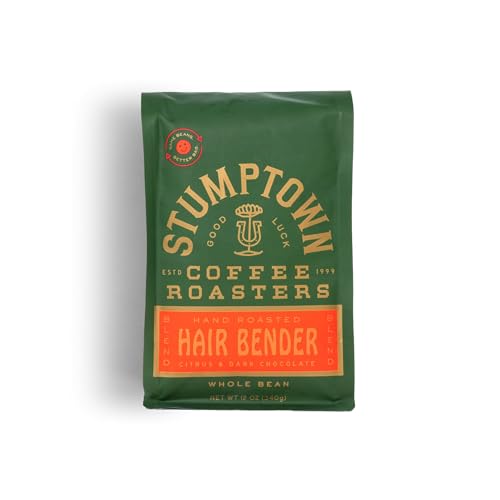
You’ll want to think about Stumptown Hair Bender Medium Roast if you’re after a consistently balanced blend that performs well no matter your brew method. I’ve used it for espresso, pour over, and cold brew-it delivers notes of dark chocolate, caramel, and citrus every time. It’s made from 100% Arabica beans sourced globally and tied to Stumptown’s Direct Trade program, meaning farmers get fair pay and the coffee meets high quality standards. They’ve been cupping this blend for years to keep the flavor steady. Since 2018, they’ve been a B Corp, so ethics are baked in. Just grind fresh, watch your water quality, and tweak to taste-it’s a reliable workhorse for daily brewing.
Best For: Coffee lovers who want a consistently balanced, ethically sourced medium roast that performs well across multiple brewing methods.
Pros:
- Complex, well-rounded flavor profile with notes of dark chocolate, caramel, and citrus
- Sourced through Stumptown’s Direct Trade program, ensuring fair pay and sustainable practices
- B Corp certified, reflecting a strong commitment to social and environmental responsibility
Cons:
- Some may find the global blend less origin-distinctive compared to single-origin coffees
- Whole beans require a grinder for optimal freshness, which may be inconvenient for some
- Premium pricing due to ethical sourcing and quality standards may not suit budget-conscious buyers
Stumptown Holler Mountain Organic Coffee 12 oz

A 12-ounce bag of Stumptown Holler Mountain Organic Coffee works best for coffee drinkers who want a balanced, full-bodied brew with both brightness and depth, especially those using multiple brewing methods at home. I find it shines in pour over and drip, but it pulls well as espresso too. The mix of Latin American and east African beans delivers citrus zest and berry notes up front, backed by caramel and hazelnut. Since it’s whole bean, you’ll need a grinder-worth it for freshness. Direct Trade and organic certs mean quality and ethics are covered. It’s versatile, but dialing in grind and water matters.
Best For: Coffee lovers seeking a versatile, ethically sourced, full-bodied brew with bright citrus and rich chocolate notes across multiple brewing methods.
Pros:
- Balanced flavor profile with bright citrus zest and berry notes complemented by caramel and hazelnut depth
- Certified Organic and Direct Trade, ensuring ethical sourcing and high-quality, sustainable practices
- Whole bean format preserves freshness and works well across espresso, pour over, drip, and cold brew methods
Cons:
- Requires a grinder for optimal freshness, which may be inconvenient for users without one
- Flavor nuance depends on precise grind size and brewing technique, potentially challenging for beginners
- Slight variability in taste may occur due to differences in water quality and brewing equipment
Stumptown Coffee Roasters Hair Bender 18oz

Coffee lovers who prioritize consistency, sourcing transparency, and balanced flavor across multiple brewing methods will find Stumptown’s Hair Bender 18oz a top contender. I rely on this medium roast blend when I want reliable performance, whether I’m using my espresso machine, pour-over, or cold brew setup. Its mix of beans from Latin America, East Africa, and Indonesia delivers notes of dark chocolate, caramel, and citrus without overpowering any single method. Sourced through Stumptown’s Direct Trade program, it supports ethical farming and consistent quality. I always adjust my grind size and water for best results-this coffee rewards small tweaks but shines even with basic gear.
Best For: Coffee lovers who value consistency, ethical sourcing, and a balanced, versatile flavor profile across multiple brewing methods.
Pros:
- Exceptionally well-balanced flavor with notes of dark chocolate, caramel, and citrus that shine across espresso, pour-over, and cold brew
- Sourced through Stumptown’s Direct Trade program, ensuring ethical farming practices and high-quality beans
- Roasted to perform reliably in various brewing setups, rewarding both novice and experienced coffee enthusiasts
Cons:
- Premium price point may be less accessible for budget-conscious buyers
- Flavor nuances may be less pronounced with lower-quality brewing equipment or water
- Availability may be limited outside major markets or specialty retailers
SR800 Coffee Roaster – Home Roasting Made Easy

The SR800 Coffee Roaster stands out for home brewers who want full control over freshness and roast profile without stepping into professional-grade complexity. I use it to roast 6–8 oz of green beans in under 10 minutes, yielding 14–28 cups per batch. Its convection fan and variable heat settings give precise control, while the digital display shows real-time temperature. It handles organic, decaf, or exotic beans with ease. Made by Fresh Roast, a family-owned U.S. company, it’s built with heat-resistant plastic and stainless steel. At 1750 watts and 120 volts, it’s efficient and durable. I’ve found it ideal for fresh, custom blends-no fuss, just better coffee.
Best For: Home coffee enthusiasts who want precise control over roasting fresh, custom blends quickly and easily without professional equipment.
Pros:
- Roasts 6–8 oz of beans in under 10 minutes with even results using convection fan and variable heat settings
- Digital temperature display and manual controls allow for customizable roast profiles, ideal for organic, decaf, or exotic beans
- Durable construction with heat-resistant plastic and stainless steel from a family-owned U.S. company known for quality support
Cons:
- Limited to 1750 watts on 120 volts, which may slow recovery time during high-volume roasting
- Plastic components, while heat-resistant, may feel less robust compared to all-metal roasters
- No automated preset profiles, requiring user attention and manual adjustments during roasting
URBAN ROOSTER COFFEE ROASTERS – HK47 BLEND

If you’re after a reliable, all-around performer that shines no matter how you brew, Urban Rooster Coffee Roasters’ HK47 Blend stands out as a top pick among America’s best. It’s their most popular, 100% premium Arabica, medium roast-sweet and balanced, with notes of dark chocolate, stone fruit, and vanilla. Sourced from Latin and Central America, it’s roasted in small batches for peak flavor. Each 12-ounce bag stays fresh up to 180 days unopened. For best results, use within two weeks after opening and store it sealed, away from light. This blend works well across all methods-drip, pour-over, or espresso-offering clarity and complexity without fuss.
Best For: Coffee lovers seeking a versatile, high-quality medium roast that delivers balanced, complex flavor across all brewing methods.
Pros:
- Excellent flavor balance with notes of dark chocolate, stone fruit, and vanilla
- Sourced from 100% premium Arabica beans and roasted in small batches for freshness
- Performs consistently well across espresso, drip, and pour-over brewing methods
Cons:
- Limited origin diversity, focusing only on Latin and Central American beans
- Shelf life drops significantly after opening (best within two weeks)
- May be too balanced for those seeking bold or distinctive roast characteristics
Cambio Roasters Organic Dark Roast Pods (60 ct)

Looking for a dark roast that doesn’t compromise on sustainability or flavor? I’ve found Cambio Roasters’ Organic Dark Roast Pods deliver. They’re the only USDA-certified organic recyclable aluminum pods on the market-great for reducing plastic waste. The aluminum blocks oxygen, keeping coffee fresh longer than plastic K-Cups. They work flawlessly in Keurig brewers, and the Flavor Ridges boost extraction by up to 34%, giving richer flavor. Each pod uses 100% organic beans from Sumatra and South America, with notes of dark chocolate, dried fruit, and toasted marshmallow. Plus, 20% of profits go to Food4Farmers-ethical and effective.
Best For: Eco-conscious coffee lovers who want a bold, sustainably sourced dark roast with full Keurig compatibility and superior flavor extraction.
Pros:
- Only USDA-certified organic recyclable aluminum pods, reducing plastic waste and supporting environmental sustainability
- Flavor Ridges enhance water flow for up to 34% greater flavor extraction, delivering a richer, bolder cup
- Ethically sourced beans with 20% of profits donated to Food4Farmers, promoting farmer well-being and food security
Cons:
- Aluminum pods may require special recycling procedures not available in all areas
- Premium pricing compared to conventional plastic K-Cups
- Limited to dark roast preference, which may not suit those who prefer lighter profiles
Green Mountain Dark Magic K-Cup Pods (60 Count)

When you need a bold, reliable dark roast without the hassle of grinding beans or cleaning equipment, Green Mountain Dark Magic K-Cup Pods are my go-to choice for convenience and consistent flavor. These extra bold dark roast pods deliver rich notes of dried fruit and chocolate, with a subtly sweet finish, all from 100% Arabica beans. Each 60-count box-six packs of 10-works with any Keurig K-Cup brewer. The pods are Orthodox Union Kosher certified and recyclable via a simple peel, empty, and recycle process, though local recycling access varies. Green Mountain sources coffee responsibly, supports sustainable farming, and funds initiatives like bee integration in Brazil to boost yields and farmer income.
Best For: Busy coffee lovers who want a bold, consistently flavorful dark roast with the convenience of single-serve pods and a commitment to sustainability.
Pros:
- Delivers a rich, extra bold dark roast with notes of dried fruit and chocolate from 100% Arabica beans
- Compatible with all Keurig K-Cup brewers and comes in a convenient 60-count pack for regular use
- Supports sustainable farming and is part of recyclable and kosher-certified initiatives
Cons:
- Recycling requires a manual three-step process (peel, empty, recycle) that may not be convenient for all users
- Local recycling programs may not accept the pods, limiting eco-friendliness
- Single-serve format contributes to higher long-term environmental impact compared to bulk brewing methods
Factors to Consider When Choosing a Coffee Roaster in America
You’ll want to check what roast levels a roaster offers-some specialize in light roasts that highlight origin flavors, while others focus on dark, bold profiles. Look for transparency in bean sourcing, like where the coffee’s grown and whether the company supports fair trade or organic farming. Don’t overlook certifications, brewing compatibility, and sustainability efforts, since they can affect both taste and environmental impact.
Roast Level Options
While roast level plays a crucial role in shaping your coffee’s final taste, it’s important to understand how each stage affects flavor, acidity, and body-so you can choose a roaster that offers the range and consistency you want. Light roasts keep more of the bean’s original character, with bright, floral, or citrus notes since they’re pulled before the first crack. You’ll notice higher acidity and lighter body. Medium roasts balance acidity and richness, adding caramelized sugars and a fuller mouthfeel thanks to moderate heat. For bold, smoky flavors, dark roasts go up to 250°C, bringing out surface oils and charred notes. Some roasters provide all three levels from the same bean, letting you compare how roast changes taste through Maillard reactions and caramelization. Pick a roaster that labels its profiles clearly and sticks to consistent roasting to match your daily preference.
Bean Origin Transparency
What if you knew exactly where your coffee came from-not just the country, but the farm, elevation, and harvest date? With transparent roasters, you do. They list specific origins like Ethiopian highlands or Guatemalan farms, not just vague regions. Many share lot details-varietal, altitude, processing method-so you understand how flavor is shaped. Look for Direct Trade or USDA Organic labels; they require traceability and verified sourcing records. Some publish annual reports showing exactly where beans come from, how much they paid, and who grew them. If you value knowing your coffee’s journey, choose roasters who provide farm names, harvest dates, and pricing transparency. Others only list “Latin America” or “Africa,” which hides critical details. Real transparency means accountability-not just marketing. When origin data is clear, you can compare quality, freshness, and value across brands with confidence. You’re not just buying beans-you’re choosing a supply chain.
Sustainability Practices
When choosing a coffee roaster, sustainability goes beyond buzzwords-it’s about measurable actions that support the planet and people behind your beans. Look for roasters using 100% responsibly sourced beans through verified programs that promote ethical farming and environmental care. Some use oxygen-blocking aluminum packaging with BPA-free linings-lighter and more recyclable than plastic pods, though you’ll need to peel, empty, and rinse before recycling, if local facilities allow it. Others support water-smart techniques in coffee regions, like recycling nutrient-rich water for crops, which reduces waste and strain on local supplies. Direct Trade roasters often pay higher prices based on bean quality, building long-term farmer relationships and encouraging sustainable practices. While not all options work the same everywhere, choosing a brand with clear, actionable sustainability efforts means you’re getting quality while supporting better systems-practical steps that add up with every brew.
Brewing Compatibility
If you’re serious about your morning cup, start by matching the roaster to your preferred brewing method-some models are built for drip-friendly medium roasts, while others dial in tight for espresso’s dark, oily finish or cold brew’s smooth, extended extraction. Check the voltage: most run on standard 120 volts, but higher wattage means faster, more even roasting. Pick a batch size that fits your habits-120 grams suits solo drinkers, while 226 grams helps when serving guests. Make sure the roaster handles various bean types, including decaf or organic, so you’re not locked into one profile. Look for adjustable heat and fan controls; they give you the precision needed for light, fruity roasts or bold, smoky ones. Models like the FreshRoast SR500 offer simplicity, while the Bullet R1 allows fine-tuned profiles. Match these features to your brew style, and you’ll get the most from every bean.
Certifications And Standards
You’ve already matched your roaster to your brewing habits, but what you roast matters just as much as how you roast it. Look for USDA Organic certification if you want beans grown without synthetic pesticides-95% of ingredients must be organic. Fair Trade means farmers get fair pay and community funding, plus better labor and environmental practices. Rainforest Alliance focuses on wildlife protection and farmworker well-being. If the company itself aligns with strong ethics, B Corp certification confirms verified standards in social and environmental performance. For those observing dietary laws, Orthodox Union (OU) Kosher means processing follows Jewish guidelines, including approved equipment and ingredients. These labels aren’t just marketing-they reflect real practices you support with each purchase. Choosing one over another depends on your priorities: ethical sourcing, environmental impact, or dietary needs. Check the bag closely-certifications help you make informed, values-driven choices without guesswork.
Freshness Guarantee Period
Though green coffee can stay fresh for up to two years, roasted beans start losing their peak flavor within days, so knowing how long a roaster guarantees freshness makes a real difference in your cup. Most roasted beans taste best within 7 to 14 days after roasting, especially when stored away from oxygen, light, heat, and moisture. You’ll want to pick roasters who include a “roasted on” date, not just a best-by date-this way, you know exactly how fresh your coffee is. Vacuum-sealed bags with degassing valves help extend shelf life by locking out air while letting gases escape. Always choose whole bean over pre-ground when possible; it stays fresher longer thanks to less surface area exposed. Some top roasters like Counter Culture and Stumptown guarantee freshness for up to 30 days post-roast, but for peak flavor, aim to brew within two weeks.
Packaging Environmental Impact
When you’re choosing a coffee roaster, the packaging’s environmental impact matters just as much as flavor and freshness. If you use single-serve pods, you’ll often face plastic waste, since most aren’t biodegradable and few municipal systems can recycle them. Some roasters use aluminum pods with BPA-free linings-better at blocking oxygen and preserving taste-but recycling them requires you to peel the lid, dump grounds, and separate materials. Your local facilities must accept each component, or the effort fails. Aluminum offers superior freshness protection over plastic, yet still poses challenges without proper disposal. The real impact depends on your actions, the materials used, and your community’s recycling capabilities. Check what your roaster uses and whether your city supports it. Choose brands aligned with both your values and your access to recycling to reduce waste effectively.
Customization And Blending Capabilities
If you’re aiming for full control over flavor, look for roasters with adjustable heat and fan settings across multiple levels, since these directly influence roast development and final taste. You’ll want digital temperature displays and real-time monitoring to track progress and repeat successful batches. Variable roasting times and up to nine power levels let you shape body, acidity, and aroma with precision. Need small batches? Some models roast as little as 170 grams, perfect for testing decaf, organic, or exotic beans without waste. For custom blends, use batch roasting to roast different beans separately, then mix them after-this preserves unique roast profiles. Machines like the PopcornWorks or Coffee Gator allow this level of control, though they take practice. Skip basic models if consistency and customization matter. With the right roaster, you’re not just brewing-you’re crafting.
Frequently Asked Questions
What Is the Best Coffee Roaster for Beginners?
You’ll want a simple, consistent roaster like the Coffee Gator Electric Roaster if you’re just starting. It’s affordable, handles small batches, and gives clear control over heat and time. You can roast evenly without steep learning curves. While it lacks precision of high-end models, it’s reliable for learning flavor development. Avoid complex manual roasters early on-they demand too much trial and error. Stick to electric, small-scale machines first, then upgrade as you gain experience and confidence in the process.
Are K-Cup Pods Recyclable?
Yes, some K-Cup pods are recyclable, but you’ve got to check the label-look for recyclable versions like those from Keurig’s my K-Cup or brands using #5 plastic. Most single-use pods aren’t recyclable unless you separate the parts: you pop off the foil, dump the grounds, and recycle the plastic cup if your local facility accepts it. It’s a hassle, so reusable filters or compostable pods might save you time and reduce waste long-term.
How Long Does Roasted Coffee Stay Fresh?
Roasted coffee stays fresh for about 2–4 weeks after opening if you store it right. You keep it in an airtight container, away from light, heat, and moisture. Lighter roasts last a bit longer than dark ones since they degrade slower. Pre-ground coffee goes stale faster than whole bean, so you’re better off grinding fresh. Freezing works long-term, but only if sealed tightly and never repeatedly thawed.
Can I Use K-Cups With Non-Keurig Machines?
You can’t use K-Cups in non-Keurig machines directly, but you’ve got options. Some brands, like Nespresso or generic drip brewers, don’t accept K-Cups at all. However, reusable K-Cup-compatible pods exist for certain systems, or you can buy universal adapters. Alternatively, switch to loose-ground coffee. Keep in mind: convenience drops slightly, and brewing time increases, but cost-per-cup often improves. Check your machine’s specs first.
What Makes a Coffee Bean Organic?
You can call a coffee bean organic when it’s grown without synthetic pesticides or fertilizers, and the farm follows certified practices that protect soil and water. You’ll see labels like USDA Organic or EU Organic, which mean inspectors verified the crop meets strict environmental and handling rules. If you want organic beans, check for those certifications-cheap imitations exist. Choosing organic avoids chemicals, but doesn’t guarantee better taste or sustainability on its own.