Top-Rated Coffee Roasters in Michigan That Brew Perfection
You get bold, fresh flavor from Michigan’s top-rated roasters like Paramount, Coffee Beanery, and Great Lakes Roast. They craft small-batch Arabica coffee with local flair-think cherry, maple, and fudge-using kosher, gluten-free, and often fair trade practices. Medium roasts suit drip and pour-over, while whole beans stay fresher longer. Pre-ground saves time but loses aroma faster. Store your coffee airtight, away from light, and you’ll taste the difference with every cup. There’s more to explore about what makes each roast stand out.
We are supported by our audience. When you purchase through links on our site, we may earn an affiliate commission, at no extra cost for you. Learn more. Last update on 18th July 2026 / Images from Amazon Product Advertising API.
Notable Insights
- Paramount Roasters crafts small-batch, SQF-certified coffee with Michigan-inspired flavors like maple and cherry.
- Coffee Beanery offers specialty-grade, K-Cup®-compatible cherry coffee pods with no artificial sweeteners.
- Great Lakes Roast sources premium Arabica beans from four origins for balanced, region-inspired flavor profiles.
- Pure Michigan Medium Roast delivers a smooth, pre-ground blend with berry and brown sugar notes.
- Frederik’s and Schuil prioritize quality with small-batch, 100% Arabica Michigan cherry coffees in resealable packaging.
Paramount Roasters Michigan Maple Coffee (12oz)

If you’re looking for a coffee that supports local, employee-owned businesses while delivering a consistently smooth and naturally flavored cup, Paramount Roasters’ Michigan Maple Coffee (12oz) is a strong choice. I’ve found it strikes a balance between flavor and quality without artificial aftertastes. The 100% Arabica beans are medium-roasted to preserve richness while highlighting natural maple notes inspired by Michigan’s syrup tradition. Roasted in small batches in an SQF-certified facility, it meets high safety and freshness standards. Originally seasonal, it’s now available year-round and works well drip-brewed or in a French press for a comforting, reliable cup every time.
Best For: Coffee lovers who value locally roasted, naturally flavored coffee from an employee-owned company that supports community and quality.
Pros:
- Made with 100% premium Arabica beans for a smooth, balanced cup without bitterness
- Naturally derived maple flavor inspired by Michigan’s syrup tradition-no artificial aftertaste
- Roasted in small batches in an SQF-certified facility, ensuring high safety, freshness, and consistent quality
Cons:
- Limited to U.S. (Michigan) roasting origin, which may not appeal to those seeking global sourcing
- Maple flavor, while natural, may still be too sweet or distinct for fans of purely traditional coffee profiles
- 12oz bag size may not be ideal for high-volume households or commercial use
Paramount Roasters Traverse City Cherry Coffee (12oz)

Paramount Roasters Traverse City Cherry Coffee (12oz) stands out for those who want a flavorful, convenient option without sacrificing dietary considerations. I find it’s a solid choice if you’re following a keto or allergen-free diet-this coffee’s certified Kosher and artificially flavored with no hidden sugars. The medium roast Arabica beans deliver a sweet cherry punch and a strong aroma that holds up well with cream and sugar. I brew it using two tablespoons per six ounces of water, adjusting to taste. For iced coffee, I double the strength before pouring over ice. Just store it in a sealed container away from light and moisture-never in the fridge or freezer.
Best For: Those seeking a keto-friendly, allergen-free, and Kosher-certified cherry flavored coffee with a convenient medium roast profile.
Pros:
- Artificially flavored with no hidden sugars, making it suitable for keto and allergen-conscious diets
- Certified Kosher and made with medium roast Arabica beans for a smooth, sweet cherry flavor
- Strong, appealing aroma that pairs well with cream and sugar or serves excellently as iced coffee
Cons:
- Artificial flavoring may not appeal to those preferring natural ingredients
- Ground coffee may lose freshness faster compared to whole bean
- Not recommended for storage in refrigerator or freezer, limiting long-term storage options
Michigan Cherry Coffee Pods 12ct

I prefer Michigan Cherry Coffee Pods 12ct when I want a dessert-like coffee that still fits my keto and sugar-free diet, and Coffee Beanery delivers that balance without compromise. Each pod uses 100% Specialty Grade Arabica beans, roasted in Michigan to highlight the sweet, ripe cherry flavor tied to the region. These K-Cup®-compatible pods work in any machine-brew on the 6oz setting for best results. They’re gluten-free, kosher, and have zero calories, with no artificial sweeteners. Don’t peel the foil seal; it prevents spills and burns. After brewing, tilt the pod slightly when tossing to avoid drips. Store the box at room temperature.
Best For: Those seeking a keto-friendly, sugar-free dessert coffee with a sweet cherry flavor and high-quality Arabica beans.
Pros:
- Made with 100% Specialty Grade Arabica beans, ensuring premium quality and rich flavor
- Fully compatible with all K-Cup® machines and requires no special equipment
- Dietary-friendly with zero calories, gluten-free, kosher, lactose-free, and no artificial sweeteners
Cons:
- Limited to 12 pods per box, which may require frequent reordering for regular users
- Flavor profile may be too dessert-like for those preferring traditional or bold coffee tastes
- Foil seal must remain intact during brewing, which could confuse new users unfamiliar with K-Cup® instructions
BIGGBY® Michigan Cherry Flavored Ground Coffee, 12oz Bag, Medium Roast
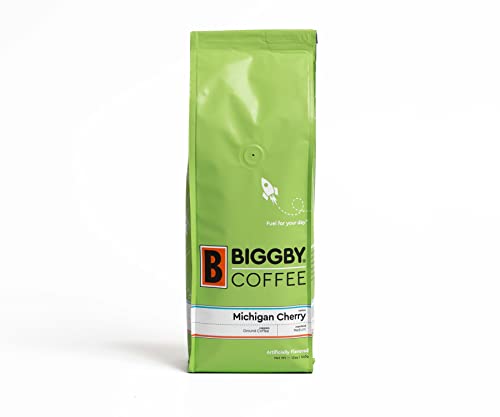
BIGGBY® Michigan Cherry Flavored Ground Coffee stands out for anyone who enjoys a sweet, fruit-forward twist on their daily brew without sacrificing the quality of a medium roast. I’ve found it works well in drip machines, French presses, or for iced coffee. The Arabica beans are medium-roasted and infused with artificial cherry flavor that stays consistent without overpowering the base coffee. It’s not overly sweet on its own, so you can adjust sugar or creamer to taste. If you like flavored coffee that skips bitterness, this is a solid pick. Just store it sealed and away from light to keep it fresh.
Best For: Coffee lovers who enjoy a sweet, fruity twist in their medium roast without overwhelming artificial sweetness or bitterness.
Pros:
- Smooth, consistent cherry flavor balanced with rich medium roast coffee
- Versatile for hot or iced coffee and pairs well with various brewing methods
- Made with high-quality Arabica beans and ethically sourced ingredients
Cons:
- Artificial flavoring may not appeal to those seeking all-natural or unflavored coffee
- Flavor intensity may diminish if not stored properly
- Limited to 12oz bag size for those who prefer bulk or larger quantities
Great Lakes Medium/Dark Roast Coffee 12oz

If you’re after a balanced, flavorful cup that bridges smooth richness and bright complexity, Great Lakes Medium/Dark Roast Whole Bean Coffee is a solid choice among Michigan’s top roasters. I prefer it because it’s made from 100% Specialty Grade Arabica beans sourced from Brazil, Colombia, Ethiopia, and Guatemala. The medium/dark roast keeps the fruitiness intact, with notes of plum, blueberry, and citrus coming through clearly. It’s inspired by northern Michigan’s autumn colors and Great Lakes blues, but it’s the consistency that matters most. A 12-ounce bag gives enough for daily brewing, and I recommend grinding fresh for drip or pour-over to get the full profile.
Best For: Coffee lovers seeking a balanced, flavorful medium/dark roast with fruity notes and a connection to Michigan’s natural beauty.
Pros:
- Crafted from 100% Specialty Grade Arabica beans for high-quality flavor
- Rich, complex tasting notes of plum, blueberry, and citrus preserved by medium/dark roast
- Inspired by the vibrant colors of northern Michigan and the Great Lakes, offering a sense of regional pride
Cons:
- Whole bean only, requiring a grinder for most brewing methods
- Limited origin transparency beyond country-level sourcing
- 12-ounce size may be too large for occasional coffee drinkers or those testing the blend
Great Lakes Medium Roast Ground Coffee 12oz

When smoothness matters and flavor needs to carry through every part of the day, Great Lakes Medium Roast Ground Coffee is the go-to for coffee lovers who value consistency and origin transparency. I trust this blend because it’s made from 100% specialty-grade Arabica beans sourced directly from farmers in Brazil, Colombia, and Guatemala. The pre-ground format saves time, and the medium roast brings out tasting notes of brown sugar, berry, and a hint of grapefruit-balanced, never overpowering. It works well in drip machines, French presses, or pour-overs. I’ve found it pairs especially well with pastries or after-dinner treats. Unlike darker roasts, it won’t overpower your palate, making it ideal for all-day sipping. The Motor City Blend’s inspiration-smooth, soulful music-comes through in its steady, reliable profile. If you want a no-fuss, flavorful coffee that performs daily, this is one you can count on.
Best For: Coffee lovers who want a smooth, consistently flavorful medium roast with origin transparency and all-day versatility.
Pros:
- Made from 100% specialty-grade Arabica beans sourced directly from farmers in Brazil, Colombia, and Guatemala
- Balanced flavor profile with notes of brown sugar, berry, and grapefruit that suits morning to evening enjoyment
- Pre-ground convenience with broad brewing compatibility including drip machines, French presses, and pour-overs
Cons:
- Pre-ground format may lose freshness faster compared to whole bean
- Flavor notes may be too subtle for those who prefer bold, intense roasts
- Limited origin variety for purists seeking single-origin options
Paramount Roasters Mackinac Island Fudge Coffee

One standout choice among top-rated coffee roasters in Michigan is Paramount Roasters’ Mackinac Island Fudge Coffee, especially if you want a dessert-inspired flavor without sacrificing dietary compliance. I’ve tried it, and it delivers a rich, chocolaty fudge taste without artificial aftertastes. It’s Kosher, allergen-free, and keto-friendly-ideal if you’re watching ingredients. The 12oz bag is vacuum sealed, so it stays fresh longer than most flavored coffees. For best results, use 2 tablespoons per 6 ounces of water and tweak strength with hot water after brewing. I prefer it black, but it works well with cream if you want it sweeter.
Best For: Dessert coffee lovers who want a rich, fudge-flavored experience while adhering to dietary restrictions like keto, Kosher, or allergen-free diets.
Pros:
- Rich, decadent fudge flavor that tastes like a dessert without artificial aftertaste
- Kosher certified, allergen free, and keto friendly-ideal for health-conscious and restricted diets
- Vacuum sealed 12oz packaging ensures long-lasting freshness
Cons:
- Artificially flavored, which may deter fans of naturally flavored or single-origin coffees
- Medium roast may be too mild for those who prefer bold, dark roast intensity
- Sweet flavor profile may not appeal to those who enjoy traditional or savory coffee tastes
Michigan Cherry Flavored Coffee (12oz)

I prefer Coffee Beanery’s Michigan Cherry Flavored Coffee (12oz) when I want a fruit-infused coffee that doesn’t sacrifice quality or dietary integrity, since it’s made with 100% specialty-grade Arabica beans-the top 3% of the global Arabica crop. Inspired by the Michigan National Cherry Festival, it delivers a smooth, sweet-cherry flavor without artificial additives. It’s keto, gluten-free, lactose-free, kosher, and zero-calorie-ideal if you’re watching your intake. Each small batch is precision-roasted for peak freshness, so flavor stays consistent. For best results, grind just before brewing and use 1–2 tablespoons per 6oz water. This coffee suits drip, pour-over, or French press, but darker roasts might overpower delicate notes.
Best For: Those seeking a high-quality, guilt-free fruit-flavored coffee that aligns with keto, gluten-free, and kosher dietary needs without compromising on taste or bean quality.
Pros:
- Made with 100% specialty-grade Arabica beans, representing the top 3% of the global Arabica crop for premium quality
- Fully keto-friendly, sugar-free, lactose-free, gluten-free, kosher, and zero-calorie with no artificial sweeteners
- Infused with smooth, sweet cherry flavor inspired by the Michigan National Cherry Festival, offering a gourmet fruit-infused coffee experience
Cons:
- Flavored coffee may not appeal to purists who prefer unflavored, single-origin beans
- Lighter roast profile may lack the bold intensity preferred by dark roast enthusiasts
- Flavor notes may be muted in brewing methods that over-extract, such as French press or prolonged steeping
Frederik’s Michigan Cherry Ground Coffee 12 oz

Frederik’s Michigan Cherry Ground Coffee 12 oz stands out for coffee lovers who want a regional twist without sacrificing quality. I use 100% Arabica beans, roasted in small batches to a light profile, so you get a smooth, balanced cup every time. The sweet Michigan cherry flavor adds aromatic notes that enhance, not overpower, the coffee’s natural taste. For best results, use two tablespoons per 6 ounces of water and adjust to your preference. The resealable 12-ounce black bag with a red stripe keeps it easy to store-just transfer to an airtight container after opening. Store in a cool, dark place to preserve freshness.
Best For: Coffee lovers who enjoy a subtly sweet, regionally inspired flavor like Michigan cherry paired with a smooth, light-roast 100% Arabica coffee.
Pros:
- Infused with authentic Michigan cherry flavor that enhances without overpowering the coffee
- Made from 100% Arabica beans, small-batch roasted for consistent quality and balanced taste
- Comes in a resealable, easy-to-identify 12-ounce bag with convenient storage guidance
Cons:
- Requires transfer to an airtight container after opening for optimal freshness
- Light roast may not appeal to those who prefer bold, dark roast profiles
- Flavor infusion might not suit purists seeking completely unadulterated coffee
Schuil Whole Bean Coffee (Michigan Sweet Cherry)

If you’re looking for a Michigan-based roaster that balances heritage with hands-on quality control, Schuil Coffee Co. stands out for its commitment to small batch roasting, which guarantees each bag of Michigan Sweet Cherry whole bean coffee delivers consistent flavor and freshness. Since 1981, this family-owned roaster in Grand Rapids has sourced high-quality beans and roasted them in light, medium, or dark profiles. I find the light roast smooth and mild, great for pour-overs, while the dark roast works well for espresso or French press. The Michigan Sweet Cherry flavor is sweet and balanced, without overpowering artificial notes. Available in 12 oz fair trade bags, it’s also a solid pick for gifting or samplers.
Best For: Coffee lovers seeking a high-quality, small-batch specialty coffee from a family-owned Michigan roaster with a commitment to freshness and flavor variety.
Pros:
- Small batch roasting ensures consistent quality, freshness, and optimal flavor extraction
- Offers a range of roast profiles (light, medium, dark) and versatile brewing compatibility
- Features fair trade, gourmet whole bean coffee in unique flavors like Michigan Sweet Cherry, ideal for gifting or sampling
Cons:
- Limited regional availability may make it harder to find outside of Michigan
- Flavored coffee may not appeal to those preferring strictly single-origin or unflavored beans
- Higher quality and fair trade sourcing may result in a premium price point compared to commercial brands
Factors to Consider When Choosing Coffee Roasters in Michigan
You’ll want to check where your beans come from, since origin affects flavor and freshness-look for roasters who list specific farms or regions. Think about roast profiles too; light roasts highlight acidity and origin character, while dark roasts bring boldness and work better in milk-based drinks. And don’t skip details like brew method fit, allergen info, or whether the company prioritizes fair trade and sustainable sourcing-it all shapes your daily cup and impact.
Origin Of Beans
While the roast level and brewing method matter, the origin of the beans plays a foundational role in shaping the flavor of your coffee. You’ll find top Michigan roasters sourcing specialty-grade Arabica beans-the top 3% globally-from countries like Ethiopia, Colombia, Brazil, and Guatemala. These regions produce distinct flavor notes: citrus and berry from Ethiopian highlands, chocolate and nut from Brazil, thanks to differences in altitude, soil, and climate. Many roasters build direct relationships with farmers, ensuring ethical practices and traceability. The processing method at origin also matters-naturally processed beans often deliver fruitier notes, while washed beans tend to be cleaner and brighter. When choosing a roaster, check if they list specific farms or regions and which processing methods they use. This transparency helps you predict flavor and support sustainable practices.
Roast Profiles Offered
The origin of your coffee sets the stage, but the roast profile determines how those flavors come through in your cup. You’ll find Michigan roasters offer light to dark profiles, each changing the bean’s character. Light roasts, pulled between 356°F and 401°F, keep bright acidity and floral or fruity notes intact, ideal if you want to taste the bean’s natural traits. Medium roasts hit 410°F to 428°F and balance body with mild acidity, making them a safe choice for most palates. When you go darker, beans reach 437°F to 482°F, developing smoky, bittersweet flavors like chocolate or char, though they lose some caffeine and origin clarity. Some roasters fine-tune profiles for single-origin beans, enhancing regional hints like spice or nuttiness. Pick based on your flavor preference-brightness, balance, or boldness-knowing each roast shifts what you’ll actually taste.
Brew Method Compatibility
Since your brewing method shapes how flavors emerge from coffee, matching the roast to your equipment matters for getting the best results. If you use a drip coffee maker, go with medium roasts-they’re balanced and extract evenly under standard conditions. Pour-over setups work best with light roasts, where slow water flow brings out bright citrus and fruity notes. For espresso machines, pick dark roasts; their bold, smoky profiles and high-oil content create a rich crema under pressure. Cold brew? Use coarsely ground medium or dark roasts to avoid bitterness during the 12–24 hour steep. And if you rely on a single-serve pod brewer, choose pre-ground coffee with a consistent medium grind to prevent clogging and guarantee even extraction. Your gear defines the ideal roast-match them right for better taste.
Dietary And Allergen Info
Look for roasters who clearly label allergens and dietary certifications if you’re managing specific health needs or dietary restrictions. Many flavored coffees are allergen-free, avoiding dairy, nuts, and soy, so check labels to be sure. If you’re gluten-sensitive or lactose intolerant, opt for options marked gluten-free or lactose-free-these are common among Michigan’s specialty roasters. For kosher dietary needs, several brands offer certified kosher coffee, meeting strict religious guidelines. If you’re on a keto or low-carb diet, go for sugar-free, zero-calorie flavored coffees that still deliver rich taste without the carbs. Some roasters also skip artificial sweeteners while keeping flavor bold, which suits clean-label seekers. Always read packaging details, because not all “natural” claims mean allergen safety. Choosing the right coffee means matching your diet needs with clear, honest labeling-don’t guess when it comes to your health.
Sourcing And Sustainability
When choosing a Michigan coffee roaster, start by checking how they source their beans, because quality and sustainability go hand in hand. You’ll want roasters that use 100% Specialty Grade Arabica, the top 3% of global harvests, grown under better farming practices. Look for companies building direct relationships with farmers-they often offer named origins and fair pay, boosting transparency. Avoid those vague about sourcing; ethical supply chains leave a clear trail. Pick roasters using eco-friendly roasting methods and packaging that keeps coffee fresh without harming the planet. Third-party certifications like Kosher or SQF aren’t just labels-they signal strong safety, traceability, and consistency. While small-batch roasting helps control quality, focus here on sourcing integrity. Your choice supports not just flavor, but the people and planet behind every cup.
Small Batch Production
While large-scale roasting prioritizes volume, small batch production puts quality and precision first, and that’s where Michigan’s top roasters often stand out. You get better control over the roast profile, ensuring each bean reaches its peak flavor without scorching or uneven development. Roasting 12 ounces to a few pounds at a time preserves freshness and aromatic complexity longer than mass-produced coffee. You’ll notice more consistency because roasters monitor each stage closely, adjusting heat and timing as needed. This method also allows for experimentation-trying different roast levels or highlighting regional flavor notes like citrus or chocolate. If you value nuanced taste and repeatable quality, small batch is worth it. It’s especially useful if you’re brewing single-origin beans or want clarity in your cup. While it costs more, the trade-off is precision and care that larger batches can’t match.
Kosher And Certification Standards
Kosher certification matters if you’re selective about what goes into your coffee-especially with flavored varieties. Flavors often contain additives that could be non-Kosher, even if labeled artificial or plant-based. When you choose Kosher-certified coffee, you’re guaranteed the beans were processed without contact with non-Kosher substances, using dedicated equipment to avoid cross-contamination during roasting and packaging. Look for symbols like the Orthodox Union (OU) on the bag-it means a trusted agency verified both ingredients and production. Many Kosher-certified roasters in Michigan, like Beth Avraham-approved suppliers, follow strict allergen controls too, which helps if you or others have dietary sensitivities beyond religious needs. While not every roaster seeks certification, choosing a certified brand gives you greater transparency and assurance about what’s in your cup. It’s a practical step toward informed, values-aligned coffee buying.
Frequently Asked Questions
Where Do Michigan Coffee Roasters Source Their Cherries?
You’ll find Michigan roasters source their coffee cherries mainly from Latin America, East Africa, and Southeast Asia. They buy directly from farms or through ethical importers to guarantee quality and fair pay. Countries like Colombia, Ethiopia, and Guatemala are common picks for their balanced, flavorful beans. Some roasters rotate beans seasonally, so you’ll see changes throughout the year. Always check roast dates and origin info when buying-you’ll get fresher, better-tasting coffee that way.
Are These Coffees Organic or Fair Trade Certified?
You’ll find some Michigan roasters offer organic or Fair Trade certified coffees, but not all do. If certification matters to you, check labels or ask directly-many prioritize direct trade or sustainable practices instead. For example, Higher Grounds and Planet Suburbia list certified options, while others focus on traceability and quality over paperwork. You’re better off reviewing each roaster’s sourcing claims carefully. Certifications help, but they’re not the only sign of responsible coffee.
Do Any Roasters Offer Decaf Michigan Cherry Coffee?
You’ll find decaf Michigan cherry coffee rare, but some roasters do offer it. Look at Arbor Coffee Co. in Traverse City-they use Swiss Water Process for decaf and occasionally release cherry varietal batches. Odd Monday in Grand Rapids sometimes blends local cherry flavors with decaf espresso. Availability shifts seasonally, so check roaster websites directly. These small batches guarantee freshness but mean limited runs. You’re better off contacting them first or signing up for restock alerts to secure a bag when it drops.
Can I Visit Roastery Locations for Tours or Tastings?
Yes, you can visit many roastery locations for tours or tastings, but you need to check each roaster’s schedule first. Some, like Madcap or Anchor, offer regular public tours with cuppings. Others require advance appointments. Bring your own notes if you’re comparing beans. Most provide free samples, though tastings might focus on signature roasts, not specialty blends like decaf cherry. Always confirm hours online-some close during holidays or private events.
How Long Does Roasted Coffee Stay Fresh After Opening?
You’ll get the best flavor from opened roasted coffee within 2–4 weeks. After that, it steadily loses aroma and complexity as oxygen breaks down its oils. Store it in an airtight container away from light, heat, and moisture to slow staling. Vacuum-sealed bags with one-way valves help, but once opened, use it quickly. Freezing isn’t ideal for daily use-it risks condensation and flavor loss. Grind just before brewing for peak freshness.