Best Decaf Coffee Made With Swiss Water Process (Truly Smooth)
You get a smooth, clean cup when you choose decaf coffees using the Swiss Water Process, like Kicking Horse or San Francisco Bay. These brands remove 99.9% of caffeine without chemicals, preserving flavor and clarity. Opt for medium roasts from Central or South America for balanced, mellow profiles. Dark roasts add smokiness but may mask subtle notes. Verena Street and Boxer Coffee offer quality single-origin options. Each balances ethics, freshness, and taste-knowing what to look for makes all the difference.
We are supported by our audience. When you purchase through links on our site, we may earn an affiliate commission, at no extra cost for you. Learn more. Last update on 10th July 2026 / Images from Amazon Product Advertising API.
Notable Insights
- Kicking Horse Decaf Dark Roast offers a smooth, full-bodied flavor with dark chocolate and hazelnut notes, decaffeinated via chemical-free Swiss Water Process.
- San Francisco Bay Decaf Medium Roast delivers balanced, bright taste from high-altitude Arabica beans, using Swiss Water Process for a clean, smooth cup.
- Verena Street Swiss Water Decaf is 99.9% caffeine-free with a rich, mellow profile, sourced from Rainforest Alliance Certified farms for consistent smoothness.
- Allegro Organic Decaf Italian Roast provides a bold yet smooth bittersweet flavor, preserving aroma through Swiss Water decaffeination and organic sourcing.
- Boxer Coffee Decaf Colombian Pods feature toasty caramel and dark chocolate notes, naturally decaffeinated using the Swiss Water Process for smoothness.
Kicking Horse Decaf Dark Roast 10 Oz

If you’re looking for a decaf that doesn’t sacrifice flavor or ethics, Kicking Horse Decaf Dark Roast is a strong choice-especially if you prefer a bold, full-bodied cup without caffeine. I use a medium-fine grind for my French press or drip brewer, and it consistently delivers rich, chocolatey notes with a smooth finish. The beans are 100% organic, Fairtrade, and shade-grown, which supports sustainable farming. Decaffeinated using the Swiss Water Process, it retains deep flavor without chemicals. Roasted in small batches in Canada, the coffee avoids additives. It works well across brewing methods-especially espresso and pour-over-where its earthy, nutty profile stands out without bitterness.
Best For: Coffee lovers seeking a bold, decaf dark roast with ethical sourcing and rich, chocolatey flavor.
Pros:
- Rich, full-bodied flavor with notes of roasted hazelnuts and dark chocolate
- Certified Organic, Fairtrade, and Kosher with sustainable, shade-grown beans
- Chemically-free decaffeination via Swiss Water Process retains deep aroma and taste
Cons:
- May be too bold or intense for those who prefer lighter decaf profiles
- Medium-fine grind may not be ideal for all brewing methods without adjustment
- Limited roast variety for those seeking decaf in non-dark roast options
San Francisco Bay Decaf Medium Roast Ground Coffee

San Francisco Bay Decaf Medium Roast Ground Coffee stands out for anyone who wants a clean, flavorful decaf without compromise-especially if you prioritize a chemical-free decaffeination process. I use the Swiss Water Process, so no solvents touch the beans while flavor stays intact. These 100% Arabica beans come from high-altitude farms in Central and South America, giving a smooth, well-rounded cup with bright, balanced notes. The medium roast works well in drip machines, French press, or Aeropress-try two tablespoons per 6oz water as a starting point. It’s Kosher certified, and the company supports sustainable, direct trade practices. You also get a satisfaction guarantee.
Best For: Those seeking a smooth, flavorful decaf coffee made with a chemical-free process and sustainably sourced 100% Arabica beans.
Pros:
- Uses the Swiss Water Process for a chemical-free decaffeination that preserves rich flavor
- Made from high-altitude, handpicked 100% Arabica beans for a smooth, well-balanced cup
- Versatile grind suitable for multiple brewing methods including drip, French press, and Aeropress
Cons:
- Decaf coffee may still contain trace amounts of caffeine, not suitable for extreme sensitivity
- Flavor profile may be milder compared to bold, dark roast regular coffees
- Limited origin diversity, sourced only from Central and South America
Verena Street 11oz Swiss Water Decaf Coffee

I trust Verena Street’s 11oz Swiss Water Decaf Coffee when I want a clean, flavorful cup without caffeine but don’t want to sacrifice quality or ethical sourcing. It uses the Swiss Water Process, so it’s 99.9% caffeine-free without chemicals, and the flavor stays rich and mellow. The medium roast delivers full-bodied aroma with no bitterness, grinding fine or coarse works well. I brew it pour-over or in a drip machine-consistent results every time. Sustainably sourced from Rainforest Alliance Certified farms, it supports farmers and ecosystems. Kosher certified, roasted fresh in Dubuque, Iowa. It’s pricier than average, but the quality and ethics justify it.
Best For: Those seeking a high-quality, ethically sourced decaf coffee with rich flavor and a clean, chemical-free brew.
Pros:
- Uses the Swiss Water Process for 99.9% caffeine-free, chemical-free decaffeination while preserving flavor
- Made from sustainably sourced, Rainforest Alliance Certified Arabica beans that support environmental and social responsibility
- Medium roast offers a rich, mellow, full-bodied aroma with no bitterness, suitable for various brewing methods
Cons:
- Priced higher than many standard decaf coffee options
- Only available in ground form, limiting freshness for those who prefer whole bean
- Limited roast variety, as it’s offered only as a medium roast
San Francisco Bay Decaf Coffee Blend

You’ll appreciate San Francisco Bay Decaf Coffee Blend most if you prioritize flavor integrity and clean sourcing, since it’s decaffeinated using the Swiss Water Process-a chemical-free method that removes caffeine without compromising the bean’s natural characteristics. I use 100% arabica beans from high-altitude farms in Central and South America, roasted to a medium-dark level for a smooth, well-rounded cup with lively notes. I’m certified Kosher, sustainably grown, and packaged in eco-conscious materials. My family-owned, American-made brand stands by a satisfaction guarantee and direct trade practices. I come in multiple forms-whole bean, ground, pods-so I fit most brew methods. You can trust my consistency and transparency, especially if you value ethics and taste without compromise.
Best For: Those who seek a flavorful, ethically sourced decaf coffee with clean ingredients and sustainable practices.
Pros:
- Uses the chemical-free Swiss Water Process to preserve flavor and remove caffeine
- Made from 100% sustainably grown, high-altitude Arabica beans with Kosher certification
- Offered in multiple formats (whole bean, ground, pods) to suit various brewing preferences
Cons:
- Decaf coffee may still contain trace amounts of caffeine, not suitable for extreme sensitivity
- Limited origin specificity compared to single-estate or micro-lot offerings
- May be priced higher than conventional decaf blends due to premium sourcing and process
Allegro Organic Decaf Italian Roast Ground Coffee

A bold choice for espresso lovers who want depth without caffeine, Allegro Organic Decaf Italian Roast Ground Coffee delivers a medium-dark roasted profile that stands out in the decaf category. I’ve found it works especially well in espresso machines, pulling shots with a bittersweet, velvety crema thanks to its rich, full-bodied finish. The beans are organically grown and Fair Trade Certified, sourced from farms across the Americas. Ground fine for consistency, it’s also suitable for drip or French press if you prefer a smoother cup. Unlike some decafs, it holds its flavor intensity-likely due to the Swiss Water Process-and doesn’t taste washed out. You’ll get aromatic depth without caffeine, making it a reliable pick when you need a serious coffee fix late in the day. I’ve used it in multiple grinders and brewers, and it performs best when tamped evenly and brewed fresh. Compared to lighter decaf roasts, this one brings weight and linger, ideal if you favor Italian-style intensity minus the jolt.
Best For: Espresso lovers seeking a rich, full-bodied decaf coffee with Italian roast intensity and organic, Fair Trade Certified quality.
Pros:
- Bold, bittersweet flavor with a velvety crema, ideal for espresso and strong brewed coffee
- Organic and Fair Trade Certified beans sourced from the Americas, processed using the chemical-free Swiss Water Process
- Maintains robust aroma and depth unlike many washed-out decaf coffees
Cons:
- May be too intense for those preferring mild or lighter roast profiles
- Ground format limits flexibility for those who prefer whole beans or alternative grind sizes
- Performance highly dependent on consistent tamping and fresh brewing for optimal results
365 Buzz Free Decaf Ground Coffee

For those who want reliable decaf without sacrificing flavor or clean sourcing, 365 by Whole Foods Market’s Buzz Free Decaf Ground Coffee stands out as a practical choice. I use it when I need a clean, consistent brew without caffeine but don’t want to compromise on quality. It’s made from beans sourced from small-holder co-ops in Latin America, supporting sustainable farming. The Swiss Water Process removes caffeine naturally, with no chemicals, which I appreciate for both taste and safety. It’s kosher certified and delivers a full-bodied, hearty flavor that holds up well in drip machines or French press. At 24 ounces, it offers solid value.
Best For: Those seeking a clean, flavorful decaf coffee made from sustainably sourced beans without the use of chemical decaffeination.
Pros:
- Made with beans from sustainable small-holder co-ops in Latin America
- Decaffeinated using the chemical-free Swiss Water Process
- Full-bodied, hearty flavor that works well in drip machines and French press
Cons:
- May lack the nuanced flavor notes found in specialty single-origin decafs
- Medium roast may be too generic for those seeking bold or dark roast intensity
- Limited availability outside of Whole Foods or online retailers
San Francisco Bay Decaf Dark Roast (2 lb)

Because it uses the Swiss Water Process, San Francisco Bay Decaf Dark Roast (2 lb) is a solid pick for anyone who wants rich, bold coffee without caffeine but won’t compromise on flavor or cleaner production methods. I like that it’s made from 100% arabica beans sourced from high altitudes in Central and South America, giving it a smoky, full-bodied taste typical of a true French roast. It’s Kosher certified, sustainably grown, and packed in eco-friendly materials. The family-owned company stands behind its product with a satisfaction guarantee, which adds peace of mind. If you prefer dark roasts and want a trustworthy decaf option without chemicals, this one delivers consistent results, especially when brewed with a drip machine or French press.
Best For: Coffee lovers who want a bold, smoky dark roast without caffeine and prefer chemical-free decaffeination and sustainably sourced, high-quality arabica beans.
Pros:
- Uses the Swiss Water Process for a chemical-free, flavor-preserving decaf experience
- Made from 100% premium arabica beans grown at high altitudes for rich, full-bodied flavor
- Sustainably farmed, Kosher certified, and backed by a family-owned company’s satisfaction guarantee
Cons:
- May be too bold or intense for those who prefer mild or medium roast profiles
- Whole bean format requires grinding, which may be inconvenient for some users
- Larger 2 lb bag size may not be suitable for individuals or those who consume coffee slowly, risking staleness
San Francisco Bay DECAF Ground Coffee

The Swiss Water Process sets San Francisco Bay DECAF Ground Coffee apart, making it a top pick when avoiding chemical decaffeination matters most. I trust this 100% chemical-free method to remove caffeine while keeping flavor intact. Sourced from high-altitude Arabica beans in Central and South America and Africa, it delivers a smooth, balanced cup with moderate intensity. I find it works well in drip machines, French press, or Aeropress-just use two tablespoons per 6oz water. It’s kosher, family-owned, American-made, and supports sustainable trade. If you’re sensitive to caffeine but not flavor, this medium roast bridges both needs reliably.
Best For: Those seeking a smooth, flavorful decaf coffee using a 100% chemical-free process, ideal for caffeine-sensitive individuals who still value rich taste and ethical sourcing.
Pros:
- Decaffeinated using the Swiss Water Process, ensuring no chemicals are used while preserving flavor
- Sourced from high-altitude 100% Arabica beans for a balanced, medium-roast cup with moderate intensity
- Supports sustainable, socially responsible direct trade and is kosher, family-owned, and American-made
Cons:
- May lack the boldness preferred by fans of dark roast or high-intensity coffee
- Ground format limits control over grind size for specialty brewing methods
- Larger 28oz bag may not be ideal for those who prefer to buy smaller quantities for freshness
San Francisco Bay Decaf Dark Roast
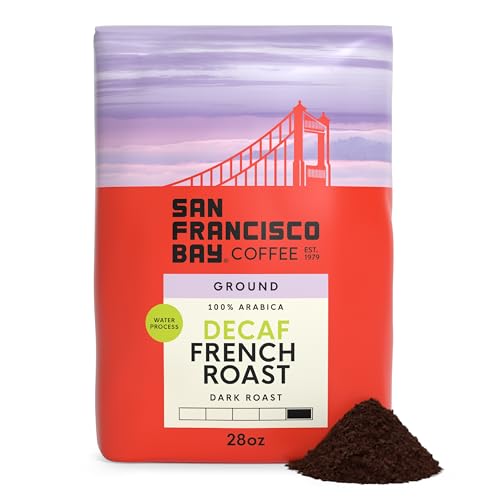
I prefer San Francisco Bay Decaf Dark Roast when I want a bold, smoky flavor without the caffeine, and it’s especially well-suited for those who prioritize clean processing and environmental responsibility. It uses 100% arabica beans from high-altitude farms in Central and South America, hand-picked for quality. The Swiss Water Process removes caffeine without chemicals, preserving flavor while meeting purity and sustainability standards. This dark roast delivers richness and a smoky finish, ideal for drip, pour over, French press, or Aeropress. Use two tablespoons per 6oz water, adjusting to taste. It comes in a 28 oz ground bag, is Kosher certified, and backed by a satisfaction guarantee.
Best For: Those seeking a bold, smoky decaf coffee experience with a commitment to chemical-free processing and sustainable, eco-friendly practices.
Pros:
- Uses 100% arabica beans from high-altitude farms, ensuring rich flavor and quality
- Swiss Water Process removes caffeine without chemicals, preserving taste and supporting sustainability
- Versatile for multiple brewing methods including drip, pour over, French press, and Aeropress
Cons:
- Limited origin variety, sourcing only from Central and South America
- Ground coffee format may not suit those who prefer whole beans for freshness
- Bold, smoky profile may be too intense for those who prefer milder decaf options
Boxer Coffee 52ct Decaf Colombian Pods

You’ll want this if you’re after a clean, single-origin decaf that keeps the character of the bean without harsh chemicals in the process-Boxer Coffee’s 52ct Decaf Colombian Pods use the Swiss Water Process, so caffeine’s removed naturally in Vancouver with no solvents, making it ideal for health-conscious drinkers who still want rich flavor. Roasted to just past medium, these pods deliver toasty caramel and dark chocolate notes, balanced and deep without going dark. They’re compatible with Keurig brewers, and since they’re single-origin, you taste the bean’s true profile. For a milder cup, brew on a larger setting-these can be strong. The recyclable bulk box cuts waste, and each purchase supports animal welfare.
Best For: Health-conscious coffee drinkers who want a naturally decaffeinated, single-origin medium roast with rich flavor and a clean finish, while supporting sustainability and animal welfare.
Pros:
- Uses the chemical-free Swiss Water Process for natural decaffeination, preserving bean integrity and flavor
- Single-origin Colombian beans roasted to a medium level (Agtron 32) offer toasty caramel and dark chocolate notes with depth and balance
- Eco-friendly recyclable bulk packaging and a portion of each purchase supports animal welfare initiatives
Cons:
- May be stronger than expected for some decaf drinkers, requiring adjustment of brew size for a milder cup
- Limited to Keurig K-Cup brewers, reducing compatibility with other single-serve systems
- Single-origin profile may lack the blend complexity preferred by some coffee enthusiasts
Factors to Consider When Choosing Decaf Coffee Swiss Water Process
You’ll want to take into account where the beans are grown, since origin affects flavor and quality-Colombian and Ethiopian beans, for example, often bring different notes to your cup. Think about roast level too, as lighter roasts tend to preserve more of the bean’s natural taste while darker roasts add body and smokiness. Don’t overlook certifications like organic or Fair Trade, which can signal better sustainability and ethical practices, and keep your personal flavor preferences in mind when choosing a profile that suits your morning routine.
Bean Origin Importance
Origin shapes flavor-more than just a label, it’s a map of taste. You’ll notice clearer acidity, sweetness, and body when you choose beans from regions with ideal altitude, soil, and climate. High-elevation farms grow denser beans with complex sugars, helping them keep rich, nuanced flavors even after Swiss Water Process decaffeination. If you prefer fruity or floral notes, go for African beans-Ethiopian or Kenyan lots often deliver brightness. For chocolatey, nutty depth, pick Central or South American beans from Colombia, Guatemala, or Costa Rica. Sustainable practices like shade-growing and organic farming maintain bean quality, making them more consistent in the cup. Traceability matters-roasters who know their source can select beans that survive decaffeination without losing character. You’re not just buying decaf; you’re choosing origin-driven quality that holds up from farm to brew.
Roast Level Impact
When selecting a decaf coffee processed with the Swiss Water Method, roast level plays a critical role in shaping the final cup. You’ll find that lighter roasts preserve the bean’s bright, complex flavors-ideal if you want to taste the origin characteristics the Swiss Water Process protects. Medium roasts strike a sweet spot, balancing body and acidity while letting nuanced notes shine through. If you prefer boldness, go dark, but beware: extended roasting adds smoky, bittersweet tones that can mask the clean, smooth profile this decaf method is known for. Dark roasts also bring roast-derived bitterness, which may overpower the subtle sweetness you’re after. Since decaffeination slightly alters flavor, many roasters use medium to medium-dark profiles to restore depth and richness without sacrificing clarity. Pick your roast based on your taste-bright and complex, balanced, or rich and heavy-but know that medium often delivers the most faithful expression of quality Swiss Water Process decaf.
Certifications To Consider
Roast level influences flavor, but certifications shape what goes into your cup and how it’s produced. When choosing Swiss Water Process decaf, look for USDA Organic to guarantee no synthetic pesticides or fertilizers were used. Fair Trade Certified means farmers got fair pay and safe working conditions, which supports long-term sustainability. If dietary compliance matters, pick Kosher certified beans-those meet strict food guidelines. For environmental care, Rainforest Alliance Certified beans come from farms that protect ecosystems and cut down on harmful chemicals. Also, verify the decaf process is officially Swiss Water Process certified, which guarantees no solvents are used and confirms the coffee is 99.9% caffeine-free. These certifications aren’t just labels-they’re proof of cleaner production, better farming practices, and a more transparent supply chain. You don’t need all of them, but picking one or two that match your values guarantees you’re drinking coffee made responsibly.
Flavor Profile Expectations
Flavor matters just as much in decaf as it does in regular coffee, and the Swiss Water Process delivers by removing caffeine without sacrificing taste. You get a clean, balanced cup because this method uses only water, heat, and time-no chemicals. That means the soluble compounds responsible for flavor stay intact. Expect preserved acidity, body, and sweetness true to the bean’s origin and roast. With medium roasts, you’ll often taste notes like chocolate, nuts, or caramel. Dark roasts keep their boldness and depth, offering smoky or toasted flavors with a smooth finish, free from the off-notes linked to chemical processing. Since the process protects aromatic complexity, your brewed coffee won’t taste flat or dull. If you use a French press or pour-over, you’ll notice the richness even more. Choosing Swiss Water-processed decaf means you don’t have to settle for less flavor-just pure, true coffee taste, minus the caffeine.
Sustainability Practices
You can enjoy a flavorful cup without compromising the planet when you choose decaf coffee processed with the Swiss Water Method. It uses only water, temperature, and time-no chemical solvents-so there’s less risk of environmental contamination. The system runs in a closed loop, recycling 99.8% of water and solution, cutting down waste. Many Swiss Water decaf brands also carry certifications like Organic or Fair Trade, which enforce eco-friendly farming. Look for labels indicating shade-grown, high-elevation beans; they support biodiversity and healthier soil. Because no synthetic chemicals are used, watersheds near processing plants stay protected. When you buy Swiss Water decaf, you’re often supporting farms that prioritize long-term sustainability. It’s a practical choice if you want lower caffeine without trading off environmental responsibility. Just check packaging for sourcing details and certifications to be sure.
Frequently Asked Questions
Is the Swiss Water Process Environmentally Sustainable?
Yes, the Swiss Water Process is environmentally sustainable because it uses only water, temperature, and time to decaffeinate coffee-no chemicals. You get residue-free beans, and the method recycles the caffeine-rich water, reducing waste. It’s energy-intensive, though, so it’s not perfect. Compared to solvent-based methods, it’s a cleaner choice, especially if you prioritize chemical-free processing and support eco-conscious roasters using this method.
Does Decaf Coffee Affect Sleep Quality?
You’ll likely sleep fine drinking decaf coffee, since it removes 97–99% of caffeine. Most brands have less than 5 mg per cup, versus 95+ mg in regular. But some people stay sensitive-even small amounts can disrupt sleep if you’re prone to anxiety or insomnia. Decaf made with the Swiss Water Process avoids chemicals but doesn’t change sleep impact. Try cutting out decaf at night if you’re unsure.
Can I Use These Grounds for Cold Brew?
You can use those grounds for cold brew, but only if they’re coarsely ground-standard drip grind will clog your filter and over-extract. Cold brew needs a long steep, usually 12–16 hours, so fresh, dry grounds work best. Used grounds lack flavor and might turn bitter. If you’re starting from scratch, grind whole beans coarse, like sea salt. Use a ratio of 1:8 coffee to water, then dilute when serving.
Is Decaf Safe for Pregnant Women?
Yes, decaf is generally safe for pregnant women when consumed in moderation. You can enjoy up to 200mg of caffeine daily, and decaf contains about 2–5mg per cup, well below the limit. The Swiss Water Process removes caffeine without chemicals, which many find reassuring. Still, check labels-some decafs use solvents like methylene chloride. When in doubt, opt for water-processed or CO2-processed decaf to minimize exposure risks during pregnancy.
Does Swiss Water Decaf Retain Coffee’s Antioxidants?
Yes, you get to keep most of the antioxidants when you choose Swiss Water decaf. The process removes caffeine without harsh chemicals, using only water and time to preserve compounds like chlorogenic acids. Compared to some solvent-based methods, Swiss Water retains more of these beneficial elements. You’re still drinking coffee, just without the caffeine-so you don’t sacrifice health perks. Look for certified Swiss Water Process labels to guarantee quality and consistency.