Best Ground Coffee for Percolator That Brews Bold Perfection
You want bold, rich flavor from your percolator, so choose a dark roast with a coarse grind. Go for Starbucks Italian Roast or Chock Full o’ Nuts Dark Roast-both use 100% Arabica beans and deliver intense, smooth flavor that holds up under repeated brewing. Their coarse grinds reduce bitterness, while the dark roasts enhance body and depth. Avoid light or fine-ground coffees. For even better results, store your coffee in an airtight container away from light. There’s more to get right for consistent, café-quality cups every time.
We are supported by our audience. When you purchase through links on our site, we may earn an affiliate commission, at no extra cost for you. Learn more. Last update on 10th July 2026 / Images from Amazon Product Advertising API.
Notable Insights
- Dark roast coffees like Starbucks Italian Roast deliver bold, intense flavors ideal for percolators’ prolonged brewing cycles.
- Coarse ground coffee prevents over-extraction and sediment, ensuring a clean, robust cup in percolator brewing.
- 100% Arabica beans from high-altitude regions, such as in Gevalia Guatemala, provide rich, full-bodied flavor with depth.
- Repeated water cycling in percolators benefits from low-acidity, high-body beans that maintain balance without turning bitter.
- Brands like Chock Full o’ Nuts offer dark roast blends in large, light-blocking cans that preserve freshness and bold taste.
Gevalia Guatemala Medium Roast Coarse Ground Coffee

If you’re using a percolator and want a coffee that delivers consistent flavor without overpowering your brew, Gevalia Guatemala Medium Roast Coarse Ground Coffee is a solid pick. I’ve found it strikes a reliable balance-medium-bodied, with earthy, smoky notes and just a touch of cocoa. Since it’s made from 100% Arabica beans grown at high altitudes in Guatemala, the quality is steady. Rainforest Alliance Certified and Kosher, it also supports sustainable practices. The coarse grind works well for percolators and French press alike, though finer grinds clog faster. I appreciate the resealable bag with a tin tie-it keeps the coffee fresh without needing extra containers. While it won’t mimic a dark roast’s intensity, it avoids bitterness, giving you a smoother, drinkable cup every time.
Best For: Coffee lovers who prefer a smooth, medium-bodied brew with earthy, smoky notes and use French press or percolator methods.
Pros:
- Made from 100% Arabica beans, Rainforest Alliance Certified, and Kosher, ensuring quality and sustainable sourcing
- Coarse grind ideal for French press and percolators, preserving flavor and preventing over-extraction
- Resealable bag with tin tie helps maintain freshness without transferring to another container
Cons:
- Coarse grind not suitable for espresso machines or pour-over methods requiring finer consistency
- Lacks the bold intensity of dark roasts, which may disappoint those who prefer stronger flavor
- Limited to single-origin profile, which may be less complex compared to blended coffees
Amazon Fresh, Colombia Ground Coffee, Medium Roast, 32 Oz
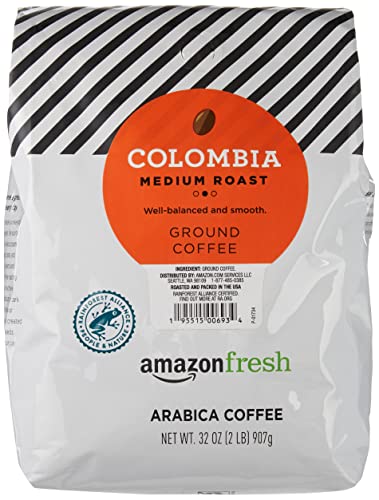
I reach for Amazon Fresh Colombia Ground Coffee when I want a dependable, no-fuss medium roast that delivers a balanced cup without surprises-ideal for percolator users who prioritize consistency and value. It’s 100% Arabica beans from Colombia, roasted and packed in the U.S.A. to lock in freshness. The 32-ounce bag offers a full-bodied flavor with a smooth finish, subtle citrus notes, and hints of cocoa and brown sugar. I find it works best when I use it within a few weeks of opening. While it won’t replace a premium specialty roast, it outperforms many grocery-store brands in flavor stability and cost per brew.
Best For: Daily coffee drinkers seeking a consistent, value-driven medium roast with balanced flavor and reliable freshness.
Pros:
- Made with 100% Arabica beans sourced from Colombia for a high-quality, smooth cup
- Full-bodied with nuanced notes of citrus, cocoa, and brown sugar, offering better flavor depth than many grocery-store brands
- Large 32-ounce bag provides excellent value and reduces refill frequency
Cons:
- Flavor peaks shortly after opening; best consumed within a few weeks for optimal freshness
- Lacks the complexity and artisanal quality of premium specialty roasts
- Packaging, while functional, offers minimal resealability to protect against staling
Starbucks Italian Roast Ground Coffee (18 oz)

Starbucks Italian Roast Ground Coffee (18 oz) delivers a bold punch that stands up well in a percolator, making it a solid pick for those who crave a strong, full-bodied brew without straying from quality. I’ve found its dark roast-deeper than their Espresso Roast-brings out rich notes of dark cocoa and toasted marshmallow, ideal for drinkers who prefer intensity. It’s made from 100% Arabica beans, ethically sourced with Conservation International, and roasted to match the standards in Starbucks cafes. The 18-ounce resealable bag keeps it fresh, and while it’s marketed for drip or press, I’ve used it in a percolator with no issues-just expect robust, smoky depth, not brightness. It’s a no-frills option if you prioritize strength and consistency over nuanced flavor. Nestlé packages it under license, so quality stays reliable.
Best For: Coffee lovers who prefer a bold, intense dark roast with rich, smoky depth and a consistent, full-bodied brew.
Pros:
- Deep, intense flavor with notes of dark cocoa and toasted marshmallow, surpassing even Starbucks’ Espresso Roast in darkness
- Made from 100% Arabica beans, ethically sourced in partnership with Conservation International
- Versatile ground consistency suitable for drip, press, pour-over, moka pot, and percolator brewing methods
Cons:
- Lacks bright or acidic notes, which may disappoint those seeking a more nuanced or balanced cup
- Packaged by Nestlé under license, which some brand purists may view as a deviation from café-sourced quality
- Strong, smoky profile may be overpowering for those who prefer medium or light roasts
Chock Full o’ Nuts Dark Roast Coffee (23 oz)

Chock Full o’ Nuts Dark Roast Coffee (23 oz) is one of the few budget-friendly, widely available options that delivers a consistently bold and smooth brew in a percolator. I’ve used it for years, and it holds up thanks to its rich, non-bitter flavor and café-style aroma. Made from premium beans since 1932, it’s a no-nonsense choice that works just as well in drip machines or pour-overs. The kosher-certified blend stays fresh in its recyclable steel can, which blocks light and moisture. You get a full 23 ounces per container-more than most-making it a practical pick for daily use without sacrificing quality.
Best For: Budget-conscious coffee drinkers seeking a reliably bold, smooth, and aromatic dark roast that performs well across brewing methods, especially in percolators.
Pros:
- Delivers a rich, bold flavor with café-quality aroma without bitterness
- Versatile ground format works seamlessly in drip machines, pour-overs, and percolators
- Packaged in a 23 oz recyclable steel can that preserves freshness and supports sustainability
Cons:
- Limited origin transparency for beans used in the blend
- May be too bold for those preferring mild or medium roasts
- Not available in single-serve or pod formats for convenience brewing
Dunkin’ Original Blend Medium Roast Ground Coffee, 12 Ounce

Dunkin’ Original Blend Medium Roast Ground Coffee is a solid choice for those who want a no-fuss, reliable brew that delivers a smooth, consistent flavor in a percolator. I use 100% Arabica beans sourced globally, giving you that rich, balanced taste without bitterness. Since it’s medium roast, it holds up well under percolation without turning harsh. The 12-ounce resealable bag keeps the grounds fresh, and it’s Kosher certified, so dietary needs are covered. You’ll get a caffeinated kick every time, just like at the shop. If you value convenience and consistency over bold intensity, this blend earns its place in your cabinet.
Best For: Home brewers seeking a smooth, reliable medium roast with consistent flavor and convenient resealable packaging for daily use.
Pros:
- Made from 100% premium Arabica beans for a rich, balanced taste
- Resealable 12-ounce bag helps preserve freshness and aroma
- Kosher certified and delivers a consistent, caffeinated brew perfect for percolators
Cons:
- Medium roast may lack the bold intensity preferred by dark roast enthusiasts
- Ground format limits versatility for those using non-drip brewing methods
- No single-serve or pod options included for on-the-go convenience
Sello Rojo Traditional Medium Roast Ground Coffee, 10 oz

If you’re looking for a reliable, no-fuss coffee that delivers a smooth and balanced cup without sharp acidity, Sello Rojo Traditional Medium Roast is a solid pick-especially if you value origin authenticity and consistent flavor. I find it works best in French press or drip machines, where its full body and velvety texture come through cleanly. Grown and roasted in Colombia, it carries genuine heritage, with beans selected for low acidity and rich aroma. It’s not ideal for espresso or percolators, which can over-extract and mute its balance. At 10 oz, the bag is smaller than others, but freshness stays locked in.
Best For: Coffee lovers who prefer a smooth, balanced, medium roast with authentic Colombian heritage and low acidity, ideal for French press or drip brewing.
Pros:
- Delivers a bold, smooth cup with velvety notes and naturally low acidity
- Expertly roasted in Colombia to preserve freshness and rich aroma
- Versatile for French press and drip coffee makers with consistent full-bodied flavor
Cons:
- Not suitable for espresso or percolator brewing due to flavor balance issues
- Smaller 10 oz package size compared to other brands
- Limited availability outside of specialty or Latin American markets
Tim Hortons Coarse Grind Original Blend 300g
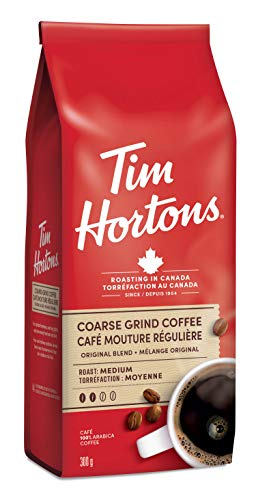
Tim Hortons Coarse Grind Original Blend 300g works best for those who prioritize a consistent, no-fuss cup with a familiar flavor profile and need a reliable option that holds up in a percolator. I find it delivers a solid medium roast taste-balanced, mildly caffeinated, and never overpowering. Since it’s kosher certified, it suits a range of dietary needs. The 300g bag weighs just 0.71 pounds and fits neatly into storage, though the packaging isn’t resealable, so I recommend transferring it to an airtight container. At 8.54 inches tall, the pouch is compact and practical. While not specialty-grade, it’s a dependable, budget-friendly pick for daily use.
Best For: Budget-conscious coffee drinkers seeking a reliable, medium roast ground coffee for everyday use, especially those using percolators.
Pros:
- Consistent, balanced flavor ideal for daily brewing
- Kosher certified, accommodating various dietary preferences
- Compact 300g bag with lightweight, space-saving design
Cons:
- Packaging is not resealable, risking freshness loss
- Not specialty-grade, lacking nuanced flavor notes
- Ground form may not suit all brewing methods equally well
French Market Coffee & Chicory Blend

I’ve found the French Market Coffee & Chicory Blend works best for percolator users who want a bold yet smooth cup with reduced acidity and no harsh aftertaste. I use the ground version, but it’s also available in whole beans and pods. The 100% Arabica beans and imported French chicory give it a medium-dark roast profile with caramelized sweetness and a clean finish. Master roasters craft it in small batches, ensuring consistency and quality. Rooted in New Orleans tradition since 1890, it’s built for those who value heritage and flavor balance. It’s less acidic than standard coffee, making it easier on the stomach. The brand supports farmers through the Sustainable Cup Project, which funds community improvements. I’ve tried it side-by-side with darker roasts, and while it lacks their smokiness, it stands out for smoothness and drinkability. If you’re switching from plain coffee, this blend offers a distinctive twist without requiring gear changes. Just mind the grind-fine for percolators, avoids sediment. A solid choice if you prefer depth without bitterness.
Best For: Percolator users seeking a bold, smooth cup with reduced acidity and a rich, balanced flavor rooted in New Orleans tradition.
Pros:
- Smooth, medium-dark roast with caramelized sweetness and no bitter aftertaste
- Lower acidity makes it easier on the stomach compared to regular coffee
- Supports sustainability and farmer communities through the Sustainable Cup Project
Cons:
- Lacks the deep smokiness of darker roasts preferred by some bold coffee drinkers
- Fine grind may cause sediment if not filtered properly in percolators
- Chicory blend may not appeal to those who prefer traditional 100% coffee without additives
Starbucks Pike Place Roast Ground Coffee
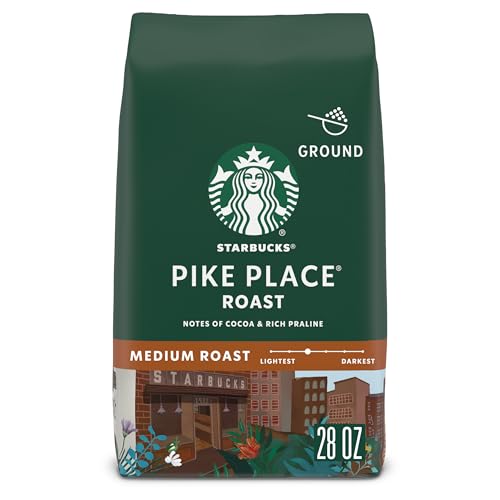
Starbucks Pike Place Roast Ground Coffee works best for percolator users who prefer a consistent, medium-bodied brew with a smooth and approachable flavor. I find it reliably balanced, with subtle cocoa and praline notes that don’t overpower. It’s made from 100% Arabica beans, so quality stays high, just like in Starbucks cafes. While it’s not a dark roast, its richness holds up well in a percolator if you avoid over-brewing. I’d say it’s ideal for daily use when you want something familiar and satisfying without bitterness. You can use it in other brewers too, which adds flexibility.
Best For: Percolator users who want a smooth, medium-bodied coffee with a balanced, approachable flavor and subtle cocoa and praline notes.
Pros:
- Made from 100% Arabica beans, ensuring consistent, high-quality flavor
- Smooth, well-balanced profile that’s ideal for daily drinking
- Versatile for multiple brewing methods, including drip, French press, and pour-over
Cons:
- Not a dark roast, so may lack intensity for those who prefer bold, smoky flavors
- Percolator use risks over-extraction if not carefully monitored
- Subtle flavor notes may be less pronounced in certain brewing methods
McCafe Premium Medium Roast Ground Coffee (24 oz Canister)
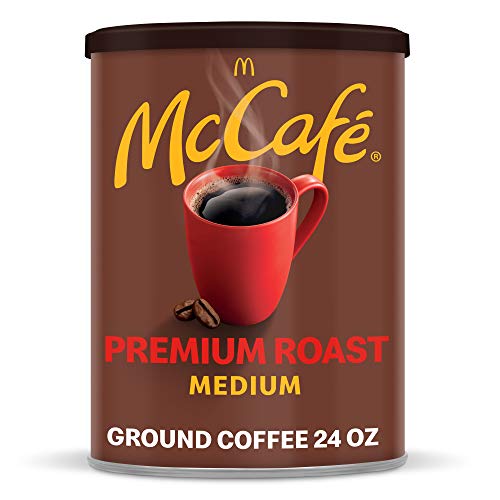
If you’re after a no-fuss, reliable ground coffee that delivers a consistently smooth and aromatic brew in your percolator, McCafe Premium Medium Roast is a practical choice for everyday use. I use 1–2 tablespoons per 6 ounces of water, and it brews a clean, balanced cup with rich aroma and no bitterness. It’s made from 100% Arabica beans sourced from top regions, roasted under strict controls for quality. The 24-ounce canister seals tightly to keep flavor fresh. Though labeled medium roast, packaging notes it as light-something to keep in mind if roast level matters to you. It’s Orthodox Union Kosher certified and responsibly sourced, supporting both ethical farming and environmental sustainability.
Best For: Home coffee drinkers seeking a consistent, smooth, and aromatic everyday brew with the convenience of pre-ground, responsibly sourced Arabica beans.
Pros:
- Made from 100% premium Arabica beans with a rich aroma and clean, balanced flavor
- Features a tightly sealed 24-ounce canister to preserve freshness and aroma
- Certified Orthodox Union Kosher and made with 100% responsibly sourced beans for ethical and environmental support
Cons:
- Roast level discrepancy-labeled as medium roast in descriptions but noted as light roast on packaging
- Pre-ground format may not suit those who prefer grinding beans fresh
- Flavor profile leans mild, which may not satisfy those seeking bold or intense coffee taste
Factors to Consider When Choosing Ground Coffee for Percolator
You’ll want to pick a ground coffee that matches your percolator’s needs, starting with a coarse grind to avoid over-extraction and bitterness. Roast level matters too-darker roasts like French or Italian add boldness, while medium roasts such as McCafe Premium keep things balanced. Always check bean quality and flavor profile, since fresher, whole-bean grounds used right after grinding deliver cleaner taste than pre-ground options sitting on shelves.
Grind Size Compatibility
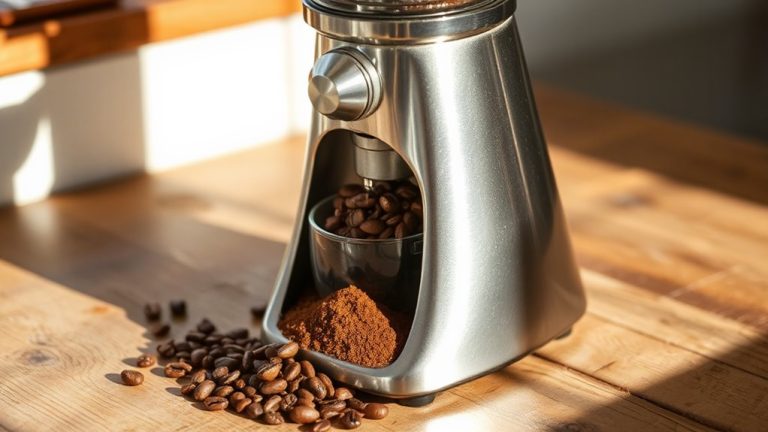
A coarse grind acts like a sturdy gatekeeper in your percolator, letting hot water pass through without dragging excess silt into your cup. If your grounds are too fine, they’ll slip through the filter basket, leaving grit at the bottom and often a bitter taste. That’s because percolators cycle hot water repeatedly through the coffee, and small particles over-extract fast. Coarse grains handle this steady exposure better, staying balanced instead of turning harsh. You also need uniform particles-uneven sizes extract inconsistently, disrupting flavor and temperature flow. Avoid pre-ground coffee meant for drip machines or espresso; those grinds are too fine and might clog the system or make a muddy, sharp brew. Always check the label: “coarse” or “percolator grind” works best. When in doubt, grind whole beans at home with a burr grinder set wide to guarantee proper size and consistency.
Roast Level Impact
Since percolators expose coffee to prolonged, high-heat brewing cycles, roast level plays a key role in determining the final taste. You’ll want dark roasts most of the time-their bold, robust flavors handle repeated boiling without fading. These roasts extract evenly under high heat, giving you a strong, consistent cup. Medium to dark roasts also bring out fuller body and deeper notes, which the percolator enhances naturally. Light roasts? They tend to turn bitter or sharp because the aggressive process amplifies acidity and delicate tones. They’re also less soluble under cycling heat, so they don’t extract as cleanly. Darker beans dissolve more readily, matching the percolator’s pressure-driven flow. If you like clarity and subtle complexity, a percolator might not suit you-but for rich, punchy coffee, stick with darker profiles. It’s the simplest way to get reliable, satisfying results every time.
Flavor Profile Balance
When choosing ground coffee for a percolator, aiming for a balanced flavor profile means selecting beans that hold up to repeated brewing cycles without turning harsh or flat. Opt for medium to dark roasts, which naturally offer smoother extraction and reduce sharp acidity. Percolators recirculate hot water through the grounds, intensifying flavor-so beans with low acidity and a solid body perform best. Look for coffees with notes of cocoa, caramel, or nuts; these stay consistent and pleasant throughout brewing. A coarse grind helps too, preventing over-extraction and keeping your cup clean and well-rounded. Fine grinds can slip through, adding bitterness. Brands like Folgers Classic Roast or Don Tomas Special Reserve deliver this balance reliably. You’re not chasing brightness or fruity notes here-those get amplified into astringency. You want harmony: a steady, bold sip from start to finish, without one flavor overwhelming the rest.
Brewing Method Flexibility
While you might be tempted to use whatever ground coffee you have on hand, not all grinds work well in a percolator-choosing the right one matters. You need a coarse to medium-coarse grind to handle the percolator’s repeated water cycling. Fine grounds turn bitter and muddy because they over-extract and slip through the filter. A uniform grind size keeps extraction even, so each cup tastes clean and balanced. Since percolators expose coffee to prolonged heat, medium or dark roasts hold up better, maintaining flavor without turning sharp or harsh. You’re better off avoiding espresso or drip grinds-those are too fine. Instead, pick grinds labeled for percolators or French press. That little adjustment gives you flexibility across brewing methods without wrecking your brew. It’s a small detail, but it makes the difference between a decent cup and a consistently good one.
Bean Quality Importance
Choose high-quality ground coffee if you want a clean, flavorful percolator brew-bean type matters. Use 100% Arabica beans for a smoother, richer taste with less bitterness than Robusta. Beans grown at higher altitudes pack denser interiors and stronger flavor, helping them handle the percolator’s repeated brewing cycles without turning harsh. Look for uniformly ripened, evenly graded beans-they roast consistently, preventing sour or ashy notes in your cup. Avoid low-quality blends with fillers or uneven roasting; they extract unevenly and often taste flat or burnt. Beans with naturally low acidity perform better, since percolators can amplify sour or sharp notes if the quality slips. While freshness is key, focus first on bean origin and grading. You’ll get better results from well-grown, properly processed beans, even if ground a few days prior, than from stale or poorly sorted ones. Choose smart, not just fresh.
Freshness Preservation
You’ve picked high-quality Arabica beans grown at high altitudes for their rich flavor and resilience in a percolator-now keep that quality intact by paying attention to how the coffee is stored. Choose ground coffee in airtight, light-blocking packaging to protect volatile aroma compounds and slow oxidation, preserving freshness for up to 30 days after opening. Opt for vacuum-sealed or nitrogen-flushed bags when possible-they reduce oxygen exposure, which quickly degrades flavor oils. A resealable closure, like a zipper or tin tie, helps limit air and moisture from getting in each time you open it. Remember, ground coffee stales faster than whole beans, so aim to use it within one to two weeks of opening for the boldest brew. Store it in a cool, dark place away from heat and humidity to prevent condensation and maintain its full aromatic profile between uses.
Frequently Asked Questions
Can I Use Pre-Ground Espresso in a Percolator?
You can use pre-ground espresso in a percolator, but it’s not ideal. The fine grind may slip through the filter, making the coffee muddy or overly bitter. Percolators work best with medium to coarse grounds that handle repeated cycling through hot water. For clearer, smoother results, stick with coffee labeled for drip or filter brewing. If you do use espresso, check your percolator’s filter strength and expect a stronger, potentially harsher cup.
How Long Does Ground Coffee Stay Fresh After Opening?
You’ve got about 2–3 weeks of peak freshness after opening ground coffee. After that, it steadily loses flavor and aroma due to oxidation. Store it in an airtight container away from light, heat, and moisture to slow degradation. Freezing isn’t recommended for daily use-it introduces condensation. For best results, buy whole bean and grind fresh; pre-ground works but degrades faster, especially in percolators that amplify staleness.
Is It Safe to Leave Percolated Coffee on a Warmer?
Yes, it’s safe to leave percolated coffee on a warmer, but you shouldn’t keep it there too long. Leaving it for more than 20–30 minutes degrades flavor and can make it bitter. The heat dries it out and breaks down volatile compounds. If you need to hold it, use a thermal carafe instead of a hot plate-it keeps temperature stable without scorching. For best taste, brew only what you’ll drink right away.
Can I Reuse Coffee Grounds in a Percolator?
No, you can’t reuse coffee grounds in a percolator. Once brewed, they’ve released most of their flavor and oils, so reusing them gives weak, flat coffee. You’ll also risk over-extracting bitter compounds on the second pass. Fresh grounds guarantee proper strength and taste. If you’re conserving beans, adjust your grind or dose instead. Rebrewing spent grounds won’t save money effectively and compromises quality every time. Stick to fresh for the best results.
Does Percolator Coffee Have More Caffeine Than Drip?
Yes, percolator coffee usually has more caffeine than drip because it brews longer and recirculates hot water through the grounds multiple times, extracting more compounds. You get a stronger, fuller-bodied cup, but over-extraction can make it bitter. If you want higher caffeine and bold flavor, a percolator works well-just don’t overdo the brew time. Drip machines are cleaner and milder, better if you prefer smoothness over intensity.