Best Indian Coffee Beans That Deliver Bold, Rich Flavor
You get bold, rich flavor from Indian coffee beans like Monsoon Malabar AA or Indian Summer Dark Roast, which offer deep earthy notes, creamy body, and low acidity thanks to monsooning or dark roasting. Arabica beans like Araku Ember provide complexity with berry and spice, while Robusta blends add heft. These beans work well in French press, espresso, or drip brewing. Whole bean format guarantees freshness, and vacuum-sealed bags help maintain quality over time-smart choices depend on your taste and brew method. There’s more to how region and process shape these profiles.
We are supported by our audience. When you purchase through links on our site, we may earn an affiliate commission, at no extra cost for you. Learn more. Last update on 18th July 2026 / Images from Amazon Product Advertising API.
Notable Insights
- Indian Summer Dark Roast delivers bold, rich flavor with dark chocolate and pepper notes, balanced by a smooth, creamy finish.
- Monsoon Malabar beans develop a full-bodied, earthy profile after monsooning, reducing acidity and enhancing chocolaty, mellow depth.
- Araku Ember features bold, complex notes of berry, melon, and honey, sourced from high-altitude volcanic soil and organic tribal farms.
- Golden Shevroy’s medium-dark roast brings out rich spice-kissed flavors like cinnamon and clove, grown in mineral-rich laterite soil.
- Sustainably sourced, single-origin Indian beans from Karnataka, Kerala, and Tamil Nadu offer bold richness with low acidity and high traceability.
Indian Monsoon Malabar Light Roast Coffee (2 lb)

If you’re after a coffee that delivers a truly distinct flavor shaped by its environment, Indian Monsoon Malabar Light Roast is your best bet. I source this 2 lb whole bean batch from southern Mysore, using Kent and Cauvery varietals that undergo monsooning and sun-drying. The process gives it a mellow profile with a creamy, chocolaty mouthfeel, ideal for pour-over or French press. It’s kosher and sustainably sourced, roasted in the USA with a low-emission Loring machine. You’ll find it only in whole bean, so you’ll need a grinder-but that keeps flavor fresh. For consistent quality and unique terroir expression, it’s hard to beat.
Best For: Coffee lovers seeking a unique, mellow, and sustainable single-origin light roast with rich terroir expression from southern India.
Pros:
- Distinctive monsooning process imparts a creamy, chocolaty mouthfeel and smooth flavor
- Sustainably sourced and roasted in an eco-friendly Loring roaster to minimize environmental impact
- Kosher-certified, single-origin whole beans for freshness and purity
Cons:
- Available only in whole bean form, requiring a grinder for brewing
- Larger 2 lb size may not be ideal for those who prefer smaller batches or frequent variety rotation
- Unique monsooned profile may be too mild or earthy for fans of bold or acidic coffees
Indian Monsoon Malabar Light Roast Coffee

I choose Indian Monsoon Malabar Light Roast when I want a smooth, low-acidity coffee that stands out for its unique processing and rich mouthfeel, especially if I’m serving guests who prefer mellow flavors over bold, sharp notes. Grown in southern Mysore, India, this single-origin bean uses Kent and Cauvery varietals and undergoes a rare monsooning process, where beans swell and lose bitterness after exposure to moist monsoon winds. I appreciate how the sun-drying after monsooning deepens its creamy, chocolaty texture. Light roasting preserves subtle notes without harshness. It’s kosher certified, sustainably sourced, and roasted in the USA using a Loring roaster, which cuts emissions. I recommend it for drip brewers or pour-over setups-it’s consistent, clean, and works well daily. Available in 12 oz, 2 lb, or 5 lb bags, the larger sizes suit households or offices with steady demand.
Best For: Coffee lovers seeking a smooth, low-acidity brew with a creamy, chocolaty mouthfeel, especially those who appreciate unique processing methods and sustainable, kosher-certified single-origin beans.
Pros:
- Unique monsooning process enhances smoothness and reduces bitterness for a mellow, rich flavor
- Sustainably sourced and roasted in the USA using an eco-friendly Loring roaster to minimize carbon footprint
- Ideal for drip and pour-over brewing, offering a consistent, clean cup with subtle, balanced notes
Cons:
- Limited availability due to single-origin sourcing and rare monsooning process
- Light roast may lack the bold intensity preferred by fans of darker roasts
- Larger bag sizes may not be practical for individuals or light coffee drinkers
Indian Monsoon Coffee Malabar AA (1lb)

Indian Monsoon Coffee Malabar AA (1lb) stands out for those who prefer a bold, full-bodied cup with minimal acidity, making it a top choice for drinkers who favor smoother profiles over bright, sharp notes. I get these beans directly from Aroma Ridge, a family-run business with over 30 years of sourcing experience. The unique monsoon process swells the beans in humid warehouses, cutting acidity while boosting body and chocolatey depth. I always receive them freshly roasted in 1lb vacuum-sealed bags, which keeps flavors locked in. If I don’t love the batch, their Amazon-based return policy makes getting a refund easy-no questions asked. It’s reliable, practical coffee for daily use.
Best For: Coffee lovers who prefer a smooth, full-bodied brew with low acidity and rich chocolate undertones, especially those seeking a unique, traditionally processed bean.
Pros:
- Distinctive monsoon processing enhances body and smoothness while reducing acidity
- Sourced directly by a family-run company with decades of heritage and quality commitment
- Freshly roasted in small batches and vacuum-sealed for maximum flavor retention
Cons:
- Unique flavor profile may not appeal to those who prefer bright, acidic, or fruity coffees
- Limited to one processing style and origin, offering less variety
- Reliance on Amazon for returns may be inconvenient for non-Amazon shoppers
Indian Monsoon Malabar Coffee 5 lb

Fresh Roasted Coffee’s Indian Monsoon Malabar 5 lb bag stands out for those who value low acidity and a smooth, full-bodied cup, making it a top pick for espresso lovers and French press users who want a bold yet mellow brew. I get this one because it’s sustainably sourced from southern Mysore, using Kents and Cauvery beans that are sun-dried and monsooned for that rich, creamy mouthfeel. The light roast brings out chocolaty notes without bitterness. Roasted in a Loring machine in the USA, it’s eco-friendly. I only wish it came in darker roasts. Whole bean keeps freshness, but you’ll need a grinder. The 5 lb size suits high-volume use-great for offices or households that go through coffee fast. Smaller bags (12 oz, 2 lb) are better if you want to test it first.
Best For: Coffee lovers who prefer a smooth, low-acidity brew with a creamy mouthfeel, especially those using French press or espresso machines.
Pros:
- Sustainably sourced single-origin beans from southern Mysore, India
- Unique monsooning process delivers a mellow, chocolaty flavor with low acidity
- Eco-friendly roasting in a Loring roaster reduces carbon footprint
Cons:
- Only available in a light roast, limiting options for dark roast enthusiasts
- Whole bean only, requiring a grinder for brewing
- 5 lb size may be too large for casual coffee drinkers or those wanting variety
Golden Shevroy Indian Coffee 12 oz

This 12 oz bag of Golden Shevroy Indian Coffee delivers a balanced, flavorful cup ideal for those who appreciate single-origin Arabica beans with a smooth, spice-kissed profile. Grown in the cool, misty Shevaroy Hills of Tamil Nadu, these specialty-grade beans develop slowly in rich laterite soil, giving them depth and sweetness. I roast them in Austin to a medium-dark level, which brings out notes of cinnamon, clove, and baker’s chocolate while keeping the body full and structured. You can use this coffee in any brew method-drip, pour-over, French press, moka pot, or espresso. Small-batch roasting and immediate sealing guarantee freshness and flavor stay locked in.
Best For: Coffee lovers seeking a smooth, single-origin Arabica with warm spice notes and versatile brew compatibility.
Pros:
- Grown in a premium, historic Arabica region with ideal climate and soil for nuanced flavor development
- Medium-dark roast enhances natural sweetness and brings out notes of cinnamon, clove, and baker’s chocolate
- Freshly roasted in small batches and sealed immediately for maximum aroma and flavor retention
Cons:
- Limited to one origin and roast profile, which may not appeal to those seeking variety
- May be less intense for fans of dark roasts or bold, smoky flavors
- Availability restricted to 12 oz bags, which may not suit bulk buyers
Indian Monsooned Malabar Light Roast Coffee

If you’re after a coffee that delivers depth without sharp acidity, the Indian Monsooned Malabar Light Roast stands out as a top pick-especially if you favor earthy, full-bodied cups similar to traditional Sumatran profiles. I get why it’s unique: green beans absorb monsoon moisture in coastal India, swelling and mellowing over weeks. The result? Low acidity, chocolate undertones, and a smooth, earthy finish. Light city roast preserves these traits while boosting aroma. I use it in French press or pour over daily-works great for cold brew or espresso too. Whole bean, 1-lb bag from Coffee Bean Direct keeps it fresh.
Best For: Coffee lovers who enjoy earthy, full-bodied flavors with low acidity and appreciate a mellow, smooth cup reminiscent of traditional Indonesian profiles.
Pros:
- Unique monsooning process enhances body and imparts distinctive earthy, chocolate-forward notes
- Low acidity makes it ideal for sensitive stomachs and balanced flavor preferences
- Versatile brewability-excellent in French press, pour over, cold brew, and espresso
Cons:
- Unusual flavor profile may not appeal to those who prefer bright, fruity, or floral coffees
- Limited roast availability, as it’s offered only as a light city roast
- Availability may be restricted due to niche processing and sourcing from a single origin
Indian Monsooned Malabar Light Roast Coffee
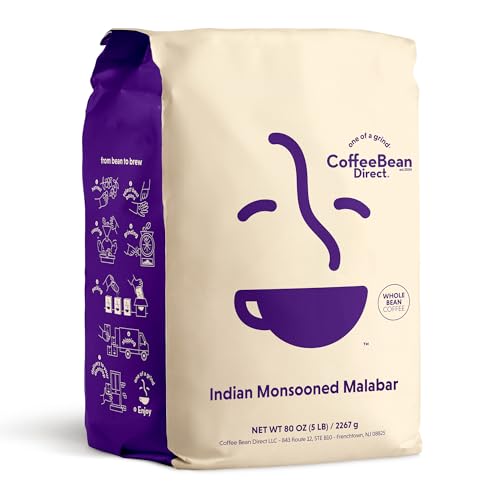
When you’re after a bold, mellow cup with deep earthy tones and next to no acidity, Indian Monsooned Malabar Light Roast stands out as the top pick among Indian coffee beans-especially if you favor a smooth, low-key brew over bright, fruity profiles. I source this coffee from the Malabar Coast, where beans swell during monsoon winds, losing acidity and gaining earthy depth. Light roasting keeps its complex character intact-think full body, subtle chocolate, and a clean finish. I pack it in 5-pound whole-bean bags to lock in freshness. It works well in drip machines, French presses, or pour-overs. Coffee Bean Direct’s roastmasters guarantee consistency, making it a reliable choice for daily use without flavor fatigue.
Best For: Home brewers, offices, and coffee enthusiasts seeking a smooth, low-acidity brew with rich body and earthy complexity.
Pros:
- Unique monsooning process enhances body, reduces acidity, and develops deep, earthy flavor with subtle chocolate notes
- Light roast preserves origin characteristics while ensuring balanced, nuanced taste and clean finish
- Large 5-pound whole-bean packaging maintains freshness and supports versatile brewing methods
Cons:
- Distinctive earthy profile may not appeal to those preferring bright, fruity, or floral coffee notes
- Requires proper storage to maintain freshness due to large bag size
- Longer shelf life means slower consumption, which could lead to flavor degradation if not stored properly
Araku Ember Indian Arabica Coffee (12 oz)

Grown at high elevations in the volcanic soil of Andhra Pradesh’s Araku Valley, Araku Ember Indian Arabica Coffee stands out for discerning drinkers who value origin transparency and specialty-grade quality. I recommend these 100% Arabica beans for their light-medium roast, which keeps the natural sweetness and bright, floral notes intact. You’ll taste berry, melon, milk chocolate, and a hint of honey-complex but balanced. The 12-ounce whole bean package guarantees freshness, especially if you grind before brewing. It works well in pour-over or drip machines. Small-batch roasted, organically grown, and traceable to tribal farms, this coffee supports sustainability without sacrificing flavor.
Best For: Discerning coffee lovers who value specialty-grade, traceable, and sustainably grown Arabica beans with bright, complex flavor notes.
Pros:
- Grown organically at high altitude in volcanic soil, contributing to vibrant flavor and floral complexity
- Light-medium roast preserves natural sweetness, clarity, and origin characteristics
- Supports small tribal farmers and promotes sustainability through biodiverse, traceable farming practices
Cons:
- Whole bean format requires a grinder for optimal freshness, which may be inconvenient for some users
- Light roast may not appeal to those preferring bold, heavy-bodied or dark roasted coffees
- Sourced from a single region, limiting variety for those who enjoy rotating origins or blends
Indian Coffee – Monsoon Malabar AA, Whole Bean, Fresh Roasted, 16-ounce

You’ll want Monsoon Malabar AA if you prefer a medium-bodied coffee with deep, earthy depth and minimal acidity, since the beans undergo a unique monsooning process that swells and transforms them over several weeks. I find it delivers distinct notes of spice, smoke, tobacco, and wood-ideal for darker roasts or espresso blends. It’s freshly roasted, sealed for freshness, and tested for mold and mycotoxins, so I trust its safety. Certified Kosher and Rainforest Alliance certified, it supports ethical farming. Roasted above 400°F, it guarantees purity without sacrificing flavor. I grind it just before brewing for the best results, especially with a French press or drip machine.
Best For: Coffee lovers who enjoy a medium-bodied, low-acidity brew with deep earthy and spicy notes, especially those seeking a unique, ethically sourced bean ideal for French press or espresso.
Pros:
- Distinctive flavor profile with notes of spice, smoke, tobacco, and wood due to the traditional monsooning process
- Certified Kosher and Rainforest Alliance certified, supporting sustainable and ethical farming practices
- Rigorous safety testing for mycotoxins and mold, plus roasting above 400°F for purity and freshness
Cons:
- Low acidity may not appeal to those who prefer bright, fruity, or citrusy coffee notes
- Earthy and smoky flavors might be too intense or acquired for some palates
- Whole bean format requires a grinder for optimal brewing, which may be inconvenient for some users
Indian Summer Dark Roast Coffee 6oz

If you’re drawn to bold, earthy flavors with a smooth finish, Indian Summer Dark Roast is a solid choice for exploring Indian Arabica beans. I find it delivers rich notes of dark chocolate and a hint of pepper, thanks to being grown near spice farms. It’s a dark roast, so it’s got depth and body, but not bitter-just creamy and well-balanced. At 6oz, it’s a small batch, which keeps the beans fresh but means you’ll need to repurchase more often than with larger bags. I recommend grinding it just before brewing for best results. Works well in drip, French press, or espresso.
Best For: Coffee lovers who enjoy bold, full-bodied dark roasts with unique spice-tinged notes and want to explore high-quality Indian Arabica beans.
Pros:
- Rich, complex flavor profile with notes of dark chocolate and pepper for a distinctive taste
- Smooth, creamy finish without bitterness, even as a dark roast
- Sustainably sourced and small-batch roasted for freshness and quality
Cons:
- Only available in a 6oz size, which may be too small for regular drinkers
- Requires frequent reordering due to limited quantity
- Best when ground fresh, which may be inconvenient for some users
Factors to Consider When Choosing Indian Coffee Beans
You’ll want to take into account the origin and region of Indian coffee beans, since places like Karnataka, Kerala, and Tamil Nadu each produce distinct flavor profiles due to their climate and elevation. Think about roast level and processing method-washed beans tend to be cleaner, while sun-dried or monsooned varieties offer heavier bodies and more complexity. Always check bean quality and freshness, and match the flavor profile to your brew method, whether you’re using a French press, pour-over, or espresso machine.
Origin And Region
Indian coffee beans thrive in the southern highlands, where elevation, climate, and soil work together to shape their character. You’ll find most Indian coffee grown at high altitudes, where cool, misty air slows bean development, boosting density and flavor complexity. The tropical monsoon climate delivers steady rainfall, while shade-grown farming preserves biodiversity and improves bean quality. Laterite and red loamy soils add balanced sweetness and depth you can taste in the cup. Arabica grows in higher zones like Kodagu and Wayanad, offering nuanced, floral notes, while Robusta thrives in warmer lower slopes, delivering bold body and earthy strength. Microclimates across Karnataka, Kerala, and Tamil Nadu create distinct profiles, so your choice depends on preferred intensity and origin-specific traits. If you want richer, more structured coffee, pick high-grown, single-origin batches from established estates.
Roast Level
While lighter roasts keep the delicate, earthy nuances of Indian beans intact-especially those influenced by monsooning-you’ll find brighter acidity and creamy, chocolaty notes most pronounced at this level. If you prefer a cleaner, more nuanced cup, go light, but roast above 400°F to guarantee safety and proper development. For a bolder, fuller body with hints of dark chocolate and pepper, dark roast brings intensity and smooth finish, ideal for espresso or milk-based drinks. You’ll lose some brightness, but gain depth and richness. Most drinkers do best with medium to medium-dark roasts-they balance sweetness, spice, and body while preserving complexity. This range highlights floral or fruity notes without sacrificing structure. Choose based on your brew method and taste: lighter for pour-over, darker for French press or espresso. Match roast to your preference, but don’t skip proper temperature control-it’s key to flavor and safety.
Flavor Profile
What makes Indian coffee unique on the cupping table? Its distinct flavor profile shaped by climate, bean type, and tradition. You’ll notice low acidity in most Indian beans, especially Monsoon Malabar, giving you a smooth, easy-drinking cup. That coffee offers mellow tones with creamy, chocolaty body and earthy depth-no sharp bite. If you prefer complexity, some Indian beans bring subtle spice, smoke, tobacco, or wood notes in a medium body. Arabica varieties can surprise you with floral hints, berry, honey, melon, and milk chocolate, especially when lightly roasted. These traits let you tailor your brew to taste-gentle and rich or nuanced and bright. When choosing, think about how these flavors match your palate. Bold doesn’t always mean intense; here, it means depth without harshness. Know the profile, and you’ll pick smarter.
Processing Method
You taste the smooth, earthy depth of a cup like Monsoon Malabar, and it’s clear the flavor didn’t come from roasting alone-it started with how the beans were processed. Indian Monsoon Malabar beans are exposed to humid monsoon winds for weeks, swelling in size and losing acidity by 30–40%. This method began by accident during colonial-era shipping, when sea moisture changed the beans’ character. Now, processors replicate it in ventilated warehouses, controlling humidity and airflow to achieve consistency. After monsooning, beans are sun-dried, deepening their full body and adding creamy, chocolaty notes. Unlike dark roasting, which masks origin traits, monsooning mellows the coffee naturally while keeping its structure intact. If you prefer low-acid, smooth cups without roasted bitterness, this process gives you that profile straight from the bean. It’s ideal for drip brewing or French press, where clarity and body matter. Just know: these beans aren’t for espresso lovers wanting brightness. Choose based on your taste-monsooned beans deliver softness few other methods can match.
Bean Quality
Bean quality shapes how your Indian coffee tastes, and a few key factors determine what ends up in your cup. Look for beans sorted by size and density-larger, denser beans like specialty-grade Arabica often score 80+ on the SCA scale, delivering balanced acidity, rich body, and complex notes of spice or chocolate. Fewer defects mean cleaner, more consistent flavor, so opt for high-grade batches when possible. Monsooned Malabar beans are a unique choice: exposed to monsoon winds, they expand, lose acidity, and develop a smooth, earthy taste prized in bold blends. While low acidity suits sensitive palates, it may lack brightness if you prefer lively cups. Always check for uniformity in color and size-this signals careful processing and roasting consistency. If you like depth without sharpness, go for monsooned or heavy-bodied Robusta hybrids from Karnataka or Kerala. Choose based on your taste preference and brewing method-espresso lovers often favor these fuller-bodied Indian profiles.
Certifications
While not always required, checking for certifications can give you clear insight into how the coffee was grown, processed, and tested. If you see Kosher certification, you know the beans met strict religious dietary guidelines during handling and processing. Rainforest Alliance certification means the farm followed environmental sustainability standards and fair labor practices-important if you value ethical sourcing. Third-party labels often include safety testing for contaminants like mycotoxins or mold, which can affect both flavor and health. These certifications don’t guarantee better taste, but they do confirm consistent quality controls from farm to bag. Look for them if you want proof of purity, safety, and responsible farming. While uncertified beans can still be excellent, certified options reduce guesswork. For everyday assurance without paying specialty prices, certified Indian coffees from regions like Coorg or Wayanad offer a reliable, no-nonsense choice.
Frequently Asked Questions
What Makes Indian Coffee Beans Unique Compared to Others?
You’ll find Indian coffee beans unique because they’re often grown in shaded, biodiverse ecosystems, especially in the Western Ghats, which slows growth and concentrates flavor. They typically have lower acidity than African beans but offer rich body and earthy, spicy notes. Monsooned Malabar beans are exposed to monsoon winds, giving them a distinct muted acidity and bold character. You can brew them well with drip, French press, or espresso, depending on roast.
Are Indian Coffee Beans Suitable for Espresso Brewing?
Yes, you can use Indian coffee beans for espresso, but choose wisely. Monsooned Malabar or robust Robusta blends work best-they’ve got the body and low acidity needed for a solid shot. Lighter Indian beans might taste flat or muddy under pressure. You’ll want a fine grind and a consistent machine like a Gaggia Classic or Rancilio Silvia. Adjust your dose and tamp pressure to avoid clogs. Indian beans won’t mimic Italian roasts, but they deliver a unique, earthy kick when dialed in right.
How Should I Store Indian Coffee Beans for Freshness?
You should store your Indian coffee beans in an airtight container away from light, heat, and moisture. Keep them at room temperature-no fridge or freezer, since condensation degrades flavor. Use opaque ceramic or stainless steel canisters, like those from Planetary Designs or Airscape. Open only when needed to minimize air exposure. Buy whole beans and grind just before brewing for the freshest cup.
Is Indian Monsoon Malabar Coffee Organic or Certified?
You’ll find most Indian Monsoon Malabar coffee isn’t certified organic, even if grown using traditional, low-chemical methods. Unless the bag specifically states USDA or EU organic certification, don’t assume it’s officially organic. Some small farms follow organic practices but skip costly certification. If certified organic matters to you, check labels for third-party verification or buy from roasters who disclose sourcing details and provide farm-specific transparency.
Can I Grind These Beans for a French Press?
Yes, you can grind these beans for a French press. Use a coarse, even grind to avoid silt and over-extraction. A burr grinder gives you better control than a blade. Indian Monsoon Malabar’s low acidity and heavy body work well with the French press’s full immersion, enhancing richness. Just don’t tamp or press-let the steep do the work. Brew for 4 minutes, stir the crust, then lower slowly. Clean your press after each use to prevent rancidity.