Best Low Acid Decaf Coffee That’s Easy on the Stomach
You want a coffee that won’t upset your stomach, and low acid decaf options like Puroast French Roast or Lucy Jo’s Organic Mellow Belly Blend deliver with pH-balanced, 70% less acidic profiles. These use chemical-free Swiss Water decaf and slow roasting to reduce irritants. Lifeboost K-Cups offer certified organic, toxin-tested convenience. Ground freshness matters-resealable bags help. Dark roasts tend to be gentler, but medium roasts keep more flavor. Pick based on your brew method and sensitivity level-details on what makes each stand out follow.
We are supported by our audience. When you purchase through links on our site, we may earn an affiliate commission, at no extra cost for you. Learn more. Last update on 10th July 2026 / Images from Amazon Product Advertising API.
Notable Insights
- Choose coffees decaffeinated using the Swiss Water Process to avoid solvents and preserve smooth, stomach-friendly flavor.
- Opt for medium to dark roasts, as longer roasting reduces chlorogenic acids that can trigger acid reflux.
- Look for pH levels of 6.0 or higher to ensure lower acidity and easier digestion.
- Select 100% organic, mold-free Arabica beans from volcanic or high-altitude regions for naturally low-acid profiles.
- Prioritize brands like Puroast or Lifeboost with third-party testing and high antioxidant content for digestive safety and health benefits.
Lucy Jo’s Organic Decaf Low Acid Coffee
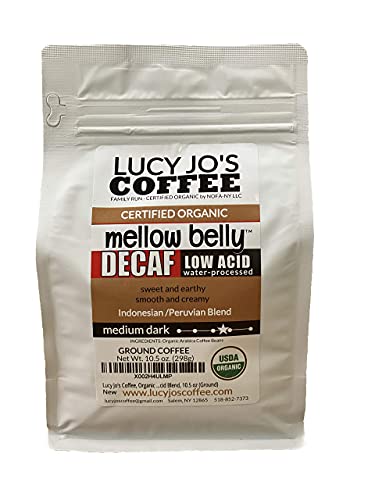
If you’ve got a sensitive stomach but still want rich, full-bodied coffee without the burn, Lucy Jo’s Organic Decaf Low Acid Coffee is one of the best choices on the market. I use 100% organic Arabica beans decaffeinated with the Water Process-no chemicals, just clean flavor. My blend combines Indonesian and Peruvian beans for a smooth, earthy taste with subtle sweetness. Roasted in small batches by hand in Upstate New York, I’m made in a family-run facility that prioritizes freshness and quality control. If you value transparency and clean ingredients, I’m a solid pick. Just don’t expect a bright, acidic zing-I’m mellow by design.
Best For: People with sensitive stomachs who want organic, low-acid coffee with a smooth, mellow flavor.
Pros:
- Made with 100% organic Arabica beans decaffeinated using a chemical-free Water Process
- Smooth, earthy, and subtly sweet flavor profile ideal for those avoiding acidic coffee
- Small-batch, hand-roasted in the USA with a focus on freshness and quality control
Cons:
- May lack the bright, lively acidity that some coffee drinkers prefer
- Ground format offers less freshness control compared to whole bean
- Higher price point due to small-batch, organic, and decaf production methods
Lucy Jo’s Organic Decaf Mellow Belly Blend

Lucy Jo’s Organic Decaf Mellow Belly Blend stands out for anyone needing a stomach-friendly coffee without sacrificing flavor or quality. I’ve found it’s made from 100% organic arabica beans sourced from Indonesia and Peru, decaffeinated using the water process-no chemicals, just clean flavor. Roasted in small 11 oz batches by hand in Upstate New York, it stays fresh and consistent. The blend delivers a smooth, creamy cup with earthy sweetness, ideal for sensitive stomachs. Since it uses single-origin beans, there are no fillers-just honest, straightforward quality. If you want low acid without compromise, this one’s worth trying.
Best For: Individuals seeking a low-acid, decaffeinated coffee that’s gentle on the stomach while delivering rich, organic flavor from high-quality single-origin beans.
Pros:
- Made with certified organic, 100% arabica beans sourced from Indonesia and Peru
- Uses a chemical-free water process for decaffeination, preserving taste and purity
- Small-batch, hand-roasted in Upstate New York for maximum freshness and flavor control
Cons:
- Limited batch size may lead to availability or restock delays
- Mellow, earthy flavor profile may not appeal to those preferring bold or bright coffees
- Higher price point typical of artisanal, organic, small-batch roasts
Folgers Simply Smooth Decaf Coffee, 11.5 Ounce

Folgers Simply Smooth Decaf Coffee in the 11.5-ounce AromaSeal canister is a solid choice for anyone who wants a gentler coffee experience without giving up familiar flavor or convenience. I find it delivers a mellow, balanced taste, now labeled Mild roast instead of Medium-though the formula hasn’t changed. It’s specially roasted to reduce irritants that cause stomach upset, which helps if you’re sensitive. The pre-ground coffee works with standard brewers, and the Interlocking AromaSeal lid keeps it fresh. One can makes up to 90 six-ounce cups, so it lasts. It’s not organic, but it’s consistent, affordable, and easy to find.
Best For: Those seeking a smooth, decaffeinated coffee that’s easy on the stomach and delivers consistent flavor with everyday convenience.
Pros:
- Specially roasted to reduce irritants, making it gentle for sensitive stomachs
- Mellow, balanced flavor with a fresh taste preserved by AromaSeal canister
- Pre-ground for convenience and yields up to 90 servings per canister
Cons:
- Not organic, which may matter to health- or environmentally-conscious buyers
- Roast labeled as Mild, which may disappoint those seeking bolder flavor
- Contains no information on bean sourcing or sustainability practices
Village Favorites Decaf Coffee 100% Arabica 1LB

Village Favorites Decaf Coffee 100% Arabica 1LB stands out for those who want a gentler coffee experience without sacrificing taste, especially if you’re sensitive to acid or caffeine. I’ve found it’s naturally low in acid and meticulously tested to be mold-free, which makes it a reliable choice for digestive comfort. It’s made entirely from premium Arabica beans sourced from Brazil and Colombia, slow-roasted to a medium profile for a smooth, balanced cup. You can brew it in a drip machine, French press, or even an espresso setup. The 16oz bag seals in freshness, and frequent restocking guarantees you’re always getting a current batch.
Best For: Sensitive stomachs and caffeine-free coffee lovers who still want a smooth, flavorful, and high-quality 100% Arabica brew.
Pros:
- Naturally low in acid and decaffeinated for gentle digestion and no jitters
- Made from 100% premium Arabica beans sourced from Brazil and Colombia for a smooth, balanced flavor
- Mold-free tested and sealed in fresh 1LB bags for consistent quality and brewing versatility
Cons:
- May lack the bold intensity preferred by fans of dark roasts or Robusta blends
- Decaf process may result in slightly reduced aroma compared to regular coffee
- Limited origin variety despite regional sourcing, offering less complexity for discerning palates
Puroast Low Acid Decaf French Roast

If you’ve ever skipped your morning cup because of acid reflux or a sensitive stomach, Puroast Low Acid Decaf French Roast might be the game-changer you’ve been looking for. It’s 70% less acidic than regular coffee, with a high pH that’s gentler on your gut and helps reduce heartburn. I appreciate that it’s packed with antioxidants-seven times more than green tea-without additives. The dark roast delivers a smooth, full-bodied flavor with zero bitter aftertaste. You can brew it in drip machines, French presses, Keurig pods, or even as cold brew. It’s sustainably sourced and roasted using carbon-neutral, renewable energy, so you’re supporting eco-friendly production.
Best For: Individuals with sensitive stomachs, acid reflux, or GERD who want a smooth, low-acid coffee without sacrificing flavor or health benefits.
Pros:
- 70% less acidic than regular coffee, making it gentle on the stomach and effective at reducing heartburn and GERD symptoms
- Rich in antioxidants-seven times more than green tea-supporting overall wellness and digestive health
- Versatile brewing options including drip, French press, Keurig, espresso, and cold brew, with a smooth, full-bodied flavor and no bitter aftertaste
Cons:
- Decaffeinated version may not appeal to those seeking a caffeine boost
- Premium pricing due to sustainable sourcing and carbon-neutral roasting process
- Dark roast flavor may be too intense for those preferring lighter, more nuanced coffee profiles
Mommee Coffee Decaf Ground 11 oz

This low-acid decaf is a smart pick for anyone who loves coffee but struggles with acid reflux, heartburn, or stomach sensitivity-especially if you’re looking for a clean, chemical-free brew. I use 100% organic Arabica beans with no additives, and the decaf process relies only on water, not solvents. It’s 100 times lower in chlorogenic acid than regular coffee, so it’s gentler on your stomach. You’ll notice a smooth, creamy taste with hints of butterscotch and caramel. The medium grind works great in drip machines or reusable pods. Just store it in a cool, dark spot-no fridge or freezer-to keep it fresh.
Best For: People who want a smooth, low-acid decaf coffee that’s gentle on the stomach and free from chemicals, especially those prone to acid reflux or digestive sensitivity.
Pros:
- Made with 100% organic Arabica beans and a chemical-free water decaf process for a clean, natural brew
- 100 times lower in chlorogenic acid than regular coffee, reducing the risk of heartburn and acid reflux
- Offers a rich, creamy flavor with notes of butterscotch, toffee, and caramel without bitterness
Cons:
- Medium grind may not suit all brewing methods without adjustment or purchase of whole bean version
- Slightly higher price point compared to conventional decaf coffees
- Flavor profile may be too mild for those who prefer bold, intense coffee tastes
Verena Street Decaf Coffee 11 Oz

I’d recommend Verena Street Decaf Coffee 11 Oz for anyone seeking a smooth, low acid decaf that doesn’t sacrifice flavor. It’s a medium roast made from 100% Arabica beans, offering a rich, mellow taste with full-bodied aroma and no bitterness. The Swiss Water Process removes caffeine naturally while preserving flavor, so you don’t get that flat or stale aftertaste some decafs have. Sustainably sourced from Rainforest Alliance Certified farms, it supports ethical farming and environmental protection. It’s kosher certified by the Orthodox Union and roasted in Dubuque, Iowa, by a family-owned company that controls quality from bean to bag.
Best For: Individuals seeking a smooth, flavorful decaf coffee with low acidity and a commitment to sustainability and ethical sourcing.
Pros:
- Uses the Swiss Water Process for natural decaffeination that preserves rich flavor and body
- Sustainably sourced from Rainforest Alliance Certified farms, supporting environmental and farmer well-being
- Kosher certified and roasted in small batches by a family-owned company for quality control
Cons:
- Limited availability outside of certain regions or online channels
- Medium roast may not appeal to those preferring bold, dark roast profiles
- Ground coffee format may sacrifice some freshness compared to whole bean
Cafe Don Pedro Decaf Low Acid K-Cups

Cafe Don Pedro Decaf Low Acid K-Cups stand out as a top pick for anyone needing a coffee that’s easy on the stomach without sacrificing flavor. I’ve found these Keurig-compatible pods deliver a smooth, rich taste thanks to their 100% Arabica beans and low-acid formula. They’re ideal if you deal with acid reflux or sensitivity. With 72 pods per pack, they’re convenient and consistent. The decaf version keeps a full-bodied profile, unlike some that taste flat. You’ll get no GMOs or molds-just clean, balanced coffee. It’s a reliable, no-fuss choice for daily use when digestive comfort matters.
Best For: Individuals with sensitive stomachs or acid reflux who want a smooth, full-flavored decaf coffee without compromising on quality or convenience.
Pros:
- Made from 100% Arabica beans with a low-acid formula for gentle digestion
- Smooth, robust flavor with no GMOs or mold, ideal for daily use
- Keurig-compatible pods offer quick, consistent brewing with 72 pods per pack
Cons:
- Limited to Keurig users, reducing accessibility for other brew methods
- Decaf flavor may still lack depth compared to caffeinated premium coffees
- Higher cost per pod compared to standard grocery store coffee options
Lifeboost Organic Decaf K-Cups (10-Count)

If you’re someone who struggles with acid reflux or a sensitive stomach but still wants a reliable, flavorful cup of decaf, Lifeboost Organic Decaf K-Cups (10-Count) are a strong option to contemplate. Grown at high elevations in Central America, these shade-grown, bird-friendly beans are hand-selected and sun-dried. They’re USDA Organic and third-party tested for pesticides, heavy metals, and over 400 toxins, ensuring purity. The medium roast delivers balanced, full flavor without bitterness. I appreciate that they’re Keurig and Keurig 2.0 compatible, making brewing simple. Plus, the 30-day satisfaction promise means trying them is low-risk.
Best For: Individuals with acid reflux or sensitive stomachs seeking a clean, low acid, and flavorful decaf coffee option.
Pros:
- USDA Certified Organic and third-party tested for over 400 toxins, ensuring a pure, safe cup
- Low acid, mold-free, and chemical-free processing ideal for sensitive digestive systems
- Medium roast with balanced, full flavor; compatible with Keurig and Keurig 2.0 machines
Cons:
- Higher price point compared to conventional decaf K-Cups
- Limited pack size (10-count) may require frequent reordering
- Flavor may be too mild for those who prefer bold or dark roast coffee
Low Acid Decaf Ground Coffee 12 oz

This low acid decaf ground coffee in a 12 oz package is ideal for anyone dealing with acid reflux, sensitive digestion, or concerns about dental enamel erosion but still wants a smooth, rich coffee experience. I’ve found it’s 30 times less acidic than regular coffee, with a pH of 6.5, thanks to flavorless electrolytes that balance acidity. It uses 100% Arabica beans and the chemical-free Swiss Water decaf process, so it’s non-GMO and clean-tasting. The medium roast delivers consistent flavor without bitterness. I grind it fresh for drip machines or pour-overs, but pre-ground works fine if you use it within two weeks.
Best For: People with acid reflux, sensitive stomachs, or dental concerns who want a smooth, flavorful decaf coffee without the acidity.
Pros:
- 30 times less acidic than leading brands with a pH of 6.5, reducing acid reflux and enamel erosion
- Uses 100% Arabica beans and chemical-free Swiss Water decaffeination for a clean, non-GMO cup
- Infused with flavorless electrolytes to neutralize acidity while preserving rich, smooth taste
Cons:
- Pre-ground format may lose freshness faster if not consumed within two weeks
- Medium roast may not satisfy those preferring bold, dark roast flavors
- Higher price point compared to conventional decaf coffees due to specialized processing
Factors to Consider When Choosing Low Acid Decaf Coffee
You’ll want to take into account the decaf method since processes like Swiss Water and CO2 remove caffeine without harsh chemicals. Look at the acidity level, roast type, and bean origin-darker roasts from regions like Sumatra tend to be smoother and less acidic. And don’t overlook flavor profile; brands like Puroast and HealthWise offer bold or balanced tastes that suit different preferences without the burn.
Decaf Method Matters
When choosing low acid decaf coffee, the method used to remove caffeine plays a key role in both flavor and digestive tolerance. You’ll want to pick beans decaffeinated with the Swiss Water Process-it uses only water, temperature, and time, so no chemical solvents touch your coffee. That means no trace residues and a cleaner, more natural taste. Unlike methods using methylene chloride or ethyl acetate, water processing preserves more oils and aromas while avoiding potential aftertastes. It also reduces chlorogenic acids linked to stomach discomfort. If you’re buying organic or want “naturally decaffeinated” coffee, water or CO₂ methods are required-solvent-based ones don’t qualify. Bottom line: check the label. Go for Swiss Water Process or CO₂ if you care about purity, flavor, and digestion. It’s a small detail that makes a real difference in your cup and your gut.
Acidity Level
Look for low acid decaf coffees with a pH of 6.0 or higher if you’re sensitive to stomach irritation, since standard coffee typically falls between 4.85 and 5.13 and can trigger acid reflux. Some brands reach a pH of 6.5, making them up to 70% less acidic. This drop in acidity means you’re far less likely to experience heartburn or GERD flare-ups. Many of these coffees use processing methods that slash chlorogenic acid-sometimes up to 100 times less-so your stomach stays calm. Electrolyte infusion in certain blends neutralizes acid without dulling flavor, protecting both your digestive tract and tooth enamel. Techniques like water-based decaffeination and special roasting also reduce irritants while keeping taste intact. These methods don’t compromise quality but do lower gastric risks. If you need a gentler cup, prioritize brands that clearly list pH levels and backing tech.
Bean Origin
Although elevation, soil, and climate vary widely across coffee-growing regions, certain origins consistently produce beans with naturally lower acidity, making them smarter choices if you’re sensitive to acid reflux. You’ll want to look for Arabica beans grown at high altitudes, where cooler temperatures slow bean development and reduce acid formation. Regions with volcanic soil-like parts of Central America or Indonesia-often yield smoother, less acidic coffee thanks to rich, mineral-dense earth. Beans from shaded, mountainous tropical zones with steady rainfall also tend to be lower in acid and more balanced. Opting for single-origin decaf lets you trace the growing conditions, so you can pick beans from known low-acid regions. This targeted approach gives you more control over what ends up in your cup-without guesswork or extra stomach trouble.
Roast Type
A darker roast often makes the smartest starting point if you’re after low acid decaf coffee. The longer roasting breaks down chlorogenic acids, which can irritate your stomach, and shifts the pH closer to neutral. The Maillard reaction during roasting also creates compounds that help mellow acidity, giving you a smoother cup. Medium roasts still offer some benefit-less acid than light roasts but more flavor complexity-so they’re a solid middle ground if you dislike the heavier taste of dark roasts. Just don’t assume darker is always better; over-roasting can boost bitterness and dull the nuances you want in decaf. Look for brands that specify precision roasting, like Puroast or Java Planet, which control heat to reduce acid without sacrificing taste. Roast level matters, but only when done right.
Flavor Profile
Smoothness matters most when you’re exploring the flavor profile of low acid decaf coffee. You’ll often notice creamy, earthy, or sweet notes-think toffee or caramel-thanks to reduced bitterness from lower acid levels. The Swiss Water Process removes caffeine without solvents, preserving the bean’s natural taste while delivering a clean cup. Medium to dark roasts are common, as longer roasting lowers chlorogenic acids, leading to a mellow, rounded flavor. Some brands even reduce these acids up to 100 times below standard coffee, creating a noticeably gentler sip. You’ll want a balanced cup: full-bodied, rich, and free of sharp or sour edges. Bean selection and roast technique play key roles, so check labels for smoothness claims and flavor hints like chocolate or nut. If you’re sensitive, prioritize coffees specifically formulated for low acidity-not just “easy on the stomach” claims-to get the taste and tolerance you need.
Certifications Count
You’ve already considered how smoothness shapes the taste of low acid decaf coffee, but what’s on the label beyond flavor notes matters just as much. Look for USDA Certified Organic-it means no synthetic pesticides were used. If you’re avoiding chemicals, verify the decaf process is Swiss Water Process certified; it’s solvent-free and preserves flavor. Rainforest Alliance Certification supports sustainable farming, protecting ecosystems and workers. For specific dietary needs, Kosher certification guarantees processing meets strict cleanliness standards. Always check for third-party testing results for mycotoxins, pesticides, or heavy metals-this isn’t optional if purity is a priority. Brands like Puroast and HealthWise publish these test results, giving transparency you can trust. Don’t assume “natural” means safe or clean. Certifications cut through marketing fluff, offering proof of what’s really in your cup. They’re your best tool to confirm quality, safety, and ethical standards align with your health goals.
Brew Compatibility
While flavor matters, matching your low acid decaf coffee to your brewing method guarantees a clean, balanced cup every time. If you use a drip machine, choose a medium grind for even extraction without bitterness. For French press, go coarse-this prevents sludge and over-extraction, especially helpful in cold brew, where coarse grounds also lower perceived acidity. Espresso demands a fine grind to handle high pressure and pull rich, concentrated shots. Some low acid decaf coffees come pre-ground specifically for drip, but whole bean offers flexibility. If convenience is key, Keurig-compatible pods let you skip grinding and measuring, delivering consistent results fast. Just make sure the grind style or pod format matches your setup-using the wrong one leads to weak, bitter, or murky coffee. Always check packaging for brew-specific recommendations to get the best from your low acid decaf.
Freshness Factors
If you want your low acid decaf coffee to taste as intended, freshness matters just as much as the roast or brew method. Choose small-batch roasted coffee-it guarantees consistent flavor and quality you can count on. Look for resealable, oxygen-barrier bags with one-way valves; they keep air, moisture, and light out, preserving freshness. For best results, use the coffee within 2–4 weeks of roasting, as flavor and aroma degrade after that window. Store your ground coffee in a cool, dark place, away from heat and humidity, to maintain its sensory profile. Buy from roasters who frequently replenish batches-this means you get beans closer to roast date, shortening time from production to your cup. Avoid pre-ground coffee sitting on shelves for months; it’s stale by the time you brew. Freshness isn’t optional-it’s essential for taste and stomach comfort. Prioritize recent roasts, smart packaging, and proper storage every time.
Frequently Asked Questions
Is Decaf Coffee Completely Caffeine-Free?
No, decaf coffee isn’t completely caffeine-free. You’re still getting about 2–5 milligrams per cup, compared to 95 in regular coffee. The decaffeination process removes most, but not all, caffeine. Methods like Swiss Water or CO2 tend to preserve flavor while reducing irritation. If you’re highly sensitive, even that small amount might affect you-so monitor your intake. It’s not zero, but it’s close.
Does Low Acid Coffee Taste Weaker?
No, low acid coffee doesn’t automatically taste weaker. You’ll still get rich, full flavor depending on the beans and roast. Dark roasts, like those from Cold Brew Co or Puroast, often have lower acidity but taste bold and smooth. Some light roasts reduce acid through special processing, keeping brighter notes. Taste strength depends more on brew method and grind than acid level. You can enjoy a strong cup without stomach burn-just pick the right blend and brew it right.
Can I Use These Grounds for Espresso?
Yes, you can use low acid decaf grounds for espresso if they’re finely ground and fresh. Most work, but results vary by roast and bean. Darker roasts like Puroast or Java Planet pull better shots-smoother, less bitter. Lighter roasts may lack crema. Grind consistency matters more than acidity level. For best results, adjust grind size and tamp pressure. Pre-ground coffee loses freshness faster, so buy whole bean and grind it fresh for ideal espresso.
Are These Brands Suitable for Cold Brew?
Yes, you can use these brands for cold brew-most low-acid decaf coffees work well with cold brewing because the process naturally extracts fewer acids. You’ll get a smoother, milder concentrate. Just use coarsely ground beans and steep for 12–18 hours in cold water. Brands like Puroast or Tyler’s No Acid Organic brew cleanly this way. If the flavor seems weak, adjust grind size or steeping time. Cold brew’s forgiving, so it’s easy to tweak.
Do Low Acid Coffees Cost More?
Yeah, low acid coffees usually cost more. You’re paying for special processing like steam-based decaffeination or water methods that reduce acidity. Brands like Puroast or HealthWise use these techniques, which adds to production costs. Regular decaf doesn’t always target acid reduction, so it’s often cheaper. If you’re sensitive, the extra expense might be worth it. For cold brew, the smoother taste helps, but price stays higher due to the processing, not the brew method.