Best Manual Espresso Makers That Craft Café-Quality Shots
You get rich, café-quality espresso at home with manual makers like the Bialetti Moka Express or AeroPress. The Bialetti uses aluminum for fast, even heating on most stoves, while the stainless steel Easyworkz Diego works on induction and resists odors. For portability, the AeroPress brews smooth, low-bitterness coffee fast. Aluminum pots need hand-washing, but stainless models often handle dishwashers. Match size and material to your stove and routine to find the best fit-your next brew depends on it.
We are supported by our audience. When you purchase through links on our site, we may earn an affiliate commission, at no extra cost for you. Learn more. Last update on 10th July 2026 / Images from Amazon Product Advertising API.
Notable Insights
- Moka pots like Bialetti and DITOSH deliver espresso-style coffee with rich flavor using stovetop pressure extraction.
- Stainless steel models such as Easyworkz and DITOSH offer induction compatibility and durability for consistent brewing.
- For café-quality texture, pair fine grind coffee with proper tamping and even heat distribution during brewing.
- The AeroPress produces smooth, low-bitterness espresso-like coffee quickly using air pressure and micro-filtration.
- Choose models with safety valves and precision threading to ensure safe, controlled pressure during extraction.
Bialetti Moka Express 6-Cup Espresso Maker

If you’re after authentic Italian-style espresso without the price tag of a machine, the Bialetti Moka Express 6-Cup is your go-to. I use it daily on my stovetop-gas or electric works fine, though induction needs an adapter. Made in Italy since 1933, it’s built from durable aluminum with a classic design and safety valve. I just fill the base with water, add fine grounds to the basket (no tamping), screw it together, and heat it. When I hear gurgling, I pull it off-perfect extraction every time. It makes about 6 ounces, roughly six small cups. I rinse it after use-never use soap or the dishwasher-so the flavor stays clean.
Best For: Home coffee enthusiasts seeking authentic Italian-style espresso without investing in an expensive machine.
Pros:
- Durable aluminum construction with a classic, timeless design made in Italy since 1933
- Easy to use on gas, electric, and induction stovetops (with adapter) for consistent espresso-style coffee
- Simple maintenance with hand washing and no detergents required to preserve flavor and quality
Cons:
- Not dishwasher safe, requiring careful hand cleaning after each use
- Aluminum build may scratch or discolor over time without proper care
- Induction compatibility requires a separate adapter plate, adding extra cost
Imusa USA Aluminum Stovetop 6-cup Espresso Maker (B120-43V), Silver

The Imusa USA Aluminum Stovetop 6-cup Espresso Maker (B120-43V), Silver is ideal for home users who want a reliable, no-frills method to brew traditional espresso without electricity. I use it on my gas stove, and it consistently delivers rich, bold shots with a classic Latin-style profile. Its aluminum build heats evenly, and the Bakelite handle stays cool, which I appreciate for safety. It fits 6 cups, but I usually fill the basket with finely ground coffee and tamp lightly for best results. I skip the dishwasher-hand washing keeps it in better shape. It won’t work on induction, but it’s solid on gas, coil, or ceramic tops.
Best For: Home users seeking a simple, stovetop method to brew traditional espresso without electricity, especially those who enjoy bold Latin-style coffee.
Pros:
- Durable aluminum construction heats evenly and efficiently on gas, coil, and ceramic stovetops
- Bakelite handle stays cool to the touch, enhancing safety during use
- Compact, classic design brews rich, authentic espresso with minimal maintenance
Cons:
- Not compatible with induction stovetops
- Requires hand washing, as it is not dishwasher safe
- Brewing results can vary based on grind size and coffee amount, requiring user adjustments for optimal output
Primula Classic 6-Cup Moka Pot Silver

I need a reliable, no-frills way to brew rich espresso-style coffee at home or while camping, and the Primula Classic 6-Cup Moka Pot Silver delivers exactly that. Made from durable cast aluminum, it heats evenly on gas, electric, ceramic, or propane stoves. The flip-top lid with a heat-resistant knob makes pouring safe, and the safety-release valve controls pressure for consistent results. I fill the bottom chamber with water, add ground coffee to the reusable filter, and in minutes, I’ve got strong, aromatic coffee perfect for lattes or straight shots. It’s not dishwasher safe, but cleanup’s quick by hand. Lightweight and portable, it’s ideal for travel or outdoor use.
Best For: Home baristas and outdoor enthusiasts seeking a simple, durable way to brew rich espresso-style coffee on any stovetop.
Pros:
- Brews strong, aromatic coffee quickly using any stovetop type, including gas, electric, and propane
- Durable cast aluminum construction ensures even heat distribution and long-term use
- Compact and lightweight design makes it ideal for camping, travel, or small kitchens
Cons:
- Not dishwasher safe, requiring hand cleaning after each use
- Aluminum construction may impart a metallic taste to sensitive palates
- Safety-release valve requires monitoring to prevent over-pressurization during brewing
4 Cup Stainless Steel Moka Pot
DITOSH’s 4 Cup Stainless Steel Moka Pot delivers sturdy, consistent performance for anyone who wants rich espresso without the clutter of electric machines or the steep cost of pro gear. I use it on my induction stove, and it heats evenly in 3–5 minutes when I watch the gasping sound. It holds 200ml, so each “cup” is about 50ml-perfect for two small espresso servings. The polished stainless steel resists wear, and the safety valve prevents overpressure. I hand-wash it since it’s not dishwasher-safe, and I always remove it from heat once brewing slows. It works on gas, electric, and even my camping stove, which makes it great for travel.
Best For: Coffee lovers who want a durable, portable stovetop espresso maker that works on all cooktops and delivers consistent results without electricity.
Pros:
- Brews rich espresso quickly (3–5 minutes) with a polished stainless steel build that resists wear and tear
- Compatible with all stovetops, including induction and camping stoves, making it highly portable for travel and outdoor use
- Non-aluminum interior and double safety features (pressure-resistant valve and three-ring threads) ensure safe, reliable operation
Cons:
- Requires hand-washing as it is not dishwasher safe, adding to maintenance effort
- Initial use may produce odor, requiring pre-wash with detergent or acidic liquid
- Small cup size (50ml per cup) may not satisfy those looking for larger coffee servings
Primula Classic Moka Pot 1-Cup Silver
For those who want espresso on the go or need a simple, reliable brewer without electric parts, the Primula Classic Moka Pot 1-Cup Silver stands out among manual options because it works on any stovetop-gas, electric, or ceramic-and doesn’t rely on power. I use it for camping or quick home brews, and it delivers one strong demitasse of rich, espresso-like coffee in minutes. Made from cast aluminum, it’s lightweight at just 8.8 ounces and includes a heat-resistant knob for safe pouring. The safety valve helps control pressure, and the design guarantees even heating. I rinse it by hand after each use-dishwashers can damage it-but that’s a small trade-off for durability and portability.
Best For: Outdoor enthusiasts, minimalists, and coffee lovers seeking a portable, electricity-free way to brew strong, espresso-style coffee at home or on the go.
Pros:
- Works on all stovetops including gas, electric, and ceramic, offering versatile brewing options
- Lightweight and durable cast aluminum construction makes it ideal for camping and travel
- Produces rich, flavorful espresso quickly without the need for electricity
Cons:
- Not dishwasher safe, requiring hand washing and careful drying to maintain longevity
- Single-cup capacity limits brewing volume, making it less ideal for families or multiple servings
- Aluminum material may impart a metallic taste over time if not properly maintained
Primula Classic 12-Cup Espresso Maker
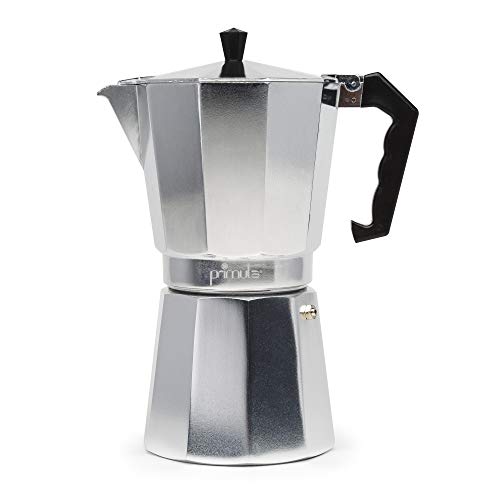
The Primula Classic 12-Cup Espresso Maker is a solid pick if you want a reliable, no-frills stovetop option that works across cooktop types-gas, electric, ceramic, or propane. I use it for making bold espresso, Cuban coffee, or even base shots for lattes, and it handles all well. It’s built from cast aluminum with a natural finish, has a flip-top lid with a heat-resistant knob, and a safety valve that keeps pressure steady. I appreciate the even heat distribution, which improves flavor. It’s lightweight at just over 2 pounds, so I take it camping. I clean it by hand-no dishwasher use-and it dries fast. Available in five sizes.
Best For: Home baristas and outdoor enthusiasts seeking a durable, portable stovetop espresso maker that delivers consistent results across various stove types.
Pros:
- Brews rich, flavorful espresso quickly using pressurized steam extraction
- Compatible with gas, electric, ceramic, and propane stoves for versatile use
- Lightweight and portable design makes it ideal for camping or travel
Cons:
- Not dishwasher safe, requiring hand cleaning for maintenance
- Made of cast aluminum, which may require careful handling to avoid damage
- Limited to ground coffee input, offering less flexibility than pod or bean-to-cup systems
Mongdio 6-Cup Stovetop Espresso Maker

A 6-cup stovetop espresso maker like the Mongdio MD-MKH-7B suits solo users or small households that want rich, espresso-style coffee without the cost or complexity of an electric machine. I use it on my induction stove with the base plate, and it heats evenly thanks to its cast aluminum build. It’s simple: add water to the fill line, put in ground coffee, and heat on medium for 3–5 minutes. The safety valve and heat-resistant handle make it reliable and safe. Clean it with warm water only-no soap, to protect the metal. At 1.26 pounds, it’s light but sturdy, and the 10-ounce output works well for lattes or straight shots.
Best For: Solo users or small households seeking an affordable, stovetop method to brew rich, espresso-style coffee without an electric machine.
Pros:
- Durable food-grade cast aluminum construction ensures even heat distribution and long-term use
- Compatible with gas, electric, induction (with base plate), and halogen stoves for versatile stove-top brewing
- Simple, manual operation with safety features like a pressure-regulating valve and heat-resistant handle
Cons:
- Not dishwasher safe and requires careful cleaning with water only-no soap to preserve aluminum integrity
- Smaller 6-cup (10 oz) capacity may not suit larger households or frequent entertaining
- Requires medium supervision during brewing to avoid over-extraction or boiling dry
Easyworkz Diego 4-Cup Stainless Steel Moka Pot
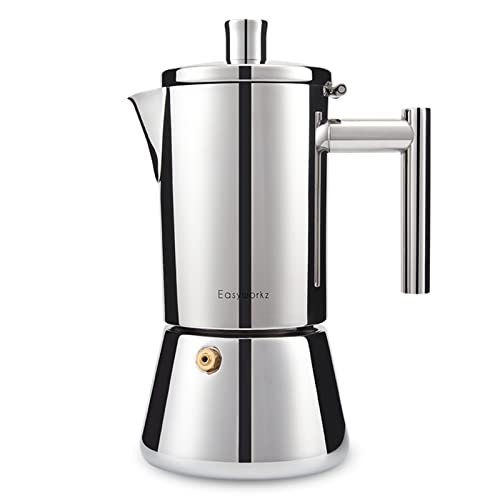
You get consistent, rich espresso-style coffee without electronics or complicated setup when you choose the Easyworkz Diego 4-Cup Stainless Steel Moka Pot, a solid pick for anyone who wants reliable stovetop brewing with minimal cleanup. I use it on my induction stove, and it heats evenly thanks to its magnetic base. The 18/8 stainless steel resists rust, and the mirror finish looks sharp. It brews four 1.7-ounce shots in under five minutes using 16g of fine grind. A reducer lets me make less, and the safety valve adds peace of mind. I clean it fast-it’s dishwasher safe. Plus, the hollow handle stays cool.
Best For: Coffee lovers who want a durable, induction-compatible stovetop espresso maker that brews rich, aromatic coffee quickly with easy cleanup.
Pros:
- Brews strong espresso-style coffee in under 5 minutes with consistent results
- Made of premium 18/8 stainless steel with a magnetic base for induction, gas, and electric stovetops
- Dishwasher safe and features a heat-resistant hollow handle for safe handling
Cons:
- Limited capacity of 4 cups (6.8 fl oz total) may not suit larger households
- Requires finely ground coffee for optimal performance, limiting flexibility
- Mirror finish may show water spots or fingerprints over time without polishing
AeroPress Original Coffee Press Portable

When portability and speed matter most, the AeroPress Original stands out as a top pick among manual espresso makers-especially for travelers, campers, or anyone short on space. I use it because it’s lightweight, shatterproof, and brews a clean, rich cup in under two minutes. Its air pressure system and micro-filtration reduce bitterness, bringing out nuanced flavors in any bean. I add coffee, pour hot water, wait 30 seconds, then press-cleaning takes seconds more. It fits in my backpack, and I’ve used it everywhere: camp sites, offices, hotels. I make espresso, Americano, even cold brew with it. Just don’t put it in the dishwasher.
Best For: Travelers, campers, and coffee lovers who want a fast, portable, and easy-to-clean brewing method with full control over their cup.
Pros:
- Brews a smooth, rich, and grit-free cup in under two minutes using air pressure and micro-filtration
- Compact, lightweight, and shatterproof design ideal for travel, camping, or office use
- Offers full customization with control over brew time, water temperature, and grind size for多种 coffee styles
Cons:
- Not dishwasher safe, requiring manual cleaning after each use
- Single-serve capacity limits brewing for multiple people
- Requires separate purchase of grinder and kettle for optimal results
2 Cup Stainless Steel Moka Pot
The 2 Cup Stainless Steel Moka Pot from DITOSH suits solo drinkers or couples who want strong, espresso-style coffee without investing in a full-sized machine. I use it on my induction stove, and it works fast-brewing in 3 to 7 minutes with a clear hiss signaling it’s done. Its stainless steel build stays durable, resists warping, and won’t stain like aluminum models. I notice it heats quickly, so I watch the flame to avoid discoloration. While the 2-cup size is compact, it may underperform on large burners; a 6-cup or bigger is better there. I always rinse it after use and clean it with detergent first to reduce new-pot odor.
Best For: Solo coffee drinkers or couples seeking a compact, durable stovetop espresso maker for quick, rich coffee without a machine.
Pros:
- Brews rich espresso-style coffee in 3–7 minutes with a clear auditory cue for completion
- Made of polished stainless steel with a durable, non-aluminum build resistant to warping and staining
- Compatible with multiple heat sources including induction, gas, and camping stoves for versatile use
Cons:
- May heat unevenly or underperform on large induction burners due to small size
- Requires careful heat monitoring to prevent overheating and discoloration
- Initial use comes with a noticeable odor that requires pre-washing to mitigate
Factors to Consider When Choosing Manual Espresso Makers
You’ll want to check the material quality first-stainless steel lasts longer and resists corrosion better than aluminum. Make sure your maker works with your heat source, whether it’s gas, electric, or induction, and pick a size that matches how much espresso you usually pull. Don’t overlook safety features, cleaning ease, and how many shots it brews at once, since they直接影响 your daily use.
Material Quality
For long-lasting performance and clean-tasting espresso, focus on the material build of your manual espresso maker. Stainless steel construction resists corrosion and won’t leach metal into your brew, ensuring durability and flavor clarity. It also withstands scratches and discoloration, especially when polished, so your device looks and works well for years. Many steel models include frosted or sandblasted interior coatings that reduce direct metal contact and boost texture without compromising function. If you prefer aluminum, you’ll get great heat conductivity for even extraction, but you must clean it carefully-oxidation can taint taste over time. Opt for non-aluminum interiors if you want a neutral flavor profile. These avoid metallic aftertastes and are ideal for frequent use. Choose based on how much upkeep you’ll do and what kind of taste you want. Your material choice directly shapes longevity and flavor quality.
Heat Source Compatibility
While matching your manual espresso maker to the right heat source might seem straightforward, overlooking compatibility can lead to uneven brewing or equipment damage. You need to check if your stove type-gas, electric, ceramic, or induction-works with the brewer. Most aluminum moka pots won’t work on induction unless you use a conversion plate, but models with magnetic stainless steel bases do. Avoid placing small pots on oversized heating zones, since that risks overheating. For even heat distribution and consistent extraction, pick a design that spreads heat evenly across the base. If you’re brewing outdoors, confirm the maker works safely on propane, butane, or alcohol stoves-some materials can’t handle open flames. Always use an induction-ready model or adapter if you’re on an induction cooktop, and skip non-approved setups to prevent damage.
Brewing Capacity
Most manual espresso makers come in sizes measured by the number of 50ml espresso servings they produce, typically ranging from 1 to 12 cups, so picking the right capacity depends on your daily needs and brewing habits. If you’re brewing for one or two, a 1 to 4-cup model suits you best-these are faster to heat and easier to manage. A 6-cup maker gives you about 300ml, ideal for small groups or back-to-back drinks. Larger models, like 9 to 12 cups, serve more people but demand better heat control to extract evenly. Keep in mind that actual output can vary slightly-your water level, grind size, and tamping pressure all influence the final amount, even within the same cup rating. Choose based on how many you serve and how often you brew.
Safety Features
Size and capacity affect how much espresso you can make at once, but safety determines how reliably and securely your manual espresso maker handles pressure during brewing. You need a high-performance safety valve that releases excess steam before pressure becomes dangerous-most kick in as water boils and steam builds. Look for models with double safety features, like backup valves or secondary release mechanisms, so if one fails, you’re still protected. Precision threading, such as three-ring joints, keeps chambers sealed tightly, maintaining safe pressure without leaks. Flip-top lids with heat-resistant knobs let you open safely after brewing, reducing burn risks and letting pressure escape controlled. These aren’t just extras-they’re essential. Without them, you’re risking unsafe operation. Always check that your brewer has certified safety valves and solid construction-don’t compromise here. Your safety depends on it.
Ease Of Cleaning
A good manual espresso maker should be easy to clean, not a chore to maintain. You’ll want removable parts like filters and gaskets, plus a smooth interior, so you can wipe away oils and grounds quickly. Most models need only a rinse with water-no soap-since detergents can damage internal materials and taint your coffee over time. Always rinse right after brewing to prevent oil buildup that leads to rancid flavors. Stainless steel units are often dishwasher safe, which saves effort, but avoid doing this with aluminum models to prevent corrosion. Never submerge the whole device, especially if it has wood or plastic parts that can degrade. Skip harsh scrubbing, too. Stick to soft cloths or brushes. Choosing a design that simplifies cleaning means you’ll actually do it-and enjoy fresher shots every time.
Design And Durability
When choosing a manual espresso maker, the materials and build quality play a key role in both performance and longevity. You’ll typically find models made from aluminum or stainless steel-aluminum is lightweight and heats quickly, but stainless steel resists corrosion and lasts longer. Polished stainless steel finishes stay shiny and resist scratches better than softer aluminum. Look for three-ring precision threading; it creates a tight, pressure-resistant seal between chambers, improving safety and shot consistency. Durable cast aluminum construction also helps spread heat evenly, which supports steady extraction and stands up to repeated stovetop use. Handles matter, too-opt for those made from heat-resistant Bakelite or hollow-insulated metal to avoid burns and keep control while brewing. These design details don’t just look good-they directly impact how well your maker performs over time and how reliably it delivers quality shots with daily use.
Portability And Use
Since you’re likely to use your manual espresso maker in a variety of settings, portability and ease of use matter just as much as build quality. These devices are compact, ranging from 1.87 to 8.35 inches tall, so they fit easily in a bag or kitchen cabinet. Weights run from 8.8 to over 33 ounces-lighter models are better for backpacking, while heavier ones may offer more stability. Since they need no electricity, you can use them with propane, alcohol, or camping stoves, making them great for outdoor trips. Most work on gas, electric, ceramic, and even induction stovetops, so they’re versatile at home or in the wild. Built from aluminum or stainless steel, they withstand rough handling and varied conditions. Choose based on where you’ll brew-ultralight for trail use, durable multi-steel for cabin or kitchen.
Grind And Pressure Control
You’ve considered size and durability for use on the trail or at home, but how your coffee tastes hinges on two key factors: grind and pressure control. Use a fine to medium-fine grind, like table salt, to create enough resistance for proper extraction. Too coarse, and water flows too fast, leaving weak, watery coffee. Inconsistent grinds lead to channeling, causing bitter or sour notes. Most stovetop makers don’t need tamping-over-tamping can block steam pressure and create unsafe buildup. These makers hit 1–2 bars of pressure, much less than commercial machines, so you can’t rely on high pressure to fix poor prep. Instead, dial in your grind and dose carefully. A good hand grinder with consistent output, like the 1Zpresso J-Max or Timemore C2, gives you control. Adjust until shots are balanced-neither rushing through nor stalling. Your brew depends on these details.
Frequently Asked Questions
Can I Use Electric Stoves With All Moka Pots?
You can’t always use electric stoves with all moka pots. Flat-bottomed models work on coil burners, but induction stoves need pots with magnetic bases-like those from Bialetti or TIMA. Standard aluminum moka pots won’t heat on induction. You’ll waste time and energy if the pot doesn’t make proper contact. Check your stove type first. When in doubt, go with a stainless steel moka pot labeled induction-ready.
Are Stainless Steel Moka Pots Better Than Aluminum?
You’ll find stainless steel moka pots more durable and easier to clean than aluminum ones. They resist corrosion and won’t dent as easily, lasting years with proper care. Aluminum heats up faster and is cheaper, but it reacts with acidic water and can wear down over time. Stainless steel models, like the Bialetti Industria or Flair Pro, maintain flavor neutrality and work on all stoves. Choose stainless steel if you want longevity and consistent performance.
How Do I Clean Burnt Coffee Residue From My Moka Pot?
You clean burnt coffee residue by filling the bottom chamber with equal parts water and white vinegar, then brewing it halfway. Let it sit for 15 minutes, finish brewing, and rinse thoroughly. Scrub stubborn spots with a soft brush-never steel wool, especially on aluminum. For regular upkeep, wash with mild soap after each use. Avoid overheating to prevent future burns. Stainless steel handles deep cleaning better than aluminum, which can pit if treated too harshly.
Is It Safe to Put a Moka Pot in the Dishwasher?
You shouldn’t put a moka pot in the dishwasher. The high heat and harsh detergents can damage the metal, especially aluminum, causing pitting or warping over time. Stainless steel models fare better but still risk gasket and seal wear. Hand-washing with warm, soapy water preserves the parts and guarantees longevity. If you skip rinsing grounds immediately, soak it right after use.
Can I Make True Espresso With a Stovetop Moka Pot?
you can’t make true espresso with a stovetop moka pot-its pressure is around 1–2 bars, well below the 9 bars needed for real espresso. the result is strong, concentrated coffee, not authentic espresso. it lacks crema and has a different flavor profile. if you want actual espresso, consider a lever or piston-based manual espresso maker like the Flair Neo or Wacaco Minipresso, which deliver proper pressure.