Best-Rated Home Espresso Machines Serious Coffee Lovers Use
You’ll get consistent, cafe-quality espresso at home with machines serious coffee lovers trust, like the Breville Barista Express or Gevi 20 Bar. These models deliver 9–10 bar brew pressure, precise temperature control, and fresh grounds via built-in grinders. The Ninja Luxe Café Pro adds versatility with drip and cold brew. Build quality, ease of maintenance, and steam wand performance matter for daily use. Your choice depends on how much control and freshness you want-options vary by grind precision, heat stability, and workflow. Picking the right one means considering how each feature fits your routine.
We are supported by our audience. When you purchase through links on our site, we may earn an affiliate commission, at no extra cost for you. Learn more. Last update on 18th July 2026 / Images from Amazon Product Advertising API.
Notable Insights
- Breville Dual Boiler delivers precise temperature control and dual heating elements for espresso perfection at home.
- CASABREWS 20 Bar machine offers Italian pump pressure and compact design ideal for serious enthusiasts with limited space.
- Gevi 20 Bar features NTC temperature control and pre-infusion for consistent extraction and rich crema.
- Ninja Luxe Café Pro includes a built-in grinder and weight-based dosing for fresh, barista-quality results.
- Breville Bambino heats in 3 seconds and has an automatic steam wand for rapid, hands-free milk texturing.
CASABREWS 20 Bar Espresso Machine with Steam Frother

If you’re looking for a reliable, no-frills espresso machine that delivers solid performance without a steep learning curve, the CASABREWS 20 Bar Espresso Machine with Steam Frother is a strong pick-especially if you want café-style drinks at home without spending a lot. I use it daily, and the 20-bar Italian pump pulls consistent shots. The steam wand froths milk well for lattes or cappuccinos, and the 34-oz tank is large enough for multiple drinks. It’s compact, fits under most cabinets, and the pressure gauge helps monitor extraction. Just remember to flush the system after steaming to avoid clogs. It’s not dishwasher safe, so cleaning’s manual-but straightforward.
Best For: Home and office coffee lovers who want consistent espresso and milk-based drinks without a complex setup or high cost.
Pros:
- Powerful 20-bar Italian pump delivers café-quality espresso with ease
- Compact design with a built-in pressure gauge and steam wand for lattes and cappuccinos
- Removable 34-oz water tank and intuitive controls make it user-friendly for beginners
Cons:
- Not dishwasher safe, requiring manual cleaning after each use
- Steam wand requires post-use flushing to prevent clogs and overheating
- Limited portafilter size at 51mm, which may affect compatibility with some aftermarket accessories
Gevi 20 Bar Espresso Maker with Milk Frother

The Gevi 20 Bar Espresso Maker with Milk Frother stands out as a solid choice for home users who want consistent, café-style espresso without the steep learning curve or price tag of prosumer machines. I find its 20-bar pump, pre-infusion, and NTC temperature control deliver balanced extraction. The steam wand heats quickly, creating microfoam for lattes or cappuccinos, and doubles for hot water needs. Its compact, stainless steel design fits small kitchens. I appreciate the removable water tank, cup warmer, and included tamper. It’s not dishwasher-safe, so cleaning takes care. I recommend it for beginners or casual drinkers who want reliability without complexity.
Best For: Home users seeking reliable, café-quality espresso with minimal learning curve and compact design.
Pros:
- Powerful 20-bar pump with pre-infusion and NTC temperature control ensures consistent extraction
- Steam wand efficiently creates microfoam and dispenses hot water for various beverages
- Compact, stylish stainless steel build with practical features like cup warmer and removable water tank
Cons:
- Not dishwasher safe, requiring careful hand cleaning
- Limited to ground coffee input, lacking built-in grinder convenience
- 51mm portafilter is smaller than the commercial standard, potentially limiting customization
Espresso Machine with Milk Frother 20 Bar

I rely on the 20-bar pressure system in this atatix EM3111 to deliver consistent extraction, making it ideal for home users who want café-quality espresso without complex machinery. It maintains 9–10 bar during brewing, pulling rich shots with golden crema in about 28–42 seconds. The NTC sensor keeps water at 90–96°C, and it heats up in just 30 seconds. I use manual mode when I want more control, getting up to 350g per brew. The steam wand produces dry, powerful steam for silky microfoam-great for lattes or cappuccinos. It’s compact, lightweight, and fits easily on small counters.
Best For: Home users seeking café-quality espresso with ease and speed using a compact, semi-automatic machine.
Pros:
- 20-bar pressure system ensures optimal extraction with rich crema and full flavor
- Rapid 30-second heat-up and precise NTC temperature control for consistent brewing
- Powerful steam wand creates dense microfoam ideal for latte art and milk-based drinks
Cons:
- Made partially with ABS plastic, which may feel less durable than all-metal builds
- Not dishwasher safe, requiring hand cleaning for maintenance
- Limited to powder coffee input, excluding compatibility with pods or beans
Ninja Luxe Café 3-in-1 Espresso Machine
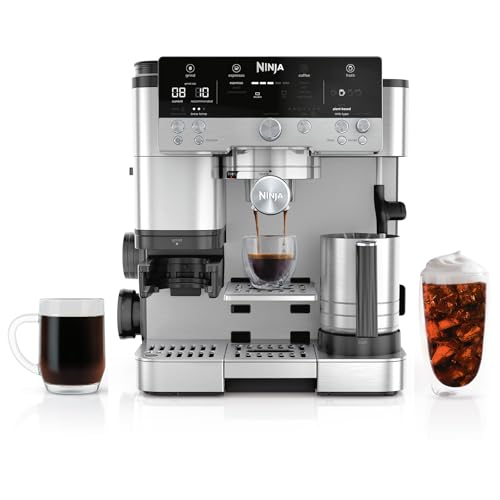
Want a machine that handles espresso, drip coffee, and cold brew without switching devices? I use the Ninja Luxe Café 3-in-1, and it’s built for people who want flexibility without hassle. It pulls double or quad espressos, brews drip coffee (classic, rich, or over ice), and makes cold brew or cold espresso in six size options. The built-in conical burr grinder has 25 settings, and the scale guarantees precise, weight-based dosing. Barista Assist guides brews for balanced flavor, while the dual frother creates hot or cold microfoam. It’s heavy (31.7 lbs) and stainless steel, with smart storage and dishwasher-safe parts. Model ES601 dominates 2025 sales for a reason-it just works.
Best For: Home baristas who want a versatile, all-in-one machine that effortlessly brews espresso, drip coffee, and cold brew with precision and ease.
Pros:
- 3-in-1 functionality covers espresso, drip coffee, and cold brew with multiple style and size options
- Integrated conical burr grinder and weight-based dosing ensure fresh, consistent results
- Barista Assist Technology and Dual Froth System deliver smart, automated, café-quality drinks
Cons:
- Heavy at 31.7 pounds, making it less portable and harder to move
- High upfront cost may not suit budget-conscious buyers
- Requires regular maintenance and descaling to maintain performance
Breville Bambino Espresso Machine BES450BSS, Brushed Stainless Steel
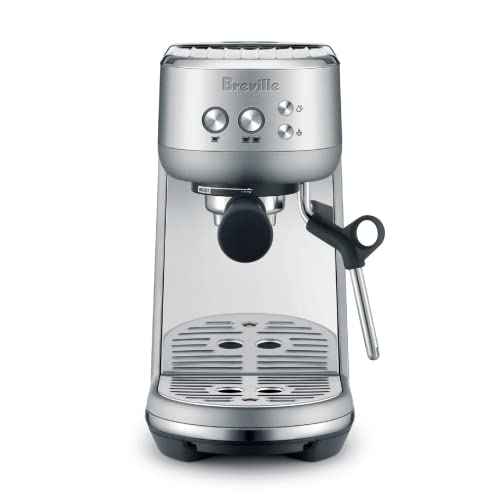
When speed and simplicity matter most, the Breville Bambino BES450BSS stands out for beginners or small-space users who still want real espresso performance. I love how its thermojet heating system gets hot in just 3 seconds-no long waits. The 54mm portafilter holds 19 grams, giving full extraction, and PID control keeps temps steady. Low-pressure pre-infusion improves flavor without extra effort. Its automatic steam wand makes microfoam easily, great for lattes. At under 11 pounds and with a compact footprint, it fits tight kitchens. Buttons are straightforward: just pick 1 or 2 shots. Some parts are dishwasher-safe, which helps cleanup.
Best For: Home baristas seeking fast, quality espresso with minimal effort in compact spaces.
Pros:
- Heats up in 3 seconds with thermojet system for quick espresso preparation
- PID temperature control and low-pressure pre-infusion ensure consistent, flavorful extraction
- Automatic steam wand creates barista-quality microfoam with hands-free milk texturing
Cons:
- Limited manual control compared to prosumer models, less ideal for espresso enthusiasts wanting customization
- Plastic water tank and some internal components may reduce long-term durability
- Higher price point compared to other beginner machines with similar footprint
Breville Barista Express Espresso Machine BES870XL, Brushed Stainless Steel

The Breville Barista Express BES870XL suits home baristas who want full control over their espresso without splitting time between separate grinder and machine. I use its integrated conical burr grinder daily-it delivers fresh grounds straight into the portafilter, saving time and boosting flavor. The PID temperature control keeps water stable for consistent shots, while low-pressure pre-infusion improves extraction. I dial in settings with the intuitive interface and included tamper. It’s not dishwasher-safe, but cleanup is manageable. At 22 pounds, it’s sturdy but fits well on most counters. For under $700, it’s a practical step up from entry-level models-ideal if you’re serious about improving your craft.
Best For: Home baristas seeking an all-in-one espresso machine with precision grinding and temperature control to craft high-quality espresso and develop their barista skills.
Pros:
- Integrated conical burr grinder delivers fresh grounds directly into the portafilter for optimal flavor and convenience
- PID temperature control and low-pressure pre-infusion ensure consistent, high-quality espresso extraction
- Compact, all-in-one design with intuitive interface and included tools simplifies the brewing process
Cons:
- Not dishwasher-safe, requiring manual cleaning for maintenance
- At 22.1 pounds, it may be heavy for some countertop setups
- Higher price point compared to entry-level espresso machines, though justified by features
CASABREWS 20 Bar Espresso Machine with Steam Frother

If you’re new to home espresso or want a reliable machine that balances performance and simplicity, the CASABREWS 3700 Essential Espresso Machine is a solid pick. I use its 20-bar pressure and 1350W motor daily-they pull rich shots with good crema. The steam wand froths milk well, especially with cold whole milk, and I can make basic latte art. It’s compact, fits my counter, and the 43.9 oz tank is easy to refill. I clean the wand after each use to keep it working right. It’s not dishwasher-safe, so I wipe parts by hand. Comes with a tamper, filters, and portafilter-everything I need to start. Ranked #2 in semi-automatic machines, it’s well-reviewed: 4.3 stars from over 3,000 buyers.
Best For: Home users and beginners seeking a compact, high-performing espresso machine with steam frothing capability for daily coffee drinks and basic latte art.
Pros:
- Powerful 20-bar pressure pump and 1350W motor deliver rich espresso with consistent crema
- Compact design with a 43.9 oz removable water tank fits comfortably on small countertops
- Includes essential accessories like tamper, portafilter, and dual filters for immediate use
Cons:
- Not dishwasher safe, requiring hand cleaning for most components
- Steam wand needs diligent post-use cleaning to prevent milk residue buildup
- Limited to manual operation with no programmable settings for advanced customization
20 Bar Espresso Machine with Grinder

Though I prioritize convenience without sacrificing quality, I find the 20 Bar Espresso Machine with Grinder stands out for home users who want consistent, café-style drinks with minimal hassle. I use the built-in grinder daily-it handles oily beans smoothly thanks to its wide chute and helical auger. The 20 bar pressure pulls rich shots with thick crema, and the steam wand textures milk well for lattes or cappuccinos. It’s semi-automatic, so I have control, but it’s simple enough for beginners. At 18 pounds, it’s sturdy but compact, with a 2.3L tank and removable parts for easy cleanup. I keep it on my counter-it looks sleek and performs reliably.
Best For: Home users who want consistent, café-style espresso drinks with minimal hassle and built-in grinding convenience.
Pros:
- Built-in anti-clog grinder with wide chute and helical auger ensures smooth, consistent grinding even with oily dark roast beans
- 20 bar pressure system delivers rich espresso shots with thick crema and supports a variety of coffee drinks
- Powerful steam wand and included stainless steel milk jug create barista-grade microfoam for lattes, cappuccinos, and flat whites
Cons:
- Not dishwasher safe, requiring manual cleaning of accessories and components
- Semi-automatic operation may require some learning curve for complete beginners
- 2.3-liter water tank may need frequent refilling during extended use or entertaining guests
Ninja Luxe Café Pro Espresso Machine (ES701)

You’ll want the Ninja Luxe Café Pro Espresso Machine (ES701) if you’re serious about versatility and hate cluttering your counter with multiple appliances. I use it daily to pull shots, brew drip coffee, and make cold brew-no extra gear needed. It grinds beans fresh with 25 settings, and the built-in scale guarantees accurate dosing. Barista Assist tech adjusts temp and pressure, so I avoid bitter or sour results. The steam wand froths milk smoothly, even non-dairy kinds, and the hot water system lets me make americanos or tea. It’s large but efficient, though cleanup takes time since parts aren’t dishwasher-safe.
Best For: Home baristas who want a versatile, all-in-one coffee machine with precision brewing and built-in grinder for espresso, drip, cold brew, and hot beverages.
Pros:
- 4-in-1 functionality (espresso, drip coffee, cold brew, hot water) eliminates the need for multiple appliances
- Barista Assist Technology with weight-based dosing and active adjustments ensures consistent, high-quality brews
- Integrated conical burr grinder with 25 settings and built-in tamper streamline the brewing process
Cons:
- Large footprint may be cumbersome for small kitchens
- Not dishwasher-safe, making cleaning more time-consuming
- High initial cost may be prohibitive for casual coffee drinkers
20Bar Espresso Machine with Milk Frother

The 20Bar Espresso Machine with Milk Frother stands out for home baristas who want café-style espresso and steamed milk without swapping devices. I rely on its 20-bar pump for consistent pressure and rich crema, while the instant heating system lets me brew and steam back-to-back without waiting. The 360° adjustable steam wand gives me precise control for silky microfoam, and the included stainless steel pitcher works well. I purge and clean the wand right after use to avoid clogs. Its compact stainless steel build fits my counter, and the 42oz tank has a clear window. I use ground coffee, dial in single or double shots, and preheat everything for best results.
Best For: Home baristas seeking a compact, reliable espresso machine with professional-grade extraction and milk frothing capabilities.
Pros:
- 20-bar pump and instant heating system deliver consistent espresso with rich crema and allow quick transitions between brewing and steaming
- 360° adjustable, detachable steam wand with included stainless steel pitcher enables precise milk texturing and easy cleaning
- Compact stainless steel design with a clear-view 42oz water tank and customizable shot volumes enhances usability and fits small spaces
Cons:
- Manual cleaning required for steam wand and components; not dishwasher safe
- Requires ground coffee and separate grinder, increasing setup cost and effort
- Learning curve for beginners to master temperature stabilization and frothing technique
Factors to Consider When Choosing a Rated Home Espresso Machine
You’ll want to check the brew pressure performance first-most top machines deliver 9 bars, which is ideal for proper espresso extraction. Look at the build quality, milk frothing capability, and whether it includes a built-in grinder, since those features affect both taste and convenience. Don’t overlook ease of maintenance, as daily cleaning and descaling can quickly become a hassle with poorly designed models.
Brew Pressure Performance
Brew pressure makes or breaks your espresso. You need 9–10 bars for ideal extraction, even though many machines tout 20-bar pumps-those numbers refer to maximum pressure, not brewing pressure. What matters is consistency. You want a machine with a stable pump that maintains even pressure throughout the shot. Vibration or rotary pumps deliver this better than basic models. Look for pre-infusion, which gently wets the puck before full pressure kicks in, improving flavor and preventing channeling. Machines with built-in pressure gauges let you watch the pressure in real time, so you can tweak your grind or dose for best results. That kind of control helps you pull balanced shots with rich crema. Don’t just trust specs-check reviews to see if users report steady performance. A machine that holds pressure well saves you frustration and coffee waste over time.
Machine Build Quality
Durability starts with design. You want a machine built to last, so look for brushed stainless steel-it’s tough and holds heat well, helping maintain steady brew temps. Heavier models, at 8 pounds or more, stay put during use, minimizing vibration that can disrupt extraction. Compact units under 13 inches wide or deep save counter space without sacrificing structure. Check the base: non-slip silicone or rubber feet keep the machine from creeping across the countertop, especially during pump activation. Materials matter-ABS plastic resists impact and combines well with stainless steel for balanced heat distribution and durability. You’re not just buying looks; you’re investing in consistent function. Avoid flimsy plastics and ultra-light builds if you plan regular use. A well-constructed machine withstands daily demands while delivering reliable performance.
Milk Frothing Capability
Getting silky, well-textured milk at home comes down to the machine’s steam power and wand design. You need a strong steam wand with dry, focused output to create dense, glossy microfoam-perfect for latte art or creamy cappuccinos. Look for models that hit at least 20 bars of boiler pressure and heat quickly, so you can brew and steam back-to-back without losing stability. A 360° adjustable or detachable wand gives you better control and makes cleaning easier. If you want convenience, some machines offer integrated frothing systems with presets for steamed milk, thick froth, or even cold foam-great for consistency. But manual control still wins for purists. Always use cold whole milk and purge the wand before and after use. It boosts foam quality and keeps your system running longer.
Grinder Integration Options
While you’re comparing top-rated home espresso machines, don’t overlook whether they include a built-in grinder-this feature can streamline your workflow and improve shot consistency. You’ll typically get a conical burr grinder with 15 to 25 settings, giving you precise control over grind size for different brews. On-demand grinding keeps beans fresh, reducing oxidation and preserving aroma better than pre-ground storage. Most models dose between 7–19 grams per shot, using timed or weight-based dispensing for accuracy. Look for anti-clog designs with wider chutes and reinforced augers, especially if you use oily or dark roast beans. Just keep in mind that integrated grinders increase the machine’s size and weight, so you’ll need more counter space and a sturdy surface. While convenient, they may limit upgrade flexibility later. Weigh the trade-offs based on your space and brewing preferences.
Ease Of Maintenance
When choosing a home espresso machine, pay close attention to how easy it is to maintain-daily care and regular cleaning directly affect both flavor and machine longevity. Look for models with removable water tanks and drip trays, so you can clean and refill them quickly, reducing bacterial growth and mineral buildup. Choose machines with self-cleaning cycles or automatic purge functions to cut down on manual work and keep performance steady. Stainless steel steam wands with detachable tips let you clean thoroughly, preventing milk clogs and preserving foam quality. A built-in water filter or descaling alert helps manage limescale, especially if you have hard water, extending the machine’s life. Steer clear of units with complex plumbing or hard-to-reach parts. Instead, pick models with user-serviceable components that make descaling and backflushing simple. These features save time and keep your machine running reliably.
Size And Design Fit
Space matters-especially in a busy kitchen where every inch counts. You’ll want a machine that fits without crowding your counter. Compact models are usually 11.5 to 13 inches deep, leaving room for prep work. If space is tight, look for units around 5.5 to 6 inches wide-they still hold a portafilter and steam wand. Height varies from 11 to 16 inches; taller ones often include grinders or bigger water tanks, so check your cabinet clearance. A brushed stainless steel finish gives a clean, modern look while resisting fingerprints and scratches-ideal for daily use. Look for non-slip bases with silicone feet or suction cups to keep the machine stable when pulling shots. These small design details make a difference in fit and function. Pick a size and style that matches your kitchen layout and usage habits for the best fit.
Frequently Asked Questions
Can I Use Non-Dairy Milk With These Machines?
Yes, you can use non-dairy milk with most espresso machines, but results vary by type. Oat and soy milk steam well and hold texture, while almond and rice milk often scorch or separate. You’ll need to clean the steam wand immediately after use to prevent residue buildup. Some machines with automatic milk systems may clog more easily. For best results, use barista-formulated non-dairy milks and purge the wand before and after steaming to maintain machine performance.
Do These Espresso Machines Work at High Altitudes?
Yeah, these espresso machines work at high altitudes, but you’ll face challenges. Lower atmospheric pressure affects boiling points, so water heats faster and steam pressure drops, making extraction tricky. Machines with PID temperature control, like the Breville Dual Boiler or Rocket R58, help stabilize heat. You’ll likely need to adjust grind size, dose, and tamp pressure. Some models, like the Decent DE1, let you fine-tune pressure profiling, giving you more control to adapt to altitude changes effectively.
Are Replacement Parts Easily Available for These Models?
Yes, you’ll find replacement parts easily for most high-end home espresso machines. Brands like Rocket, Lelit, and Profitec offer strong support, with gaskets, filters, and grouphead components available through retailers or directly. Machines using standard 58mm parts are especially convenient. Just check the model’s service record-older or discontinued units might need more effort. Keep a few key spares on hand, and you’ll avoid downtime when something wears out.
How Often Should I Descale My Espresso Machine?
You should descale your espresso machine every 1–3 months, depending on how often you use it and your water hardness. If you use it daily, go with the 1-month mark. Hard water means more frequent cleaning. Skip descaling and you’ll risk clogs, poor temperature control, and longer brew times. Use a brand-approved solution-like Deca Scale or Urnex-weaker formulas might not cut through limescale effectively. Always rinse thoroughly after.
Can I Make Cold Brew Using These Espresso Machines?
No, you can’t make traditional cold brew with an espresso machine since it relies on hot water pressure, not room-temperature steeping. Cold brew needs coarse-ground coffee soaked in cold water for 12–24 hours, then filtered. Espresso machines extract concentrated shots quickly using pressure. If you want cold coffee, pull a shot and pour it over ice-this makes an iced espresso, not cold brew. Use a French press or dedicated cold brew maker instead.