Best Steam Wand Espresso Machines: CASABREWS, Gevi & More
You get creamy, cafe-quality froth using machines like the CASABREWS 20 Bar or Gevi 20 Bar, which feature 360° adjustable steam wands and precise NTC or PID temperature control. These models produce dry, consistent steam for microfoam, outperforming cheaper plastic units. Stainless steel construction adds durability and heat retention. A powerful 15–20 bar pump guarantees good extraction. Clean the wand right after use to prevent clogs. For best results, purge and position the wand just below the milk’s surface. You’ll see how small details affect performance.
We are supported by our audience. When you purchase through links on our site, we may earn an affiliate commission, at no extra cost for you. Learn more. Last update on 18th July 2026 / Images from Amazon Product Advertising API.
Notable Insights
- Look for steam wands with 360° adjustability and dry, focused steam for dense microfoam ideal for latte art.
- Choose models with PID or NTC temperature control to ensure consistent, stable steaming performance.
- Opt for stainless steel steam wands, which resist corrosion and are easier to clean than plastic alternatives.
- Detachable steam nozzles and regular purging help prevent clogs and maintain hygiene for quality froth.
- Proper technique, like positioning the wand just below the milk surface, is crucial for creamy, café-quality texture.
CASABREWS 20 Bar Espresso Machine with Steam Frother

If you’re looking for a solid entry-level machine that delivers real espresso with a quality steam wand, the CASABREWS 20 Bar Espresso Machine with Steam Frother is one of the better picks under $200. I use its 20-bar Italian pump and 1350W boiler daily, and it pulls consistent shots with good crema. The steam wand creates microfoam well, though you’ll need practice for latte art. Its pressure gauge helps monitor extraction, and the hot water function aids in overheating recovery. I unplug it briefly after steaming to avoid flashing buttons. The tank detaches easily, and cleanup’s simple-just wipe down. It’s compact, reliable, and ideal for beginners learning manual espresso.
Best For: Home baristas seeking an affordable, compact espresso machine with a reliable steam wand for learning manual brewing and milk texturing.
Pros:
- Delivers consistent espresso shots with a 20-bar Italian pump and built-in pressure gauge for monitoring extraction
- Features a powerful steam wand capable of creating microfoam for lattes and cappuccinos
- Compact design with a removable water tank and simple maintenance for easy daily use
Cons:
- Requires practice to master steaming and latte art, not fully automatic
- May overheat if steaming and brewing are done back-to-back without cooldown
- Buttons can flash and machine may enter protection mode if not properly reset after steaming
Coffee Machine with Steam Wand & Safety Lock

I choose the XIXUBX CM510 for its responsive 800W heating system and safety-focused design, making it ideal for beginners who value control and consistency in a compact machine. Its 3.5 bar pressure pulls espresso in about 2 minutes using dark roast, medium-coarse grounds. The steam wand froths milk for lattes or cappuccinos, though it may be tough for users with weak grip. Safety locks prevent brewing unless the handle is secured, and the portafilter clip speeds up cleanup. It includes BPA-free Tritan cups and a tamper. Just don’t put parts in the dishwasher.
Best For: Beginners seeking a compact, safety-conscious espresso machine with consistent performance and built-in milk frothing.
Pros:
- Rapid 2-minute espresso extraction with 800W heating and 3.5 bar pressure
- Integrated safety locks prevent leaks and ensure secure brewing
- Includes BPA-free Tritan cups, tamper, and steam wand for cappuccinos and lattes
Cons:
- Steam wand may be difficult to handle for users with limited hand strength
- Not dishwasher safe, requiring manual cleaning of all parts
- Requires precise grind size and roast level for optimal results
CASABREWS 20 Bar Espresso Machine Silver

The CASABREWS 20 Bar Espresso Machine in silver suits home baristas who want café-style espresso and milk drinks without complex machinery or a steep learning curve. I use its 20-bar pump to pull rich, consistent shots, and the steam wand heats cold whole milk into creamy micro-foam for lattes or cappuccinos. Its compact size fits small kitchens, and the 43.9 oz water tank lets me brew multiple drinks without refills. I clean the wand after each use to prevent clogs, and I ran a quick cycle before first use, as the manual says. It’s not dishwasher safe, but the parts are easy to wipe down. I’d recommend it for beginners or as a reliable gift.
Best For: Home baristas and coffee enthusiasts seeking an easy-to-use, compact espresso machine that delivers café-quality espresso and milk-based drinks without a steep learning curve.
Pros:
- Powerful 20-bar pressure system ensures rich, consistent espresso extraction
- Compact design and large 43.9 oz water tank make it ideal for small kitchens and multiple brews
- Steam wand creates creamy micro-foam for lattes, cappuccinos, and latte art with proper technique
Cons:
- Not dishwasher safe, requiring manual cleaning for maintenance
- Requires initial cleaning cycle and removal of rubber plug before first use
- 51mm portafilter may limit compatibility with some aftermarket accessories
Gevi 20 Bar Espresso Maker with Milk Frother

A solid pick for anyone stepping up from pod machines to real espresso without breaking the bank, the Gevi 20 Bar Espresso Maker delivers consistent results with its 20-bar pump and pre-infusion feature, making it ideal for hands-on beginners who want control without complexity. I use the built-in pressure gauge and NTC control to fine-tune extraction, while the steam wand froths milk quickly for lattes or cappuccinos. The stainless steel build saves space, and the cup warmer’s handy. It’s not dishwasher safe, but cleaning’s easy thanks to removable parts. I’ve found it reliable, especially with the 12-month warranty and lifetime support from authorized sellers.
Best For: Beginners transitioning from pod machines to manual espresso making who want reliable performance and milk frothing without high costs.
Pros:
- Delivers consistent espresso with 20-bar pump pressure, pre-infusion, and NTC temperature control
- Compact stainless steel design with a built-in cup warmer and easy-to-clean removable components
- Comes with a 12-month warranty and lifetime technical support when purchased through authorized retailers
Cons:
- Not dishwasher safe, requiring manual cleaning of parts
- Uses a 51mm portafilter, which may limit compatibility with some aftermarket accessories
- Steam wand performance is functional but less powerful than on higher-end models
Chefman 15-Bar Espresso Machine with Steam Wand

You’ll want this one if you’re after an affordable, compact machine that handles both espresso and milk-based drinks without taking up counter space-Chefman’s 15-bar CraftBrew fits small kitchens and starter setups perfectly. I use it daily, and it pulls solid shots with a programmable timer for ristretto or lungo. The steam wand froths milk decently, though it takes practice. At 1350 watts, it heats up fast, and the removable tank makes refills easy. It’s not as powerful as 20-bar models, but it’s reliable for the price. Just remember to descale every 500 cycles-there’s an alert to remind you.
Best For: Budget-conscious beginners and small kitchen owners who want a compact, easy-to-use espresso machine for daily espresso and milk-based drinks.
Pros:
- Compact design with a 15-bar pump and programmable timer for customized shot volumes
- Built-in steam wand for milk frothing, suitable for lattes and cappuccinos
- Removable water tank and auto descaling alert for easy maintenance
Cons:
- Steam wand requires practice to master for consistent milk frothing
- Less powerful than 20-bar espresso machines, limiting extraction precision
- Plastic components may feel less durable compared to higher-end models
CASABREWS 20 Bar Espresso Machine with Milk Frother

When I need reliable espresso and velvety microfoam without spending hundreds on a high-end machine, the CASABREWS 20 Bar Espresso Machine with Milk Frother stands out, especially for home or office use where space and budget matter. Its 20-bar Italian pump delivers steady pressure for rich crema, and the built-in gauge helps monitor extraction. The steam wand creates creamy microfoam, but remember to turn it off after use and let the machine cool before brewing again. I skip the dishwasher-everything’s hand-wash only. At just over 12 inches deep, it fits tight countertops. For $200, it’s a solid pick.
Best For: Home or office users seeking an affordable, compact espresso machine with reliable 20-bar pressure and steam wand functionality for making espresso and milk-based coffee drinks.
Pros:
- Compact design with 20-bar Italian pump delivers high-quality extraction and rich crema
- Built-in pressure gauge and steam wand enable precise brewing and creamy microfoam for lattes and cappuccinos
- Removable 34 oz water tank and intuitive controls make it user-friendly and easy to refill
Cons:
- Steam wand requires cooldown before brewing to prevent overheating; manual monitoring needed
- Not dishwasher safe-components require hand washing for maintenance
- May need hot water flush to reset if buttons flash and beeping occurs after heavy use
Chefman 15-Bar Espresso Machine with Steam Wand
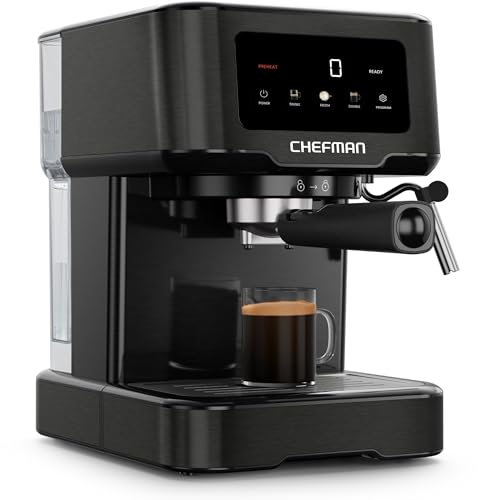
If you’re after consistent espresso with digital convenience and a reliable steam wand for milk-based drinks, the Chefman 15-Bar Espresso Machine with Steam Wand fits compact kitchens without sacrificing core functionality. I use its touch controls daily to program shot volume, pulling ristrettos or lungos with ease. The 15-bar pump delivers solid pressure, and the steam wand heats up fast for creamy microfoam. My 1.5L reservoir lasts several brews, and cleanup’s manageable-just wipe the exterior and hand-wash removable parts. It’s cETL certified, has an auto descaling alert, and comes with a 1-year warranty.
Best For: Home espresso enthusiasts who want digital precision, consistent results, and a compact machine with a reliable steam wand for milk-based drinks.
Pros:
- 15-bar pump delivers strong, consistent pressure for quality espresso extraction
- Programmable shot volume and digital touch controls offer customization for ristretto, espresso, or lungo
- Compact design with a 1.5L removable reservoir and cETL certification for safety and convenience
Cons:
- Non-dishwasher safe parts require manual cleaning, which can be time-consuming
- Limited to semi-automatic functionality despite digital interface
- Warranty is only 1-year, which is standard but shorter than some premium brands
Espresso Machine with Milk Frother, 20 Bar

The atatix EM3111 stands out for home baristas who want reliable 20-bar pressure extraction and a powerful steam wand in a compact, easy-to-use machine. It maintains 9–10 bar during brewing for rich crema and uses NTC control to stay between 90–96°C. I get consistent shots whether I’m using light or dark roast. The steam wand delivers dry, focused steam-perfect for silky microfoam or flat whites. I can pull short or long shots with manual mode, up to 350 grams. Its small size fits my countertop, and the removable tank and drip tray make cleanup simple. It’s efficient, well-built, and backed by solid support.
Best For: Home baristas seeking a compact, semi-automatic espresso machine with precise 20-bar pressure extraction and a powerful steam wand for crafting café-quality espresso and milk-based drinks.
Pros:
- Delivers consistent, high-quality extraction with 20-bar pressure and NTC temperature control for optimal flavor and crema
- Features a powerful steam wand that produces dry, dense microfoam ideal for latte art and silky milk textures
- Compact, well-built design with removable water tank and drip tray for easy cleaning and maintenance
Cons:
- Limited to 120V power source, which may restrict use in regions with different voltage standards
- Manual mode allows long extractions but may overwhelm beginners unfamiliar with espresso timing
- Plastic components in ABS construction may feel less premium compared to fully metal machines at higher price points
Espresso Machine 20 BAR with Steam Frother

You’re a home barista who wants café-quality espresso and silky milk textures without spending a fortune-this 20 BAR espresso machine with steam frother fits your needs perfectly. I get rich crema thanks to the 20-bar pump and PID temperature control, which keeps brewing steady and balanced. The fast heat-up (about 60 seconds) means I’m pulling shots in under 30. The 360° steam wand froths milk smoothly if I keep the tip just below the surface. It’s compact, quiet, and auto-shuts off for safety. I clean it with the included needle after use. Works best with fine espresso grind and cold milk.
Best For: Home baristas seeking café-quality espresso and smooth milk textures with a compact, affordable machine.
Pros:
- 20-bar pump pressure and PID temperature control deliver rich crema and consistent flavor
- Fast heat-up in 60 seconds and ready-to-brew indicator for quick, convenient use
- 360° adjustable steam wand creates silky microfoam with proper technique
Cons:
- Requires manual frothing skill to achieve professional-quality milk textures
- Not dishwasher safe, demanding hand cleaning and regular maintenance
- Limited water tank capacity (28 oz) may require frequent refills during high use
20Bar Espresso Machine with Milk Frother

Though compact, the 20Bar Espresso Machine with Milk Frother delivers solid pressure and steam power, making it a strong choice for home users who want café-style espresso without a bulky setup. I get consistent 20-bar pressure and fast heat-up, so extractions are even and crema lasts. The upgraded steam wand creates dense microfoam, and the 360° detachable nozzle gives me precise control while frothing. I use the included stainless pitcher and purge the wand before and after-keeps it clog-free. At 11.8 inches tall and 7.5 pounds, it’s stable and space-saving. I hand wash the portafilter and avoid harsh cleaners to maintain it.
Best For: Home users seeking a compact, high-performance espresso machine that delivers café-quality results with consistent pressure and reliable milk frothing.
Pros:
- Delivers consistent 20-bar pressure for rich espresso with lasting crema
- Upgraded steam wand with 360° detachable nozzle provides precise microfoam control
- Compact, stable design with fast heat-up and low-noise operation
Cons:
- Portafilter and components are not dishwasher safe, requiring hand cleaning
- Requires preheating and proper tamping technique for optimal results
- Limited to 120V, making it suitable only for standard North American outlets
Factors to Consider When Choosing a Steam Wand Espresso Machine
You’ll want to check the pump pressure performance first-most machines run at 15 bars, which is standard, but consistent pressure matters more than the number. Look for good steam wand control and temperature stability so you can pull solid shots and froth milk without constant adjustments. Build quality and ease of cleaning also make a real difference, especially if you’re using the machine daily.
Pump Pressure Performance
When pulling a great shot, pump pressure plays a key role in how evenly water moves through the coffee. You’ll want a machine with 15 to 20 bars of pressure-this range guarantees strong extraction and rich crema. Models below 15 bars often under-extract, leaving your espresso weak. Higher pressure, like 20 bars, forces water evenly through fine grounds, boosting flavor and aroma. Look for machines with a pressure gauge so you can monitor your brew pressure in real time; ideal extraction happens around 9–10 bars. Pre-infusion helps too-it wets the puck gently before ramping up, improving evenness. Machines like the Breville BES870XL include this feature. Sustained, stable pressure throughout the brew cycle prevents channeling and keeps flavors balanced. Don’t just chase high bar numbers-consistent, controllable performance matters more for daily results.
Steam Wand Control
How well can you control the steam? With a 360° adjustable wand, you can position it exactly where you need for a strong milk vortex and silky microfoam. Machines like the Breville BES870 give you that flexibility, improving consistency. If you want easier cleaning, pick a model with a detachable steam nozzle-less milk buildup means fewer clogs. Manual steam pressure dials, found on higher-end models, let you fine-tune texture, whether you’re aiming for wet microfoam or dry foam. Always keep the tip just below the milk’s surface to aerate smoothly and avoid splashing. Purge the wand before and after each use; it clears residue and keeps steam steady. You’ll get better results and extend machine life. Control isn’t just about power-it’s how precisely you can manage every part of steaming. Choose machines that put that control in your hands.
Machine Build Quality
A well-built espresso machine stands up to daily use and delivers consistent results, and materials matter. Choose stainless steel construction over plastic or ABS-it’s more durable and holds heat better, stabilizing brew temperature. Machines with die-cast aluminum portafilters maintain heat during extraction, improving shot consistency. Look for a non-slip base with silicone suction cups; it keeps the machine steady, even during vigorous steaming. Brushed finishes on the housing resist fingerprints and light scratches, so your machine looks good longer. Full stainless steel models often weigh over 8 pounds, signaling a solid, stable build compared to lighter, compact designs that may feel flimsy. Heavy doesn’t always mean better, but in this case, weight usually reflects denser materials and better heat retention. Skip flimsy plastics if you plan to use the machine daily-they wear down faster and respond poorly to temperature swings.
Ease Of Cleaning
You’ll want to clean your steam wand after every use to prevent milk buildup, which can lead to clogs and off-flavors. Wipe it down with a damp cloth right after purging steam - it’s quick and keeps residue from baking on. Look for a stainless steel wand since it resists corrosion and wipes clean easier than plastic or coated types. A 360° adjustable wand helps you position it for better rinsing and reduces milk traps in awkward angles. If your machine has a detachable nozzle, you’ll find it much simpler to scrub away stubborn residue. Use a cleaning needle regularly to clear any blockages in the steam holes - especially if you steam milk daily. This keeps output steady and prevents bacteria growth. Machines like the Breville Barista Express or Gaggia Classic Pro make these steps straightforward, so maintenance doesn’t become a chore.
Temperature Stability
While brewing espresso, maintaining steady water temperature between 90°C and 96°C is essential for balanced flavor, as even small fluctuations can lead to sour or bitter shots. You need consistent heat to extract flavors evenly and avoid under- or over-extraction. Machines with PID controllers or NTC sensors give you tighter control than basic thermostats, reducing swings during brews. When switching from steaming to brewing, poor thermal management can cause overheating, ruining your shot-machines like the Breville Linea Mini or Rancilio Silvia handle this better thanks to stable heat response. Pre-infusion helps too, gently wetting the puck to stabilize temperature before full pressure hits. If your machine can’t maintain consistent heat, you’ll taste it-bitter espresso means it’s too hot, sour means too cool. Choose a model with solid thermal design so you pull reliable shots every time.
Frequently Asked Questions
Can I Use Almond Milk With a Steam Wand?
Yes, you can use almond milk with a steam wand, but it’s trickier than dairy. It scorches easily and doesn’t froth as thickly, so you’ll need to steam it colder-below 140°F. Go for barista-blend almond milk; it’s stabilised and steams better than regular kinds. Hold the pitcher close to the wand to avoid large bubbles. You won’t get the same silky texture as whole milk, but with practice, decent microfoam is doable.
How Often Should I Descale My Espresso Machine?
You should descale your espresso machine every 1–3 months, depending on how often you use it and your water hardness. If you brew daily with hard water, go for every 4 weeks. Use a descaling solution like Dezcal or Urnex, not vinegar-it’s harsher and leaves residue. Skip descaling, and you’ll risk clogs, poor heat transfer, and machine failure. Always rinse thoroughly after. Machines like Breville or Gaggia have indicators, but don’t rely solely on them.
Is Cold Brew Possible With a Steam Wand Machine?
No, you can’t make cold brew with a steam wand machine-cold brew requires room-temperature water steeped with coffee grounds for 12–24 hours. Steam wands only heat and froth milk, not brew coffee. If you want cold brew, use a dedicated cold brew maker, French press, or mason jar. Steam wand machines excel at espresso and steamed milk, not slow extractions. For iced coffee, pull a shot and cool it quickly over ice, but that’s not true cold brew.
Do Steam Wands Require Special Cleaning Products?
No, steam wands don’t need special cleaning products. You can wipe them with a damp cloth right after use to remove milk residue, which prevents buildup and clogs. If you use the wand daily, purge it with steam first, then wipe. For deeper cleaning, a monthly soak in warm, soapy water or a vinegar solution works fine. Some brands, like Breville or Rancilio, include cleaning brushes, but dish soap and water usually do the job.
Can I Make Oat Milk Foam With This Machine?
Yes, you can make oat milk foam with this machine, but results vary by brand and steam power. Oat milk thickens and scorches easier than dairy, so use cold milk and a chilled stainless steel pitcher. Purge the wand first, then insert just below the surface to create a whirlpool. Lower-powered steam wands struggle, so models like the Breville Dual Boiler or Rocket R56 handle it better. Watch temperature-don’t exceed 150°F to avoid breakdown.