Best Vintage Coffee Grinders That Still Grind Perfectly
You get reliable, consistent grinds from vintage-style manual grinders built with ceramic conical burrs and solid wood or cast iron parts. Models like the IMAVO, BAILIQI, and YUEHUA offer durable construction, smooth operation, and fine grind control for espresso, pour-over, or French press. They require effort but preserve flavor, need no electricity, and work anywhere. Their compact size suits small kitchens or travel. Just keep them dry and clean. You’ll find which model fits your brewing routine and space best with a closer look at their features.
We are supported by our audience. When you purchase through links on our site, we may earn an affiliate commission, at no extra cost for you. Learn more. Last update on 14th June 2026 / Images from Amazon Product Advertising API.
Notable Insights
- Ceramic conical burrs ensure precise, consistent grinding while preserving coffee flavor and preventing heat buildup.
- High-quality materials like beech wood, cast iron, and pine provide durability and a sturdy, long-lasting build.
- Adjustable grind settings allow customization for espresso, French press, pour-over, and other brewing methods.
- Manual operation offers full user control and portability, ideal for travel, camping, and off-grid use.
- Well-maintained vintage models from brands like IMAVO and YUEHUA continue to deliver reliable performance today.
Manual Coffee Grinder for Home Use

If you’re into hands-on brewing and appreciate gear that blends function with old-school charm, this manual coffee grinder is built for you. I use the BAILIQI M-coffee-grinder daily, and its pine wood body and cast iron parts feel solid, not gimmicky. The ceramic burr stays sharp and adjusts finely with the polygonal knob-great for espresso or French press. It’s light at just over 2 pounds, fits neatly on my counter, and looks like a retro appliance, not clutter. At 4.2 stars from 50 reviews, it’s reliable, though not perfect-some users report minor finish flaws. If you want quiet, cordless grinding with decent consistency, this one delivers without fluff.
Best For: Home brewers who value a quiet, cordless grinding experience and appreciate vintage-inspired kitchen tools with reliable performance.
Pros:
- Ceramic burr grinder offers precise, adjustable grinding for various brewing methods
- Stylish retro design with pine wood and cast iron construction doubles as kitchen decor
- Lightweight and compact, ideal for countertop use without taking up much space
Cons:
- Some users report minor finish flaws affecting aesthetics
- Manual operation requires more effort compared to electric grinders
- Lower ranking in broader home and kitchen categories may indicate niche appeal
Wooden Manual Coffee Grinder with Ceramic Burr

The wooden manual coffee grinder with ceramic burr stands out for those who value both craftsmanship and consistency in their daily brew. I use the Eitonbu model A3333, which combines a dark brown wooden body with durable metal parts and carved “Coffee” lettering for classic charm. Its ceramic burr delivers even grounds, improving flavor extraction. The wooden crank turns smoothly, letting me control grind size precisely. At 7.5 x 3.3 x 6.3 inches and just 1 pound, it’s compact and easy to store. An internal drawer holds grounds, and the included brush keeps the mechanism clean. I’ve found it reliable since March 2025.
Best For: Coffee enthusiasts who appreciate rustic, manual grinders with precise ceramic burrs and compact, stylish designs for home or travel use.
Pros:
- Features a durable wooden body with a vintage aesthetic and smooth-turning wooden crank for comfortable, controlled grinding
- Equipped with a high-quality ceramic burr for consistent grind size and optimal flavor extraction
- Compact design with an integrated storage drawer and included cleaning brush for convenience and maintenance
Cons:
- Manual operation requires physical effort, making it less ideal for grinding large quantities quickly
- Limited grind capacity due to small internal storage drawer
- Ceramic burr, while precise, may be more fragile than metal burrs if subjected to improper use or drops
Manual Coffee Grinder Mini Vintage Wooden

You’ll find the Mini Manual Coffee Grinder by KINI MOX works best if you want a compact, stylish tool that combines function with vintage charm, especially for small-batch brewing like French press or pour-over. I use it daily-it’s light at 250 grams and fits neatly on any countertop. Its wooden body and brown finish give it a retro look, but it’s no decoration. The ceramic burr grinds evenly, and I adjust coarseness by shifting the central axis: up for fine, down for coarse. It’s manual, so no power’s needed, which saves space and cuts clutter. I’ve ground coffee, spices, even nuts without issues. While it’s small, it handles most tasks, though large batches are tedious. I appreciate the 12-hour customer support and online warranty details. It’s practical, real, and built to last, not just to display.
Best For: Coffee enthusiasts who value compact, vintage-style grinders for small-batch brewing and manual control without electricity.
Pros:
- Compact, lightweight design with a durable wooden build and ceramic burr for consistent grinding
- Adjustable grind settings suitable for coffee, spices, and nuts without needing power
- Excellent aesthetic appeal with practical functionality and responsive 12-hour customer support
Cons:
- Small capacity makes grinding large batches time-consuming and labor-intensive
- Adjustment mechanism may require occasional calibration for precise consistency
- Limited color options and potential variability in wood finish due to natural materials
Vintage Manual Coffee Grinder with Wooden Handle

I prefer the Vintage Manual Coffee Grinder with Wooden Handle when I want full control over grind size without relying on electricity, making it ideal for off-grid brewing or minimalist setups. Made by KINI MOX, this quadrilateral grinder uses a ceramic core, cast iron, pine wood, and durable plastic. At 1.09 kg, it’s sturdy but portable. I adjust the grind by repositioning the hexagonal patch-up for fine, down for coarse. It handles coffee, spices, or nuts reliably. The wooden handle and retro design look sharp on any counter. Available in black or brown, it’s ranked #49 in manual grinders, with solid feedback and responsive seller support.
Best For: Coffee enthusiasts who value manual, electricity-free grinding with precise control and a vintage aesthetic for home or off-grid use.
Pros:
- Adjustable grind settings via hexagonal patch for precise coarse to fine customization
- Durable construction with ceramic core, cast iron, pine wood, and high-quality plastic
- Stylish retro design enhances kitchen decor while preserving natural coffee aroma
Cons:
- Manual operation requires physical effort compared to electric grinders
- Limited availability of customer support beyond the 12-hour response window
- Heavier than some manual grinders at 1.09 kg, slightly reducing portability
IMAVO Manual Coffee Grinder Wooden Design

When crafting a rich, full-flavored cup by hand, the IMAVO Manual Coffee Grinder stands out with its durable pine wood body, ceramic burr core, and cast iron crank-ideal for coffee lovers who value both function and vintage charm. I use it daily, and the hand crank delivers smooth, consistent grinding without electricity. The ceramic burr avoids heat buildup, so my coffee stays flavorful and fresh. I adjust the grind size easily with the polygon adjustor-coarse for French press, fine for espresso. It’s lightweight at just over 2 pounds and looks great on my countertop. I’ve even used it for spices and herbs. It’s practical, built to last, and makes a thoughtful gift.
Best For: Coffee enthusiasts who appreciate manual grinding, vintage aesthetics, and full flavor control in a compact, eco-friendly design.
Pros:
- Durable construction with high-quality pine wood, ceramic burr, and cast iron crank for long-lasting performance
- Adjustable grind settings via polygon adjustor for versatile use with French press, espresso, and other brewing methods
- Preserves coffee’s natural flavor by eliminating heat and metal taste during grinding
Cons:
- Manual operation may be time-consuming for those accustomed to electric grinders
- Limited capacity suitable for small batches, not ideal for large servings
- Requires hand strength and effort, which may be tiring for frequent or extended use
Vintage Manual Coffee Mill Grinder
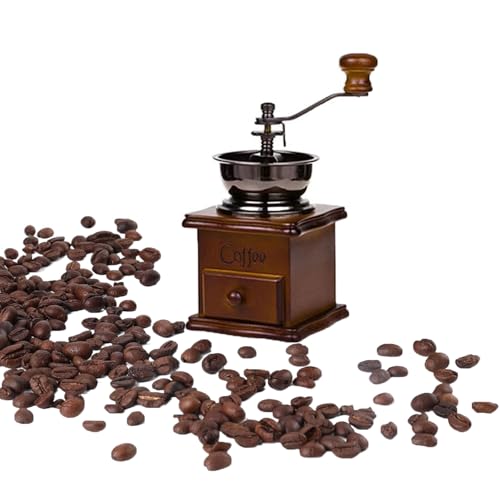
A vintage manual coffee mill grinder suits those who value simplicity, durability, and hands-on control in their coffee routine-especially travelers, outdoor enthusiasts, or anyone without reliable electricity. I rely on mine because it’s built with high-quality pine, ceramic conical burrs, and cast iron, so it won’t add metallic taste or heat that ruins flavor. The polygon adjuster lets me fine-tune grinds from coarse to fine, perfect for drip, French press, or pour-over. It’s hand-powered-no batteries or outlets needed-and lightweight at just under a pound. Plus, its retro wooden design fits neatly on my countertop or in my backpack. I’ve used it for coffee, nuts, and spices while camping with no issues. Made by ZD123 (model RO123, ASIN: B0FBL4XFLX), it’s been available since June 1, 2025, and packs into a space smaller than a toaster.
Best For: Coffee enthusiasts, travelers, and outdoor adventurers who prefer a reliable, hand-powered grinder with durable materials and no need for electricity.
Pros:
- Crafted from high-quality pine, ceramic conical burrs, and cast iron for lasting durability and pure flavor without metallic taste or heat buildup
- Adjustable grind settings via a precision polygon adjuster, suitable for multiple brewing methods including drip, French press, and pour-over
- Compact, lightweight, and portable design ideal for home, camping, or travel with no dependency on batteries or power sources
Cons:
- Manual operation requires physical effort, which may be tiring for large quantities or frequent use
- Limited grinding capacity compared to electric grinders, making it less ideal for large batches
- Availability date of June 1, 2025, suggests it may not yet be widely accessible or tested by a broad user base
IMAVO Vintage Manual Coffee Grinder
The IMAVO Vintage Manual Coffee Grinder stands out for coffee lovers who value craftsmanship and control, especially those without easy access to electricity or who prefer a hands-on brewing process. I use it daily, and its ceramic core keeps flavors clean-no metallic taste or heat buildup. The hand crank takes a little effort, but I can adjust grind size precisely with the built-in polygon dial, perfect for drip, pour-over, or espresso. Made of pine wood and cast iron, it’s sturdy at 2.2 pounds and stores ground coffee in a pull-out drawer. It’s compact, reliable, and great for travel or off-grid use. I’ve had mine since 2017, and it still grinds smoothly.
Best For: Coffee enthusiasts who value manual control, portability, and a vintage aesthetic, especially in off-grid or low-electricity environments.
Pros:
- Ceramic grinding core ensures flavor purity with no metal taste or heat buildup
- Precise grind adjustment with built-in polygon dial for versatile brewing methods
- Durable construction with wood and cast iron, featuring a convenient pull-out drawer for grounds
Cons:
- Hand-cranking requires physical effort, especially for fine or large-batch grinds
- Limited capacity suited for individual or small-batch use
- Wood construction may be susceptible to wear in high-humidity environments
Manual Coffee Grinder with Wooden Vintage Design

For those who value both function and timeless design, this manual coffee grinder with wooden vintage styling stands out as a practical choice that fits well in traditional or rustic kitchens. I use the pine wood body and cast iron parts daily-it feels solid, not gimmicky. The ceramic core grinds evenly, and the polygonal adjuster lets me switch between espresso and French press quickly. At 2.35 pounds, it’s stable but portable. I store it on my counter; the retro Ferris wheel look draws comments. It handles spices and nuts too, so it earns its space. Made by BAILIQI, it’s ranked #140 in manual grinders-solid, not stellar. Still, for home use, it works.
Best For: Home coffee enthusiasts who appreciate vintage aesthetics and manual control in a compact, multi-use grinder.
Pros:
- Elegant wooden vintage design with durable pine wood and cast iron construction
- Ceramic grinding core ensures consistent grind with adjustable fineness for multiple brewing methods
- Versatile enough to grind coffee, spices, and nuts, doubling as a kitchen tool and countertop decor
Cons:
- Ranked #140 in manual grinders, indicating moderate popularity or differentiation
- Manual operation may be labor-intensive for high-volume or frequent use
- Limited brand visibility compared to leading coffee grinder manufacturers
Manual Coffee Grinder Cast Iron Hand Crank
You’ll want this cast iron manual grinder if you value durability and classic design in your coffee setup. I use mine daily-it’s built tough with a red wooden base and hand-crank charm that looks great on my counter. The conical burr and ceramic core give me consistent grinds, from fine espresso to coarse French press. I adjust the grind with the gear nut, no electricity needed. It also grinds spices and nuts cleanly, thanks to the ergonomic handle and sealed base that stops mess. Grounds collect neatly in the pull-out drawer. At 2.3 pounds, it’s sturdy but not heavy. YUEHUA made this model (ASIN: B07BQS777G), and it’s still available.
Best For: Coffee enthusiasts who appreciate durable, vintage-style grinders and prefer manual, electricity-free grinding with precise, adjustable results.
Pros:
- Durable cast iron construction with a stylish brown pine wood base adds both longevity and classic décor appeal
- Conical burr with ceramic core ensures consistent, adjustable grinding from fine espresso to coarse French press
- Multi-purpose use for grinding coffee, spices, nuts, and herbs with a sealed base and pull-out drawer to minimize mess
Cons:
- Hand-cranking requires physical effort, which may be tiring for large grinding tasks
- Larger footprint (4.72″ x 4.72″) may not suit compact kitchen spaces
- Cast iron material, while sturdy, may be prone to rust if exposed to moisture over time
Retro Wooden Handcrafted Coffee Grinder Set

Hands down, this Retro Wooden Handcrafted Coffee Grinder Set suits anyone who values a quiet, hands-on morning ritual without sacrificing build quality. I use it daily, and the beech wood body feels solid, not flimsy. The ceramic burr guarantees even grinding, and I can adjust it from coarse (perfect for French press) to fine (great for espresso). It includes a drawer to catch grounds, a brush, spoon, and dust cover-practical extras. It’s light at just over a pound but stable during use. While it’s not the fastest, it’s reliable, especially if you like grinding spices too. Just don’t expect speed; it’s craftsmanship over convenience.
Best For: Coffee enthusiasts who appreciate a quiet, manual grinding experience and value artisanal, eco-friendly design in their morning ritual.
Pros:
- Durable beech wood construction with a ceramic burr for consistent, adjustable grind settings
- Includes handy accessories like a cleaning brush, measuring spoon, dust cover, and collection drawer
- Doubles as a spice grinder, adding versatility to the kitchen
Cons:
- Slower grinding speed compared to electric grinders, not ideal for large quantities
- Lightweight design may feel less stable during vigorous use
- Limited customer reviews and market presence, indicating newer product reliability uncertainty
Factors to Consider When Choosing a Vintage Coffee Grinder
You’ll want to check the material quality first-solid wood and cast iron last longer than plastic or cheap metal. Make sure the grinder offers consistent grinds and adjustable settings, so you can switch between coarse french press and fine espresso. And don’t overlook the hand crank design, size, and portability, since they affect how easily you can use and store it in your kitchen.
Material Quality
Durability starts with material choice when selecting a vintage coffee grinder. You’ll often find high-quality pine wood used for the body-tough, wear-resistant, and warm in appearance. Cast iron parts, common in the crank and internal gears, add stability and last decades if maintained. These metals resist flex and wear, keeping mechanisms tight. Inside, ceramic grinding cores are key in premium models; they avoid heat buildup and won’t grind off metal particles, so your coffee tastes clean. Unlike steel, ceramic doesn’t corrode or alter flavor over time. The mix of wood, ceramic, and metal also reduces heat transfer during grinding, which helps preserve bean aroma. Units typically weigh 1 to 2.5 pounds-those on the heavier end usually mean denser materials and better build quality. A well-made grinder feels solid, not hollow, in your hands.
Grind Consistency
While grind size often gets attention, it’s consistency that truly shapes your coffee’s flavor-especially with vintage grinders, where wear and design play big roles. You’ll want a grinder with ceramic burrs; they slice beans evenly, leading to uniform particles and better extraction. Conical burrs in good condition reduce heat and friction, preserving aromas and avoiding uneven grit. If you’re using a manual grinder, look for one with a smooth-turning mechanism-less effort means steadier cranking and more consistent results. Over time, even the best grinders drift off track, so regular cleaning and keeping the mechanism dry are essential. Wear down the burrs? That’ll ruin consistency. Vintage models like the Timemore Hand Grinder or Hario Skerton Pro show how thoughtful engineering stands the test of time-when maintained, they still deliver reliable, even grinds.
Adjustable Settings
If you’re serious about matching your grind to different brewing methods, adjustable settings are a must, and vintage grinders vary widely in how well they deliver. You’ll often rotate a hexagonal adjuster to change the grind size-fine for espresso, coarse for French press. Most models require loosening a top cap screw to reposition the burrs, letting you fine-tune the gap manually. Look for ceramic burrs; they usually come with built-in adjusters that keep particle size consistent, boosting flavor extraction. Some grinders use a center axis system: raise it for finer grinds, lower it for coarser ones. The best vintage designs give you precise control without needing electricity. And since you’re adjusting by hand, you can also crush spices, nuts, or herbs to your liking. While some models feel finicky, others, like the Timemore Handmill versions, strike a smart balance between precision and simplicity. Always test the adjuster’s smoothness before buying.
Hand Crank Design
You’ll want a hand crank that makes grinding feel smooth and controlled, since it directly affects both grind consistency and how much effort you’ll need. Most vintage models use cast iron or wood cranks-cast iron offers sturdiness, while wood provides a lighter, ergonomic grip. A longer crank arm gives you more leverage, reducing fatigue, especially when grinding larger batches. Look for models with precision gears; they transfer your motion evenly to the burrs, ensuring uniform grounds. The crank’s placement matters too-side-mounted designs often allow better hand clearance and balance. Since these grinders are manual, you’ve got full control over speed and fineness, and they work anywhere, no electricity required. Brands like Timemore and Zassenhaus use reliable gear systems, but even older models from the 1940s, if maintained, deliver solid performance. Check for smooth rotation and sturdy attachment to the base before committing.
Size And Portability
A compact vintage coffee grinder can measure just 3.8 inches wide and under 7 inches tall, making it a smart choice when counter space is limited or you plan to travel with it. You’ll find some manual models weigh under 1 pound, so they’re easy to pack and move. But if you prefer a sturdier build, larger grinders over 10 inches tall and 2.3 pounds offer stability during use-just expect less portability. Built-in storage drawers or internal chambers let you keep grounds right in the grinder, which helps when you’re on the go. Just remember, even if the grinder is moderately sized, the original packaging might be bulky, sometimes exceeding 10 inches in multiple directions, affecting storage or shipping. Choose based on where you’ll use it most-tight kitchens favor compact builds, while stationary setups can handle bigger, heavier models.
Ease Of Cleaning
Keeping your vintage coffee grinder clean guarantees consistent performance and extends its lifespan. Look for models with an accessible grind chamber and removable parts-these let you wipe away oils and residue before they build up. If it includes a small brush made of wood or stiff bristles, you can quickly clear grounds from the burr without taking the whole thing apart. Ceramic burrs are a smart choice; they resist static and oil buildup better than metal ones, so they’re simpler to wipe down. Integrated collection drawers reduce mess by catching grounds neatly, making post-grind cleanup quicker. And don’t overlook a dust cover-throwing one on after use keeps kitchen dust and crumbs out, meaning you won’t have to deep-clean as often. These features save time and keep your grinder working right with less effort.
Aesthetic Appeal
That polished wood body with its brass accents isn’t just built to grind-it’s designed to catch the eye. You’ll find these grinders feature cast iron frames, ceramic burrs, and hand-crank mechanisms that add a timeless look to your countertop. Many have dark brown or natural wood finishes, some with hexagonal or Ferris wheel shapes that stand out in vintage or traditional kitchens. Carved lettering and metal detailing boost their charm, making them functional decor pieces. You can display them openly since they double as collectibles. They work best where style matters as much as function-think farmhouse sinks or retro cafes. Models like the Kuhn Rikon or Timemore C2 in vintage finishes deliver this look without sacrificing usability. Just make sure the size fits your space. These aren’t just tools; they’re conversation pieces that serve a purpose every day.
Durability And Build
You’ll want to pay close attention to materials when picking a vintage coffee grinder that lasts. Models built with high-quality pine wood, cast iron, and ceramic components hold up best over time. The ceramic grinding core doesn’t just resist heat buildup-it also avoids metal shavings, keeping your coffee pure and flavor consistent. Look for reinforced joints and solid mechanical assembly, especially in hand-crank models, since repeated grinding stresses the mechanism. A weight between 1 and 2.5 pounds usually signals a sturdy build; lighter units might skimp on materials. Wooden bodies should resist moisture and temperature shifts to prevent warping or cracking, maintaining both fit and performance. While some vintage grinders show wear, well-constructed ones keep functioning smoothly for decades. You’re not just buying aesthetics-you’re investing in a tool. Choose one that’s built to work as well as it looks.
Frequently Asked Questions
Are Vintage Grinders Safe for Daily Use?
Yes, they’re safe for daily use if you inspect them first. You should check the cord for cracks and test the motor for overheating. Many vintage grinders, like the Timemore Hand Grinder or older Krups models, still function well after decades. Just clean the burrs regularly and avoid moisture. While they lack modern safety certifications, proper maintenance reduces risks. For consistent results and safety, pair them with a scale and grinder brush. You’ll get reliable performance if you treat them with care.
Can I Replace Parts on Old Grinders?
You can replace parts on old grinders, but it depends on the model and availability. Common wear parts like burrs, clamps, or motor brushes are often replaceable. Brands like Zassenhaus or Timemore offer spare parts for some vintage-style units. However, obsolete models might need custom fixes or 3D-printed components. Always check manufacturer support or specialty repair shops. Replacing parts can extend life, but mismatched components may affect grind consistency or damage the mechanism.
Do Wooden Grinders Resist Moisture Damage?
You can’t fully trust wooden grinders to resist moisture damage-they absorb humidity and may warp or crack over time. While they look great and feel solid, prolonged exposure to damp environments weakens the wood. You’re better off keeping them in dry areas and wiping them down fast if they get wet. Compared to metal or plastic, wood’s more high-maintenance. For lasting performance, choose models with sealed finishes, but know they’re not waterproof.
How Do I Restore a Rusty Hand Crank?
You disassemble the hand crank carefully, then scrub light rust with steel wool or a wire brush. For stubborn spots, use naval jelly or white vinegar, letting it soak briefly before wiping clean. Dry all parts thoroughly to prevent further corrosion. Apply a food-safe lubricant like mineral oil to moving parts. If the crank’s threads are damaged, you might need a tap and die set to restore them. Test smoothness before reassembling.
Are Ceramic Burrs Better Than Steel in Vintage Models?
You’re better off with steel burrs in vintage grinders-ceramic ones rarely appear in older models and are more fragile. Steel holds up over time, especially in hand-crank designs like the Timemore or Hario Skerton predecessors. Ceramic resists heat and corrosion, but vintage builds rely on durable, replaceable steel. If you’re restoring an old grinder, expect steel burrs. They’ll serve you well with regular cleaning and aren’t prone to cracking if tightened too much.