Cold Brew Ratio Guide: 1:4 Coffee-to-Water + Steep Times
Use a 1:4 coffee-to-water ratio for rich, smooth concentrate in most cold brew makers like the OXO 64oz or Takeya 2-Quart. Stick to coarse-ground beans-around 700 to 800 microns-to avoid bitterness, and always use filtered water with neutral pH. Steep for 12–24 hours in the fridge for clean flavor, or 4–6 hours for a lighter brew. Dark roasts need careful balancing; light roasts shine with this ratio. Adjust based on your gear and taste-and discover how small tweaks sharpen results.
We are supported by our audience. When you purchase through links on our site, we may earn an affiliate commission, at no extra cost for you. Learn more. Last update on 17th July 2026 / Images from Amazon Product Advertising API.
Notable Insights
- Use a 1:4 coffee-to-water ratio for a concentrate that delivers rich flavor when diluted with water or milk.
- Opt for a 1:8 to 1:10 ratio if you prefer ready-to-drink cold brew without additional dilution.
- Choose a coarse grind (700–800 microns) to prevent over-extraction and ensure smooth, balanced flavor.
- Use filtered water with neutral pH and avoid chlorine to eliminate off-flavors from long steep times.
- Adjust ratios based on roast: lighter roasts suit higher concentrations, while dark roasts may require weaker ratios to reduce bitterness.
Masontops Cold Brew Maker Kit with Pitcher

If you’re after a no-fuss way to nail the best cold brew coffee ratio every time-especially if you value clean design and hate clutter on your counter-the Masontops Cold Brew Maker Kit has you covered. I use it daily, and the included ratio magnet removes guesswork. The 24oz glass pitcher fits right in my fridge, and the stainless steel filter brews smooth concentrate overnight, no mess. I just add grounds, screw on the lid, and pour come morning. Dishwasher-safe parts clean up fast, and the drip-free spout works as promised. Unlike plastic brewers, this one won’t leach chemicals, and the teal accent looks sharp. It’s compact, efficient, and handles both coffee and tea with ease-ideal for simple, consistent cold brew.
Best For: Home brewers who want a sleek, easy-to-use cold brew system that delivers consistent results without countertop clutter.
Pros:
- Includes a handy ratio guide magnet for precise, repeatable brewing every time
- Made with durable, BPA-free glass and a reusable stainless steel filter that won’t leach chemicals
- Compact, fridge-friendly 24oz pitcher with a drip-free spout and dishwasher-safe components
Cons:
- Limited to 24oz capacity, which may be too small for larger households or frequent users
- Requires wide-mouth mason jars, which may not be standard in all kitchens
- Teal accents, while stylish, may not match all kitchen aesthetics
Masontops Cold Brew Maker Kit

The Masontops Cold Brew Maker Kit works best if you want a simple, all-in-one system for making cold brew at home without needing electric appliances or complex steps. I use the 24oz glass mason jar as both brewer and serving vessel, which saves time and counter space. Its stainless steel mesh filter fits snugly, preventing grounds from slipping through. I add coarsely ground coffee, pour cold water over it, and let it steep overnight in the fridge. By morning, I get smooth, low-acid cold brew concentrate. I can dilute it with water or milk, or add flavored syrups. The included ratio magnet helps me stay consistent. All parts are dishwasher-safe, making cleanup easy. It’s compact, portable, and stores neatly in the fridge.
Best For: Home coffee enthusiasts who want a simple, manual system to brew smooth, low-acid cold brew concentrate without electricity or complicated equipment.
Pros:
- All-in-one mason jar design doubles as brewer and serving vessel, saving space and simplifying use
- Stainless steel mesh filter ensures no sediment in the final brew and is durable and reusable
- Dishwasher-safe components and included ratio guide make preparation and cleanup effortless
Cons:
- Limited to 24oz capacity, which may be too small for larger households or frequent use
- Requires overnight steeping, so not ideal for those needing quick cold brew
- Glass jar, while sturdy, could be prone to breakage if dropped or mishandled
Takeya 2-Quart Cold Brew Coffee Maker

I reach for the Takeya 2-Quart Cold Brew Coffee Maker when I want full batches of smooth, low-acid cold brew without fuss, and its 2-quart capacity makes it ideal for families or frequent entertainers. Its BPA-free Tritan construction resists stains and odors, and I appreciate the airtight, leak-proof lid when storing it in the fridge. The included filter works well with coarse grounds, and cleanup is simple-just rinse or place it on the top rack of the dishwasher. I’ve found it’s more durable than glass models and easier to handle, though it’s not dishwasher-safe in the bottom rack. It’s reliable, practical, and consistently delivers great cold brew.
Best For: Families or frequent entertainers who want to make large batches of smooth, low-acid cold brew coffee with minimal effort.
Pros:
- Large 2-quart capacity ideal for making cold brew in bulk
- Durable, BPA-free Tritan construction that resists stains and odors
- Airtight, leak-proof lid and dishwasher-safe (top rack) for easy storage and cleanup
Cons:
- Not safe for dishwasher use on the bottom rack, limiting cleaning convenience
- Requires coarse coffee grounds for optimal filtration
- Slightly larger footprint may not suit compact fridge spaces
Cold Brew Coffee Maker 64oz with Filter

You’ll find the Heyglee Cold Brew Coffee Maker 64oz with Filter hits the sweet spot if you’re after a no-fuss, reusable system that handles batch brewing without sacrificing quality. I use it for cold brew and iced tea, and the 304 stainless steel filter gives me smooth, grit-free results every time. The glass pitcher’s durable, fridge-safe, and won’t stain, while the airtight lid seals in freshness for days. It’s leak-proof, so I take it on road trips or to the office without worry. The included mat keeps my counter dry, and the brushes make cleaning easy. At 2 quarts, it’s ideal for small households or frequent drinkers who want consistency and convenience.
Best For: Coffee lovers who want a durable, leak-proof, and reusable cold brew system for home, office, or travel use.
Pros:
- Produces smooth, grit-free cold brew and iced tea thanks to the premium 304 stainless steel ultra-fine mesh filter
- Airtight, leakproof design with silicone seal keeps beverages fresh for days and is ideal for on-the-go use
- Includes useful accessories like cleaning brushes and an absorbent, anti-slip coffee mat for convenience and countertop protection
Cons:
- Glass construction, while durable, can be heavy and fragile compared to plastic alternatives
- Limited capacity for larger households or entertaining due to 64oz (2-quart) size
- Stainless steel filter may require thorough cleaning to prevent oil buildup over time
Toddy® Cold Brew System

For those committed to making smooth, low-acidity cold brew at home without relying on electric appliances, this manual coffee infuser delivers consistent results with minimal effort. I’ve used the Toddy Cold Brew System since 2004, and it’s still available because it works. At 7.25 by 7.25 by 12.5 inches, it fits in most fridges, brewing 64 ounces per batch. It includes a decanter, reusable filters, and a stopper-no dishwasher use, though. I find it handles coarsely ground beans well, steeped 12–24 hours. With a 4.7-star average and ranking in Amazon’s top kitchen sellers, it’s a trusted choice for cold brew and even iced tea.
Best For: Home users seeking a reliable, non-electric method to make smooth, low-acidity cold brew coffee and iced tea with minimal effort.
Pros:
- Consistently produces smooth, low-acidity cold brew using a simple manual process
- Includes reusable filters and a durable glass decanter, reducing long-term waste and cost
- Compact fridge-friendly design with a 64-ounce capacity and strong customer approval (4.7 stars)
Cons:
- Not dishwasher safe, requiring hand washing for maintenance
- Manual operation requires advance planning for 12–24 hour steeping time
- Limited to cold brew and iced tea, not suitable for hot coffee brewing
Cold Brew Mason Coffee Maker 64oz

The Cold Brew Mason Coffee Maker 64oz stands out for those who want a simple, reliable way to make cold brew at home without stepping up to more complex gear. I use it daily with a 1:4 coffee-to-water ratio, though you can adjust to 1:8 for a lighter taste. Its 64oz BPA-free glass jar fits my fridge, and the stainless steel filter (160-micron weave) delivers smooth, full-flavored concentrate. I like the flip-top spout-no leaks, one-handed pouring. Cleanup’s easy: dishwasher-safe parts, no brush needed. Just avoid sudden temperature changes to prevent cracking. It’s practical, durable, and backed by a lifetime warranty.
Best For: Home users who want a simple, durable, and easy-to-clean cold brew coffee maker with a classic mason jar design and reliable daily performance.
Pros:
- Makes smooth, full-flavored cold brew concentrate using a high-quality 160-micron stainless steel filter
- All parts are dishwasher-safe and easy to clean with no hard-to-reach areas
- Comes with a lifetime warranty and features a leak-proof flip-top spout for convenient, one-handed pouring
Cons:
- Glass jar is not resistant to thermal shock and can crack with sudden temperature changes
- Larger 64oz size may be too bulky for small refrigerators or for individuals brewing single servings
- Limited color or design options beyond the classic mason jar style
Cold Brew Coffee Maker 1 Gallon

I’ve found this 1-gallon cold brew coffee maker works best for home users who make weekly batches and want consistent results without daily setup. Its heavy-duty glass and 304 stainless steel filter handle long soaks without rust or cracking. The 0.25mm holes in the filter prevent grounds from slipping through, and the built-in scale line helps measure coffee right. It brews smooth cold brew or iced tea in just 4–6 hours-no shaking needed. While it’s not dishwasher safe, the included brush makes cleaning manageable. I use mine for infused drinks and outdoor gatherings, and I trust the lifetime guarantee if I ever drop it.
Best For: Home users who prepare weekly batches of cold brew or iced tea and value durability, convenience, and consistent results.
Pros:
- Durable heavy-duty glass and rust-proof 304 stainless steel filter ensure long-term use
- 0.25mm precision filter holes and built-in coffee scale line enhance brewing accuracy and prevent grounds from passing through
- Brews in just 4–6 hours with no shaking required, and doubles as a beverage server for cold drinks
Cons:
- Not dishwasher safe, requiring manual cleaning
- Glass construction, while durable, can break if dropped despite lifetime guarantee
- Limited capacity for larger gatherings beyond 1 gallon per batch
Cold Brew Coffee Maker 32 Oz

A 32 oz cold brew coffee maker suits anyone who wants batch-style brewing without cluttering their fridge, especially those leaning toward convenience and consistency in their routine. I use mine for cold brew, iced tea, and fruit infusions, thanks to its removable stainless steel filter and wide-mouth design. The 160-micron mesh traps fine grounds, while the airtight lid with silicone seal prevents leaks and keeps drinks fresh. Made from durable glass and BPA-free plastic, it’s dishwasher-safe and includes a cleaning brush. Just avoid sudden temperature shifts. It’s compact, practical, and doubles as a storage pitcher.
Best For: Home brewers seeking a compact, versatile, and easy-to-clean solution for making cold brew coffee, iced tea, lemonade, and other infused beverages with consistent results.
Pros:
- Durable glass construction with a 160-micron stainless steel filter effectively traps fine grounds and sediment
- Airtight flip-cap lid with silicone seal prevents leaks and preserves freshness in the refrigerator
- Multi-use design with removable filter allows for brewing, straining, and storage of various beverages
Cons:
- Not resistant to thermal shock; sudden temperature changes may cause cracking
- Limited capacity for larger households or heavy daily consumption
- Brush included is small and may not reach all areas easily during cleaning
Hario “Mizudashi” Cold Brew Coffee Maker, 1000ml, Black

Brewing with the Hario Mizudashi Cold Brew Coffee Maker suits those who want a no-fuss, reliable method for making smooth cold brew at home without special equipment or complicated steps. I use its 1000ml capacity to make up to five servings-just add coffee to the removable mesh basket, pour in water, stir, and refrigerate for 8 hours. The heatproof glass jug, made in Japan, doubles as a server, and the slender spout prevents drips. I’ve found coarse grinds work best for clean, light brews; finer grinds give more strength. I clean the filter by hand since it’s not dishwasher safe. It’s durable, simple, and fits daily use.
Best For: Home users seeking a simple, reliable method to make smooth cold brew coffee without specialized equipment.
Pros:
- Removable fine mesh basket makes brewing and cleaning easy
- High-quality heatproof glass construction from Japan ensures durability
- Doubles as a serving pitcher with a drip-free slender spout
Cons:
- Not dishwasher safe, requiring hand washing for maintenance
- Limited capacity at 1000ml for larger households or gatherings
- Requires 8 hours of refrigeration time for optimal brewing
Presto Dorothy Electric Cold Brew Maker

The Presto Dorothy Electric Cold Brew Maker suits anyone who wants smooth, low-acid cold brew fast-specifically, those who prioritize speed and simplicity over traditional 12-hour steeping methods. I use it to brew 22 ounces in just 15 minutes, thanks to its spinning “tornado” action that extracts flavor without heat. I add water to the glass carafe, select my brew speed with the dial, then pour in ground coffee. It whirls through the grounds, and I press the presser after to filter. My carafe, filter, and cup go in the dishwasher, and the cord detaches for easy storage.
Best For: Home users who want fast, smooth cold brew coffee without the wait of traditional steeping methods.
Pros:
- Brews 22 ounces of cold brew in just 15 minutes using rapid cold brew technology
- Spinning “tornado” action extracts flavor without heat, reducing bitterness and acidity
- Dishwasher-safe components and detachable cord for easy cleaning and compact storage
Cons:
- Limited capacity of 22 ounces per brew cycle may not suit larger households
- Requires medium-coarse ground coffee for optimal performance, limiting flexibility
- Higher price point compared to manual cold brew systems with similar output
Factors to Consider When Choosing a Cold Brew Coffee Ratio Guide
You’ll want to pick a cold brew ratio guide that matches how strong you like your coffee, since your taste preference directly shapes the right coffee-to-water balance. Think about the beans you’re using, your grind size, and even your water quality-each one changes how smooth or bold your brew turns out. And don’t ignore steep time; 12 hours might work for one setup, but 16 could be better if you’re using coarser grinds or lighter roast beans.
Brew Strength Preferences
While your preferred brew strength plays a key role in shaping the right coffee-to-water ratio, it ultimately comes down to how bold or mellow you like your cold brew. If you want a strong, concentrated base for iced coffee, go with a 1:4 ratio-it’s ideal for diluting with water, milk, or alternatives later. This version packs more caffeine and delivers a rich, full-bodied kick. But if you drink cold brew daily and prefer something smoother, try weaker ratios like 1:6 or 1:8. These yield lighter, more balanced results that often need no extra mixers. Stronger ratios extract more flavor and caffeine but can taste bitter if overdone. Weaker brews are more forgiving and easier to drink straight. You can tweak the ratio to match your taste-no single ratio works for everyone. Start with 1:4 or 1:6, then adjust based on how strong you like it.
Coffee Bean Type
Coffee bean variety shapes your cold brew ratio just as much as grind size or brew time. If you’re using Arabica beans, which are lighter and more acidic, aim for a stronger ratio like 1:5 to 1:6 to pull out enough flavor during the slow steep. Robusta beans, denser and more bitter, often need a slightly lower concentration-closer to 1:7-to avoid an overly intense brew. Dark roasted beans are more porous and less dense, so while they extract faster, they may require more coffee (1:7) to balance thinness. Oily surfaces on dark roasts can also clog filters, subtly affecting flow and extraction. Beans with natural sweetness or fruity notes do better at lower ratios to keep flavors bright, not bitter. Adjusting your ratio based on bean type guarantees cleaner, more consistent cold brew every time-no guesswork needed.
Grind Size Impact
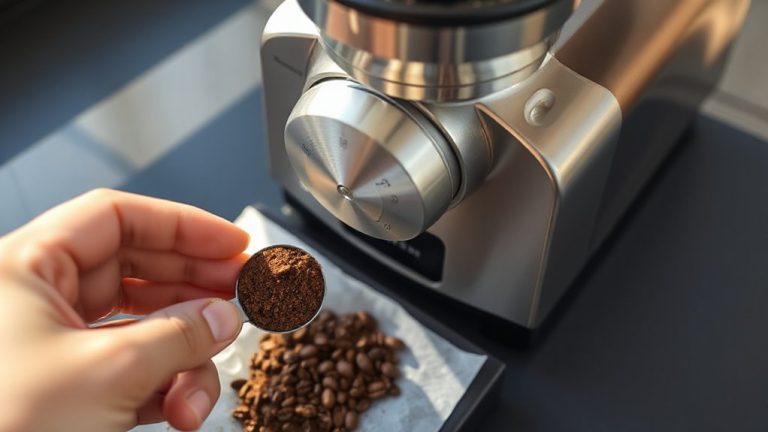
Grind size plays a direct role in how your cold brew turns out, just as much as the type of beans you start with. You’ll want a coarse grind-around 700 to 800 microns, like coarse sea salt-to avoid over-extraction and keep sediment low. Finer grounds extract faster, even in cold water, and can make your brew bitter if you’re not careful. If you do use a finer grind, scale back your ratio to 1:8 or 1:10 to avoid an overly strong or harsh result. Uneven particles cause uneven extraction: fines turn astringent while chunks stay under-extracted. That’s why you’re better off with a burr grinder-it delivers consistent size, leading to balanced, smooth results. Skip the blade grinder; it chops inconsistently and hurts flavor control. Match your grind precisely to your brew time and ratio for the cleanest cold brew every time.
Water Quality Matters
Your water choice directly affects how well your cold brew extracts and tastes, especially with long steep times. Use filtered water with a neutral pH (around 7) to guarantee clean, consistent results. Minerals like magnesium and calcium help pull out flavor, but too much hardness-above 150 ppm-can make your brew bitter. On the flip side, very soft water (below 50 ppm) often leads to a flat, weak concentrate. Avoid tap water with chlorine or chemicals, as they react with coffee and create off-flavors. Since cold brew steeps 12–24 hours, impurities get concentrated, not diluted. A simple carbon filter, like a Brita or PUR, usually works well. If your tap water tastes odd or smells like bleach, don’t use it. Good water doesn’t guarantee great cold brew, but bad water will ruin it every time. Choose wisely.
Steep Time Influence
While steep time isn’t the only factor in cold brew strength, it directly shapes how bold or smooth your final brew turns out. If you steep for just 4 to 6 hours, you’ll get a lighter, more delicate coffee that’s ready to drink without adding water. Most people, though, go for 12 to 24 hours for fuller flavor extraction. Just don’t push beyond 24 hours-you risk over-extraction, which brings out bitter or astringent notes, even in cold brew. Keep in mind, water temperature matters: refrigerated brewing at around 40°F slows extraction, so you’ll need the full 24 hours, while room temp speeds it up. Adjust your coffee-to-water ratio accordingly-longer steeps might need a coarser grind or slightly less coffee to keep the brew balanced.
Concentrate Versus Ready
If you’re deciding between making cold brew concentrate or a ready-to-drink batch, the coffee-to-water ratio is your starting point for getting it right. For concentrate, use a 1:4 ratio-it’s strong, needs dilution, and gives you control over final strength. It lasts up to two weeks and is cost-effective if you drink cold brew daily. Steep it 12–24 hours for full extraction. Ready-to-drink brew uses a 1:8 to 1:10 ratio, making it smoother and ready to pour straight into your glass. It’s less flexible but more convenient for quick servings. Concentrate suits those who like customizing their drink with milk, water, or ice. Ready-to-drink works better if you want consistency and speed. Pick based on your routine, storage space, and how much effort you want to put in each time.
Dilution Technique Choices
How strong should your cold brew taste when you take that first sip? That depends on your dilution technique. If you’re using a 1:4 coffee-to-water ratio during brewing, try diluting your concentrate at 1:2 or 1:3 with cold water or milk to avoid bitterness. A 1:1 mix gives a stronger, balanced drink, great for milk-based beverages. Prefer something lighter? Go up to 1:4. Always use cold liquid to preserve smoothness and low acidity. And don’t forget ice-it melts, slowly weakening your drink over time. So if you’re serving over ice, under-dilute slightly at first. You can adjust on the fly based on taste, strength, and how much you’re serving. The right ratio isn’t fixed. It’s personal, practical, and easy to tweak once you know how each choice changes the final cup.
Frequently Asked Questions
What Is the Best Grind Size for Cold Brew?
You should use a coarse grind for cold brew-think sea salt or breadcrumbs. It prevents over-extraction and bitter flavors during the long steep. Fine grounds clog filters and make sludge. A burr grinder gives consistent particles, which helps even extraction; blade grinders work in a pinch but aren’t ideal. Brands like Baratza Encore or Fellow Ode deliver reliable results. Never use espresso-fine. Coarse guarantees smooth, clean cold brew after 12–24 hours in water.
Can I Use Regular Coffee Beans for Cold Brew?
Yes, you can use regular coffee beans for cold brew-no special beans required. Just pick a flavor profile you like, since cold brewing highlights sweetness and reduces acidity. Light, medium, or dark roasts all work, but darker roasts often yield smoother, chocolaty results. Avoid flavored or oily beans; they can clog filters and taste artificial when steeped. For best results, grind them coarse before steeping 12–24 hours in cold water.
How Long Should I Steep Cold Brew Coffee?
You should steep cold brew coffee for 12 to 16 hours at room temperature or in the fridge. Less than 12 hours yields weak, under-extracted flavor; more than 16 can make it overly bitter. A 14-hour steep usually works best for most people. Use coarsely ground beans and cold or room-temp water. Strain thoroughly using a paper filter or French press to avoid sediment. Store the concentrate in a sealed container.
Should Cold Brew Be Stored in the Fridge?
Yes, you should store cold brew in the fridge-it keeps better and stays fresh longer. Leaving it at room temperature risks spoiling, especially after 24 hours. Use an airtight container to prevent oxidation and off-flavors. Properly stored, it lasts up to a week. If you’re making small batches daily, you can skip refrigeration, but you’ll need to drink it fast. Fridge storage is the smarter, safer choice for most people.
Can I Heat up Cold Brew Coffee?
Yes, you can heat up cold brew coffee without ruining it. Just warm it gently on the stove or in the microwave-don’t boil it, or you’ll lose flavor. Heating doesn’t make it acidic; cold brew stays smooth. You can serve it hot over ice for an iced coffee or mix with hot water for a quick Americano-style drink. Just remember: cold brew concentrate should be diluted first. Nescafé and Starbucks bottles? Those work too.