How to Calibrate a Conical Burr Grinder for Cold Brew Coarseness
Set your conical burr grinder to a coarse setting-around 20–30 on a Baratza Encore or 5–7 on a Fellow Ode-to match the texture of coarse sea salt, ideal for cold brew’s long steep. Use room-temperature water in a water-only test to check drainage and spot inconsistencies. Adjust slightly finer if weak, coarser if bitter, and mark your setting once dialed in. You’ll find more precision tweaks that keep your brew smooth and balanced batch after batch.
Notable Insights
- Set the grinder to a coarse setting similar to coarse sea salt, typically 20–30 on Baratza Encore or 5–7 on Fellow Ode.
- Perform a water-only steep test using room-temperature water to check for channeling or uneven drainage.
- Adjust grind size based on taste: coarser for smoothness, finer for body, changing only one variable at a time.
- Fix bitterness by grinding coarser to prevent over-extraction; address weak flavor by grinding finer.
- Mark the optimal setting and maintain consistency, only reassessing when switching coffee beans.
Set Your Grinder to Cold Brew Coarseness
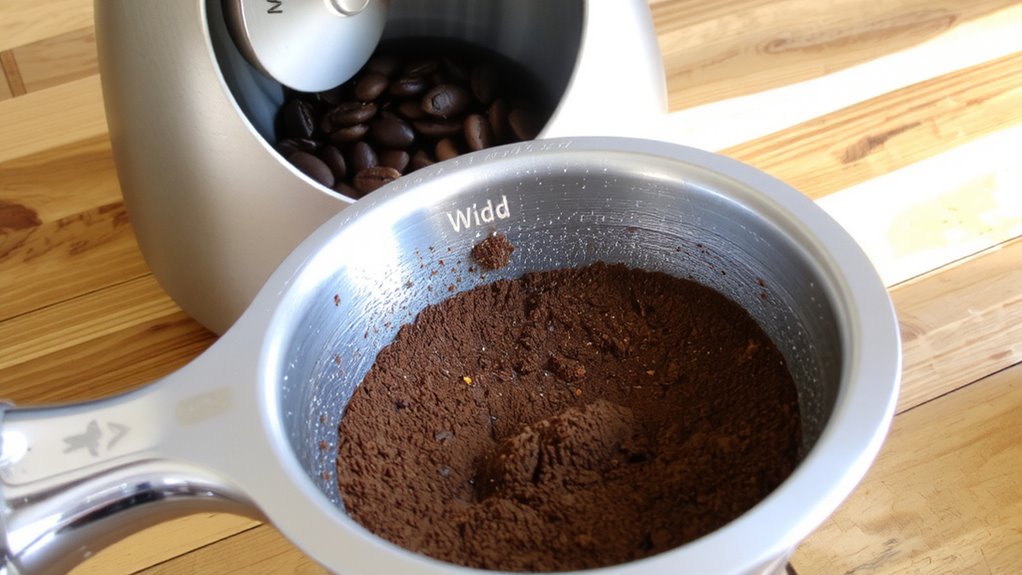
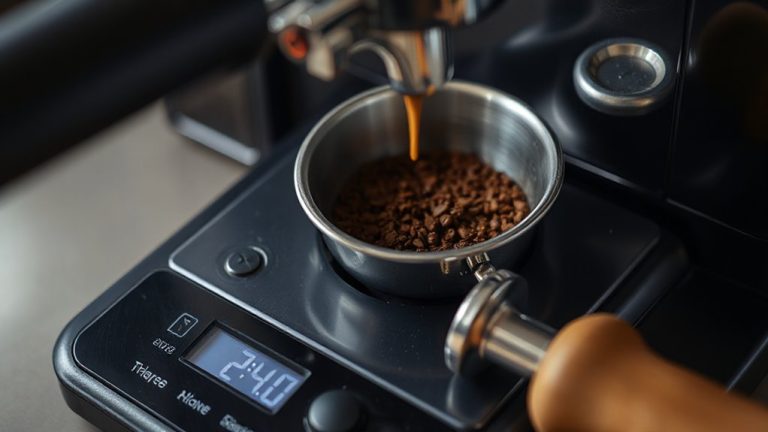
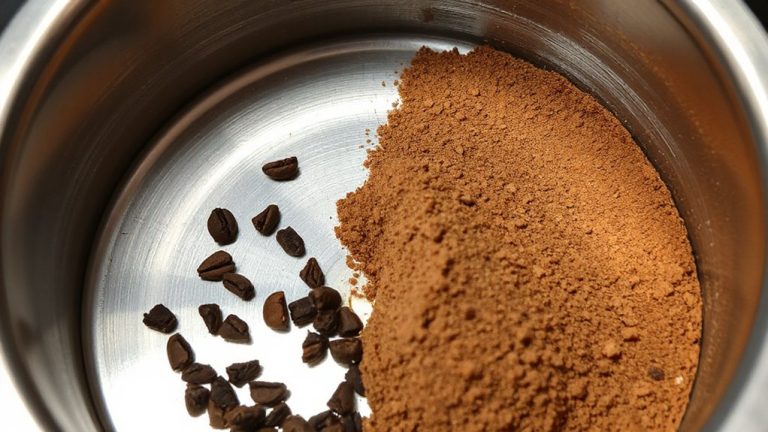
Grinder settings make or break your cold brew’s flavor, and getting this right starts with choosing the right coarseness. You’ll want a setting noticeably coarser than drip coffee-similar to coarse sea salt-to prevent over-extraction during long steep times. Most conical burr grinders have a range from fine to coarse; aim for around 20 to 30 on popular models like the Baratza Encore or 5 to 7 on the Fellow Ode. A consistent grind matters, so check your grind consistency by eye and touch-uneven particles lead to uneven flavor. Poor burr alignment causes fines and boulders, which ruin batch balance. If your grounds look inconsistent or your brew tastes off, clean and recalibrate the burrs. This guarantees even grinding, essential for smooth, clear cold brew. Don’t skip checking manufacturer guides-they often give coarseness benchmarks tailored to your machine. For more tailored recommendations, consider reviewing the best coffee grinders for cold brew.
Run a Water-Only Steep Test
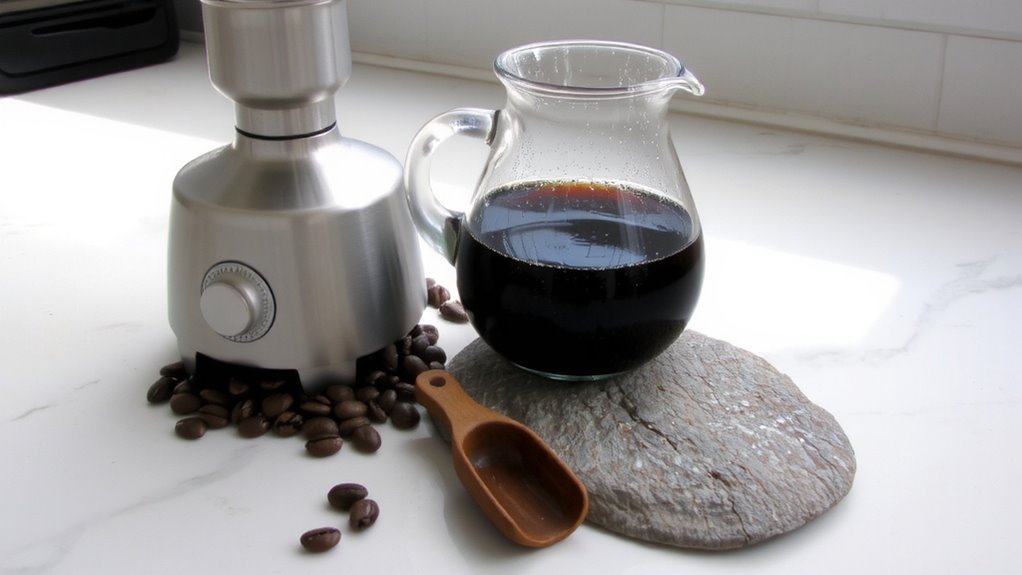
Now that you’ve set the grind size and confirmed it’s coarse enough for cold brew, it’s time to check how well your grinder performs under real brewing conditions. Run a water-only steep test using room-temperature water-around 68–72°F-to simulate typical brewing environments. Use the same steep duration you plan for actual brews, usually 12 to 24 hours, to assess consistency. Skip the coffee grounds; just add water to the empty grounds container or brewing vessel with your ground filter medium if applicable. This test reveals channeling or uneven extraction risks caused by inconsistent particle size. If water drains too fast or pools oddly, your grind may be too uneven, even if coarse. This step helps isolate grinder performance from coffee quality variables. It’s simple, fast, and gives immediate feedback. For best results, use a grinder specifically designed for cold brew, such as one from our top-rated cold brew grinders list.
Taste and Adjust for Smoothness
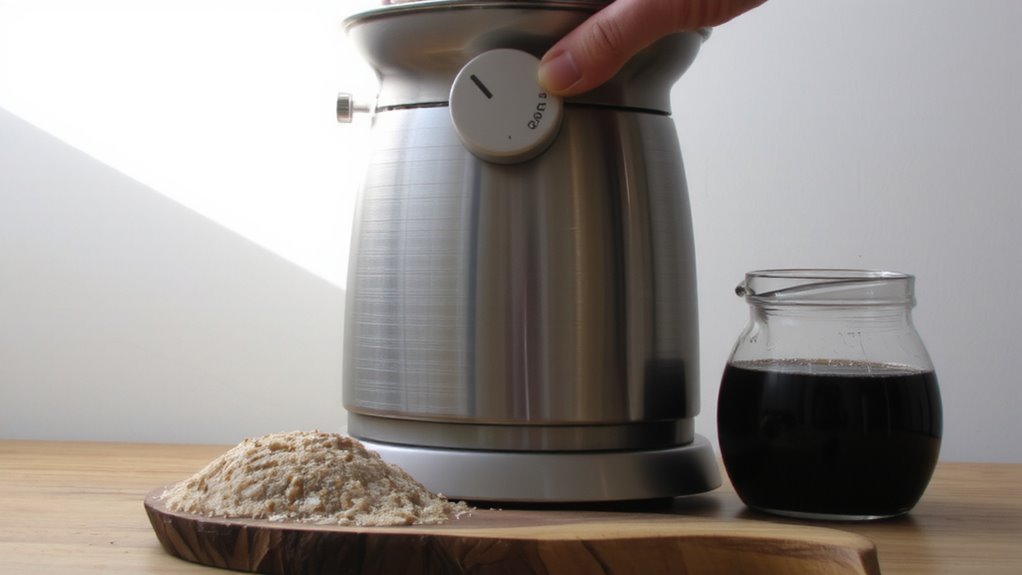
How does your cold brew taste after the first full batch? Pay attention to flavor balance and any sharp notes that suggest poor acidity control. Cold brew should be smooth, not sour or flat. If something feels off, your grind size might need another tweak. Go coarser if it’s too sharp, finer if it’s hollow or thin. Let’s compare adjustments:
| Grind Change | Flavor Balance Effect | Acidity Control Result |
|---|---|---|
| Slightly finer | Boosts body and sweetness | May increase acidity |
| Slightly coarser | Reduces bitterness, improves smoothness | Enhances acidity control |
| No change | Maintains current profile | Stable if already balanced |
Always adjust one setting at a time. Wait a full steep (12–16 hours) before judging results. You’re not chasing intensity-you’re aiming for clean, rounded flavor balance. Small dial turns make big differences. Trust your palate, not just the clock. Using beans specifically selected for cold brew can enhance overall smoothness and depth, so consider trying a best coffee for cold brew variety known for low acidity and rich body.
Fix Bitter or Weak Cold Brew
One common issue you might run into is bitter or weak cold brew, and the fix usually starts with your grind size. If it’s bitter, your grind is likely too fine, over-extracting during the long steep. Try a coarser setting. If it’s weak or flat, the grind may be too coarse, under-extracting flavor-adjust finer. Always use room-temperature or cold water; warm water temperature speeds extraction and can increase bitterness, even with proper grind. Bean freshness matters too-stale beans produce dull, weak results no matter the grind. Use beans roasted within the last two to three weeks for best flavor. Grind right before brewing to preserve oils and aroma. These steps help you balance strength and smoothness without relying on guesswork. Consistency starts with fresh beans, correct grind, and cold, slow water contact.
Repeat the Best Grind Every Time
Once you’ve dialed in the ideal grind for smooth, balanced cold brew, locking in that setting guarantees consistency across batches. Mark your grinder’s setting with tape or a permanent marker-especially on models like the Baratza Encore or Fellow Ode-so you can return to it quickly. Consistent calibration means the burrs produce the same particle size every time, which is critical for even extraction and repeatable results. Avoid adjusting the grind without reason; small changes can throw off flavor even with the same beans. Store your beans properly and grind just before brewing to maintain freshness. If you switch beans, reassess only if needed-many medium-to-dark roasts respond well to the same coarse setting. Trust your taste, but rely on the setting as your baseline. With consistent calibration, you’ll get repeatable results and spend less time troubleshooting. It’s not about perfection every time-it’s about predictability.
Solve Common Grind Problems
A coarse, even grind is essential for cold brew, but inconsistencies can lead to messy results. Grind retention is a common issue-fine particles stuck in the burr chamber or chute can skew your dose and waste beans. To fix it, wipe down the grinder regularly and use a brush to clear hidden grounds. Static issues often cause grounds to cling to the bin, especially in dry environments. A light tap usually helps, or try slightly adjusting the grind setting to reduce friction. For models like the Baratza Encore, anti-static brushes or humidity-controlled storage may reduce buildup. If your grind feels uneven, check for worn burrs or misalignment. Regular cleaning and calibration prevent most problems. You don’t need fancy tools-just consistency and attention. Small fixes make a big difference in extraction and flavor. Address these issues early to keep your cold brew smooth and repeatable.
On a final note
Now you’ve got the right grind for cold brew-coarse, even, and consistent. Stick to your conical burr grinder’s recommended setting, like 20 on a Baratza Encore, and keep notes. If it’s bitter, go coarser; if weak, fine-tune finer. Water-only tests save beans. Repeat what works. Consistency beats guesswork every time, so trust the process, not a hunch.