Proper Way to Rinse and Dry Your French Press After Each Brew
Disassemble your French press right after brewing while parts are still warm. Rinse each piece under warm water, then scrub with soapy water using a soft brush-focus on the mesh, rod, and carafe. Clean under the filter to remove trapped oils and sediment. Rinse thoroughly until no suds remain and surfaces feel slick. Air-dry all components completely on a rack before reassembling. Skipping steps risks mold or rancid oils. Do this every time, and you’ll keep your press brewing clean, clear coffee for years.
Notable Insights
- Disassemble the French press immediately after use to prevent coffee residue from hardening on components.
- Rinse all parts thoroughly under warm running water to remove coffee grounds and oils.
- Use warm soapy water and a soft brush to scrub the carafe, plunger, and filter, especially under the mesh.
- Rinse each piece until water runs clear to eliminate any soap residue that could affect taste.
- Air-dry all components on a rack for at least 30 minutes before reassembling to prevent mold and odors.
Disassemble the French Press Immediately
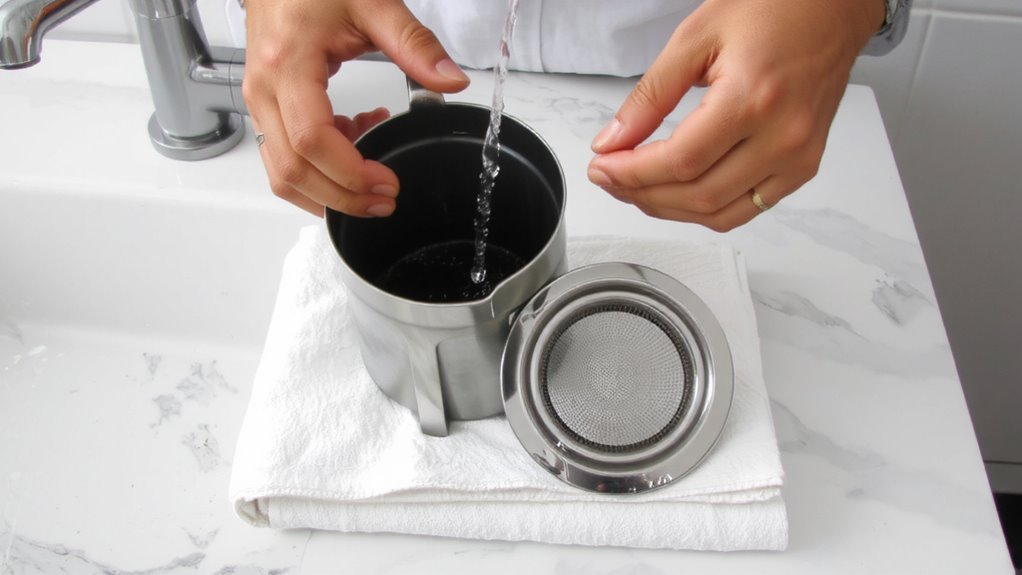
After you’ve poured your last cup, don’t let the French press sit-take it apart right away while it’s still warm, since coffee residue and fine grounds will stick harder as things cool. Disassembling immediately makes filter maintenance easier and helps prolong the life of the mesh screen. Pull the filter up and separate the lid, filter, and rod. Let each part air out briefly, but don’t delay cleaning. This step is essential for proper filter care, as leaving coffee oils and grit on the filter mechanism can lead to clogs and corrosion over time. Stainless steel parts are durable, but trapped moisture or buildup can reduce efficiency. Removing and inspecting the parts right after use lets you spot wear early, especially on the filter mesh or rubber gasket. Immediate disassembly isn’t just about cleanliness-it’s a practical step to maintain function and avoid long-term damage. For those using a plastic-free French press, choosing a model made with stainless steel construction ensures durability and easier cleaning without the risk of plastic degradation.
Scrub All Parts With Warm Soapy Water
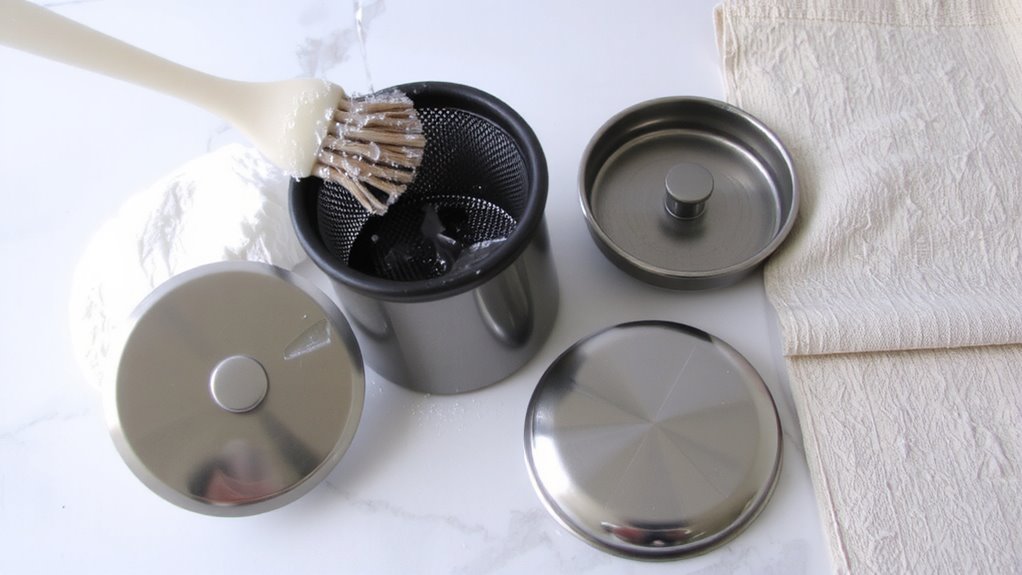
You’ve taken the French press apart while it was still warm, which keeps residue from setting in and makes cleanup more effective. Now, scrub all parts with warm soapy water using a soft brush or sponge. Pay close attention to the carafe, depressor rod, and lid, where oils and fine grounds tend to cling. For the metal depressor assembly, use a small brush with a narrow head to reach tight spots, applying a circular brush technique to dislodge buildup without scratching surfaces. If the press sees daily use, consider increasing soaking duration to 10–15 minutes in warm, soapy water to loosen stubborn grime. This step isn’t always needed after every brew but helps during weekly deep cleans. Avoid steel wool or abrasive pads-they damage finishes. Use dish soap that cuts grease but rinses cleanly. Rinse thoroughly under running water to remove all soap residue before moving to the next step.
Clean Under the Mesh Filter Thoroughly
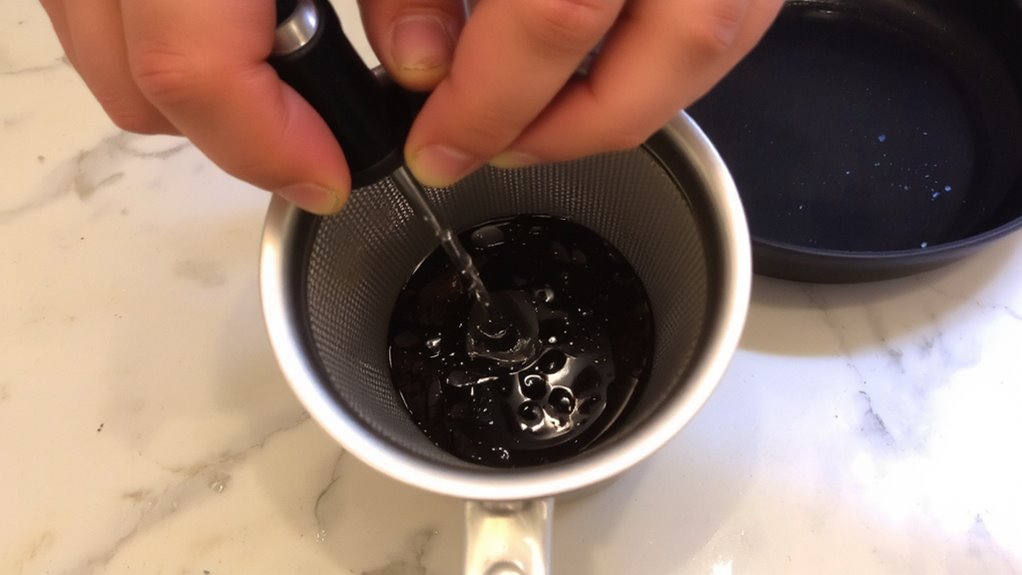
The hidden layer of coffee oils and fine sediment trapped beneath the mesh filter is often overlooked, yet it’s a prime spot for staleness and off-flavors to develop over time. You need to disassemble the press completely to access this area-most French press models let you pop out the filter assembly for thorough cleaning. Use a soft brush or sponge to scrub under the mesh where filter buildup accumulates daily. This trapped sediment not only affects taste but can clog the mesh over time, reducing brew efficiency. Pay close attention to the inner rim and the space between the mesh and the metal frame, since oils linger there. Regular cleaning prevents long-term residue and maintains consistent brew quality. Don’t skip this step-neglecting it leads to faster wear and off-tasting coffee. A clean filter means better flavor and longer equipment life.
Rinse to Remove All Soap Residue
Since soap residue can linger in crevices and affect your coffee’s taste, it’s essential to rinse every part of the French press thoroughly after washing. Hold each piece under running water, focusing on the plunger, filter, and carafe’s bottom. Use warm water-too hot could stress the glass, while cold might not remove oils effectively. Warm water helps dissolve any leftover soap residue without risking damage. Make certain all surfaces are fully rinsed, especially where the mesh meets the metal. Even a small amount of soap residue can alter your brew’s flavor, creating an off-taste most people notice right away. Avoid using strong scented soaps; they’re harder to rinse clean and may linger. Rinse until the water runs completely clear and the surfaces feel slick, not slippery. Proper water temperature and a careful rinse guarantee your next cup stays pure, clean, and tastes just like coffee-nothing else. For optimal performance, consider choosing one of the Best French Press Picks for 2024.
Air-Dry Completely Before Reassembly
After rinsing every component thoroughly, it’s time to let them dry properly. Place each piece on a drying rack to guarantee maximum air circulation, which helps prevent lingering moisture. A stainless steel or plastic drying rack works well-just make sure parts aren’t touching, so water can evaporate evenly. Avoid using a towel, since it can transfer lint or bacteria. Let the coffee press, lid, and carafe air-dry completely, ideally for at least 30 minutes, before reassembling. Proper drying reduces the chance of weakened seals or dull parts over time. If you’re in a humid environment, spreading components out on the rack and leaving them overnight is a safe bet. Good airflow speeds the process and keeps your French press in better shape. Skipping full drying can lead to issues down the line, so don’t rush reassembly.
Stop Mold in Your French Press
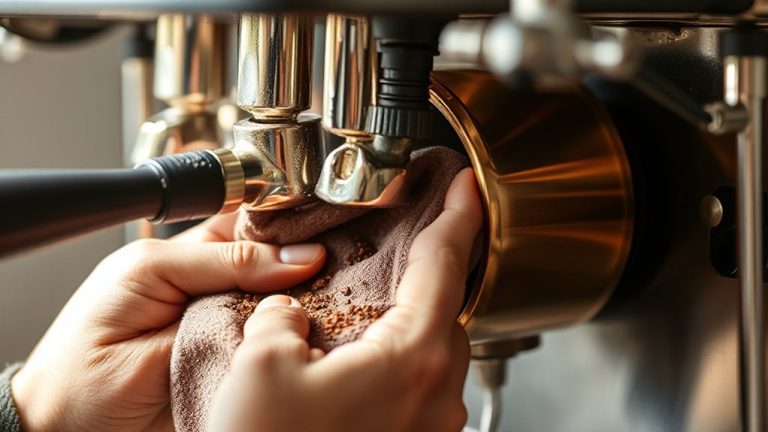
When it comes to keeping your French press in top shape, preventing mold is non-negotiable-especially in the gasket and filter screen, where moisture and coffee oils often linger. Your best prevention tips include rinsing all parts thoroughly with warm water immediately after use and letting them air-dry fully before reassembling. Never store your French press while damp. The pump assembly’s rubber gasket traps moisture, so disassemble it and dry each piece separately. Use a clean cloth to wipe crevices. For long-term storage solutions, keep the press fully disassembled in an open cabinet-avoid sealed containers that limit airflow. Glass carafes resist odor absorption, but stainless steel versions may need extra drying care. Regular inspection helps catch early signs of mold. If you notice any musty smell or discoloration, clean with a vinegar-water soak. Staying consistent with drying and smart storage solutions greatly reduces mold risk.
Avoid Rancid Oils: Clean After Every Use
You’ll almost always want to clean your French press right after use-coffee oils left behind can turn rancid in just a day, especially in warmer kitchens. That oil buildup coats the carafe and mesh filter, creating a breeding ground for stale flavors. Over time, it leads to flavor degradation, making even freshly brewed coffee taste flat or bitter. Don’t wait-rinse the press and carafe immediately after pouring your coffee. Use warm water and a drop of dish soap, scrubbing the metal filter thoroughly since oils cling there. A small brush, like a bottle or mesh cleaner, helps remove residue others miss. If you skip cleaning just once, you’ll notice the off-taste next brew. Even stainless steel models suffer oil buildup, not just glass ones. Regular cleaning avoids long-term staining and keeps your equipment working efficiently. Clean after every use-it’s the simplest way to protect your coffee’s quality.
On a final note
Clean your French press right after each use to prevent mold and rancid oils from building up. Disassemble it fully, scrub all parts with warm, soapy water-especially under the mesh-and rinse well to remove soap residue. Let everything air-dry completely before reassembling. Skipping even one cleaning can degrade flavor and shorten your press’s lifespan. It takes minutes, but avoids bigger issues later-like clogged filters or off-tastes. Consistent maintenance keeps your coffee tasting fresh and your gear lasting longer.