Why Brew Temperature Should Be Lowered for Aged Coffee Beans
You should lower the brew temperature for aged coffee beans because they lose volatile compounds and degrade over time, making them more prone to harsh, bitter flavors when hit with boiling water. Brewing between 190–195°F reduces extraction of stale notes while preserving balance. Use a gooseneck kettle like the Fellow Stagg EKG to control heat precisely. This simple tweak improves flavor without wasting old beans-there’s more to optimizing stale coffee with the right techniques and tools.
Notable Insights
- Aged coffee beans degrade due to oxidation, losing aromatic compounds and developing stale, flat flavors over time.
- Boiling water extracts more bitter and astringent compounds from old beans, amplifying undesirable stale notes.
- Lower brew temperatures (190–195°F) reduce harsh extraction, preserving balance in aged coffee.
- Cooler water minimizes over-extraction of degraded compounds while retaining residual flavor complexity.
- Using precise temperature control helps extend usability of older beans without wasting them.
What Happens When Coffee Beans Age?
While coffee doesn’t technically spoil like perishable food, its quality degrades over time-and that affects how you should brew it. As beans age, they undergo oxidation effects that slowly alter their chemical makeup. This leads to flavor degradation, stripping away the vibrant, nuanced notes you get from fresh roasts. You’ll notice the coffee tastes flatter, less aromatic, and sometimes a bit stale. Light roasts tend to lose brightness faster, while dark roasts may retain body but still lack complexity. The degassing process also completes over weeks, reducing the crema in espresso and weakening extraction. Oxygen, heat, and light speed up this decline, so storing beans in an airtight container away from sunlight helps slow it. But no matter how you store them, old beans won’t perform like fresh ones-adjusting your brewing approach is the best way to work with their limits.
Why Old Beans Turn Bitter With Hot Water
Why does your morning brew taste harsh when you use older beans with boiling water? It’s because aged beans undergo bean oxidation and flavor degradation over time, weakening their structure and depleting desirable compounds. When you hit them with near-boiling water, you extract more bitter, stale notes and fewer of the sweet, balanced flavors you want. Hot water amplifies the negative compounds left behind after oxidation, making your coffee taste flat and acrid. Fresh beans handle higher temps well, but old ones don’t. You’re not just getting less flavor-you’re pulling out the wrong kind. The result? A bitter cup that’s hard to enjoy, even with cream or sugar. It’s not your brewing method; it’s the combo of degraded beans and excessive heat. Adjusting temperature can help, but first, understand what aging does to your beans. Bean oxidation is inevitable, and flavor degradation changes how they respond to heat.
Brew at 190–195°F for Smoother Flavor
You already know hot water can draw out bitter, stale flavors from aged beans because of how oxidation weakens their structure. Brewing at 190–195°F reduces extraction of harsh compounds, giving you a smoother cup with less flavor degradation. This range hits the sweet spot-hot enough to extract decent complexity, but cool enough to skip the bitterness. Compared to standard brew temps (200°F+), the lower range mimics some benefits of cold brew without the 12-hour wait. Using a gooseneck kettle ensures precise temperature control and optimal pour accuracy.
| Method | Brew Temp (°F) | Best For |
|---|---|---|
| Cold Brew | Room or cold | Smooth, low-acid drinks |
| Standard Drip | 200–205 | Fresh beans |
| Adjusted Brew | 190–195 | Aged beans (2+ weeks) |
| Pour Over | 195–205 | Bright, vibrant notes |
Use a gooseneck kettle with temp control for accuracy.
How to Adjust Your Brew Temperature Easily
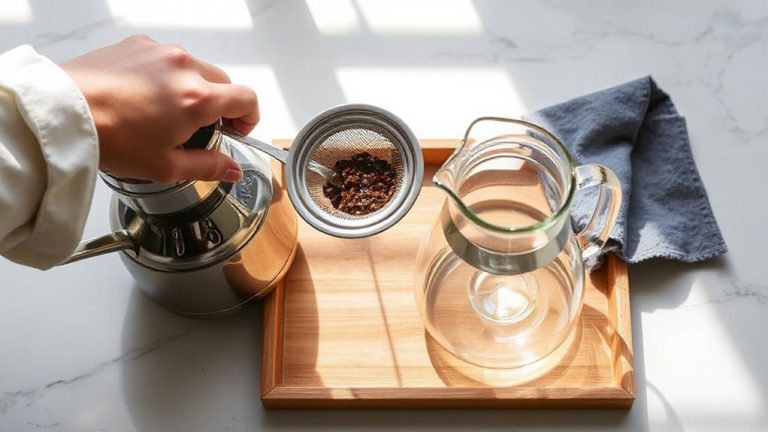
If your coffee tastes sharper or more astringent than usual, dialing down the brew temperature could make a noticeable difference-especially with older beans. Most pour-over kettles and automatic brewers let you adjust heat settings right from the start. Aim for 190–195°F by using a gooseneck kettle with a built-in thermometer like the Fellow Stagg EKG or adjusting your machine’s digital control. Don’t overlook water quality-using filtered water prevents off-flavors and guarantees accurate extraction at lower temps. You may also tweak your grind size slightly finer, since cooler water extracts more slowly, but avoid overcompensating and making your brew bitter. Always make one change at a time so you can track what’s working. This method gives you more control than default settings, especially with aged beans that extract unevenly. For precise monitoring, consider using one of the best coffee thermometers to ensure your water hits the ideal range every time.
Fix Stale Coffee Without Wasting a Bean
A little age on your coffee beans doesn’t have to mean tossing them out-there are ways to work with what you’ve got. Lowering your brew temperature can revive stale coffee by softening harsh notes and improving balance. For aged beans, try brewing between 185°F and 195°F instead of the usual 200°F+; this reduces over-extraction and brings out what’s left of the flavor. While proper coffee storage helps with flavor preservation, even well-stored beans degrade over time. If yours have been sitting more than four weeks post-roast, expect some flatness. A finer grind can extract more from stale beans, but avoid going too fine-bitterness worsens. Re-sealable containers like Airscape canisters help slow staling but won’t reverse it. Cold brew is another option, as lower temperatures mask staleness. A consistent mill grinders selection ensures optimal grind uniformity, which is especially important when adjusting for older beans. Ultimately, prevention beats correction-buy smaller batches and store them in airtight, cool, dark conditions.
On a final note
You should lower your brew temperature to 190–195°F for aged beans because hotter water pulls bitter compounds more aggressively from stale coffee. Cooler water gives a smoother, less harsh cup without wasting old beans. Most electric kettles and brewers let you adjust temps easily. If yours doesn’t, mix boiled water with a bit of cool to hit the right range. It won’t revive fresh flavor, but it helps.