Light vs Dark Roast Grind Size: How to Re-Dial Your Grinder
You need to adjust your grind size when switching roast levels because light roasts are denser and extract slower, requiring a finer grind for balanced flavor. Dark roasts are more porous and extract faster, so a coarser grind prevents bitterness. Using the same setting across roasts leads to sour or bitter coffee. Temperature stays the same, but grind must change. Get this wrong, and even good beans taste off-keep refining your setup for better results.
Notable Insights
- Light roasts are denser, requiring a finer grind for efficient water penetration and extraction.
- Dark roasts are more porous and soluble, needing a coarser grind to avoid over-extraction.
- Using the same grind size across roast levels leads to unbalanced sour or bitter flavors.
- Finer grinds increase surface area and extraction, ideal for dense light roast beans.
- Coarser grinds slow extraction in dark roasts, preserving sweetness and preventing bitterness.
Why Grind Size Must Match Roast Level
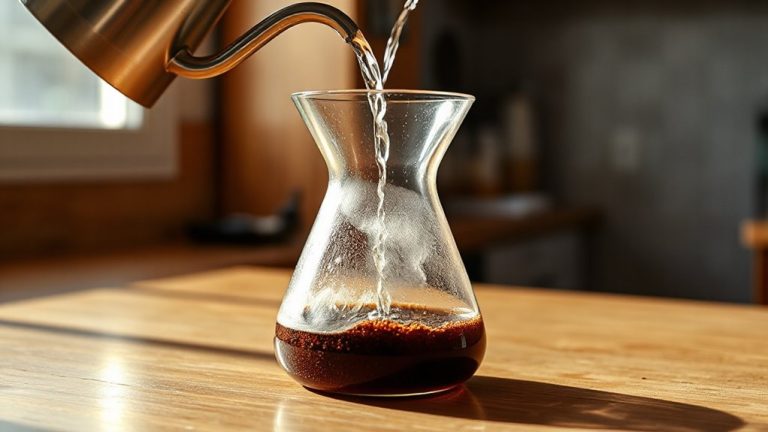
Roast level isn’t just about flavor-it directly impacts how your coffee grounds interact with water during brewing. Darker roasts are more brittle and porous, so they extract faster, while lighter roasts are denser and resist water. If you keep the same grind size across roast levels, you’ll get uneven flavor extraction. A coarse grind with a dark roast might under-extract, leaving it sour, while a fine grind on a light roast can over-extract and turn bitter. You’ve got to re-dial your grinder. Adjusting grind size helps balance brewing time and optimize extraction. For example, a medium-fine grind in a pour-over with a medium roast gives you a 2:30–3:00 minute brew-ideal for clarity and sweetness. Your taste tells you what’s working, but starting with proper grind alignment guarantees control.
Why Light Roasts Need a Finer Grind
That dense, hard bean structure of a light roast? It resists water more than darker beans, slowing down extraction speed. That’s why you need a finer grind-more surface area helps water pull out flavors efficiently. With a light roast, under-extraction is a real risk if the grind’s too coarse, leaving your coffee sour or weak. A finer setting balances that, ensuring sugars and acids dissolve properly. Think of it like stirring sugar: smaller particles dissolve faster. Your grinder should deliver a texture close to table salt for most pour-overs, maybe finer for espresso. Just don’t go too fine-choking the brew is just as bad. Adjusting grind size based on roast level isn’t fussy; it’s essential for even extraction. For a light roast, dialing in finer makes all the difference in flavor clarity and balance.
Why Dark Roasts Require a Coarser Grind
You just dialed in a bright, snappy light roast with a fine grind to crack through its dense structure-now you’re switching to a dark roast, and that same setting will over-extract in a hurry. Dark roasts are more soluble and less dense, so they extract faster. If you don’t coarsen the grind, you’ll pull out too much, getting bitter, hollow flavors instead of sweetness. A coarser setting slows down extraction, helping maintain flavor balance and protect delicate notes. It also supports aroma preservation by avoiding the harsh, burnt volatiles that come from over-extraction. Think of roasts like Sumatra or French roast-without adjusting, you’ll lose complexity fast. Most grinders, from the Baratza Encore to the Fellow Opus, need at least a few clicks coarser for dark roasts. Your brew method matters, too-espresso may need smaller adjustments than pour over. Always tweak and taste. For more precision in matching grind size to roast, consider using one of the best grinders for filter coffee designed to handle these subtle adjustments with consistency.
How Roasting Changes Bean Density and Solubility
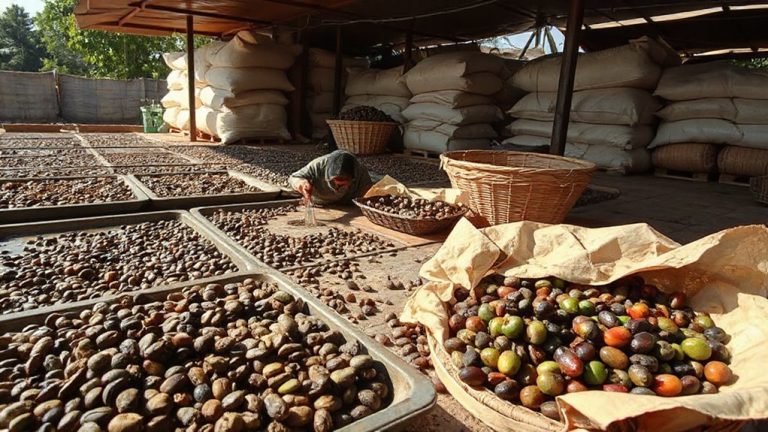
Even though the beans you start with look similar, roasting transforms their internal structure in ways that directly affect how they extract. As roasting progresses, moisture loss and heat cause bean expansion, making the structure more porous. This cellular degradation increases solubility, meaning dark roasts dissolve faster in water than light ones. Since extraction hinges on surface area and density, these physical changes mean your grinder settings can’t stay the same across roast levels.
| Roast Level | Density & Solubility Change |
|---|---|
| Light | High density, less soluble |
| Medium | Moderate density and solubility |
| Medium-Dark | Reduced density, increased solubility |
| Dark | Low density, highly soluble |
| French | Very low density, fast extraction |
You’re dealing with real physical shifts-bean expansion and cellular degradation-so adjustments aren’t optional.
How to Adjust Grind Size When Switching Roasts
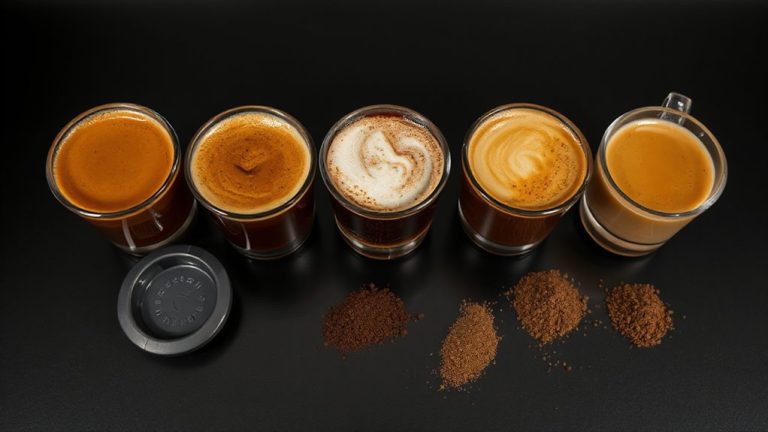
When switching between roast levels, you’ll need to adjust your grind size to match the bean’s changing density and solubility. Lighter roasts are denser and harder, so you should grind finer to increase surface area and improve extraction. If you don’t, your coffee may taste sour due to under-extraction and a shortened extraction time. Darker roasts are more porous and soluble, so you’ll need a coarser grind to avoid over-extraction and bitter flavors. Even with the same brew temperature, say 200°F, changing roast levels without adjusting grind size throws off balance. A finer grind slows flow rate and extends extraction time, while a coarser grind speeds it up. Always tweak your grinder after switching roasts-don’t assume the old setting works. Small adjustments make a real difference in flavor, clarity, and overall balance. For consistent results, consider using a calibrated coffee tamper to ensure even pressure during tamping.
The Biggest Mistake When Changing Roasts
While it might seem efficient to keep your grinder settings unchanged when switching roasts, doing so is the most common and impactful mistake in coffee preparation. Light and dark roasts expand and fracture differently, altering how water extracts flavor. Ignoring this leads to under- or over-extraction, regardless of your taste preference or brew method. Using a high-quality coffee grinder for pour-over ensures consistent particle size and improves control when adjusting for roast differences.
| Roast Level | Grind Size Change | Brew Method Impact |
|---|---|---|
| Light | Finer | Increased extraction, brighter acidity |
| Medium | Slight adjustment | Balanced output across methods |
| Dark | Coarser | Reduced bitterness in espresso |
| City (light) | Much finer | Pour-over benefits from precision |
| French (dark) | Much coarser | French press avoids sludge |
Always re-dial your grind. Matching grind size to roast guarantees peak flavor, no matter your taste preference or chosen brew method.
On a final note
You need to re-dial your grind size when switching roast levels because light and dark roasts extract differently. Light roasts are denser and less soluble, so they need a finer grind to extract fully. Dark roasts are more porous and soluble, requiring a coarser grind to avoid over-extraction and bitterness. Skipping this adjustment can lead to sour or burnt coffee. Always tweak your grinder-Breville, Baratza, or others-based on roast. It’s a small step with real impact.