Cold Brew Coffee Secrets: How to Make Smooth, Low-Acidity Iced Coffee at Home
Use freshly roasted Arabica beans and grind them coarsely-like sea salt-with a burr grinder to avoid bitterness. Stick to a 1:8 coffee-to-water ratio by weight for a smooth concentrate. Steep in the fridge for 16 hours in an airtight container to bring out balanced, low-acid flavor. Strain twice: first with a French press, then a paper filter. Serve over dense ice cubes and store in glass for up to 10 days. You’ll get even better results by fine-tuning each step.
Notable Insights
- Use coarsely ground, freshly roasted Arabica beans for a smooth, naturally sweet cold brew with low acidity.
- Grind coffee to a consistent coarse texture, similar to sea salt, using a burr grinder for optimal extraction.
- Maintain a 1:8 coffee-to-water ratio by weight for a balanced concentrate, adjusting to 1:10 or 1:12 for milder flavor.
- Steep coffee in the refrigerator for 16–24 hours to achieve smoothness and depth while minimizing acidity.
- Double-strain the brew using a French press followed by a paper filter for a clean, sediment-free result.
Choose the Right Coffee for Cold Brew
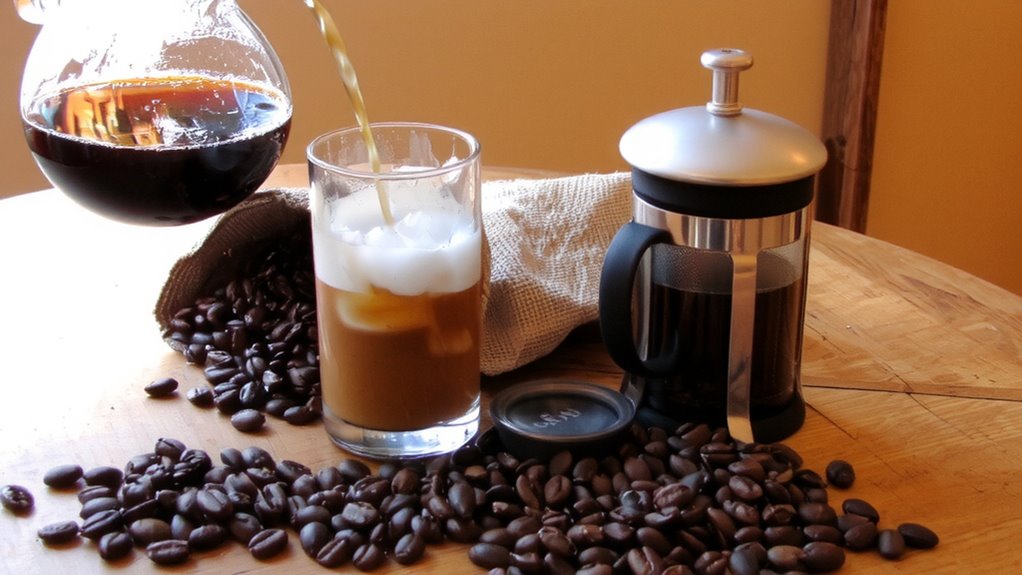
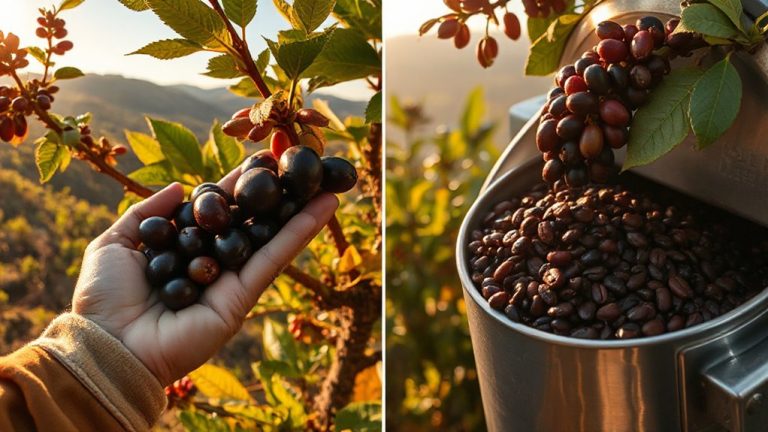
While any coffee can technically work for cold brew, you’ll get the best results if you start with coarsely ground beans meant for immersion brewing-fine grinds can make your cold brew muddy and over-extracted. For flavor and smoothness, go with Arabica beans; they’re naturally sweeter and less harsh than Robusta, making them ideal for slow-steeping. You’ll also want to pay attention to roast level-medium to dark roasts are most popular for cold brew because they bring out chocolatey, nutty notes without excessive acidity. Light roasts can work if you prefer brighter flavors, but they may lack the depth cold brew drinkers usually want. Don’t assume expensive beans equal better cold brew; focus instead on freshness and roast date. Always store your beans in an airtight container away from light to preserve quality before grinding. Check out my guide to the best Arabica coffee picks for top-rated beans that deliver excellent flavor in cold brew.
Grind Coarsely for Smooth, Non-Bitter Results
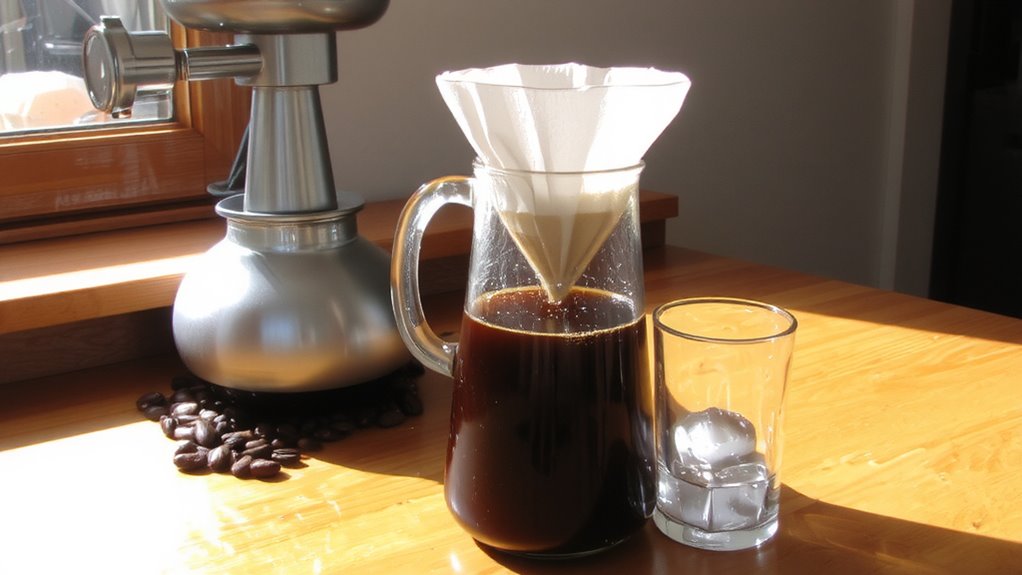
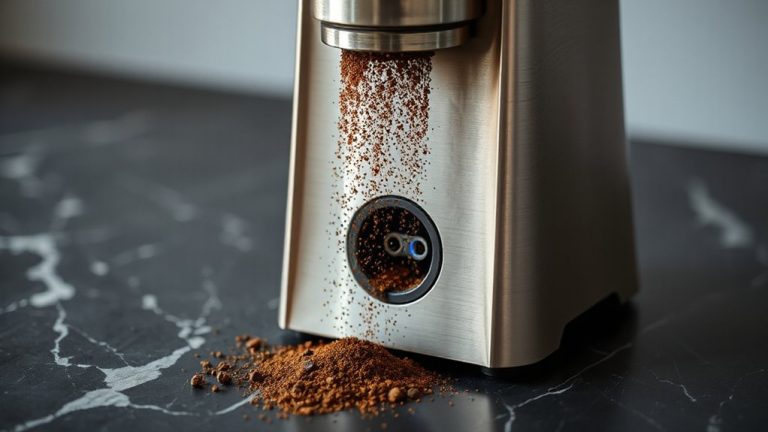
If you want smooth, balanced cold brew without harsh bitterness, grinding your beans coarsely is essential. A coarse consistency slows extraction during the long steep, preventing the release of bitter compounds. This method supports better flavor preservation, letting you taste the coffee’s natural sweetness and subtle notes. Fine grounds increase surface area, over-extracting and creating unpleasant sharpness-even if you use top beans.
| Grind Size | Result in Cold Brew |
|---|---|
| Coarse | Smooth, low bitterness, full flavor |
| Medium | Slightly bitter, less clarity |
| Fine | Harsh, muddy, over-extracted |
Use a burr grinder for consistency-blade grinders crush unevenly. Set it to the coarsest setting, like sea salt. This one step makes a real difference in your final cup. For optimal results, consider investing in one of the best coffee grinders for cold brew.
Use the Perfect Coffee-to-Water Ratio
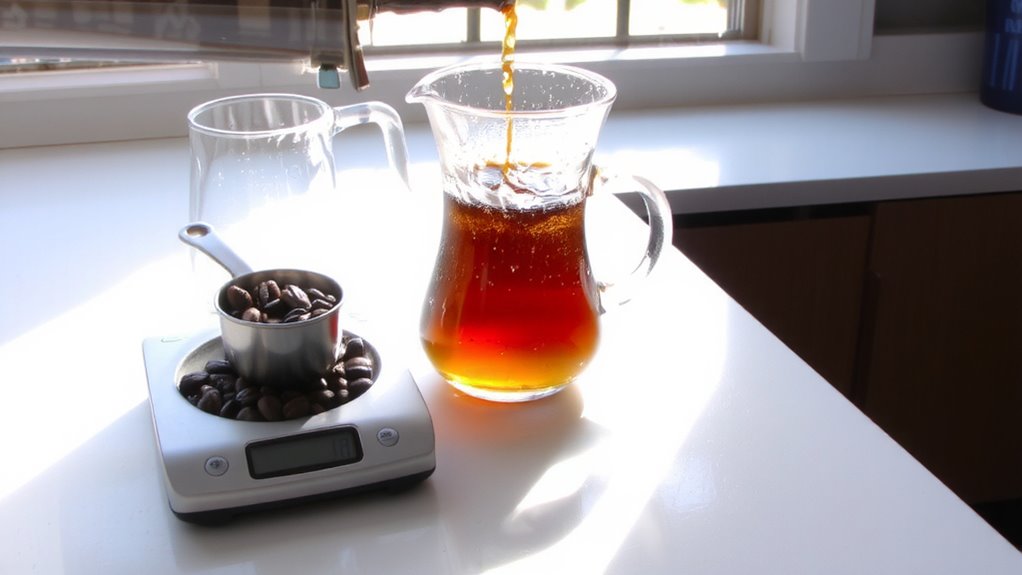
You’ve got your coarse grind dialed in, which sets the stage for a smooth cold brew, and now it’s time to get the proportions right. Use a 1:8 coffee-to-water ratio by weight-like 100 grams of coffee to 800 grams of water-for a balanced concentrate. This ratio gives strong flavor strength without over-extracting, especially during longer brew time. If you like milder coffee, go with 1:10 or even 1:12, which works well for ready-to-drink batches. Measuring by weight with a kitchen scale is more accurate than volume, ensuring consistency. Too much coffee makes it overly intense; too little results in weak flavor. Stick to filtered water for cleaner taste. This ratio fits most systems, whether you’re using a mason jar, French press, or a Toddy cold brewer. Adjust slightly based on your beans and preference, but start here for reliable results. For best results, choose a medium to dark roast specifically labeled as ideal for cold brew coffee.
Steep Cold Brew for 12–24 Hours in the Fridge
Start steeping your cold brew for 12 to 24 hours in the fridge to extract smooth, low-acid flavor without bitterness. The longer brew time allows for gradual flavor development, enhancing richness while minimizing sharpness. Too short (under 12 hours), and your coffee may taste weak. Too long (over 24), and it risks over-extraction, even when chilled.
| Brew Time | Result |
|---|---|
| 12 hours | Mild, bright notes, lighter body |
| 16 hours | Balanced smoothness and depth |
| 20 hours | Full-bodied, rich flavor |
| 24 hours | Bold, concentrated, low acidity |
A fridge slows extraction, giving cleaner control than room-temperature steeping. Use an airtight container like a mason jar or Toddy system to prevent odor absorption. Steeping in the fridge guarantees consistency and reduces the chance of off-flavors.
Strain for a Silky-Smooth Finish
Smoothness in cold brew isn’t just about steep time-filtration plays a critical role in removing sediment and fines that can dull the texture. After steeping, you’ll want to strain your brew carefully. Using a french press gives you a quick, easy first step-it catches the larger grounds, but it won’t remove the fine particles that make coffee gritty. For a truly silky finish, follow up with a paper filter. A standard coffee filter, either in a dripper or funnel, removes those tiny bits and results in a cleaner cup. Yes, it’s a bit slower, but the improvement in mouthfeel is noticeable. Cheesecloth or metal filters aren’t as effective here-they let too much slip through. Stick with the paper filter after your french press for the best balance of convenience and quality. It’s a small step, but it makes a real difference in the final texture.
Serve Over Ice and Store Properly
Now that you’ve strained your cold brew for a clean, grit-free result, it’s time to think about how you serve and store it. Serve your concentrate over ice, but mind the ice balance-too much dilutes flavor fast. Use larger, denser ice cubes like those from a silicone tray or Tovolo mold; they melt slower than standard ones. For a ready-to-drink version, mix a 1:1 ratio of cold brew and water before pouring over ice. When storing, use an airtight container like a mason jar or OXO dispenser. Keep it in the fridge to maximize storage duration-properly sealed, it stays fresh for up to 10 days. Glass is better than plastic for preserving taste and avoiding odors. Avoid freezing unless you’re making ice cubes for later use in drinks.
On a final note
You’ve got what it takes to make smooth, low-acid cold brew at home. Use a coarse grind, cold water, and steep for 12–24 hours in the fridge. A 1:4 coffee-to-water ratio works well-adjust to taste. Strain through a paper filter or cheesecloth to remove oils. Serve over ice, dilute if needed. Store concentrate up to two weeks. French press or mason jar both work-just keep it simple and consistent.