Why Ivory Coast’s Coffee Focuses on Robusta for Instant and Blends
You’ll find Ivory Coast focuses on Robusta because it grows easily in the country’s hot, humid lowlands with little need for costly inputs. It delivers the bold flavor, high caffeine, and strong crema prized in instant coffee and espresso blends. Brands like Nescafé rely on it for consistency and cost-efficiency. Compared to Arabica, Robusta offers higher yields and better resistance to pests. Government support and favorable pricing further boost its appeal for farmers-key to sustaining supply and quality improvements ahead.
Notable Insights
- Robusta thrives in Ivory Coast’s hot, humid climate and low-elevation regions like Agboville and Divo.
- Its natural pest resistance and high yields reduce farming costs and increase efficiency.
- Robusta’s strong, earthy flavor and high caffeine content suit instant coffee and espresso blends.
- The beans dissolve easily, making them ideal for spray-drying and freeze-drying processes.
- Government support and global demand favor Robusta for stable exports and economic growth.
Why Ivory Coast Chooses Robusta Over Arabica
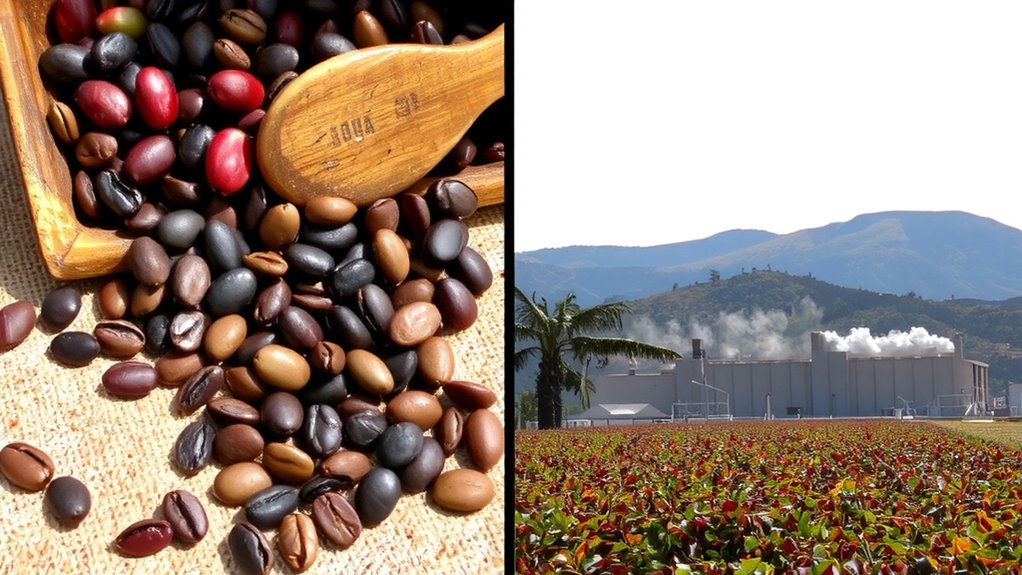
While some coffee-producing countries focus on Arabica for its smoother taste, Ivory Coast leans heavily into Robusta for practical and environmental reasons. You’ll find Robusta easier to grow at lower elevations and more resistant to pests, which cuts farming costs. Its strong, earthy flavor profile suits instant coffee and dark espresso blends, where boldness matters more than subtlety. Global instant coffee demand drives export demand, making Robusta a reliable cash crop. Unlike Arabica, which needs precise conditions and more care, Robusta delivers higher yields with less input. If you’re blending for crema or body, or supplying instant brands, Robusta’s consistency and caffeine punch make it a smart choice. Export markets value its uniformity, especially in pre-ground and soluble products. While it may lack Arabica’s floral notes, its robust traits meet commercial needs reliably. For Ivorian farmers and exporters, choosing Robusta isn’t about flavor nuance-it’s about practical output and steady market access.
How Climate and Soil Favor Robusta Farming
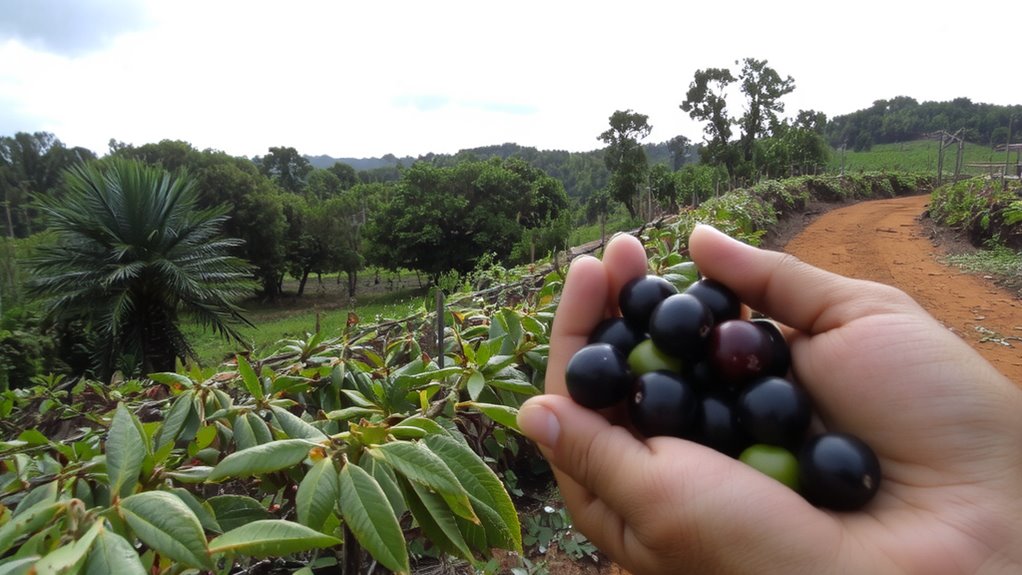
Ivory Coast’s climate and soil aren’t just suitable for Robusta-they’re ideal. You’ll find consistent temperatures between 24°C and 30°C and high humidity, both of which Robusta thrives in. The country’s heavy rainfall, often above 1,500 mm annually, supports steady growth without needing complex irrigation. Rich, well-drained acidic soils in regions like Agboville and Divo enhance root development and nutrient uptake. These terroir characteristics give Robusta beans their signature boldness and higher caffeine content. Farmers use low-input cultivation techniques such as minimal pruning and shade management, which work well here. Unlike Arabica, Robusta resists pests and diseases better, reducing reliance on chemicals. This hardiness, combined with favorable growing conditions, means you can achieve solid yields even with basic farming practices. That makes expansion more predictable and cost-effective across large areas.
Robusta’s Role in the Global Instant Coffee Market
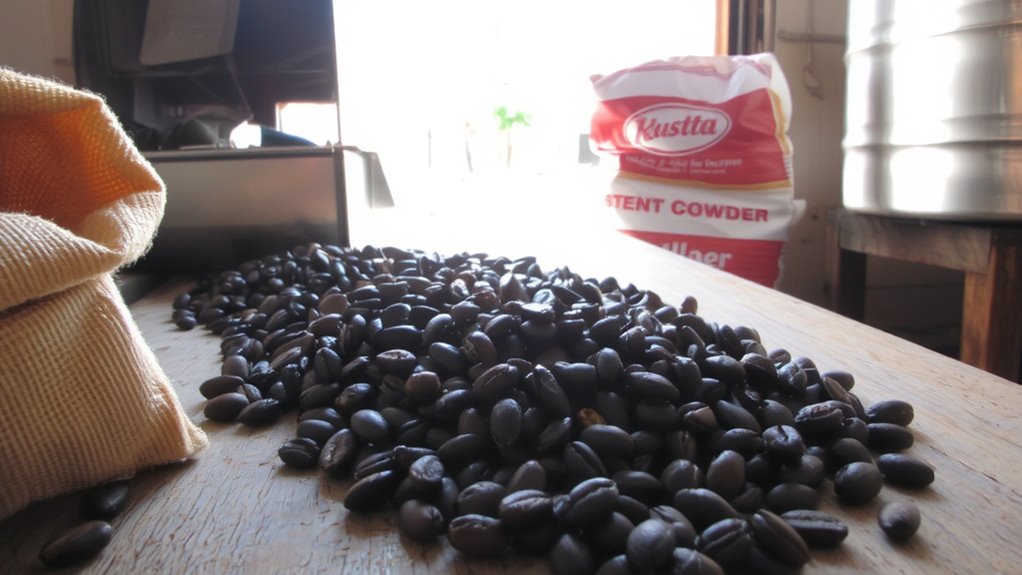
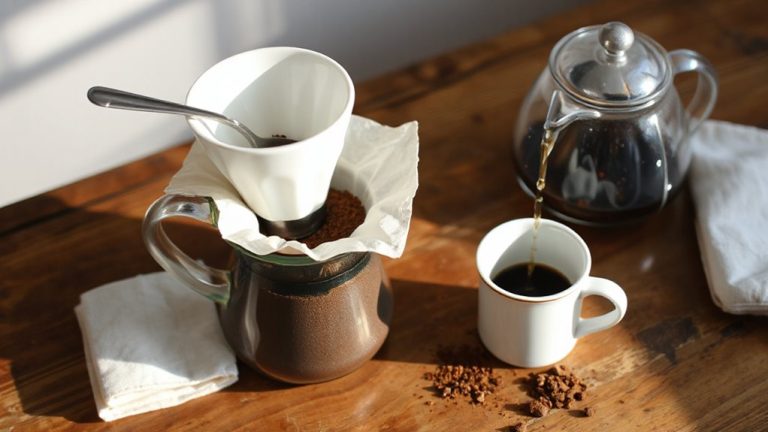
A good instant coffee starts with the right bean, and that’s where Robusta comes in. You’ll find Robusta dominant in instant coffee because it dissolves well and delivers a strong, consistent kick. Its flavor profiles are bold and earthy, with higher caffeine giving that sharp punch people expect in a quick brew. While subtler than Arabica, Robusta’s intensity holds up through freeze-drying and spray-drying processes, making it ideal for mass production. Market trends show steady demand for instant coffee in Asia, Africa, and Eastern Europe, where convenience and price matter most. Brands like Nescafé and Starbucks instant blends rely heavily on Robusta for cost efficiency and shelf stability. If you’re brewing from a jar, you’re likely drinking Robusta-no frills, just function. It’s not about elegance; it’s about reliability, yield, and keeping your morning routine on track without surprises.
Key Differences: Robusta vs. Arabica in Blends
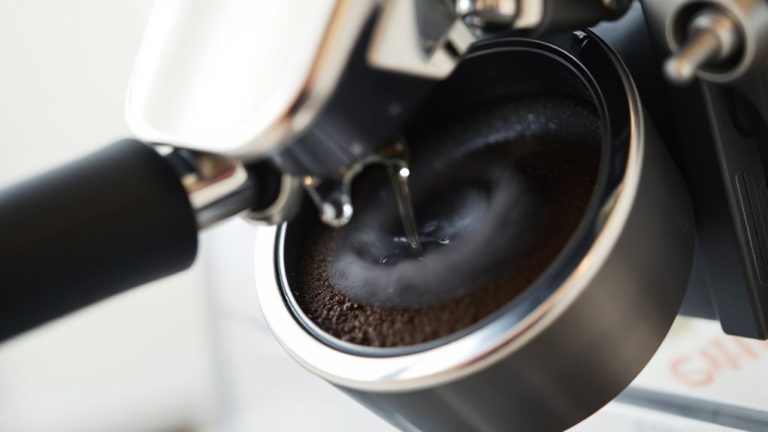
If you’ve ever wondered why your espresso has a creamy layer on top or why some coffee blends pack a stronger punch, it’s likely because they include Robusta. Robusta beans have more caffeine and produce a thicker crema, which is ideal for espresso blends and chosen based on the brewing method. Arabica offers a smoother, more complex flavor profile, often preferred in pour-over or drip. But Robusta adds body and intensity, making it useful in dark roasts or instant mixes. When blending, you trade some acidity and nuance for boldness and crema. For everyday espresso, a 30% Robusta mix can boost crema and cut costs without sacrificing quality. Arabica dominates specialty coffee, but for durability and extraction under high pressure, Robusta holds its ground. Your brewing method shapes the choice-espresso favors Robusta; slower brews often favor Arabica.
Government Policies Fueling Robusta Production
You’ve seen how Robusta strengthens blends with bold flavor and rich crema, especially in espresso and instant coffee-now consider what’s driving its rise at the source. In Ivory Coast, government policies actively favor Robusta. You’ll find trade tariffs applied to imported coffee gear and processed beans, making local production cheaper and more competitive. Export quotas are set to limit how much can leave the country all at once, stabilizing prices and avoiding market crashes. These rules help direct supply toward instant coffee manufacturers and blend producers who rely on steady inputs. The state also offers subsidies for Robusta farming, focusing on yield and disease-resistant strains. While protectionist, these measures keep production aligned with global demand patterns. If you’re sourcing beans or building blends, expect consistent availability-but monitor policy shifts, as changes in export quotas or tariffs can affect timing and cost. It’s a practical system designed for stability, not experimentation.
Economic Impact for Ivorian Coffee Farmers
Stability starts at the source, and for Ivorian Robusta farmers, government-backed pricing and export controls mean more predictable income. You face less risk from market volatility thanks to fixed minimum prices and regulated sales channels. This income stability lets you plan harvests, manage household needs, and reinvest in farms without guessing next season’s returns. Unlike Arabica growers exposed to global price swings, you benefit from a structured system that cushions sudden crashes. While premiums are limited, the trade-off favors consistency. Cooperatives handle logistics, reducing your workload and cutting out middlemen who often take large cuts. Export revenue flows back into rural areas, supporting local roads and services. Though prices aren’t high, they’re reliable-critical when you depend on coffee as your main livelihood. For you, income stability isn’t luxury-it’s survival.
How Processing Upgrades Are Elevating Robusta Quality
What if better processing could change how the world sees Robusta? You’re already seeing it happen in Ivory Coast, where farmers and cooperatives are upgrading methods to boost quality. Fermentation control is key-by managing time and temperature, you reduce off-flavors and create cleaner, more consistent beans. It’s not just about tradition anymore; precise fermentation helps Robusta hold its own in specialty blends. Then there’s drying techniques: turning parchment regularly on raised beds or using mechanical dryers guarantees even moisture loss, preventing mold and enhancing shelf life. Sun-drying still works, but monitored airflow and covers during rain improve results. These upgrades mean fewer defects, better cup scores, and more demand from instant coffee makers and roasters who want reliable, high-grade material. You’re not just improving taste-you’re reshaping Robusta’s market value with practical, scalable steps.
On a final note
You’ll find Ivorian Robusta in many instant coffees and espresso blends because it’s affordable, hardy, and packs a strong caffeine punch. While Arabica tastes smoother, Robusta thrives in Ivory Coast’s hot, humid climate and sells at lower prices, making it practical for farmers. Modern processing now boosts its quality, reducing harsh flavors. If you’re brewing bold, budget-friendly coffee or blending, Ivorian Robusta offers reliability-just pair it with better roasting and preparation to bring out its best.