How to Brew Pour Over Coffee Without a Scale Using Spoon Measurements
Use one level tablespoon of coffee for every 6 ounces of water, using a standard 15-ml spoon to keep things consistent. Measure water with a liquid measuring cup and aim for 195°F to 205°F-let boiled water sit 30 seconds. Match this ratio whether you’re using a Hario V60 or Kalita Wave. Level each spoon with a knife to avoid overpacking. If your coffee tastes bitter, try a coarser grind. There’s more to fine-tune for your setup.
Notable Insights
- Use 1 tablespoon of medium-fine ground coffee per 6 ounces of water for balanced extraction.
- Level each tablespoon with a knife to prevent overpacking and ensure consistent coffee dosage.
- Heat water to 195–205°F by letting boiled water sit 30 seconds before brewing.
- Match each tablespoon of coffee with 6 ounces of water using a liquid measuring cup.
- Adjust grind size or water temperature if coffee tastes bitter or sour after brewing.
Use 1 Tbsp Coffee per 6 Oz Water
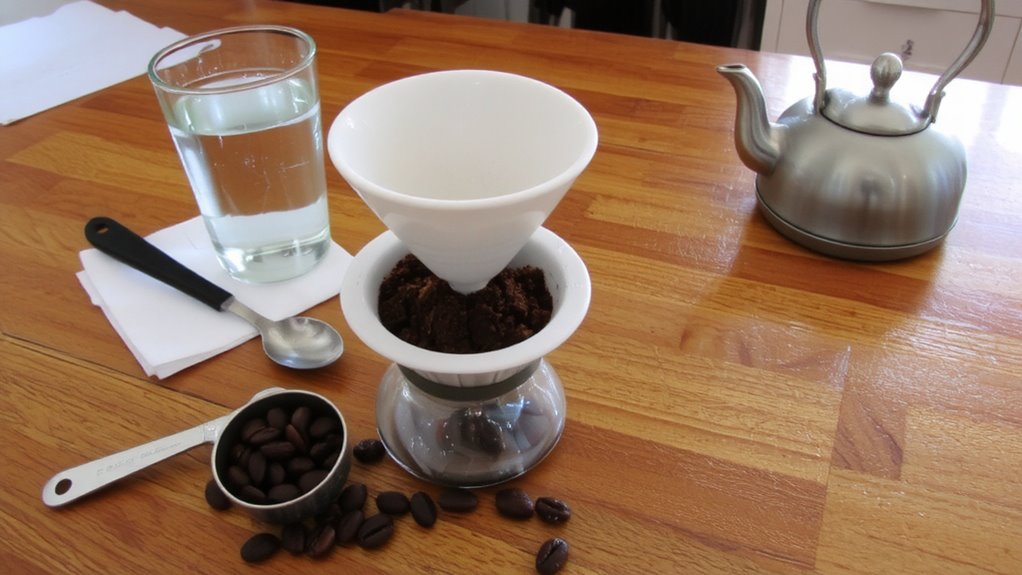
One common way to brew pour over coffee without a scale is to use 1 tablespoon of coffee for every 6 ounces of water. This ratio works well with most medium to medium-fine grind settings, like those used for Hario V60 or Kalita Wave brewers. You’ll get more consistent results if you prioritize coffee freshness-aim to use beans within 2–4 weeks of roasting. Stale coffee loses aroma and brightness, dulling your cup. Grind consistency matters just as much; uneven grounds lead to over- and under-extraction. A blade grinder can create inconsistent particles, so a burr grinder like the Baratza Encore is a smarter pick. While spoon measurements aren’t as precise as a scale, they’re reliable when paired with fresh beans and a stable grind. Just level each tablespoon to avoid accidental overpacking. It’s a practical fix when you’re in a pinch or traveling light. For optimal flavor, choose the best coffee grinds for pour-over that match your brewer’s requirements.
Measure Water Without a Scale
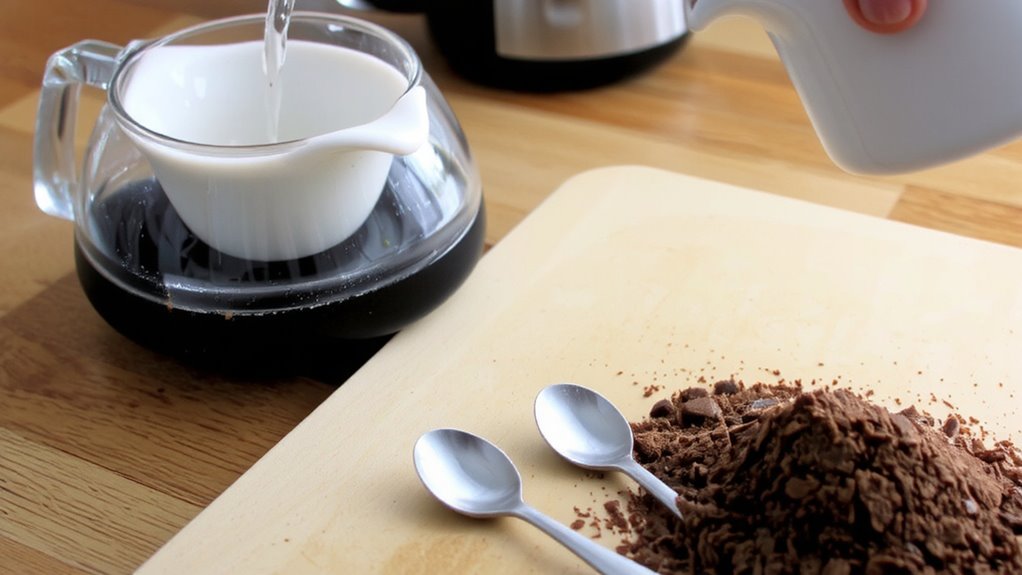
You’ve got your coffee measured with tablespoons, but now you need to get the water right-without a scale. Use a standard liquid measuring cup: 6 ounces (about 180 ml) per tablespoon of coffee. Stick to this ratio for balanced extraction. Water temperature matters-aim for 195°F to 205°F (just below boiling). If you don’t have a thermometer, let boiled water sit 30 seconds before pouring. Grind consistency also affects flavor; too fine causes over-extraction, too coarse leads to weak coffee. Match your grind to the water contact time. Here’s how variables interact:
| Water Amount | Water Temp | Grind Consistency |
|---|---|---|
| 6 oz | 195–205°F | Medium-fine |
| 12 oz | Let sit 30 sec | Consistent, no chunks |
| 18 oz | Avoid boiling | Uniform for even flow |
Stick to a Standard Tablespoon
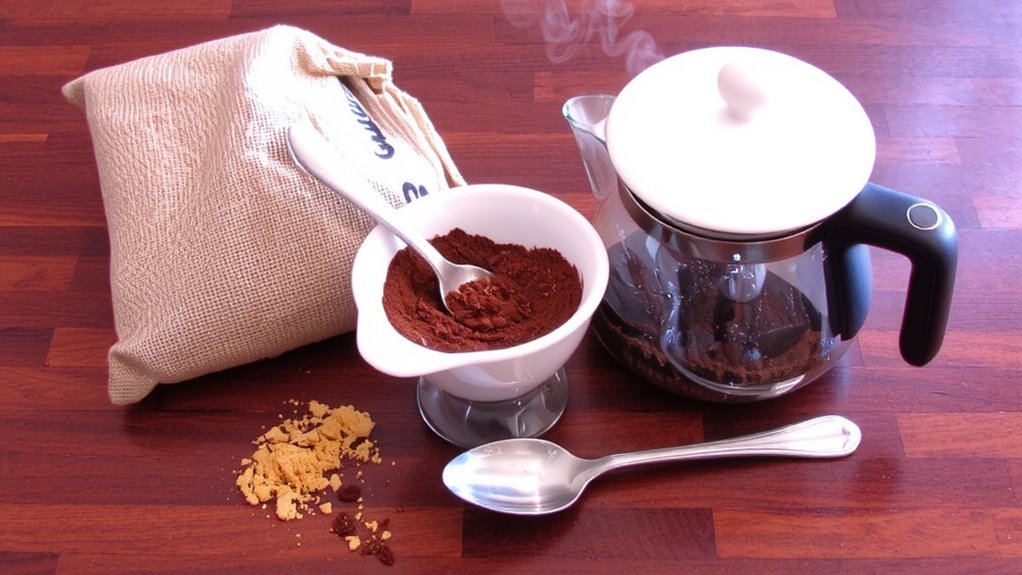
Every successful pour over starts with consistent measuring, and that means using a standard tablespoon-specifically the 15-ml kind found in most teaspoon sets. Measuring with the right spoon guarantees repeatable results, which is key when you’re not using a scale. A heaping tablespoon can add up to 20% more coffee, throwing off your brew ratio and affecting extraction. For best results, level off each spoon with a knife. This method works best with a consistent grind-aim for a medium-fine texture, like sea salt. Uniform grind consistency helps prevent under- or over-extraction. Freshly ground beans also preserve coffee freshness, guaranteeing brighter, more flavorful cups. Pre-ground coffee loses aroma quickly, especially after opening. If you’re using pre-ground, store it in an airtight container away from light. Stick to one reliable spoon to minimize variables and dial in your routine. Using a high-quality coffee spoon ensures precise and consistent measurements every time.
Adjust Your Brew Based on Taste
How does your coffee taste-if it’s bitter or harsh, are you grinding too fine or using too much coffee? On the flip side, if it’s weak or sour, your grind might be too coarse or your water temperature too low. Tweaking these variables helps you balance flavor without a scale.
| Too Bitter? | Try This |
|---|---|
| Grind too fine | Coarsen grind slightly |
| Water too hot (over 205°F) | Lower temperature slightly |
| Poor grind consistency | Use a burr grinder for even particles |
Adjust one factor at a time. A stable water temperature around 195–205°F and consistent grind size make the biggest difference. If your grinder chops rather than grinds, switching to a burr model improves extraction. Taste guides your fixes-use it to fine-tune. A high-quality coffee grinder for pour-over ensures even particle distribution, enhancing flavor clarity and control.
Fix Common Pour Over Issues
Brewing pour over coffee without a scale demands attention to detail, but common issues can still arise. If your coffee tastes flat or sour, your water temperature might be too low-aim for 195–205°F to properly extract flavors. Boil water, then let it sit 20–30 seconds before pouring. A short Bloom time-under 30 seconds-can lead to uneven extraction; let the coffee fully bloom for 45 to 60 seconds to release trapped gases. If the brew runs too fast, your grind is likely too coarse; if it drips slowly, it’s too fine. Use a burr grinder for consistency. Stirring the slurry can help improve extraction. Avoid pouring too aggressively-maintain a steady, controlled stream. Adjust based on taste, but first fix bloom time and water temperature-they’re key to a balanced cup. Small tweaks make clear differences.
On a final note
You can brew good pour over coffee without a scale by using 1 tablespoon of ground coffee per 6 ounces of water. Stick to a standard measuring spoon and adjust based on taste-stronger or weaker brews just need small tweaks. This method isn’t as precise as a scale, but it’s reliable and practical with common tools. Clean gear and consistent pouring matter just as much.