Protecting Natural Process Coffee From Rainfall Using Mobile Polycarbonate Covers
You need mobile polycarbonate covers to shield natural process coffee from sudden rain during drying. They block moisture that causes mold and off-flavors, while still letting light in and allowing airflow. Unlike plastic tarps, polycarbonate resists heat buildup and lasts longer. Durable frames and sloped designs help sheds rain and withstand tough conditions. You can cover drying beds fast when storms hit, protecting bean quality. Proper covers mean fewer defects and better flavor control. Smart protection like this makes consistent, high-quality natural process coffee possible-even in rainy climates.
Notable Insights
- Mobile polycarbonate covers shield drying coffee beans from sudden rain, preventing moisture reabsorption and over-fermentation.
- Polycarbonate allows diffused sunlight, ensuring even drying without scorching or creating hot spots.
- Durable twin-wall panels with UV resistance protect against weather while maintaining optimal drying conditions.
- Sloped, well-anchored covers enable rainwater runoff and prevent moisture trapping that can cause mold.
- Adjustable ventilation and insulated design preserve aroma, flavor, and bean integrity during variable weather.
Why Rain Ruins Natural Process Coffee Drying
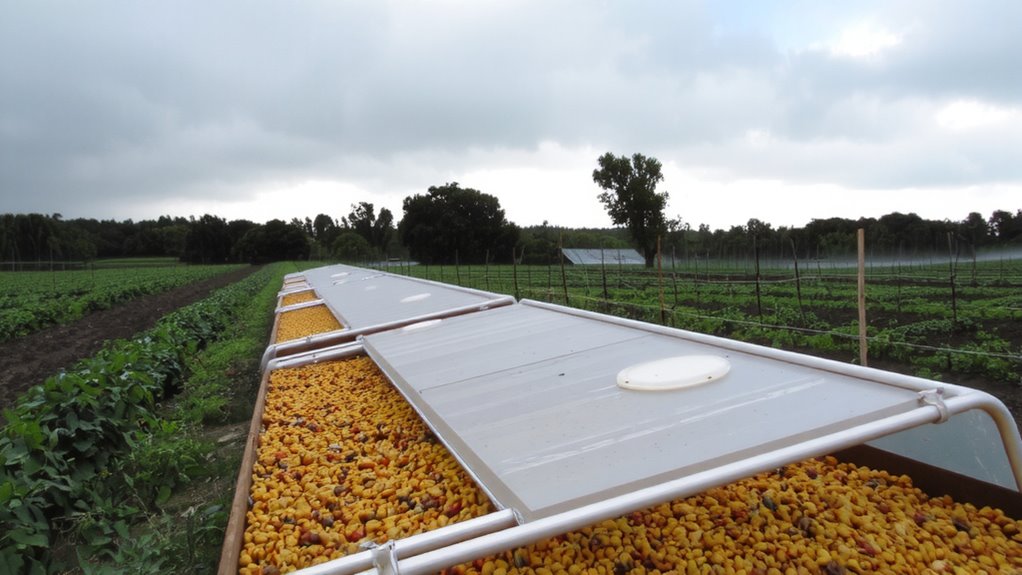
Have you ever wondered why a sudden downpour can wreck weeks of careful coffee drying? When rain hits beans left out in the open, moisture reabsorption triggers uncontrolled coffee fermentation. That over-fermentation alters pH levels and creates off-flavors, often making the beans sour or musty. Even a brief shower can cause swelling of the bean structure, which disrupts uniform drying and increases the risk of mold. More critically, wet beans lose volatile compounds rapidly-this leads to aroma degradation, dulling the bright, complex notes prized in specialty coffee. Sun-dried lots are especially vulnerable since they rely on consistent, dry heat. If you’re processing naturals, timing and weather monitoring are non-negotiable. Leaving beans exposed overnight or during storm season greatly raises risks. While raised beds improve airflow, they offer zero protection from rain. Without a cover, you’re gambling with quality every time clouds gather.
How Polycarbonate Covers Protect Drying Coffee Beds
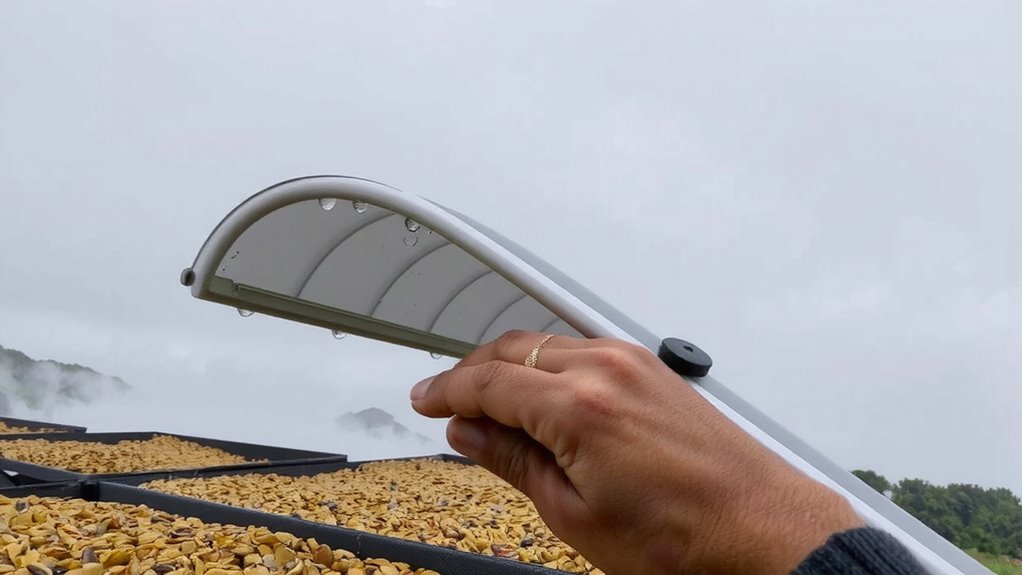
While raised beds improve airflow during drying, they do nothing to stop rain-so when storms roll in, your beans are still at risk unless you’ve got protection. That’s where polycarbonate covers come in. These mobile shields slide over drying beds fast, blocking rain without trapping excess heat. The material durability means they withstand UV exposure, wind, and frequent use, unlike cheaper plastics that crack or yellow. You’ll find polycarbonate lasts years, even in harsh sun. Plus, sunlight diffusion helps maintain even drying by scattering direct rays, reducing scorching and hot spots. This means your beans dry more uniformly, preserving quality. Since the covers aren’t opaque, you don’t have to remove them every morning-just leave them ready to deploy. They’re heavier than tarps, sure, but that also means less flapping. In short, they’re a reliable, long-term fix for weather threats.
Top Features in Coffee Drying Covers
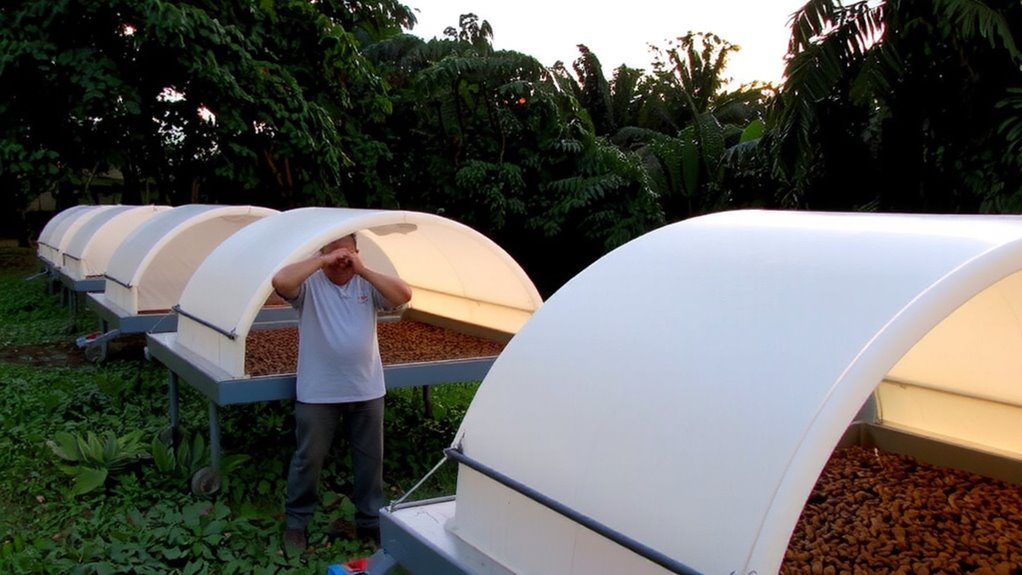
If you’re serious about protecting your drying coffee, you’ll want covers that do more than just block rain. Look for mobile polycarbonate covers with strong UV resistance-they last longer under intense sun without yellowing or becoming brittle. Durability testing shows these covers withstand wind, rain, and daily handling better than plastic or shade cloth. Polycarbonate panels resist impact and maintain structural integrity over seasons, while aluminum frames won’t rust in humid conditions. Some models use twin-wall design for better insulation, protecting beans from extreme temperature shifts. Lightweight designs are easier to move but must balance strength and portability. Cheaper PVC options may save money upfront but often fail UV resistance and durability testing within a year. For long-term use, top brands like Palram or Suntuf offer proven performance. Make sure the cover slope allows rain runoff and doesn’t trap moisture. Prioritize tested materials that protect beans and reduce labor over time.
Installing Mobile Covers on the Farm
Since mobile covers need to move easily yet stay secure in changing weather, your setup should balance stability and flexibility. Use lightweight aluminum or galvanized steel frames with wheeled bases so you can shift covers quickly across drying beds. Secure anchoring points every 6–8 feet prevent whipping in wind while allowing disassembly when needed. When selecting polycarbonate panels, prioritize cover durability-look for UV-coated, twin-wall sheets that resist cracking and yellowing over time. Installation speed matters during sudden weather changes, so opt for pre-cut panels and snap-together connectors instead of custom on-site builds. Covers up to 20 feet wide can typically be deployed by two people in under 15 minutes. While heavier materials add strength, they slow repositioning. Lightweight systems trade minor reductions in longevity for faster response. Choose designs tested in tropical climates, where humidity and storms challenge both structure and timing. Proper installation makes all the difference.
Keeping Flavor Pure With Modern Drying Protection
You’ve got your mobile covers in place to shield drying coffee from sudden rain, but protection doesn’t stop at avoiding moisture-it’s about preserving the bean’s flavor from the moment it leaves the bed until it’s ready for storage. Modern polycarbonate covers let light through while blocking rain, helping maintain steady drying rates and improving bean density. Consistent airflow under the cover prevents mold and supports fermentation control, which is critical in natural processing. If temperatures spike, lifting the ends allows ventilation; during cool, humid nights, keeping it closed locks in warmth. Unlike plastic tarps, polycarbonate won’t trap steam, reducing risks of over-fermentation. You still need to turn beans regularly, but the cover keeps the process predictable. High bean density and clean flavor hinge on this balance-so invest in covers that are durable, UV-resistant, and easy to move. It’s practical gear that pays off in cup quality.
On a final note
You protect natural process coffee with mobile polycarbonate covers to shield beans from rain without trapping moisture. These covers let in light and reduce mold risk, unlike plastic tarps. They’re durable, UV-resistant, and easy to move, making them ideal for unpredictable weather. If you dry coffee on patios or raised beds, polycarbonate covers help maintain consistent quality. They cost more upfront than tarps, but they last longer and support better flavor.