Cold Brew Ice Cube Method: Preventing Dilution in Iced Coffee Drinks
You stop iced coffee from getting watery by using cold brew ice cubes instead of regular ice. Freeze strong coffee concentrate in silicone trays for cubes that melt without diluting your drink. Use a 1:4 coffee-to-water ratio with a coarse grind steeped 12–16 hours for best results. These cubes work in lattes, smoothies, or cocktails, keeping flavor bold. Try flavored infusions like vanilla or citrus for variety-there’s more to explore with this method.
Notable Insights
- Regular ice cubes dilute iced coffee by melting into plain water, weakening flavor and strength.
- Cold brew ice cubes are made from concentrated coffee, so they preserve taste as they melt.
- Use a 1:4 or 1:3 coffee-to-water ratio to create a strong, flavorful concentrate ideal for freezing.
- Freeze cold brew in silicone trays for easy release and store in airtight containers for up to a month.
- Cold brew ice cubes enhance iced lattes, smoothies, and cocktails without sacrificing richness or temperature.
Why Ice Dilutes Iced Coffee
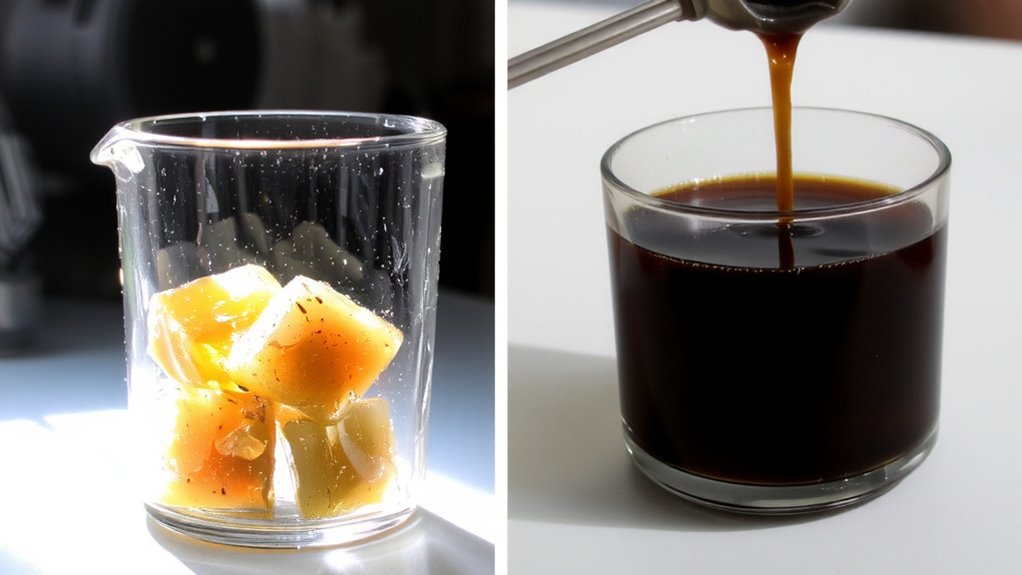
Ever wonder why your iced coffee tastes weaker after a few minutes? It’s because regular ice cubes start melting the second you drop them in, leading to ice melt that waters down your drink. As the ice shrinks, cold water spreads into your coffee, causing flavor diffusion-this means the bold coffee compounds gradually disperse and weaken. Standard cubes, made from tap water, add zero coffee flavor, so what you’re left with is a diluted, less satisfying sip. Even premium coffee makers like the Chemex or AeroPress can’t prevent this if you’re using plain ice. That melt happens fast, especially in warm rooms or large pours. You’ll notice the change within minutes. Since flavor diffusion is unavoidable with traditional ice, many opt for alternatives-but not all fixes work the same. The issue isn’t brewing method; it’s the ice itself.
How Cold Brew Ice Cubes Keep Flavor Strong
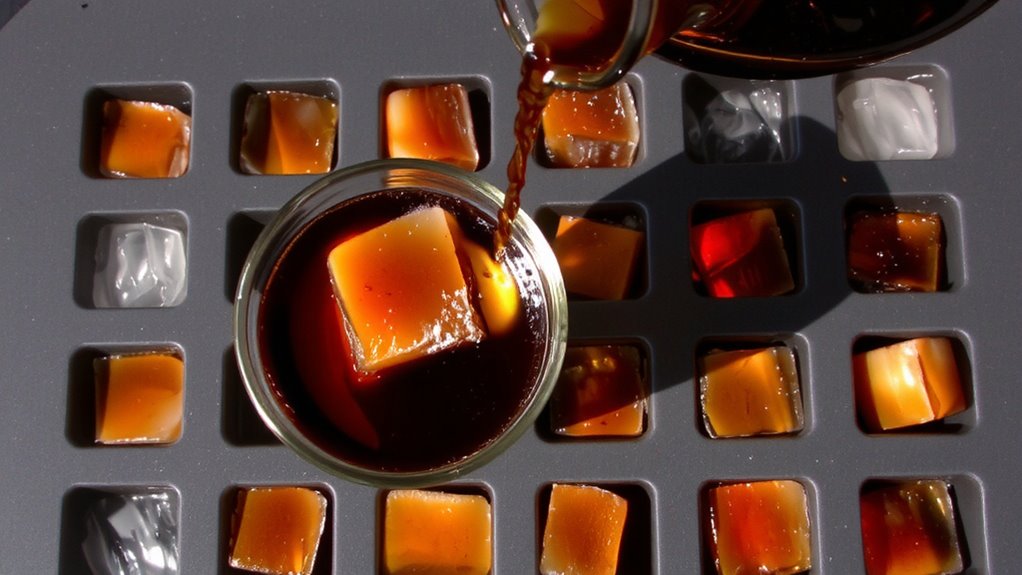
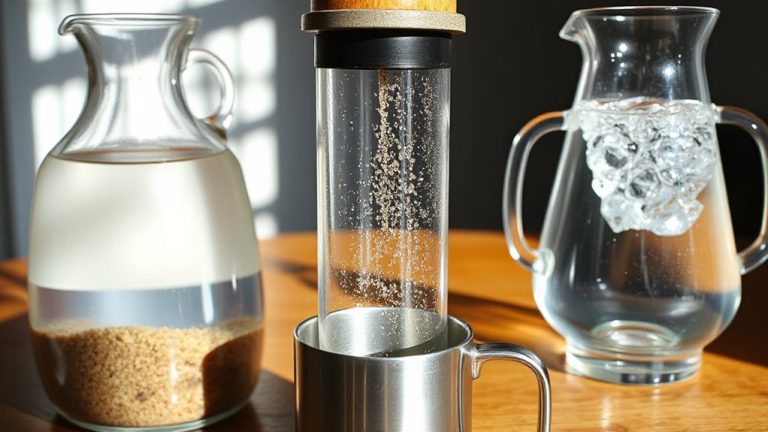
Plain ice cubes melt and dilute your drink because they’re made of water, not coffee. When they thaw, they release plain water into your cold brew, weakening the taste and undermining flavor preservation. But cold brew ice cubes solve this by being made from concentrated extraction-your strong-brewed coffee frozen solid. As they melt, they release coffee, not water, so the drink stays rich and consistent. You’re not adding dilution; you’re adding more flavor. This method works best with a coarse grind and a 12- to 24-hour steep, producing a smooth, low-acid concentrate ideal for freezing. Just pour the concentrate into an ice tray and freeze. Once set, these cubes keep your iced coffee bold without watering it down. It’s practical, simple, and effective-especially if you use reusable silicone trays for easy release. No special gear needed, just your existing brew.
Make Cold Brew Ice Cubes in 3 Steps
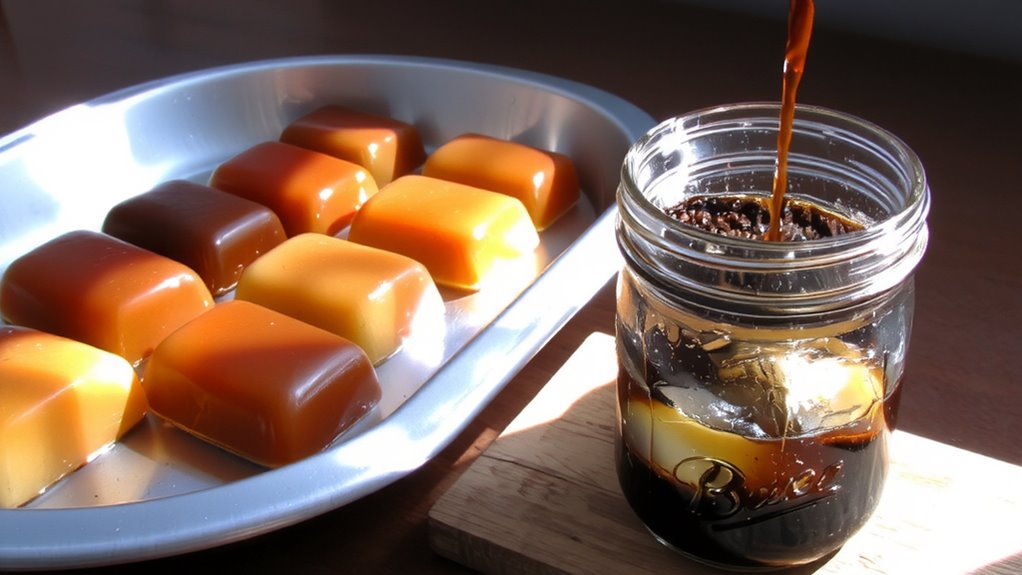
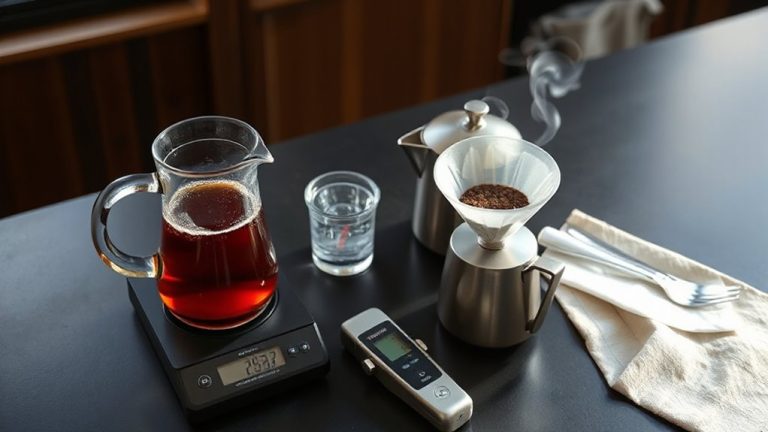
One effective way to preserve the bold flavor of your cold brew is by freezing it into ice cubes, and the process takes just three straightforward steps. First, brew your cold coffee concentrate and let it cool to room temperature-this prevents condensation in the tray. Second, pour the cooled brew into an ice cube tray, preferably silicone for easy removal, and place it in the freezer. The freezing time is usually around 4–6 hours, but leaving it overnight guarantees fully solid cubes. Third, transfer the cubes to a resealable freezer bag or airtight container to avoid absorbing odors. For best storage tips, label the bag with the date and use the cubes within a month for peak freshness. They work in iced coffee, lattes, or even cold brew cocktails without watering down the taste.
Use a Stronger Brew for Bolder Results
While standard coffee-to-water ratios work for everyday brewing, bumping up the coffee grounds to a 1:4 or even 1:3 ratio can dramatically strengthen your cold brew concentrate, giving you ice cubes with a richer, more pronounced flavor. You’ll get a bolder result when those cubes melt, so your iced coffee keeps its kick. A stronger brew means each cube carries more caffeine and delivers a bold flavor that won’t fade fast. For best results, use a coarse grind and steep for 12–16 hours. Go any higher than 1:3 if you prefer intense, syrupy results, but watch for over-extraction-bitter notes can creep in. Brands like Fellow or OXO offer brewers that handle concentrated recipes well. Cold brew bags or French presses work too, though filtration may need extra steps. This method’s ideal if you skip milk or sweeteners and want a richer taste without slushy wateriness. A top-rated cold brew coffee maker can enhance extraction and consistency when preparing concentrated batches.
5 Creative Ways to Use Cold Brew Ice Cubes
Cold brew ice cubes aren’t just for cooling down your morning cup-they’re a stealthy tool for upgrading drinks without dilution. Drop them into iced lattes or matcha smoothies for a caffeine kick that won’t water down the flavor. Try flavor infusions by freezing cold brew with vanilla extract, cinnamon, or even cocoa-just add the infusion before pouring into trays. These subtly enhance your final drink. For recipe pairing, use citrus-infused cold brew cubes in sparkling lemonade for a bright twist, or mint-infused ones in chocolate milkshakes for a mocha-like boost. They work well in cocktails, too-swap regular ice in bourbon or cream-based drinks to maintain richness. Just remember: use sealed trays to avoid absorbing freezer odors. Each cube delivers concentrated flavor, making them smarter than standard ice for both taste and consistency. Experiment to find your best pairings.
On a final note
You’ll keep your iced coffee strong by swapping regular ice for cold brew cubes-they chill without watering down your drink. Make them in three steps: brew concentrate, pour into trays, freeze. Use a stronger ratio like 1:4 for bolder results. Try them in milkshakes, cocktails, or smoothies. Compared to diluted drip ice, these preserve flavor. Just store them in sealed containers to avoid freezer odors.