Nighttime Covering Techniques to Shield Natural Coffee From Dew Accumulation
You need to cover your drying coffee at night to block dew, especially in humid areas like Rwanda or Colombia. Use breathable polypropylene tarps or mesh covers to keep moisture out while allowing airflow. Avoid non-porous plastics that trap humidity. Anchor edges securely but leave small gaps for ventilation. In windy or cold zones, go for double-layered or insulated covers. Elevate the cover with a frame to prevent condensation drip. Uncover early at sunrise to resume drying. Timing and material matter most-get it right, and you’ll protect your beans from sourness. The best approach depends on your specific weather and setup.
Notable Insights
- Cover coffee beans just before dusk to prevent night dew from increasing moisture and restarting fermentation.
- Use tightly woven polypropylene tarps in humid climates to block dew while allowing some breathability.
- Avoid non-porous materials like polyethylene; opt for breathable covers to reduce trapped moisture and fermentation risks.
- Elevate covers using frames to maintain airflow and prevent condensation from dripping onto drying beans.
- Uncover beans as early as possible after sunrise to resume drying and prevent mold or off-flavors.
How Night Dew Ruins Drying Natural Coffee
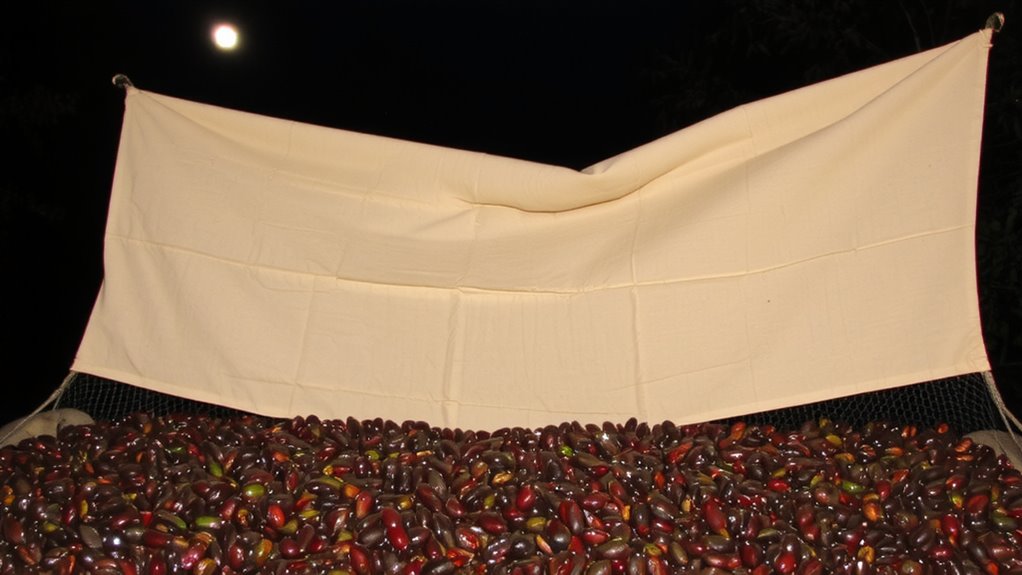
Why leave your drying coffee exposed overnight when dew can undo hours of careful work? Moisture from night dew settles on beans, restarting unwanted drying-stage processes. This dew absorption increases humidity around the beans, creating conditions ripe for over-fermentation. You’re not just risking moisture-you’re inviting inconsistent bean fermentation, which directly impacts flavor. Once beans reabsorb water, microbial activity can resume, leading to sour or off-tastes. Even short exposures can compromise quality, especially in humid climates where dew forms heavily. You might think daytime sun will fix it, but by then, internal changes may already be locked in. Preventing dew absorption isn’t just about cover-it’s about timing and monitoring. If you’re drying naturals on patios or raised beds, night exposure without protection risks structural and chemical changes in the bean. Actively shielding beans at night stops unwanted fermentation before it starts. Control equals consistency.
Choose the Best Cover for Your Climate

What’s your climate like-hot and dry, or humid with heavy dews? In humid regions, you need a cover with good wind resistance to stay secure overnight and prevent dew from soaking your beans. Look for tightly woven polypropylene tarps-they’re lightweight but tough. If you’re in a cooler area with cold snaps, frost protection becomes critical. Use insulating covers like thermal blankets or floating row covers, which trap just enough warmth without overheating. In windy highlands, double-layered covers add wind resistance and help retain heat. But in hot, dry zones, breathable mesh covers work best-they block dew while allowing airflow. Always secure edges with weights or clips to maintain coverage. Choose materials durable enough to handle your specific conditions. The right cover balances frost protection, wind resistance, and climate fit, keeping your coffee safe without risking damage.
Use Tarps Without Trapping Moisture
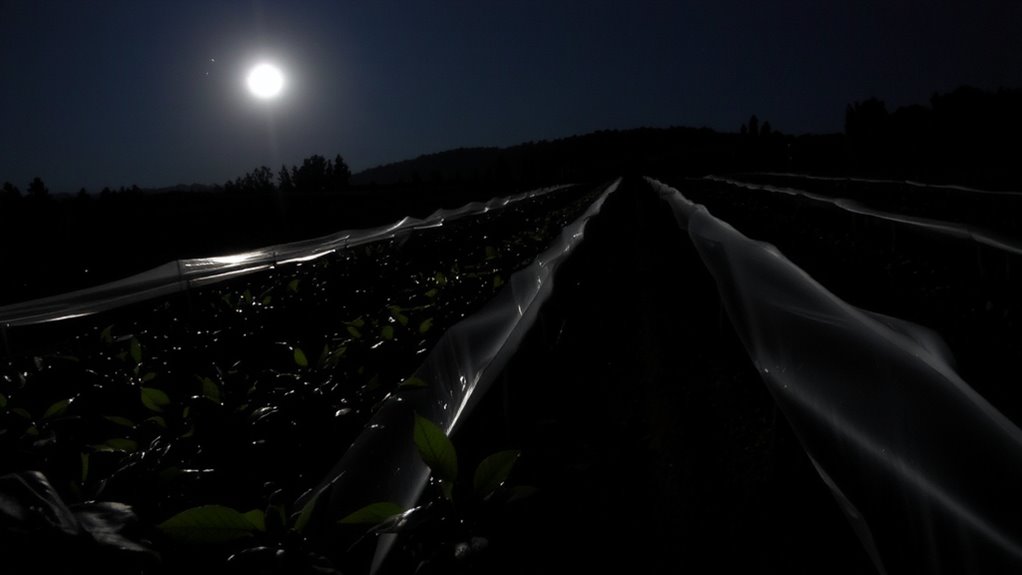
You’ve picked a cover suited to your climate, but how you use it matters just as much-especially when it comes to avoiding excess moisture buildup. To prevent trapped dew from dampening your coffee beans, prioritize material breathability-polyethylene tarps block rain but limit airflow, while polypropylene or woven fabrics allow some vapor escape. Stretch the tarp taut to maintain proper cover tension, ensuring water runs off and air circulates along the surface. Loose covers sag, collect condensation, and press against plants, increasing moisture transfer. Anchor edges securely with stakes or sandbags, leaving a small gap at the sides for ventilation. Don’t seal the tarp completely-this traps humidity. In humid regions, even breathable materials need tension and slight openings to reduce moisture retention. Regularly check under the cover at dawn; if it feels damp or beads form, adjust tension or switch materials. Proper setup prevents mold and preserves bean quality.
Try Elevated Covers for Better Airflow
If you’re dealing with persistent dew or high humidity, elevating your cover instead of draping it directly over plants can make a noticeable difference in airflow. Using elevated frames keeps the covering material off the coffee cherries, reducing moisture buildup and lowering the risk of mold. These frames, typically made from lightweight metal or PVC, lift breathable layers like shade cloth or perforated polyethylene several inches above the drying bed. This setup allows air to circulate freely while still blocking nighttime dew. Compared to direct draping, elevated covers prevent condensation from dripping onto beans. They’re also easier to remove and adjust at dawn. While the initial setup takes a little more effort and cost, the improvement in airflow helps maintain consistent drying rates. Elevated frames work best in damp, still conditions where stagnant air is a concern. For best results, pair them with breathable layers that balance protection and ventilation.
When to Cover and Uncover Drying Coffee
How do you know when to cover and uncover your drying coffee? Timing considerations are critical. Cover your beans late in the afternoon, just before dusk, to preempt dew buildup. If you wait too long, moisture soaks in, risking mold and fermentation flaws. Use breathable tarps or elevated covers-these allow some airflow while blocking dampness. Uncover as early as possible at dawn, usually just after sunrise, to resume drying. Delays reduce airflow and extend drying time, which might harm quality. Exposure management means balancing protection and airflow. In humid regions like Rwanda or Colombia, nightly covering is standard. In drier climates like parts of Ethiopia, it might be optional. Watch local weather patterns. Automated sensors or simple humidity checks help decide nightly. Your goal? Minimize moisture absorption without trapping heat or moisture during the day. Stick to consistent routines based on your microclimate.
On a final note
You’ve got to protect drying coffee from night dew - it risks spoilage and uneven moisture. Use breathable tarps or elevated covers like mesh screens to block dew while allowing airflow. In humid areas, uncover early to prevent condensation; in dry zones, cover later at night. Always monitor weather. Simple, practical choices - like using polyethylene tarps with edges raised - keep beans safe without trapping moisture.