How to Adjust Stepless Grind Settings on a Niche Zero for Pour-Over Brewing
Start with a grind similar to table salt-around 16–18 clicks on the Niche Zero’s stepless collar-for a reliable pour-over baseline with V60 or Chemex. Adjust in 5–10 degree increments, finer for sour coffee, coarser for bitter. Let the burrs settle after each tweak and check alignment. Use filtered water and consistent pour speed. Track your settings and taste changes-you’ll refine your process faster with every brew.
Notable Insights
- Start with a grind size similar to table salt as a baseline for pour-over brewing with the Niche Zero.
- Adjust the stepless collar in 5–10 degree increments to fine-tune extraction precision.
- Check collar alignment and let burrs settle after each grind adjustment for consistent results.
- If coffee tastes sour, adjust the grind finer; if bitter, adjust coarser to correct extraction.
- Record grind settings, dose, and flavor notes to maintain repeatability and optimize over time.
Start With a Pour-Over Baseline on the Niche Zero
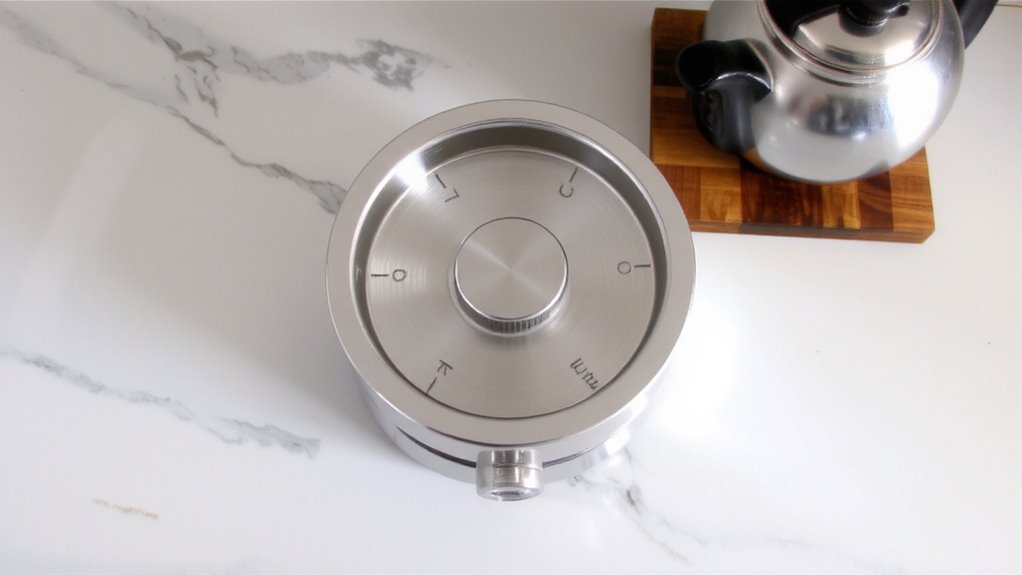
Why start with a pour-over baseline when dialing in your Niche Zero? Because it gives you a reliable reference point for finer adjustments later. The Niche Zero’s stepless grind ring is precise, but without a starting place, you’re guessing. A pour-over grind-similar to table salt-works well for methods like V60 or Chemex and helps you evaluate grinder calibration quickly. This baseline lets you check if burr alignment is correct; uneven grounds or streaking in brews often point to misalignment. You’ll save time and beans by identifying mechanical issues early. Plus, once you confirm the grinder is performing as expected, small tweaks become meaningful. Skipping this step might mean chasing inconsistencies that aren’t due to your settings but to underlying issues with calibration or alignment. Start smart-build on a consistent foundation, not guesswork. A well-chosen pour-over grind setting also ensures compatibility with the filters and brew time requirements of top-rated coffee drippers.
Adjust the Stepless Collar in Small Increments
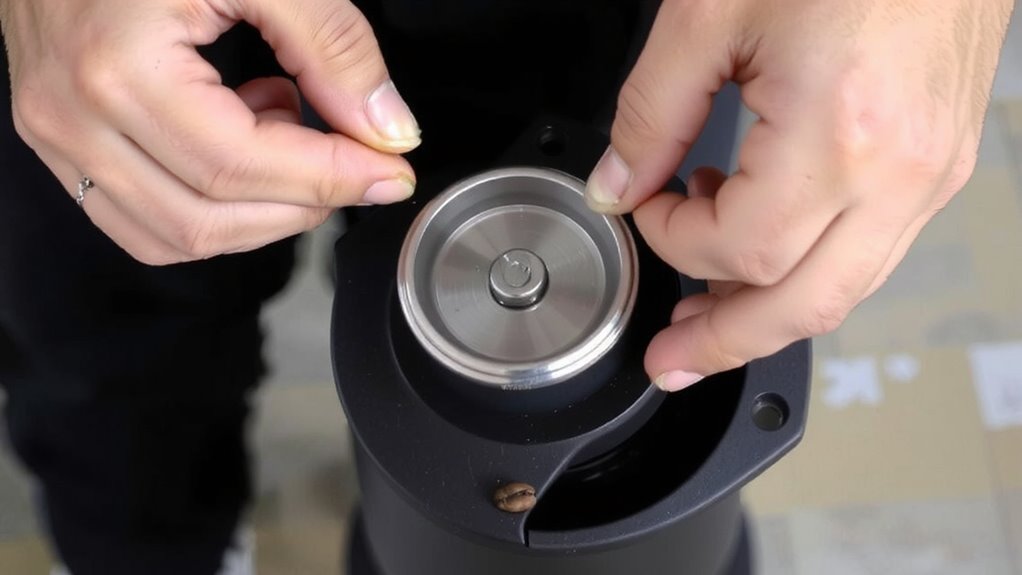
Now that you’ve established a pour-over baseline and confirmed your Niche Zero is producing even, consistent grounds, you’re ready to fine-tune the grind setting with precision. Use the stepless collar to make small adjustments-turning it just 5–10 degrees at a time. This guarantees grind stability and prevents sudden shifts in extraction. Always check collar alignment after each change; misalignment can cause uneven particle distribution and channeling. Let the burrs settle for a few seconds post-adjustment before brewing again. For optimal results, consider pairing your Niche Zero with one of the best coffee grinders for espresso and pour-over to ensure compatibility and performance across brew methods.
| Adjustment Size | Effect on Grind |
|---|---|
| 5° turn | Subtle change, preserves grind stability |
| 10° turn | Noticeable shift, verify collar alignment |
Avoid large twists-they disrupt consistency. Small, deliberate moves give you control and repeatable results.
Identify Under- and Over-Extraction in Your Cup
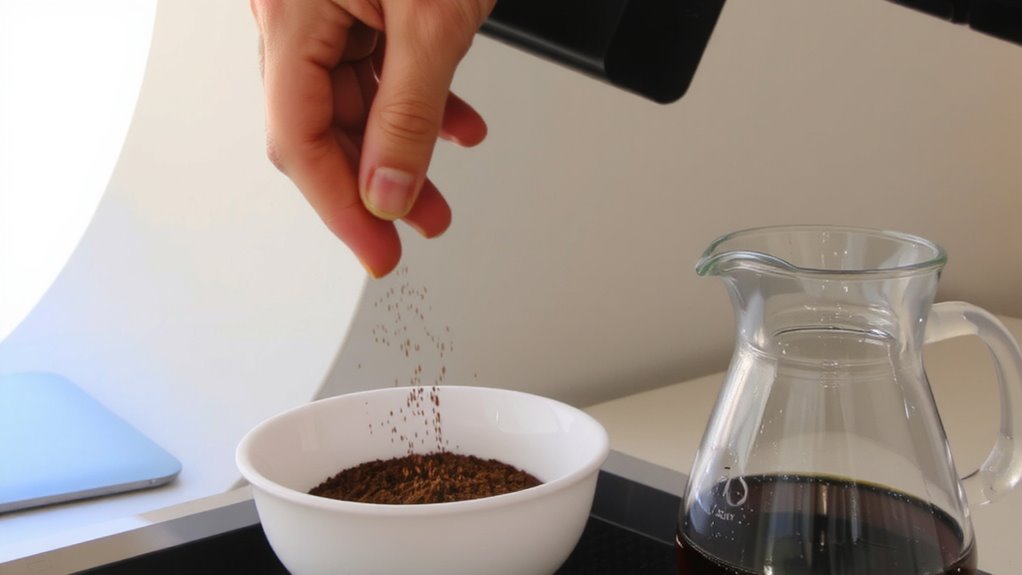
A balanced extraction lies at the heart of a good pour-over, and knowing how to spot the signs of imbalance is key to improving your brew. If your coffee tastes sour or sharp, with underdeveloped flavor notes, it’s likely under-extracted-common when the grind is too coarse. The water passed through too quickly, pulling only the easy, acidic compounds. You’ll miss sweetness and body, and the taste balance will feel thin or unrounded. Over-extraction, on the other hand, happens when grounds are too fine, leading to a bitter, drying cup. Here, harsher compounds dominate, overshadowing delicate flavor notes. You might also detect astringency or a lingering bitterness that coats your mouth. These signs aren’t personal preference-they’re indicators of extraction efficiency. Recognizing them helps you adjust your grind setting with purpose, not guesswork. Consistent coffee grind size is essential for achieving optimal extraction in pour-over brewing.
Fix Sour or Bitter Coffee With Grind Tweaks
You’ve learned how to recognize the signs of under- and over-extraction, and that gives you the edge in fixing off-flavors quickly. If your coffee tastes sour, it’s likely under-extracted-your grind is too coarse. Turn the Niche Zero’s stepless dial slightly finer to slow the brew time and pull out more sweetness. Bitter coffee usually means over-extraction-your grind’s too fine. Adjust the dial coarser to shorten brew time and reduce harshness. Always tweak one change at a time. Keep in mind that water quality affects extraction too; soft or unbalanced water can skew results even with the right grind. Use filtered water with balanced minerals for consistent outcomes. These small grind tweaks, paired with stable water quality, let you fix sour or bitter cups confidently and precisely-no guesswork needed.
How Temperature and Pour Speed Change Your Grind
While grind size is the primary lever for controlling extraction, water temperature and pour speed still play supporting roles that can shift how your chosen setting performs on the Niche Zero. If you brew with water below 90°C, you’ll need a finer grind to compensate for slower extraction, especially with dense beans. Harder water, due to higher mineral content, improves extraction efficiency-so you might lean slightly coarser without losing sweetness. Softer water may require a finer setting to avoid weak, sour results. Pour speed also matters: a fast pour reduces contact time, mimicking a coarser grind, while a slow, controlled pour increases extraction, similar to a finer setting. Always maintain consistent grind consistency-uneven particles lead to uneven extraction, no matter your technique. Adjust your grind in small steps after stabilizing temperature and pour rhythm to isolate variables effectively.
Save Your Best Niche Zero Settings
Now that you’ve fine-tuned your grind for factors like water temperature, mineral content, and pour speed, it’s time to lock in the settings that give you the best results. The Niche Zero’s stepless adjustment lets you dial in precise grind consistency, which is key for even extraction and clear flavor notes. Once you hit the sweet spot, mark the ring position with a pen or use a rubber band as a reference-this saves time during repeat brews. Write down your dose, grind setting, and observed flavor notes in a log for accuracy. While metal burrs hold alignment well, slight variances can occur over time, so double-check consistency weekly. Avoid relying on memory-small differences in setting impact brew quality. These steps guarantee repeatable, high-quality pour-overs with reliable grind consistency and balanced flavor notes every time.
Dial In Fast: Troubleshooting Common Issues
What do you do when your shot pulls too fast or your pour-over tastes sour? Start with a quick calibration check-your Niche Zero might’ve shifted from your saved setting. Even small changes in the dial position can alter extraction. If your grind’s too coarse, adjust finer in small increments, waiting between shots to assess flavor. Bitter coffee? Go coarser. Sour? Likely too coarse-refine the grind. Always check for grind consistency; uneven particles lead to unbalanced extraction. A worn burr or static can cause this, so clean the grinder regularly and use a distribution tool. If problems persist, verify your dose and water ratio-often the issue isn’t the grind at all. A proper calibration check every few weeks keeps your Niche Zero accurate. Remember, freshness matters: stale beans mimic poor grind settings. Dial in fast by isolating variables, starting with grind size and consistency.
On a final note
You’ve dialed in your Niche Zero for pour-over-now make small adjustments to the stepless collar as needed. If coffee tastes sour, go finer; if bitter, go coarser. Match grind size to your water temperature and pour speed. Write down what works. Repeatable results come from consistency, not guesswork. This method saves time and coffee, giving you better control than preset notches ever could.