Why French Press Coffee Retains More Oils and Lipids Than Filtered Methods
You get more oils and lipids in French press coffee because it uses a metal filter instead of paper. Unlike paper, which absorbs oils and fine particles, the metal mesh lets those compounds pass through. This gives your cup a fuller body and richer flavor. The longer steep time-around 4 minutes-also helps extract more oils. If you want a bolder, more textured brew, French press delivers. There’s more to how this affects taste and aroma.
Notable Insights
- French press uses a metal filter that allows natural oils and lipids to pass through during brewing.
- Unlike paper filters, metal filters do not absorb oils, preserving flavor and mouthfeel.
- Full immersion brewing increases contact time, enhancing oil and lipid extraction from grounds.
- Coarse grind and steep time of 4–5 minutes optimize release of oils without over-extraction.
- Paper filters remove oils and fine particles, resulting in a cleaner but less oily cup.
How French Press Keeps Coffee Oils Intact
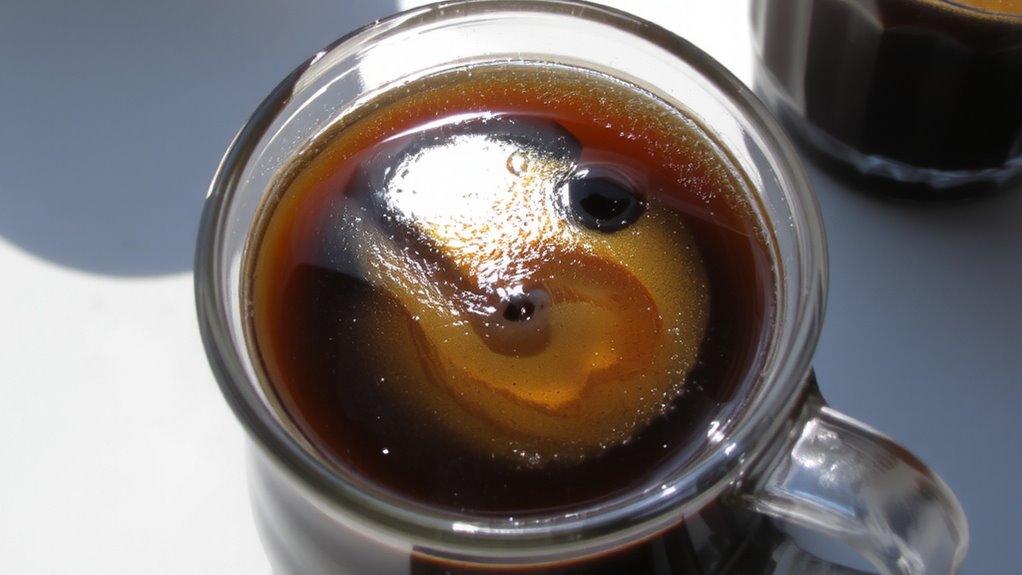
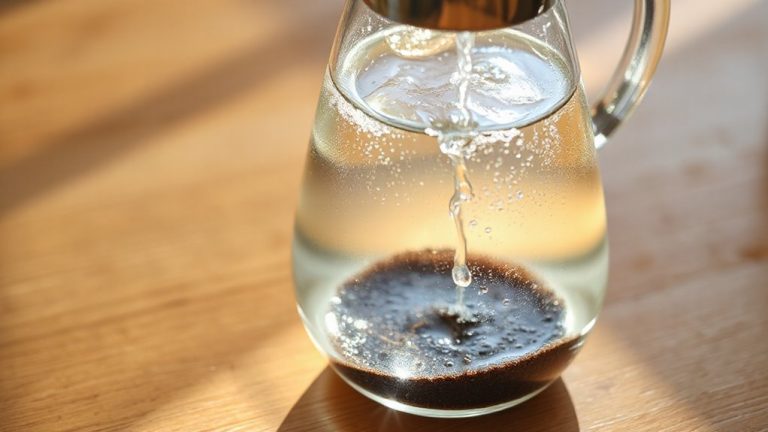
The French press keeps coffee oils intact because it uses a full-immersion brewing method with no paper filter. You steep coarsely ground beans in hot water, allowing oils to stay in the final cup. Grind consistency matters-too fine and you’ll get over-extraction or sediment; too coarse and the brew tastes weak. Aim for a uniform, sea-salt-sized grind. Water temperature is also key; use water just off the boil, around 195–205°F. If it’s too hot, you scorch the grounds. Too cool, and extraction falls short. Stir the grounds after pouring to guarantee even saturation. Let it steep for four minutes, then press slowly. The metal plunger traps grounds but lets oils pass through. Unlike drip machines, there’s no paper to absorb flavor compounds. This method gives a richer, fuller-bodied coffee, though it may carry slight sediment. You trade clarity for depth. For the most consistent results, consider choosing one of the Best French Press Picks for 2024.
Why Metal Filters Beat Paper for Flavor
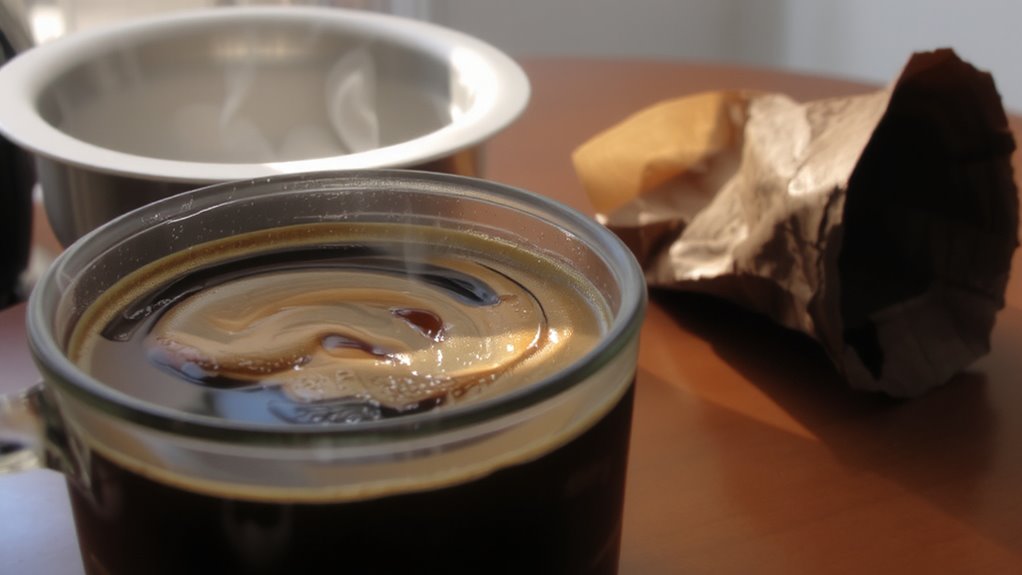
While paper filters do a decent job of trapping fine particles, they also absorb the natural oils that give coffee its rich mouthfeel and aromatic depth-something metal filters avoid. With metal porosity allowing more oils to pass through, your brew retains fuller body and more nuanced flavors. Mesh or perforated metal filters, like those in AeroPress metal filters or reusable French press inserts, let these compounds flow into your cup instead of being trapped. This structural design also contributes to longer filter longevity-you can reuse them hundreds of times with proper care, reducing waste and long-term costs. Unlike paper, which degrades after one use, metal filters hold up well over time, provided you clean them thoroughly. While they may allow some fine sediment, most users find the trade-off in flavor and sustainability worthwhile. For richer, more complete coffee flavor and less environmental impact, metal wins on both taste and practicality. For those seeking a fully plastic-free experience, consider a plastic-free French press made with durable glass, stainless steel, and metal filters only.
What Paper Filters Remove (And Why It Matters)
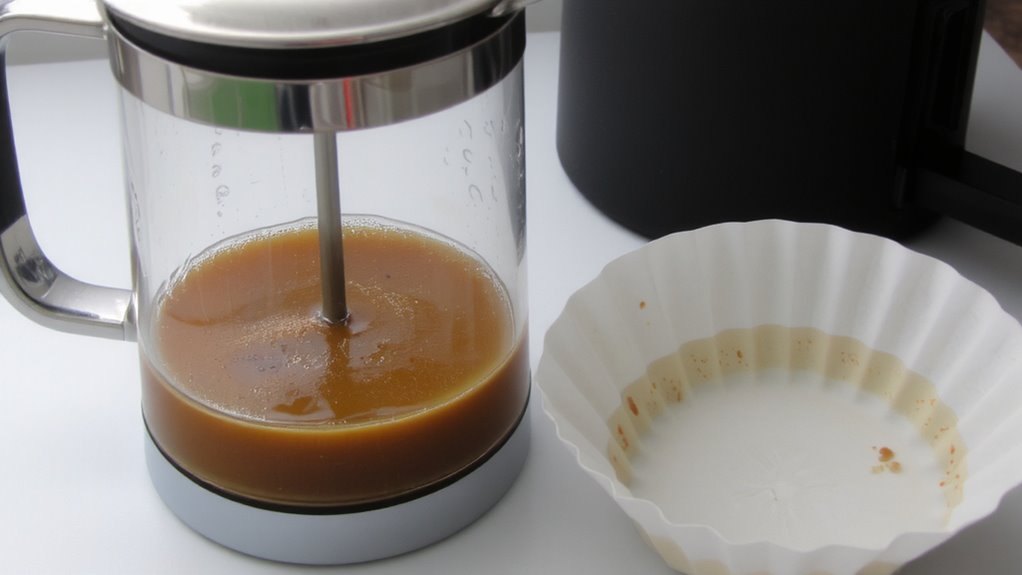
You get a cleaner cup with paper filters because they trap more than just grounds-they catch oils, fine particles, and even some compounds that affect flavor. Paper’s high filtration efficiency blocks most suspended solids and coffee oils, which alters the brew’s chemical composition. That means less grit and a lighter body, which many drinkers prefer for a crisp, bright taste. Brands like Hario and Chemex use thicker paper, removing even more. Thinner papers, like those in Melitta cones, offer slightly more oil transfer but still outperform metal in filtration efficiency. Removing these oils isn’t just about texture-it influences how flavor compounds express themselves on your palate. If you’re sensitive to sediment or want consistent clarity, paper filters deliver. But it’s worth noting: higher filtration means you lose some aromatic complexity. The choice depends on your taste priorities and how much cleanup you’re willing to manage. A key factor in this trade-off is the design of the best coffee drippers, which often prioritize filtration control and brew consistency.
Why French Press Beats Pour-Over on Oil and Body
Since French press uses a metal mesh instead of paper, it lets most of the coffee’s natural oils pass straight into your cup-oils that pour-over filters would otherwise trap. This gives your brew a fuller body and richer mouthfeel. Your grind size matters: too fine and the coffee turns muddy; too coarse and it tastes weak. Aim for a consistent, medium-coarse grind, like sea salt. The immersion depth-the full saturation of grounds in water-ensures even extraction and boosts oil release. Unlike pour-over, where water flows quickly through a bed of grounds, French press keeps coffee submerged, improving contact. This combo of metal filtering, proper grind size, and deep immersion lets lipids and compounds stay in your cup, enhancing flavor complexity. You get more of what’s in the bean, not just what slips through a paper filter.
How Brewing Time Boosts Oil Extraction
When you let coffee steep longer, more oils get pulled from the grounds, and that’s especially true in a French press where four to five minutes of contact time makes a noticeable difference. The extended brew time, combined with full immersion, helps extract more lipids and soluble compounds. Brewing temperature and grind coarseness play key roles too-aim for 195–205°F and a coarse, even grind to optimize extraction without overdoing bitterness.
| Factor | Effect on Oil Extraction |
|---|---|
| Steep Time | Longer = more oils |
| Brewing Temp | Too low = weak; too high = bitter |
| Grind Coarseness | Too fine = clogging; too coarse = weak |
| Method | French press > paper filter |
You’ll get richer results by controlling these variables, especially with a French press’s full-metal filter.
How Coffee Oils Enhance Taste and Aroma
Those oils matter-because they carry much of coffee’s flavor and aroma. When you brew with a French press, you’re letting those oils stay in your cup, unlike paper-filtered methods that trap them. These oils deliver flavor complexity you can actually taste-floral, spicy, or fruity notes that might otherwise be lost. They also boost aromatic richness, so each sip smells as vibrant as it tastes. Without a paper filter, volatile compounds remain, enhancing both smell and flavor. While this might mean a slightly heavier mouthfeel, it also means a more complete sensory profile. Just keep in mind: if you dislike sediment or strong aromatics, this might not suit you. But if you want truer taste expression from your beans, embracing the oils is key. They’re not just residue-they’re essential to the coffee’s character.
Maximize Body and Oil in Your Brew
Though you can’t control every variable in your brew, choosing the right method and grinder goes a long way toward maximizing body and oil. The French press is ideal-no paper filter means oils pass straight into your cup. For best results, use a burr grinder; it guarantees consistent grind consistency, which helps extract flavor evenly. A coarse grind works best-too fine and you’ll get sludge and over-extraction. Water temperature matters, too. Aim for 195°F to 205°F-just off boil. If it’s too hot, you’ll burn the grounds; too cool, and extraction falls short. Steep for four minutes, then press slowly. A stainless steel press retains heat better than glass. Plunger mesh quality also affects oil retention-double filters trap less fat than paper. While pour-over delivers clarity, French press gives body. If you want richness, this method wins.
On a final note
You get more oils and body in your cup with a French press because the metal filter lets those compounds pass through, unlike paper filters that trap them. Longer steep time helps extract those flavorful lipids too. If you want a richer, fuller mouthfeel, this method beats pour-over. Just know it may leave more sediment. Use coarse grounds and press slowly for best results.