Exploring the Role of Auction Systems in Kenyan Coffee Pricing
You see Kenya’s coffee prices set weekly at the Nairobi Coffee Exchange, where global buyers bid on graded lots in transparent auctions. The Coffee Board of Kenya oversees the process, ensuring fairness and traceability. While it promotes real-time price discovery based on quality and origin, smallholders often get lower returns due to delays and grouping. Larger suppliers benefit more, and rising direct trade deals in Ethiopia or Colombia show there might be better ways to secure higher income.
Notable Insights
- The Nairobi Coffee Exchange holds weekly auctions where prices are set through live, competitive bidding.
- Price discovery reflects real-time supply and demand, ensuring market transparency and fair valuation.
- The Coffee Board of Kenya governs the exchange, enforcing rules and maintaining quality and traceability standards.
- Smallholder farmers often face disadvantages due to delayed payments and consolidation into lower-grade lots.
- Climate volatility and global direct trade trends are pushing some farmers to bypass auctions for better income.
How Kenya’s Coffee Auctions Work
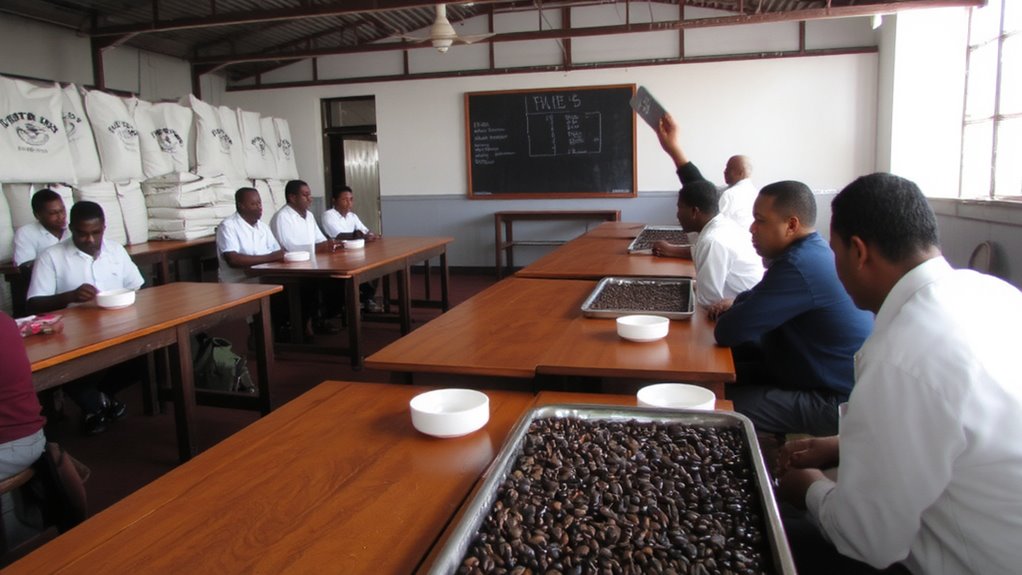
While you might expect coffee pricing in Kenya to rely on global commodity markets, the country still runs a traditional auction system every week at the Nairobi Coffee Exchange. You’ll find that each lot is sampled, graded, and auctioned to the highest bidder, which supports accurate price discovery based on real-time demand. This weekly event promotes market transparency, as buyers and sellers access the same data on bids, grades, and outcomes. Unlike fixed-price deals, auctions let you see how quality, altitude, and processing affect value. Importers, roasters, and brokers participate directly, cutting out unnecessary middlemen. While the system takes time and coordination, it guarantees competitive pricing. Smaller farms benefit when their high-scoring beans fetch premium bids. However, price volatility can occur if demand dips. Still, the auction remains a practical, open method for trading specialty lots. You can track results online shortly after each sale.
Who Runs The Nairobi Coffee Exchange?
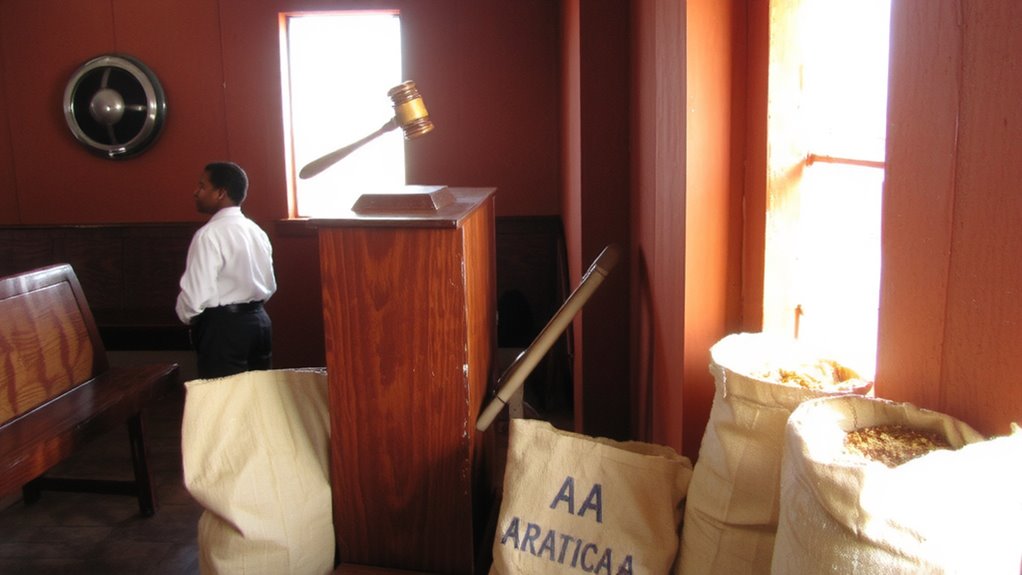
The Nairobi Coffee Exchange operates under the oversight of the Coffee Board of Kenya, a government agency tasked with regulating and promoting the country’s coffee sector. You’ll find that the Board sets the rules, licenses traders, and guarantees transparency in each auction. While the Exchange facilitates trading, it doesn’t set prices-those emerge from real-time market dynamics. You should know that trade policies enforced by the Board shape who can participate and how coffee moves from farms to buyers. These policies help stabilize supply and guarantee quality standards, which benefits both farmers and international buyers. The system isn’t perfect-delays sometimes happen-but it remains a central hub for Kenyan coffee sales. If you’re sourcing Kenyan beans, understanding this structure helps you anticipate availability and pricing trends. The Board’s role is vital in maintaining fairness and efficiency in a competitive global market.
How Auctions Set Coffee Prices In Kenya
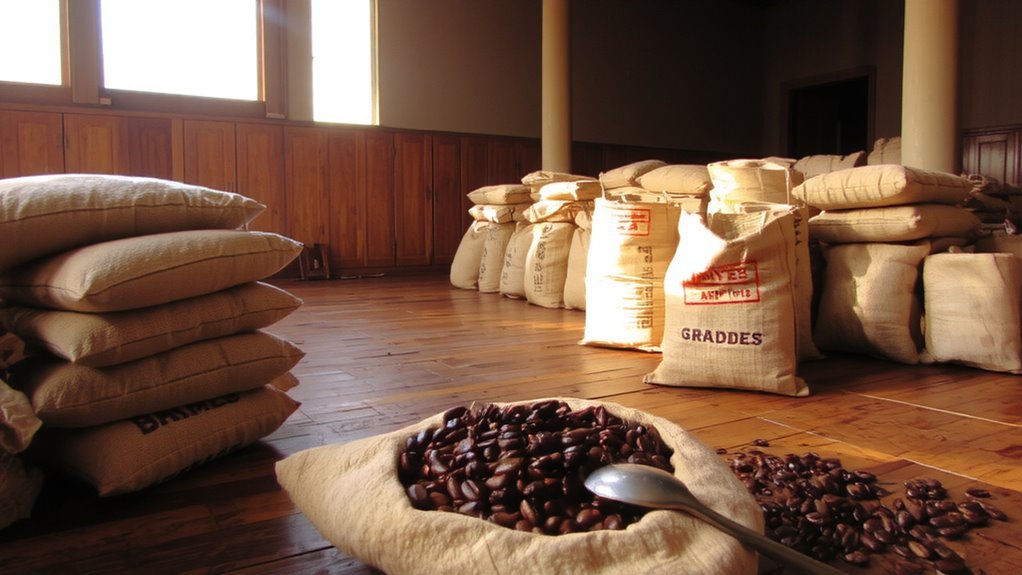
When you attend a Nairobi Coffee Exchange auction, prices aren’t decided in advance but form through live, competitive bidding every week. You see price discovery in action-each lot’s value emerges as buyers bid based on quality, demand, and market trends. This process guarantees market transparency, since all participants observe the same bids and results in real time. You’ll notice prices vary widely between farms and regions, reflecting real-time supply and demand. Unlike fixed pricing, this system lets you react to current conditions, making it easier to secure beans at fair values. Traders, exporters, and cooperatives all rely on this open method to gauge true market worth. There’s no guesswork-what you see is what you get. While it requires quick decisions, the auction’s structure supports fairness and accuracy, helping you make informed buying choices week after week.
Who Benefits: And Who Loses: From The System
How fair is Kenya’s auction system, really? You see market transparency as a clear benefit-prices are public, and buyers bid openly, which can lead to fair valuations. That works well for larger suppliers who show up consistently with high volumes. But let’s be honest: smallholder marginalization is a real issue. If you’re a small farmer with just a few bags, you’re often last in line for payment and visibility. The big cooperatives and exporters get premium slots, while your coffee might be lumped into lower-grade lots, reducing your return. Even with transparent pricing, you don’t always get the premium your quality deserves. The system tracks traceability, but it doesn’t guarantee equity. So while you gain insight into pricing trends, the structure still favors scale over small plots. You need strong alliances or direct buyers to truly benefit.
Why The Auction Model Is Under Threat
Why does a system built on transparency still struggle to hold its ground? Because even fairness can’t shield it from deeper forces. You’re facing climate change that’s disrupting harvest cycles, reducing yields, and making supply unpredictable. Unreliable volumes mean the auction can’t guarantee consistent quality or volume, pushing buyers elsewhere. At the same time, global competition is rising-countries like Ethiopia and Colombia offer direct trade models with traceability and faster turnaround. Kenya’s auction, while transparent, is slower and less flexible. Buyers now want speed, certainty, and sustainability, which the auction doesn’t always deliver. You’re also seeing farmers bypass the system to access premium prices directly. With pressure from environmental shifts and tighter international markets, the auction’s rigid structure simply can’t adapt fast enough to stay competitive.
What Could Replace Kenya’s Coffee Auctions?
What might come next for Kenya’s coffee trade if the auction system continues to fade? You’re likely to see more direct trade emerging as a viable alternative. This model connects farmers straight to buyers, cutting out middlemen and often improving farmer income. With direct trade, you get better price transparency since both sides agree on costs upfront, avoiding the uncertainty of weekly auction bids. Though it requires stronger relationships and trust, platforms like Sucafina and Cropster help streamline traceability and payments. Unlike the auction’s one-size-fits-all approach, direct deals let you negotiate based on bean quality, region, and sustainability practices. Still, smallholders may lack the resources to market globally, so cooperatives still play a key role. For now, blending direct trade with digital platforms offers you a practical, transparent path forward.
On a final note
You’ll find Kenya’s auction system gives transparency and standardized pricing, helpful if you value traceability and consistent quality. But prices can be volatile, and smaller farmers often see fewer gains. Direct trade or contract buying may offer better returns for producers and more stability for buyers. If you’re sourcing Kenyan coffee, consider both models-auction lots for clarity, private deals for fairness and long-term partnerships.