How to Tamp Without Creating Cracks in a Fine Grind Puck
Fine grinds crack when tamped unevenly or with too much force, but you can prevent this. Distribute grounds evenly using a WDT tool or your finger to break up clumps. Tamp with about 30 pounds of steady, level pressure-keep your wrist firm and tamper flat. Use a puck leveler like the OCD or Netta to smooth the surface before tamping. Make sure your tamper fits your portafilter exactly (58mm or 58.3mm) and isn’t worn. Replace old baskets every 6–12 months. The right prep and gear make a strong, crack-free puck possible. Better results start with checking these small details.
Notable Insights
- Distribute grounds evenly using WDT or a finger to prevent clumps and ensure uniform compression.
- Apply consistent, level pressure of about 30 pounds using your wrist and forearm, not fingers.
- Use a properly fitting tamper that matches your portafilter diameter to avoid uneven tamping.
- Eliminate high spots with a puck leveler using a light gliding motion before final tamping.
- Replace old or dry coffee and clean equipment regularly to reduce static and brittleness.
Why Fine Grinds Crack When You Tamp
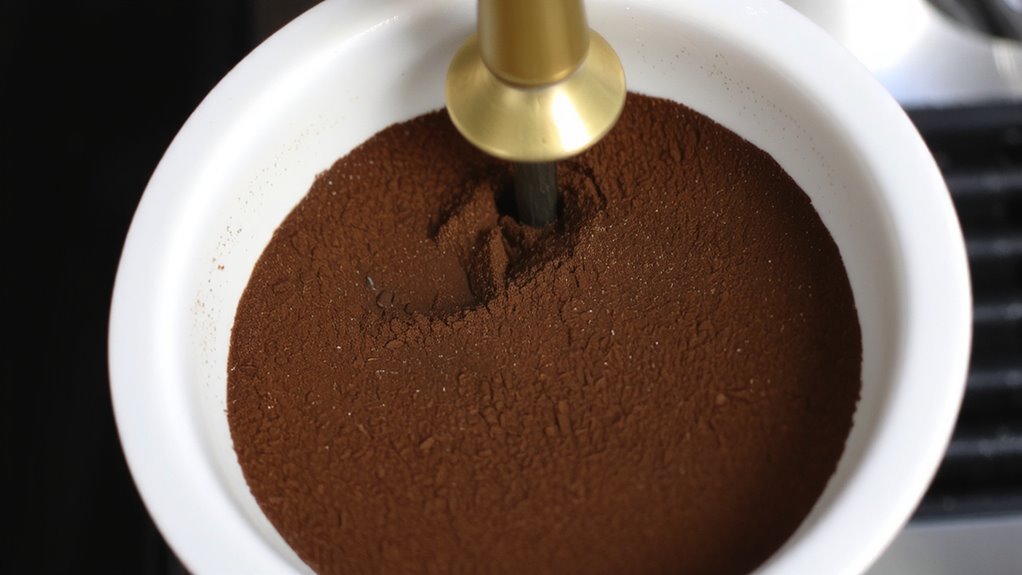
Fine grinds bring a challenge you’ve probably seen: cracks forming in the puck after tamping. These cracks happen because fine particles pack tightly, trapping air and restricting downward flow. When you tamp, uneven pressure or too much force can create stress points, leading to fissures-especially if your tamping technique isn’t level or consistent. Freshly ground coffee flows and settles more evenly, but as grind age increases, static charge builds, making the grounds cling and resist uniform compression. Older grinds also lose moisture, increasing brittleness and crack risk. A calibrated tamper, like a Pullman stand-alone, helps maintain even pressure. You don’t need expensive gear, but you do need consistency. Adjust your technique: apply steady, even pressure straight down, not at an angle. Watch for bounce or tilt. Proper technique combined with fresh grinds reduces cracks and improves extraction. Using a high-quality coffee grinder for baristas ensures a consistent particle size, which minimizes resistance and channeling during extraction.
Distribute Coffee Evenly Before Tamping
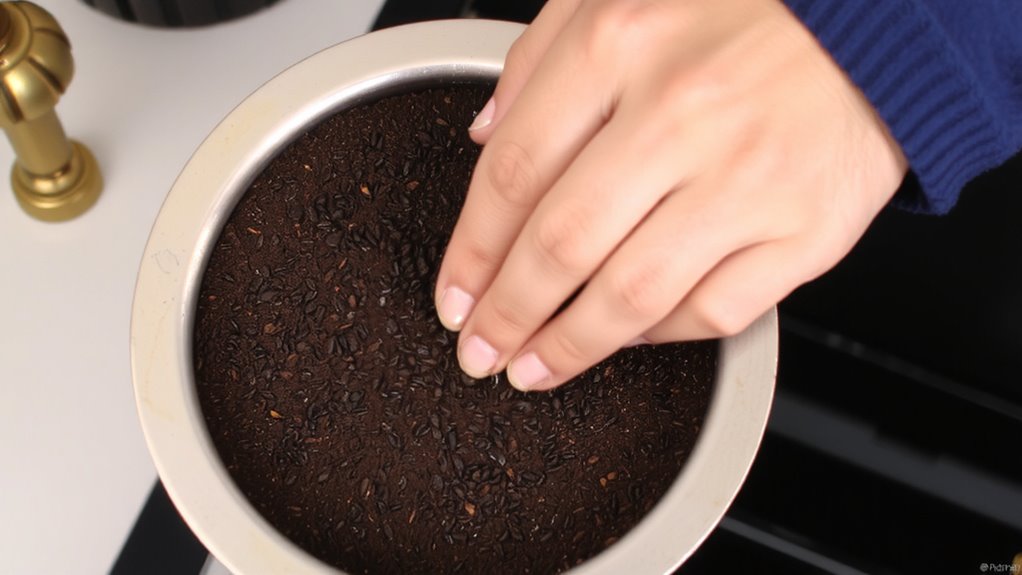
Skip the guesswork and level the playing field-literally-by spreading your grounds evenly in the portafilter before you tamp. Proper coffee distribution is key to avoiding cracks in fine grinds. If the grounds are clumped or uneven, tamping forces won’t be uniform, increasing the risk of fractures in the puck. Use your finger, a distribution tool, or a simple twist of the wrist to spread the dose flat. This step sets you up for even tamping, where pressure transfers consistently across the surface. Tools like the Weiss Distribution Technique (WDT) or tools such as the Stockfleth move help, but even basic finger leveling works. Avoid pressing down-just spread. Uneven distribution leads to channeling during the shot, ruining extraction. Good coffee distribution isn’t about perfection; it’s about minimizing variables. You’ll see better flow, fewer cracks, and more consistent shots. For those looking to optimize their setup, consider exploring some best coffee distribution tools.
Tamp With Consistent, Level Pressure
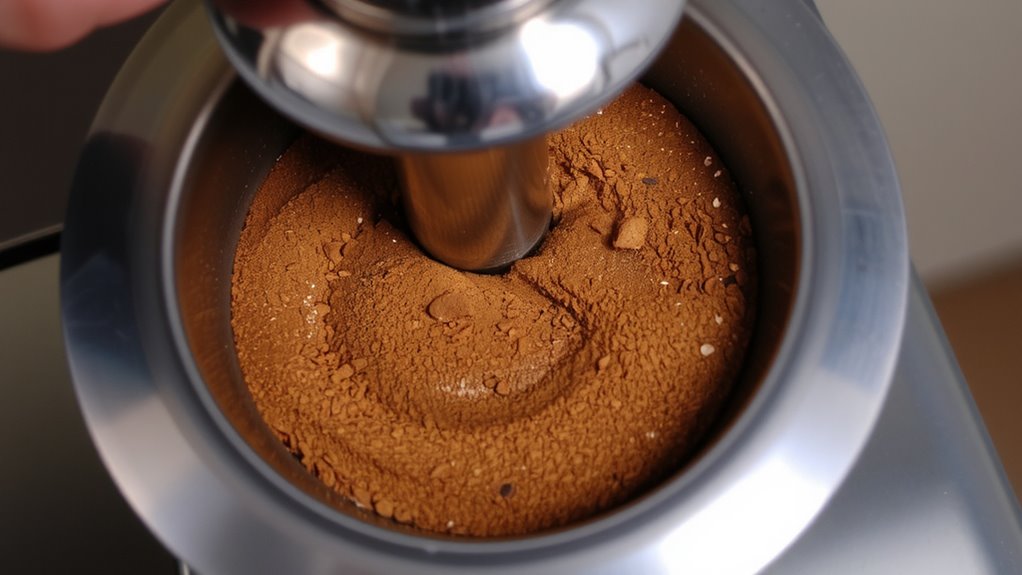
Now that your grounds are evenly spread, it’s time to apply pressure with a tamper-how you do it matters. Press down with a steady force, using your wrist and forearm to drive the motion, not just your fingers. Keep the tamper flat and level throughout. Applying even pressure guarantees uniform compression, which helps prevent cracks and channels in the puck. Don’t twist or shift the tamper-this disturbs the grounds and creates weak spots. A calibrated, fixed-dose tamper like the Pullman Big Step can help maintain consistency, but any quality tamper works if used correctly. Aim for about 30 pounds of pressure-enough to compact the puck without overdoing it. Under-tamping leads to weak extraction; over-tamping risks fractures. The goal is a firm, level surface that allows water to flow evenly. Consistency here directly impacts shot quality in fine grinds. Choosing the right best coffee tamper can significantly improve your tamping precision and overall espresso results.
Use a Puck Leveler for a Flat Surface
A puck leveler can help you achieve a smoother, more even surface before tamping, especially with fine grinds that tend to clump or settle unevenly. Puck leveling guarantees consistency by removing high spots and filling in gaps, which supports proper surface flattening. This step minimizes channeling and helps prevent cracks during tamping. For best results, twist the leveler gently across the portafilter after distribution.
| Tool | Material | Best For |
|---|---|---|
| Stockfords | Stainless | Precision puck leveling |
| Netta | Metal/Resin | Quick surface flattening |
| OCD | Aluminum | Mess-free leveling |
| Pullman Chisel | Stainless | Fine-tune fine grinds |
| Puqpress Go | Plastic | Budget-friendly option |
Use light, even pressure-don’t press down, just glide. A flat bed leads to a uniform pack, reducing stress points when tamping.
Choose a Tamper That Fits Your Portafilter
You’ve leveled the puck, so now it’s time to make certain your tamper matches your portafilter exactly. A proper tamper fit prevents uneven pressure and reduces the risk of cracks. If the base is even 0.1 mm too small, coffee can channel around the edges, weakening extraction. Most home machines use 58mm portafilters, but not all are true to size-some are 58.3mm or tapered. Check your portafilter’s diameter with calipers and match it precisely. Aftermarket tampers like those from Pullman or Reg Barber offer exact sizing and better portafilter alignment than stock options. A snug, smooth side-to-side fit guarantees the tamper stays centered during compression. Avoid wobbling or binding, as misalignment stresses the puck. Stainless steel bases also resist warping. Getting the right tamper fit isn’t fussy-it’s foundational.
Stop Cracks Caused by Over-Tamping
Pushing too hard when tamping can backfire-literally. Over-tamping creates cracks in fine grind pucks because excessive force compresses coffee unevenly. Your tamping technique matters more than raw strength. Apply steady, level pressure until you meet resistance, then stop. You don’t need to crush the grounds-just compact them uniformly. Experts recommend 30 pounds of pressure, but exact numbers matter less than consistent pressure control. Too much force increases the risk of channeling, where water escapes through weak points, ruining extraction. A calibrated palm tamper can help, but most baristas succeed with practice and mindfulness. Keep your wrist locked, use your shoulder to guide downforce, and avoid leaning. If you see cracks post-tamp, ease up. Fine espresso grinds are fragile. Good tamping technique isn’t about power-it’s about precision, repeatability, and knowing when to stop.
Fix Worn Tampers and Portafilters Fast
Even if you’ve nailed your tamping technique, a worn tamper or portafilter can still sabotage your puck. Over time, tampers lose flatness, leading to uneven compression-this disrupts tamper calibration and invites channelling. Check your tamper base monthly; if it’s dented or warped, replace it or have it machined flat. A calibrated tamper guarantees even pressure across the entire puck. Similarly, inspect your portafilter basket for warping or bent rim edges-common with heavy use. Bent rims prevent proper gasket sealing and disrupt portafilter maintenance, causing leaks or misalignment. Clean baskets regularly and replace them every 6–12 months, depending on usage. Machines like the Lelit or ECM show obvious puck issues when parts wear. Swap in OEM or third-party upgrades like Decent or Puqpress tampers for better durability. Fast fixes today prevent wasted shots tomorrow-stay ahead with routine checks.
On a final note
You can prevent cracks in fine grind pucks by ensuring even distribution before tamping and using consistent, level pressure. A properly sized tamper and a puck leveler help create a flat, uniform surface. Avoid over-tamping-30 pounds of pressure is usually enough. Worn tampers or portafilters cause uneven compression, so check them regularly. Replace if cracked or misshapen. These steps improve espresso extraction and flavor with minimal effort.