How to Descale a Moccamaster Drip Coffee Maker Safely and Effectively
You should descale your Moccamaster every 1–3 months using 50 ounces of commercial solution like Dezcal or a 50/50 white vinegar and water mix. Unplug the machine, run half a brew cycle, then let it sit for 15 minutes before finishing. Flush with three full water cycles to remove residue. This prevents scale buildup that slows brewing and harms performance-especially if you have hard water. Watch for signs like slow flow or odd flavors. There’s more to get right for long-term care.
Notable Insights
- Unplug the machine and use 50 ounces of descaling solution or a 50/50 vinegar-water mix in the reservoir.
- Run half a brew cycle, then turn off the machine and let the solution sit for 15 minutes.
- Complete the cycle after the soak, then flush the system with at least three full cycles of fresh water.
- Descaling every 1–3 months prevents mineral buildup, especially with hard water or frequent use.
- Wipe internal parts and run additional water cycles if residue or off-flavors remain after descaling.
Why Your Moccamaster Needs Regular Descaling
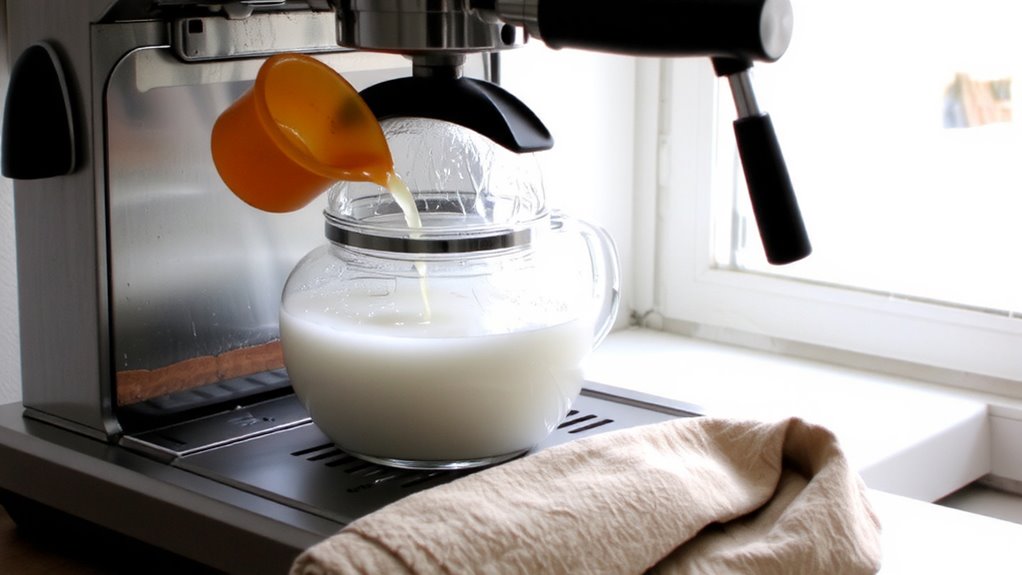
Every few weeks-or more often if you use hard water-mineral deposits from your water supply start building up inside your Moccamaster’s heating element and water tubing. This mineral buildup, caused by water hardness, reduces efficiency over time. Your machine has to work harder to heat water, which slows brewing and can alter temperature precision-key for proper extraction. Left unchecked, scale can clog narrow water pathways, leading to leaks or complete failure. Regular descaling prevents these issues, extending your brewer’s lifespan and keeping performance consistent. It’s not just about longevity; it’s about maintaining brew quality. Hard water areas see faster accumulation, so frequency matters. Descaling every 1–3 months, depending on use and water hardness, keeps internals clear. You won’t see the buildup immediately, but the machine’s performance will reflect it-until it doesn’t work at all. Preventive care beats repair. Using a compatible descaling solution ensures safe and effective removal of limescale without damaging internal components.
What You’ll Need: Solution, Vinegar, and Tools
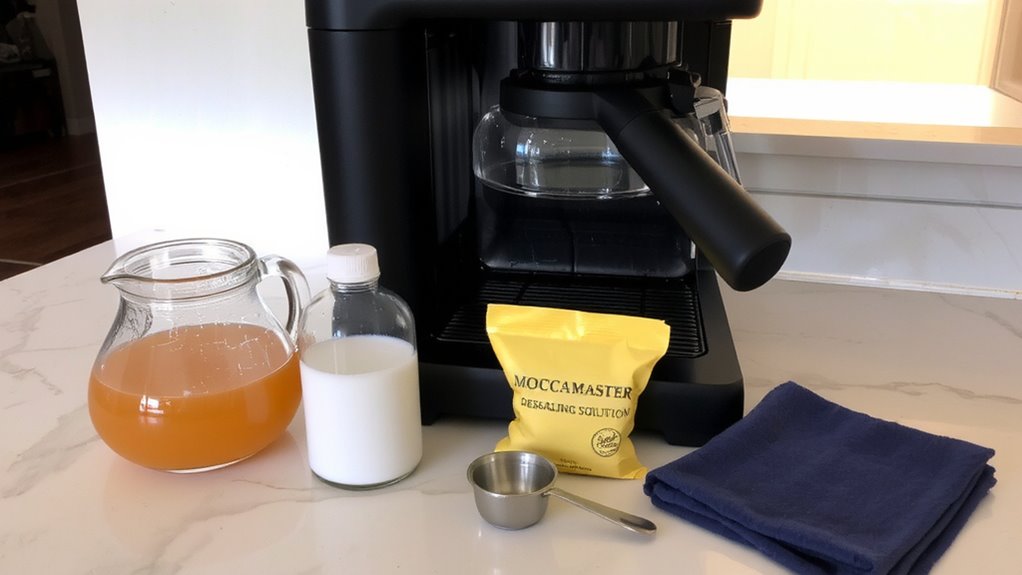
You’ll need a few key items to descale your Moccamaster properly, and choosing the right solution matters. Use either a commercial descaling solution like Dezcal or a 50/50 mix of white vinegar and water-both work, but vinegar may leave an odor and isn’t ideal with hard water. Poor water quality speeds up scale buildup, so consider filtered water for future brews. You’ll also need a measuring cup, a clean washcloth, and access to a sink. Always unplug the machine before starting; that’s a basic safety precaution. Don’t use bleach or abrasive tools-they damage components. A soft brush can help clean the water reservoir gently. Make sure you’ve got at least 50 ounces of solution ready. Having everything on hand prevents delays and keeps the process efficient. Skip steps, and you risk incomplete descaling or safety issues. Prepare fully, and your machine stays in top shape. For long-term performance, consider pairing descaling with regular maintenance using one of the Top Picks & Buying Tips for choosing the right model to meet your brewing needs.
Step-by-Step Descaling Instructions
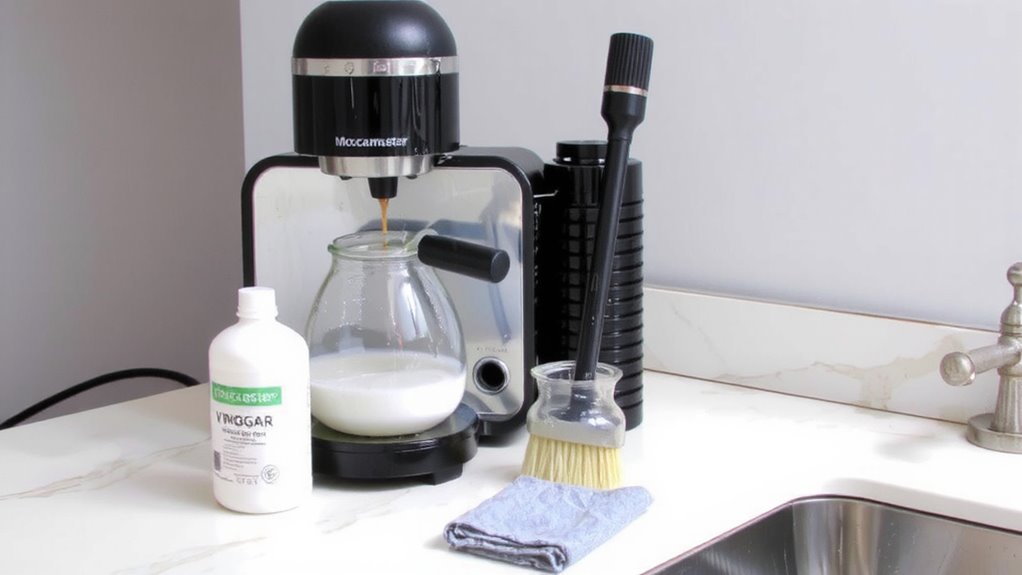
Once you’ve gathered your supplies, start by pouring the descaling solution into the water reservoir-use the full 50 ounces, whether it’s a 50/50 vinegar mix or a commercial product like Dezcal, to guarantee complete circulation through the system. Turn the coffee maker on and let the solution run through the full brew cycle. Halfway through, switch it off and let it sit for 15 minutes to break down mineral buildup. After the pause, turn it back on to finish. Once complete, dump the carafe contents and rinse it. Run fresh water through at least three full cycles to flush out any leftover taste or residue. Regular cleaning frequency-every 3 to 6 months-helps prevent heavy scale accumulation and keeps your Moccamaster brewing efficiently. Skip this, and mineral buildup can clog valves, slow brewing, and shorten machine life. For best results, consider using Breville-approved descalers that are specifically formulated to safely dissolve limescale without damaging internal components.
How Often Should You Descale?
Skipping regular descaling might seem harmless at first, but over time, mineral deposits from water build up inside the heating element and internal tubing, which affects performance. How often you descale depends on your water hardness and filter quality. If you have hard water, you’ll need to descale every 1–2 months. Soft water? Every 3–6 months is fine. Using a good water filter, like Brita or a dedicated Moccamaster charcoal filter, reduces mineral intake and extends time between cleanings. Don’t rely solely on filter quality, though-eventually, minerals still accumulate. Moccamaster recommends descaling every 100 brews, which for average home use is about every 3 months. Check your machine’s performance: slower brewing, lower water flow, or odd-tasting coffee are signs it’s time. Stick to a schedule based on your water conditions to keep your brewer running right.
Fixing Problems After Descaling
While most Moccamaster owners notice improved performance after descaling, sometimes issues pop up that seem counterintuitive. You might see water spots on the carafe or white residue inside the boiler, even after a thorough cycle. Don’t panic-these aren’t new mineral buildup signs but leftover descaling solution reacting with heat. Rinse the carafe with warm, soapy water and wipe interior surfaces with a damp cloth to remove residue. Run two full brew cycles with fresh water only to flush out any remaining solution. If brewing slows or leaks appear, check the valve and tube for trapped particles. Water spots on stainless parts are cosmetic and won’t affect function. Prevent future mineral buildup by using filtered water and sticking to a 3–6 month descaling schedule, depending on your water hardness.
On a final note
You should descale your Moccamaster every 3–6 months, depending on water hardness. Use a commercial solution like Dezcal or diluted white vinegar for best results. Run the full cycle, then rinse twice with fresh water to remove residue. This keeps brewing temps accurate and prevents clogs. Skip abrasive tools or harsh chemicals-they can damage components. Regular maintenance extends the machine’s life and guarantees clean, consistent coffee. A little upkeep beats costly repairs or early replacement.