Flow Control Portafilter: Fine-Tune Grind & Dose Mid-Shot
You don’t need perfect grind or dose when using a flow control portafilter like the PF54 or Decent EP5. Start with a consistent dose and medium-coarse grind, then adjust flow in real time-open the valve fully at first, then restrict gradually to shape pressure. This lets you correct for fast runs or stalls without changing settings. You’ll balance extraction by tuning flow to match your coffee’s behavior, not just grinding finer or dosing more. There’s more to mastering this balance just ahead.
Notable Insights
- Start with a stable dose and grind, then use flow control to adjust extraction without immediate changes to grind or dose.
- Open the flow valve fully at the start for 5–8 seconds to ensure even puck saturation before restricting flow.
- Adjust flow mid-shot to correct channeling or uneven extraction, reducing the need for grind tweaks.
- Use slower flow ramp-up to allow coarser grinds to extract evenly, increasing flexibility in dosing and grind settings.
- Fine-tune flavor by balancing flow dynamics with slight grind or dose adjustments, treating them as complementary variables.
What a Flow Control Portafilter Does (And Why It Matters)
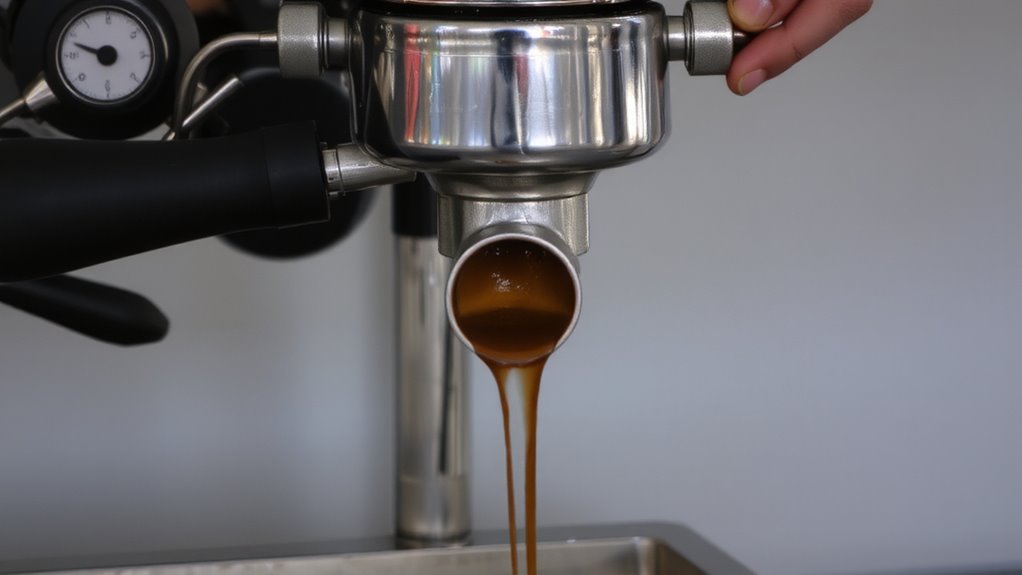
While most portafilters let water flow freely once the pump engages, a flow control portafilter gives you direct power over how much water enters the coffee puck during extraction. You can adjust flow dynamics from the start, influencing how evenly and fully the coffee extracts. This control allows for effective pressure profiling-not by altering pump pressure, but by restricting flow to shape pressure buildup over time. Models like the PF54 or Decent EP5 give you this precision. You’ll see clearer shot windows, better shot consistency, and more flexibility when dialing in grind and dose. It matters because small tweaks can rescue under-extracted or bitter shots without changing your setup drastically. Unlike fixed portafilters, flow control helps you adapt to uneven grinds or roast variances. It’s not magic-you still need good technique-but it gives you real-time influence over extraction, making it a practical tool for refining espresso with evidence-backed results.
How to Use Flow Control During a Shot: Step-by-Step
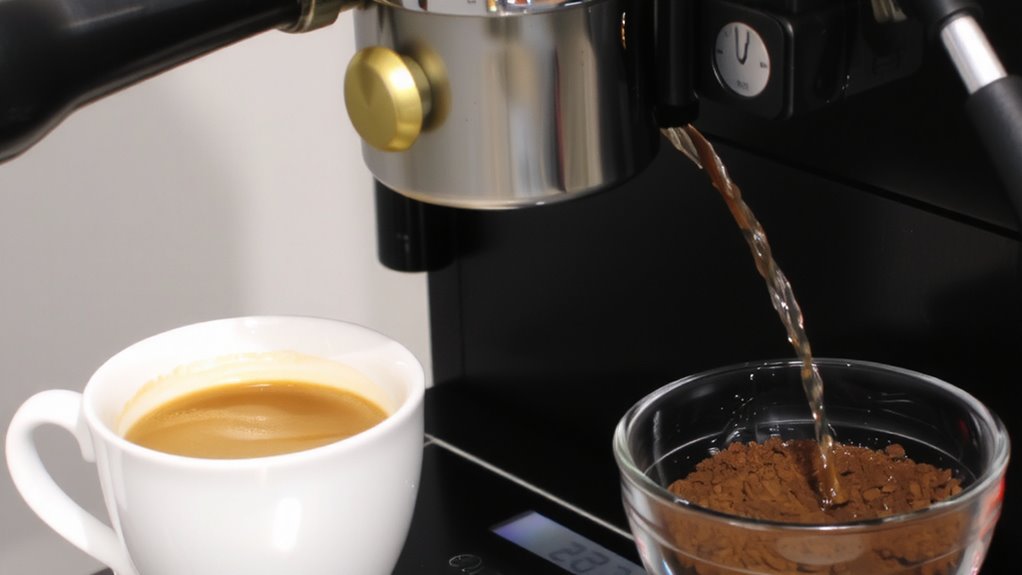
You’ve seen how a flow control portafilter gives you command over water flow and pressure buildup, letting you shape extraction in ways fixed baskets can’t. Now it’s time to use that control. Start by preheating your gear and dosing your coffee as usual. Begin the shot with the valve fully open-let water flow freely for 5–8 seconds to initiate even saturation. Then, gradually close the valve to restrict flow, building pressure for controlled extraction. This is pressure profiling: managing intensity to avoid bitterness or sourness. Keep an eye on shot timing; most target 25–35 seconds. Adjust the valve mid-shot to correct pace-slowing flow if pulling too fast, opening more if stalling. Your adjustments shape flavor directly.
| What You Feel | What It Means |
|---|---|
| Frustrated | Timing’s off-tweak flow |
| Confident | You’re in control |
| Excited | First perfect shot in |
How Flow Control Changes Grind and Dose Tuning
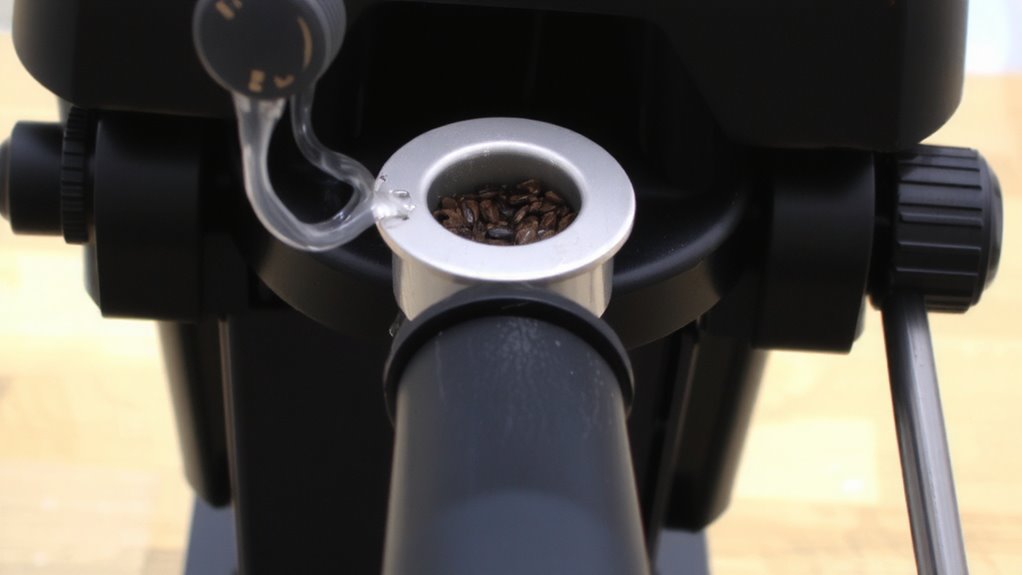
What if your grind and dose didn’t have to be perfect down to the last tiny increment? With a flow control portafilter, you gain flexibility. Instead of obsessing over tiny grind adjustments, you can influence extraction directly by managing flow dynamics. Flow control lets you shape pressure profiling manually-starting slow for even wetting, then increasing flow for balanced yield. That means a slightly coarser grind might still work well, reducing channeling risk. You’re not just chasing pump pressure; you’re guiding water through the puck intentionally. This shifts how you tune: dose and grind become starting points, not fixed values. Brands like Decent and Puqpress integrate this idea, letting real-world results guide tweaks. You’ll still need baseline precision, but flow control gives room to adapt without constant grinder recalibration. It’s not magic-just smarter leverage of variables you already use. For those upgrading their setup, choosing one of the best coffee portafilters can significantly enhance control and consistency.
Fix Channeling and Bitterness With Real-Time Flow Adjustment
If you’ve ever dealt with uneven extraction or a harsh, bitter shot, flow control gives you a direct way to respond. By adjusting flow rate mid-pour, you can reduce channeling caused by uneven water paths through the puck. Starting with lower flow during initial saturation helps with turbulence management, letting water distribute more evenly and preventing disruptive bursts that lead to gaps. Once stable, you can increase flow or adjust pressure profiling manually, mimicking advanced machines that ramp up pressure gradually. This real-time control helps avoid the high-pressure spikes that over-extract edges and cause bitterness. You’re not stuck waiting-it’s immediate feedback and correction. Models like the Decent EP5 or apps paired with Flow Meter attachments make this precise, but even basic flow restrictor portafilters offer meaningful gains. It won’t fix a bad grind or dirty machine, but when issues arise, you’ve got a practical tool to correct them on the fly.
Balance Dose, Grind, and Flow for Better Shots
How do you pull a shot that’s sweet, balanced, and free of off-flavors? You balance dose, grind, and flow. With a flow control portafilter, you can adjust water delivery in real time, helping match extraction to your coffee’s needs. Start with a consistent dose and grind-small tweaks here affect everything. Then, use flow control to shape shot symmetry: a slow ramp-up promotes even saturation, reducing channeling. Many machines allow basic pressure profiling, letting you start low and build pressure, which helps delicate shots avoid bitterness. You don’t need advanced gear, but machines like the Decent or Rocket R58 make it easier. Too much flow too soon causes imbalance; too little leads to stalling. Find the sweet spot where flavor, time, and yield align. It takes practice, but once dialed, your shots gain clarity and consistency. Upgrading to a high-quality best portafilters can further improve heat retention and extraction stability.
How Expert Baristas Master Flow Control for Flavor
A skilled barista treats flow control like a dial for flavor, not just a timer for extraction. You can shape shots using flow profiling, starting slow to prevent channeling and speeding up to boost sweetness. Many use a flow control portafilter to open the valve partway, holding 4–6 bars for the first 10–15 seconds-this mimics pressure profiling machines at a lower cost. Then, you gradually increase flow to finish in 30–40 seconds. Some prefer pressure surfing, manually adjusting flow to maintain steady pressure late into the shot, improving body and balance. It takes practice to nail consistency, especially on lever machines or basic pumps. While flow control gives you more leeway with grind and dose, it won’t fix poor technique. Machines like the Rocket R58 or Decent EP5 make it easier, but even budget setups work with patience. Upgrading to a high-quality espresso portafilter can significantly improve heat retention and stability during flow-controlled extractions.
On a final note
You now have direct control over extraction with your flow control portafilter. Use it to fine-tune grind and dose by adjusting flow mid-shot, reducing bitterness and channeling. Start at 50% restriction, then tweak based on taste. It won’t fix poor technique, but paired with consistent prep, it sharpens results. Brands like Naked Goat and Puqpress offer real precision-just remember, practice and observation matter most.