How to Calibrate Grind Size for a Balanced Chemex With Low Sediment
Use a burr grinder for consistent medium-coarse grounds, like crushed sea salt, to balance flavor and reduce sediment. Start with a 4-minute brew time and adjust: finer for sourness, coarser for bitterness. Pair with a Chemex or Able filter to catch fines and prevent sludge. Pre-rinse the filter to remove paper taste and seal it in place. Your roast, water, and altitude matter-light roasts and hard water lean finer; dark roasts and soft water need coarser. Tweaking one variable at a time sharpens results-you’ll fine-tune your best cup.
Notable Insights
- Use a medium-coarse grind, similar to crushed sea salt, to balance extraction and minimize sediment in your Chemex brew.
- Choose a conical or flat burr grinder for uniform particle size, reducing fines and boulders that cause uneven extraction.
- Adjust grind size based on roast: finer for light roasts, coarser for dark roasts to avoid over- or under-extraction.
- Pair a medium-coarse grind with pre-rinsed Chemex or Able unbleached filters to effectively trap fine particles and reduce sludge.
- Dial in grind by tweaking one variable at a time, targeting a 3.5 to 4.5 minute brew time for optimal balance and clarity.
Start With the Right Grind for Your Chemex
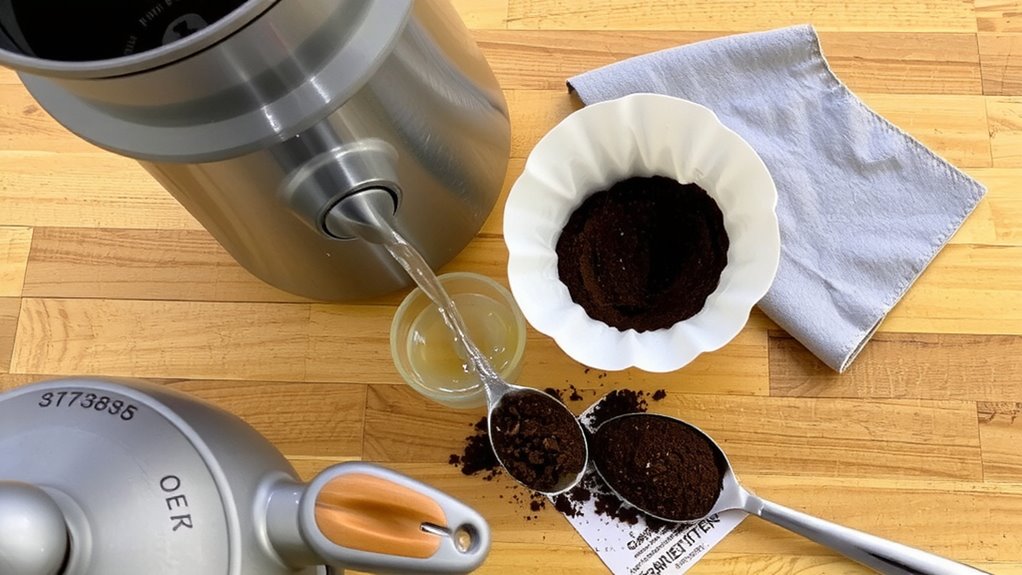
Grind size can make or break your Chemex brew, so getting it right from the start matters. You need a medium-coarse grind-think crushed sea salt-for ideal flow and extraction. If the grind’s too fine, water struggles to pass, resulting in over-extraction and bitterness. Too coarse, and you’ll get weak, sour coffee. Grind uniformity is key: inconsistent particles lead to uneven extraction. Even a few fines or overly large bits mess up the balance. Poor particle distribution means some grounds extract too much while others don’t contribute, muddying flavor. A sharp burr grinder helps, but focus on results, not gear. Adjust in small steps and watch brew time-an ideal window is 3.5 to 4.5 minutes. Consistent grind quality affects clarity and body, shaping the final cup’s texture and taste.
Use a Grinder That Delivers Consistent Results
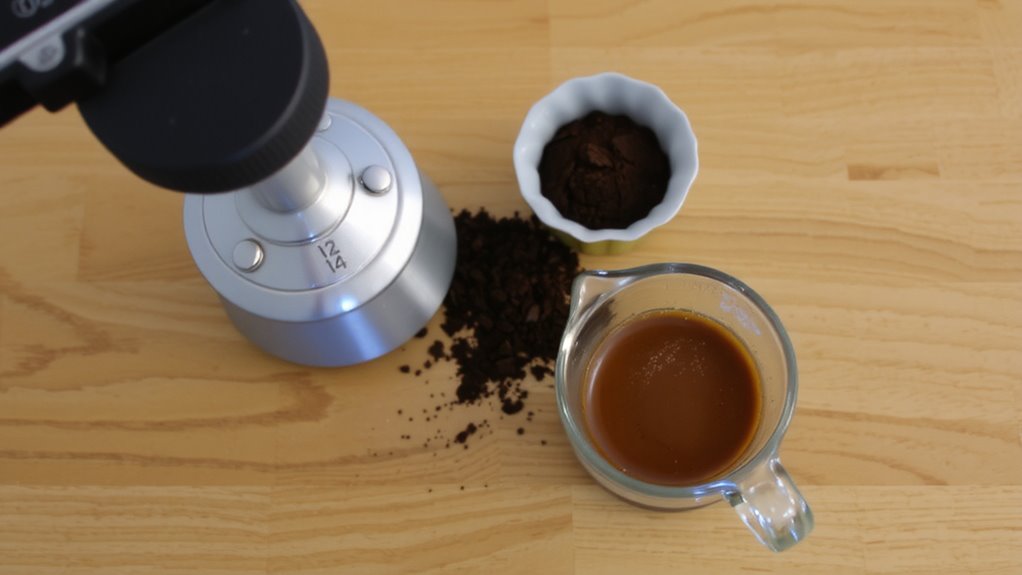
A good grinder makes all the difference when dialing in your Chemex, and not all models deliver the same level of consistency. Blade grinders chop beans unevenly, leading to messy extractions and unwanted sediment. For better results, use a burr grinder-flat or conical-since these offer more control and even particle size. Conical burrs, like those in the Baratza Encore, often produce less heat and noise, while flat burrs may deliver slightly more uniform results. Grind uniformity testing shows that higher-end grinders minimize fines and boulders, improving clarity in your cup. Inconsistent grinds cause some particles to over-extract and others to under-extract, hurting balance. If you’re serious about Chemex, skip the cheap options and invest in a grinder that prioritizes consistent particle distribution. Your brew will be cleaner, sweeter, and far more repeatable. For trusted recommendations, check out the best grinders for filter coffee.
Find the Sweet Spot: Medium-Coarse Like Sea Salt
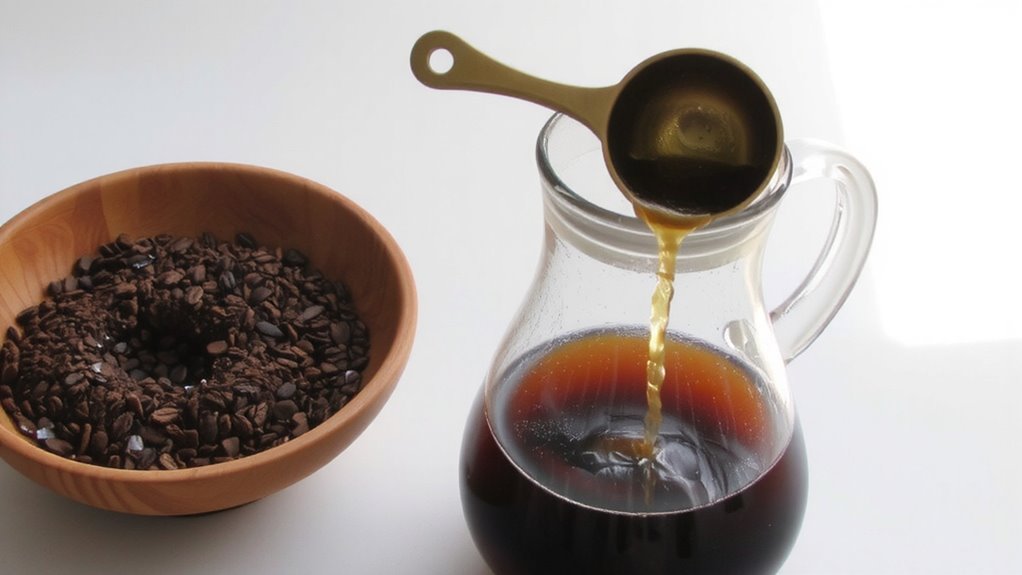
Think of your coffee grounds like tiny sponges soaking up water-too fine, and they’ll choke the flow; too coarse, and they’ll let it rush through untouched. For your Chemex, aim for a medium-coarse grind, similar to sea salt. This size supports balanced extraction and clear flavor while minimizing sediment. Good grind uniformity stops fines from slipping through and clogging the filter. A consistent particle distribution means most grounds are the same size, helping water extract evenly. Blade grinders often fail here-opt for a burr grinder like the Baratza Encore or Fellow Ode for best results. Investing in a quality burr grinder ensures superior grind consistency essential for Chemex brewing.
Brew, Taste, Adjust: Dialing In Your Chemex
How’s your morning brew tasting these days? If it’s too bitter or flat, your grind might be off. Start with a medium-coarse setting-like sea salt-and brew. Taste right away. If it’s sour, go finer; if it’s harsh, go coarser. Small tweaks matter. Bean density plays a role: denser beans, like high-elevation Ethiopians, often need a slightly finer grind to extract fully. Lighter beans might extract too fast if ground too fine. Water chemistry is just as important-hard water can over-extract, making coffee bitter, while soft water might under-extract, leaving it weak. Use filtered water for consistency. Always adjust one variable at a time: grind size first, then water, then dose. Let each change settle before the next. Dialing in takes practice, but it’s the surest path to balanced, clean Chemex coffee.
Filter Out Sediment With These Pour-Over Tips
That filter paper matters more than you might think-especially when it comes to keeping sediment out of your cup. Your paper filter choice directly affects sediment trapping. Standard Chemex filters are thicker than most, designed to catch fine particles and oils. Using them cuts down on grit in your brew. Generic or third-party filters may seem cheaper, but they’re often thinner and less effective. If you’re seeing sludge at the bottom of your mug, swap in a name-brand Chemex or Able Unbleached filter. They cost a bit more, but they seal better in the cone and filter more thoroughly. Also, make sure the filter fits snugly-gaps let sediment slip through. Pre-rinsing helps too: it removes paper taste and settles the filter in place. With the right paper filter choice and proper setup, you’ll get cleaner coffee every time. Sediment trapping isn’t just about grind-it starts with the filter. For those using a V60, choosing the right V60 dripper can also influence sediment levels due to differences in design and flow rate.
Fix Bitter or Sour Chemex Brews Fast
Why does your Chemex brew taste off-bitter one day, sour the next? It’s usually due to mismatched grind size, water temperature, or brewing time. Bitterness often means over-extraction from too fine a grind or water too hot, while sourness points to under-extraction from coarse grinds or water below 195°F. Brewing time matters just as much: over 4 minutes risks bitterness; under 2.5 leaves sourness.
| Issue | Likely Cause | Quick Fix |
|---|---|---|
| Bitter | Fine grind, high heat | Coarsen grind, check temp |
| Sour | Coarse grind, low heat | Refine grind, use 195–205°F |
| Balanced | Proper balance | Adjust based on taste |
Keep water temperature between 195–205°F and aim for a 3–4 minute brewing time. That’s your sweet spot.
Adjust Your Grind for Roast, Water, and Altitude
Your grind size isn’t one-size-fits-all-it shifts depending on roast level, water quality, and where you’re brewing. Light roasts need a finer grind than dark because they’re denser and harder to extract; match the grind to the roast profile to avoid under-extraction and sourness. Darker roasts, more soluble, risk bitterness if ground too fine. Water hardness also changes things-soft water can over-extract, so use a slightly coarser grind, while hard water, with more minerals, benefits from a finer setting to improve extraction. At high altitudes, water boils at a lower temperature, slowing extraction, so go finer to compensate. If you’re in Denver or Mexico City, this tweak is essential. Use a quality burr grinder to make precise adjustments. Always dial in by taste: if it’s flat or sharp, revisit grind size before changing anything else.
On a final note
You’ve got the basics: a consistent medium-coarse grind, a reliable burr grinder like the Baratza Encore, and a steady pour. Now tweak in small steps-adjust grind first, then water or brew time. Use fresh, quality filters to cut sediment. Taste clearly, fix fast. This method works regardless of roast or altitude. Keep notes, stay precise. A balanced Chemex isn’t magic-it’s repeatable, practical, and worth mastering.