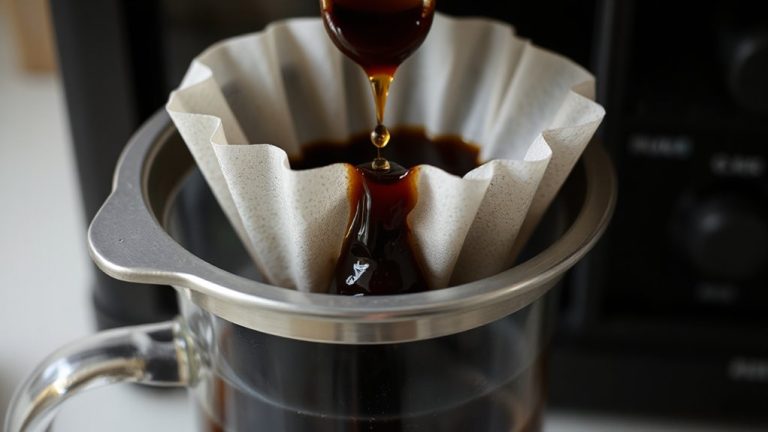
Exploring the Use of Villa Sarchi in Honey Processed Costa Rican Coffees
You’ll find Villa Sarchi excels in honey-processed Costa Rican coffees thanks to its dense beans and natural sweetness. Grown at high altitudes on volcanic soil, it handles extended drying well, developing bright acidity and rich stone fruit or honey notes. Red honey processing boosts sweetness without tipping into fermentation flaws. Roast with steady heat to preserve clarity. You’ll see why top micro-lots favor this rare, resilient varietal.
Notable Insights
- Villa Sarchi, a Costa Rican Arabica variant, offers concentrated sugars and clean acidity ideal for honey processing.
- Its compact size and resilience make it cost-effective to cultivate, supporting consistent honey-processed micro-lot production.
- Honey processing preserves mucilage on Villa Sarchi beans, enhancing sweetness and creating syrupy body with fruity notes.
- Costa Rica’s volcanic terroir slows maturation, yielding dense, uniform beans that withstand extended honey-process drying.
- Limited cultivation and high cup quality drive premium pricing, making honey-processed Villa Sarchi a competition-grade favorite.
What Is Villa Sarchi: and Why It Excels With Honey Processing
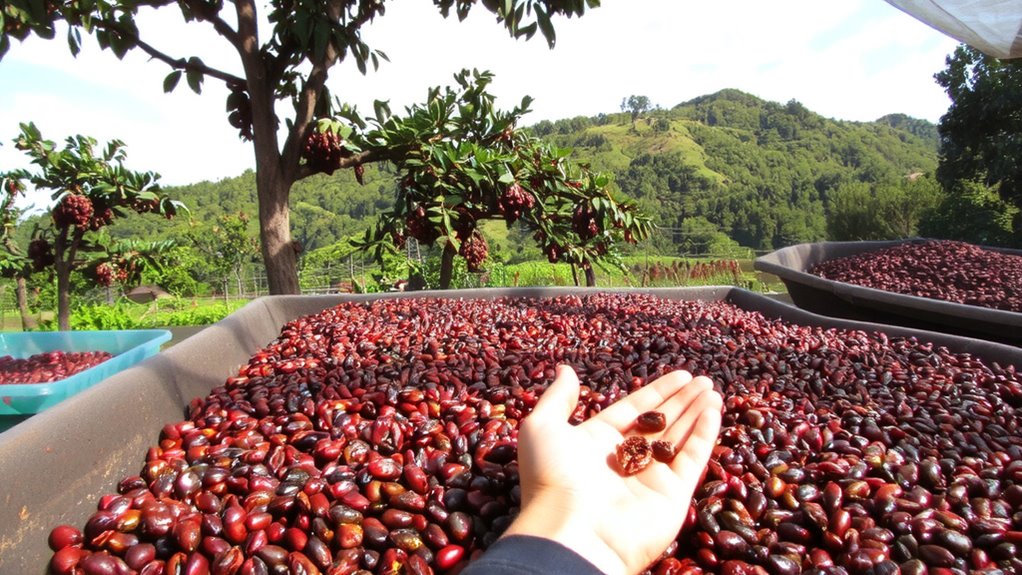
Ever wondered what makes certain coffee varieties stand out when processed a specific way? You’re likely sipping Villa Sarchi, a Arabica variant bred in Costa Rica from Bourbon and Typica roots. Its compact size reduces yield but boosts quality, especially under honey processing. Thanks to its strong genetic traits, it develops concentrated sugars and clean acidity-ideal for this method. You’ll also find it thrives in Costa Rica’s high-altitude farms, thanks to its climate adaptation. It handles moderate altitudes and variable rainfall better than many heirlooms, making it reliable for producers. Unlike more delicate varieties such as Geisha, Villa Sarchi isn’t overly finicky-or expensive to grow. That means you get balanced, sweet profiles without excessive cost. While not as bold as Pacamara, it offers consistency. If you’re exploring honey-processed beans, Villa Sarchi is a practical, quality-driven choice supported by biology and environment.
Why Honey Processing Boosts Villa Sarchi’s Sweetness
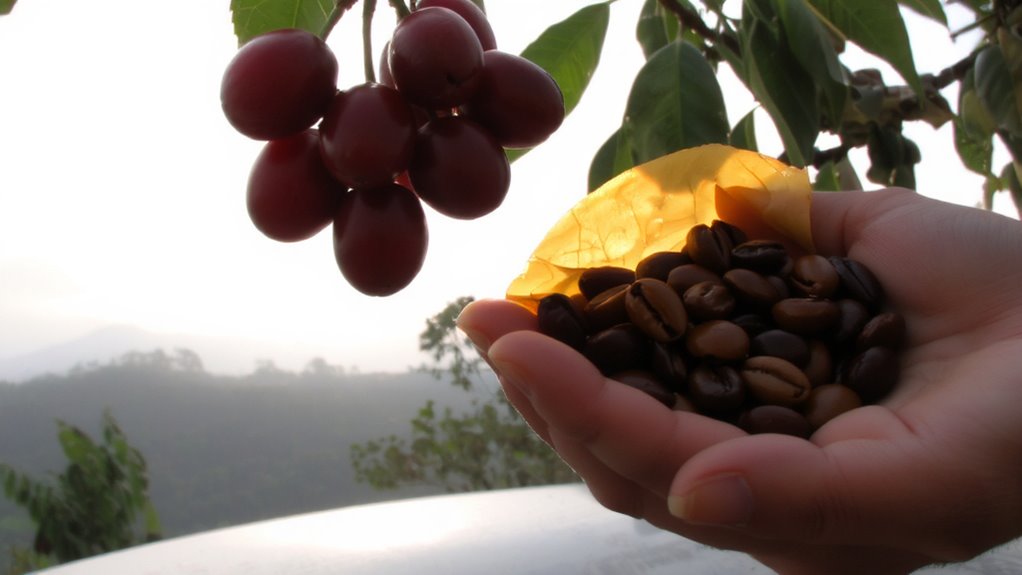
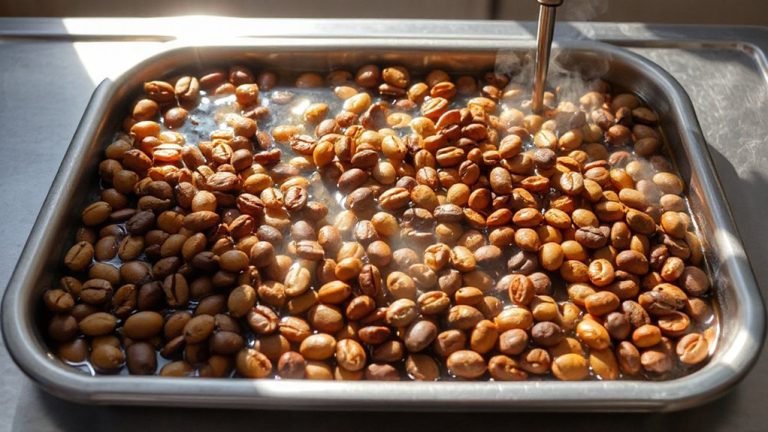
While honey processing doesn’t create sweetness out of nowhere, it does preserve more of the natural sugars in Villa Sarchi’s coffee cherry by removing the skin while leaving a measured layer of mucilage on the bean during drying. You control how much mucilage retention happens-more mucilage means longer drying times and increased fermentation dynamics. That extended contact between bean and gooey layer deepens sugar development and boosts perceived sweetness. Red honey, for example, keeps more mucilage than yellow or white, offering richer results if managed carefully. But watch humidity and airflow; too much moisture slows drying and risks over-fermentation. With Villa Sarchi’s balanced acidity and inherent sweetness, this method enhances what’s already there. You’re not adding flavor-you’re shaping conditions to favor sugar preservation. Properly executed, honey processing amplifies sweetness through controlled fermentation dynamics and smart mucilage retention, making it a practical choice for quality-focused producers.
What Honey-Processed Villa Sarchi Tastes Like
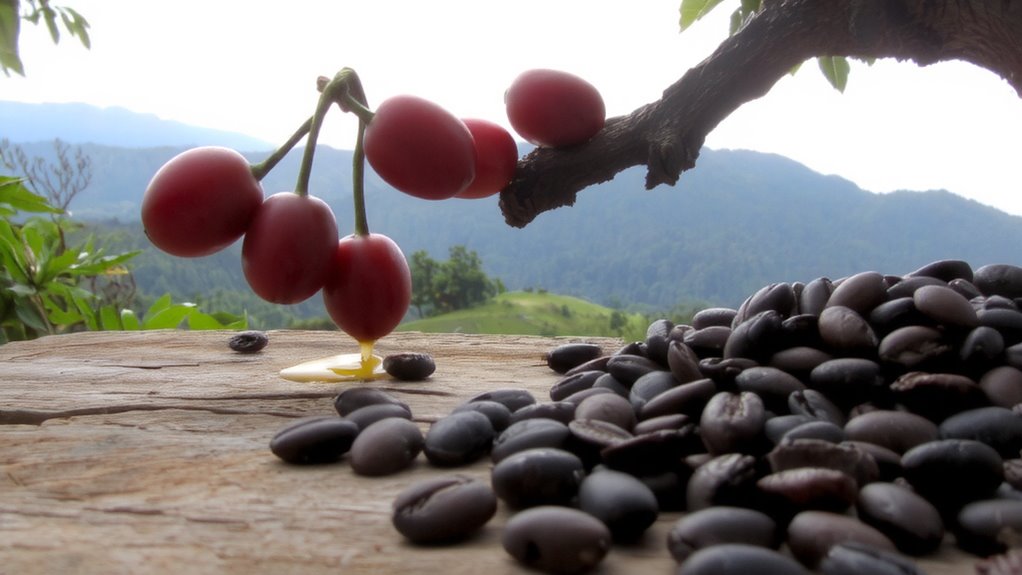
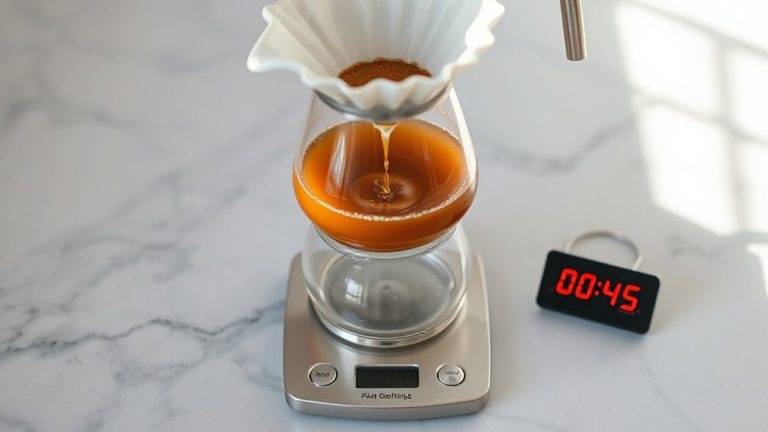
You’ve already seen how honey processing preserves and intensifies the natural sweetness in Villa Sarchi by controlling mucilage retention and drying conditions. Now, when you brew honey-processed Villa Sarchi, you’ll notice a balanced, syrupy body with a bright, clean acidity. The flavor profile typically leans toward stone fruit, honey, and tropical notes like mango or papaya, often with a subtle caramel sweetness. Tasting notes can vary slightly depending on roast level-lighter roasts emphasize floral and fruit clarity, while medium roasts enhance body and sweetness. You’ll find it less acidic than fully washed coffees but more nuanced than naturals. For best results, use a pour-over or flat-bottom filter to highlight clarity without muddying the cup. A gooseneck kettle helps control extraction, ensuring you get the full range of flavors without over-expressing any one note.
How Costa Rica’s Terroir Shapes Honey-Processed Villa Sarchi
Because Costa Rica’s high-altitude volcanic soils and consistent microclimates create ideal conditions for specialty coffee, the Villa Sarchi varietal develops dense bean structure and concentrated sugars-key traits that respond well to honey processing. You’ll find that climate influence plays a major role here: steady rainfall and mild temperatures slow cherry maturation, boosting complexity. The soil composition, rich in volcanic minerals, enhances nutrient uptake, leading to cleaner cups with lively acidity. These natural advantages mean the beans handle the honey process’s extended drying without fermenting excessively. If you’re roasting, expect more predictability in development due to uniform bean density. Growers in Tarrazú or West Valley rely on these terroir traits to maintain consistency across batches. You don’t need advanced gear to appreciate the results, but precise temperature control during roasting helps preserve the intrinsic sweetness shaped by environment. Terroir isn’t just marketing-it directly affects how you should approach processing and roasting this coffee.
How Villa Sarchi Commands Premium Prices in Micro-Lots
Villa Sarchi’s strong performance in honey processing is just one reason it stands out in Costa Rica’s specialty market. You’re paying for more than flavor-its genetic rarity makes it scarce, limiting supply and driving up value. Unlike mass-grown varieties like Caturra or Catuai, Villa Sarchi is a naturally occurring dwarf mutation of Bourbon, found almost exclusively in Costa Rica. That limited footprint means fewer farms can offer it, especially in high-scoring micro-lots. Roasters and importers know this, and they bid aggressively when it appears. Auction demand spikes for top-tier batches, often exceeding $20 per pound in global markets. You’ll see it featured in competitions or exclusive single-estate releases. If you’re sourcing beans, expect tight availability and premium pricing. While other varieties offer consistency, Villa Sarchi brings something rarer: uniqueness grounded in genetics and origin. For those seeking the finest examples, consider exploring the Best Costa Rican Coffee Picks to discover top roasters and limited releases.
Roasting Tips for Honey-Processed Villa Sarchi
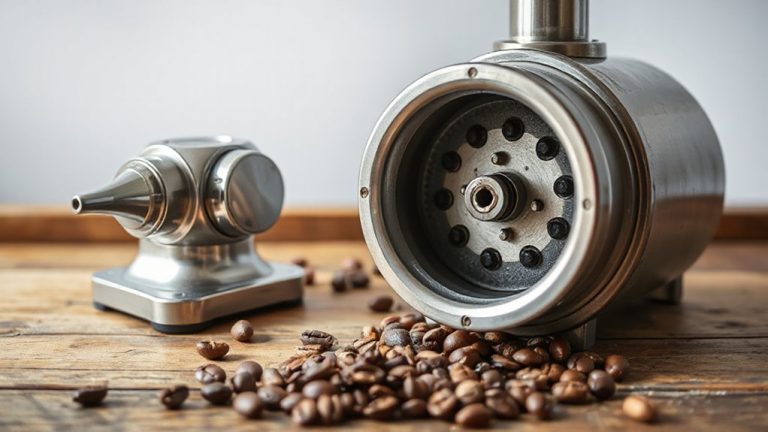
A consistent roast profile starts with understanding the density and moisture content of honey-processed Villa Sarchi. Its high bean density means you’ll need to apply more heat early to avoid stalling. Maintain roast uniformity by guaranteeing even drum speed and airflow, especially during the Maillard phase. Because of the sticky mucilage residue, monitor development closely-too aggressive a charge temperature can scorch the sugars. Home roasters offer precise control, making it easier to tweak profiles for delicate beans like home coffee roasters.
| Stage | Temp (°F) | Suggested Action |
|---|---|---|
| Drying | 350–380 | High airflow, moderate heat |
| Maillard | 380–400 | Stabilize drum speed |
| First Crack | 405–410 | Reduce heat slightly |
| Development | 410–415 | Prioritize even roast color |
| Drop | 418–422 | Guarantee roast uniformity |
Let the beans cool quickly to preserve sweetness. Use a sample roaster like the Probatino for accuracy.
On a final note
You’ll find honey-processed Villa Sarchi offers bright sweetness with notes of stone fruit and honey, thanks to its dense bean structure and Costa Rica’s high-altitude farms. It works well in light to medium roasts, preserving acidity and clarity. For best results, use a consistent roaster like the Artisan or Behmor and monitor development closely. While pricier than blends, its distinct profile justifies the cost in specialty markets.