Troubleshooting a Drip Coffee Maker That’s Overflowing the Basket
Your coffee maker overflows when water can’t flow freely-often from a clogged showerhead, mineral buildup, or using the wrong filter. Avoid overfilling the water reservoir or packing too many grounds into the basket. Clean the showerhead monthly, especially with hard water, and descale every 1–3 months. Check that the basket is seated properly and the carafe seal isn’t cracked. For models like the Hamilton Beach 48465, mesh filters may work better than paper. You’ll get better results by addressing these common issues.
Notable Insights
- Use the correct filter type and ensure the basket is fully seated to prevent water pooling and overflow.
- Avoid overpacking coffee grounds; use a medium-coarse grind and proper dosage to maintain optimal flow.
- Clean the showerhead monthly to remove mineral deposits that disrupt even water dispersion and cause overflow.
- Never exceed the max fill line in the water reservoir or coffee basket to maintain proper pressure and flow.
- Descale internal components every 1–3 months and check the carafe seal for cracks to prevent leaks and clogs.
Stop Coffee Maker Overflow at the Source
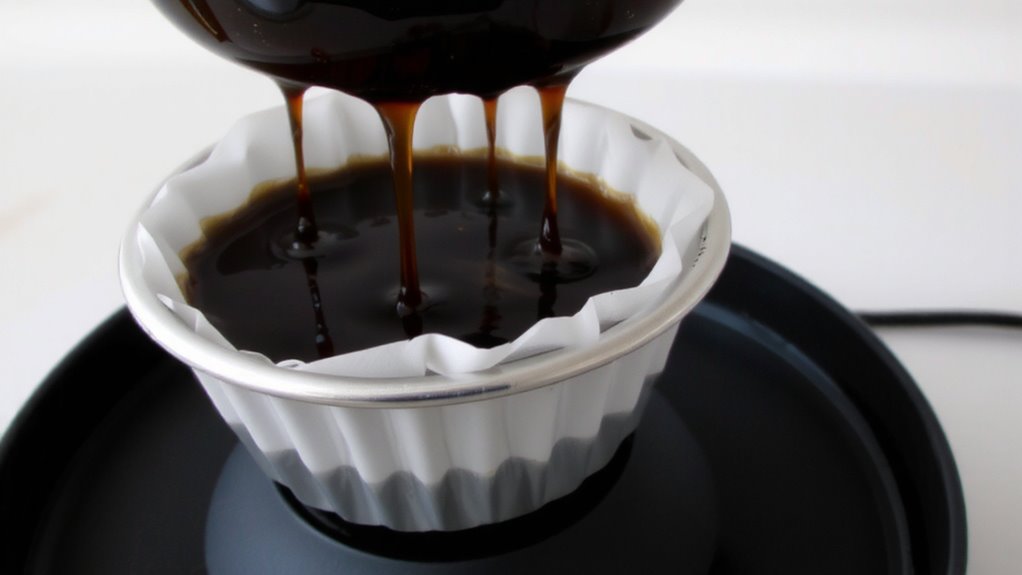
A drip coffee maker overflowing the basket usually stems from a preventable mismatch between water flow and filter resistance. You’re likely using the wrong filter type or overfilling the basket, which restricts water movement. Standard paper filters slow flow more than mesh, increasing pressure buildup if the machine isn’t designed for them. Check your model’s specs-some, like the Hamilton Beach 48465, handle higher water pressure better. Misaligned baskets disrupt drainage, so guarantee the basket is fully seated and correctly aligned. Poor basket alignment creates pockets where water pools instead of dripping through. Never pack grounds too tightly; that increases resistance and forces overflow. Use medium-coarse grounds for balanced extraction and flow. Matching grind size, filter type, and proper basket alignment stops most overflows before brewing starts. You’ve got control at the source-use it. For reliable performance within a budget, consider one of the best drip coffee makers under $200.
Clean the Showerhead to Prevent Clogs
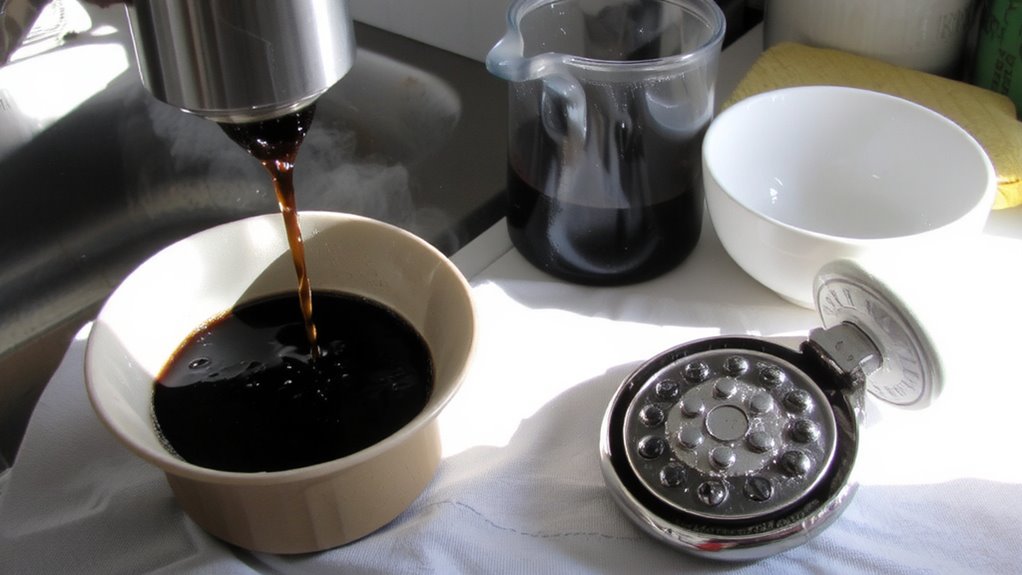
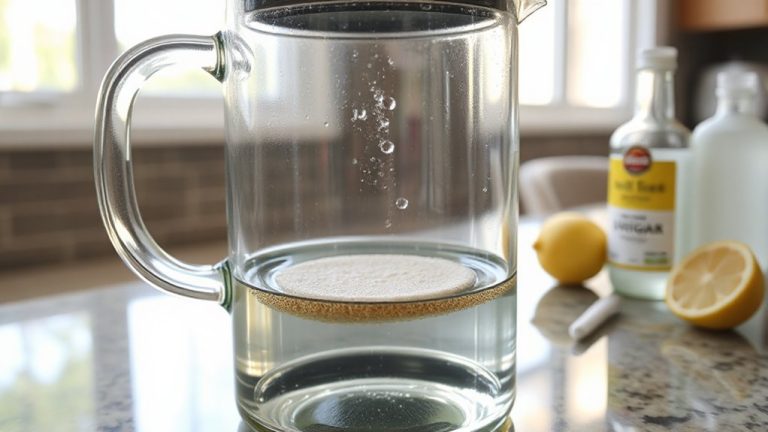
Mineral buildup is the usual suspect when your coffee maker’s showerhead starts underperforming. Over time, calcium and lime deposits clog the tiny holes, restricting water flow and disrupting spray dispersion. When water can’t spread evenly, it pools in spots, over-saturating the coffee grounds and contributing to overflow. You’ll want to descale regularly-monthly if you use hard water-using white vinegar or a commercial descaling solution. Run several brew cycles with the solution, then flush with water. After cleaning, check the showerhead alignment. If it’s misaligned, water may not reach all areas evenly, worsening spray dispersion. Some models, like those from Cuisinart or Mr. Coffee, let you remove the showerhead for soaking; others require gentle brushing. Proper maintenance guarantees consistent flow, reduces overflow risk, and keeps your brew balanced.
Don’t Overfill the Basket or Water Reservoir
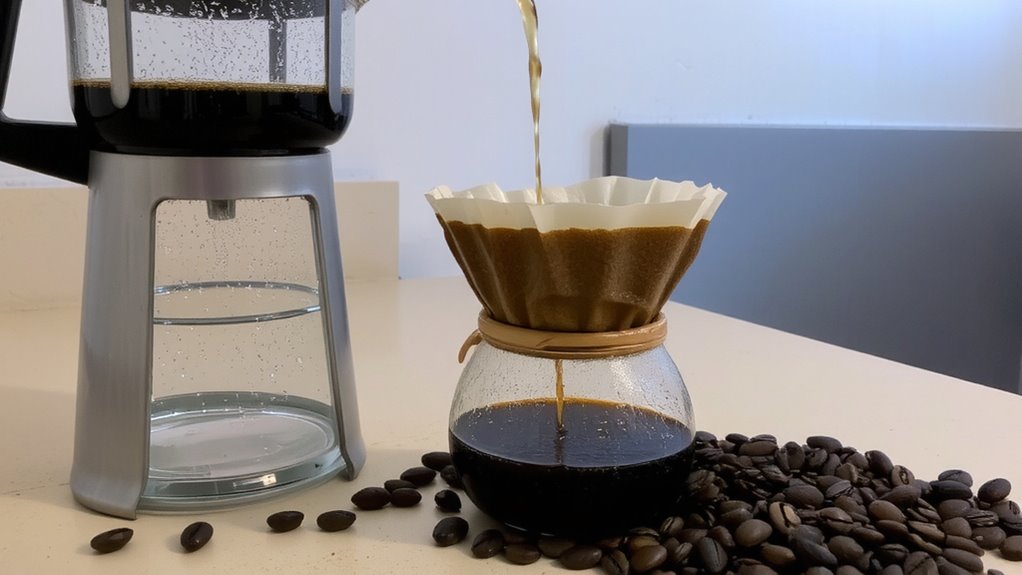
One too many grounds or a reservoir filled past the max line and you’re asking for a mess. Staying within the recommended basket capacity and correct water levels prevents overflow during brewing. Overpacking the basket restricts water flow, while too much water increases pressure, both leading to spills. Always measure grounds with a scoop or scale, and never let coffee reach above the max fill line in the reservoir.
| Factor | Recommendation |
|---|---|
| Basket capacity | Use 1 tbsp per 6 oz water; don’t pack grounds |
| Water levels | Fill only to the corresponding cup line |
| Filter type | Paper filters handle less volume than permanent |
| Grind size | Medium grind prevents clogging and overflow |
| Model limits | Keurig K-Elite and Cuisinart DCC-3200 have marked max lines |
Respect your machine’s design for reliable, mess-free coffee.
Descale Regularly to Fix Mineral Buildup
You’ve checked the basket and reservoir levels, so now turn your attention to what’s happening inside the machine-mineral buildup from hard water can silently sabotage your brew. Over time, calcium and lime deposits clog internal tubing and alter water flow, which may cause overflow. This mineral buildup restricts proper water dispersion, forcing it to pool and escape through the basket. Most manufacturers recommend descaling every 1–3 months, depending on water hardness. Use white vinegar or a commercial descaling solution like De’Longhi EcoDecalk or Urnex Descaling Solution for reliable scale prevention. Run a full brew cycle with the solution, followed by two to three with clean water. Regular descaling keeps flow paths clear, maintains ideal brewing pressure, and extends machine life. Skipping it risks poor performance and potential damage-consistent scale prevention isn’t optional if you want trouble-free operation. For Breville machine owners, using a best descaler for Breville ensures optimal compatibility and performance.
Replace Cracked Carafes or Worn Seals
A cracked carafe or worn seal might not seem like a big deal at first, but it can easily lead to leaks and overflow during brewing. Over time, seal degradation reduces the tight fit between the carafe and machine, letting water escape improperly. Even slight misalignment, like incorrect carafe alignment, can cause pooling on the warming plate. Check your carafe for cracks and the rubber gasket for stiffness or warping every few months. Choosing models with durable designs can prevent future issues, so consider checking our top picks for the best coffee machines when replacing.
| Issue | Solution |
|---|---|
| Visible cracks in carafe | Replace carafe immediately |
| Cloudy or warped seal | Install new gasket |
| Misaligned carafe during brew | Re-seat for proper carafe alignment |
| Leaking despite intact seal | Check for seal degradation |
Use manufacturer-recommended parts when replacing. Generic carafes may not align correctly, increasing overflow risk.
On a final note
Fixing an overflowing coffee maker starts with simple checks: clean the showerhead to clear clogs, don’t overload the basket or water tank, and descale every few months to prevent mineral buildup. A cracked carafe or worn seal can also cause leaks-replace them if needed. These steps work on most drip machines, from basic models to higher-end ones like Cuisinart or Bonavita. Stay proactive, and your brew stays where it belongs-in the pot, not the tray.