Fine-Tuning Turkish Coffee Ratios for Authentic Foam and Body
Use a 1:10 coffee-to-water ratio-7 to 8 grams of ultra-fine coffee per 60 ml of fresh, filtered water-for rich body and stable kaimaki foam. Measure precisely with a digital scale like Hario or Escali, since spoons vary. Grind beans to a flour-like consistency using a burr grinder. Add sugar before heating to protect the foam, and brew over medium-low heat in a copper cezve, removing just before it peaks. You’ll get consistent, authentic results every time-and see how small tweaks refine the final cup.
Notable Insights
- Use a precise 1:10 coffee-to-water ratio with 7–8 grams of coffee per 60 ml of water for optimal body and foam.
- Measure coffee with a 0.1-gram accuracy digital scale to ensure consistency and stable kaimaki foam formation.
- Grind beans to an ultra-fine, flour-like consistency using a burr or manual Turkish grinder for proper suspension.
- Add granulated sugar before heating to fully dissolve without disrupting the developing foam layer.
- Brew over medium-low heat, removing the cezve just before boiling to preserve foam and build rich crema.
Use the Right Turkish Coffee Ratio for Authentic Taste
Most traditional Turkish coffee uses a simple 1:10 coffee-to-water ratio-about one heaping teaspoon of finely ground coffee per 3-ounce demitasse cup. You’ll want to stick close to this ratio for authentic taste and proper extraction. Using too much water dilutes the brew, weakening both flavor and foam preservation; too little and it’s overly harsh. Water quality matters-always use fresh, filtered water to avoid off-flavors from chlorine or minerals. Hard water can interfere with foam formation and leave residue in your cezve. Distilled water isn’t ideal either, since it lacks dissolved minerals that support balanced extraction. For best results, heat the mixture slowly over low heat. This gradual rise in temperature helps build a rich, stable foam. You’re not just brewing coffee-you’re crafting a textured, aromatic experience rooted in precision and tradition. Achieving the ideal consistency starts with using a Turkish coffee grinder capable of delivering an ultra-fine, powder-like grind.
Measure Coffee Accurately for Perfect Foam
Every gram counts when you’re chasing that velvety, golden foam topping a perfect cup of Turkish coffee. You need dose precision to hit the right balance-too little coffee and the foam won’t form; too much and it turns bitter and dense. A standard serving uses about 7 to 8 grams of coffee per 60 ml of water, but small adjustments make a big difference. Use a digital scale with 0.1-gram accuracy-models like the Hario or Escali are reliable and affordable. This level of measurement guarantees consistent extraction and strong foam stability. Without precise dosing, even perfect heat control won’t save your brew. You’re not just measuring coffee-you’re setting the foundation for texture and strength. Skip the guesswork with spoons; they vary too much. With accurate measurement, you lock in conditions that let the foam develop fully and hold its structure from pot to cup. For even greater precision and advanced features, consider some of the best coffee scales on the market today.
Grind Your Beans Fine for Rich Body and Kaimaki
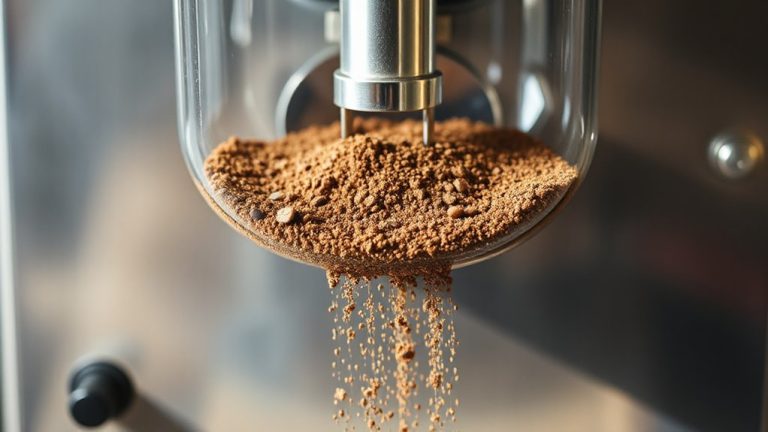
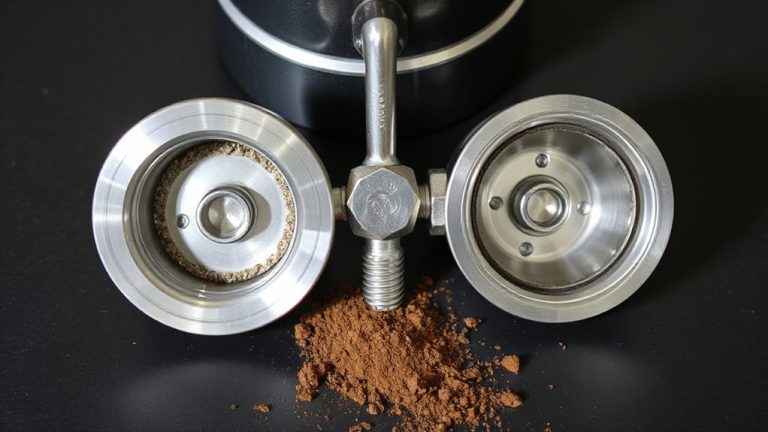
A fine, powdery grind is non-negotiable for authentic Turkish coffee-you’re aiming for something closer to flour than sand. This ultra-fine texture allows the grounds to remain suspended in the water, creating the rich body and dense kaimaki foam that define the drink. Your grinder matters: blade grinders often don’t achieve consistency, so a burr grinder-especially a manual Turkish hand grinder or high-end electric burr model-works best. Bean origin affects flavor clarity; Ethiopian beans offer floral notes, while Brazilian adds nuttiness. Match that with a medium-dark roast level to enhance body without overloading on bitterness. Light roasts can taste too acidic, while very dark roasts may scorch and suppress origin characteristics. Always grind fresh-pre-ground coffee loses volatile compounds fast. A consistent espresso grinders ensures optimal extraction for both Turkish and espresso brewing methods. With the right grind, roast level, and bean origin, you’ll get a fuller, more balanced cup.
Add Sugar Before Brewing to Protect the Foam
If you’re adding sugar, it’s best to stir it into the grounds and water before heating, as this helps preserve the integrity of the foam. Proper sugar integration guarantees the sweetener dissolves evenly without disrupting foam preservation during brewing. Adding sugar afterward or mid-brew can destabilize the kaimaki, leading to flat, weak crema. For best results, mix sugar directly in the cezve before applying heat.
| Sugar Level | Recommended Additive Amount (per demitasse) |
|---|---|
| Unsweetened | 0 tsp |
| Slightly | ½ tsp |
| Medium | 1 tsp |
| Sweet | 1.5 tsp |
| Very Sweet | 2 tsp |
This method supports consistent flavor and strong foam preservation. Always use granulated sugar for ideal integration. Alternative sweeteners may not dissolve fully, risking texture and foam quality. Stick to traditional technique for authentic results.
Control Heat and Timing in Your Cezve
You’ve mixed your sugar with the grounds, so now it’s time to focus on heat-this is where your control directly shapes the result. Heat management is critical when using a cezve; too high, and the foam breaks, too low, and you won’t develop proper crema. Use medium-low heat on a stovetop or a temperature-controlled electric burner for consistency. Traditional copper or brass cezves respond quickly, so watch closely. Brewing duration should be around 4 to 6 minutes-long enough for the grounds to rise and form foam, but not so long that it boils over. Let the coffee rise slowly; remove the cezve just before it peaks, let it settle, then repeat once or twice. This builds body without scorching. Consistent heat and timing mean repeatable results-key for mastering authentic Turkish coffee.
On a final note
You’ve got the basics now: stick to the classic 1:10 coffee-to-water ratio, measure precisely, and use a super-fine grind-espresso isn’t fine enough. Add sugar early if you want it, but never stir after brewing. Use a narrow cezve and low, steady heat to build foam (kaimaki) without boiling it over. Turkish coffee waits for no one-timing matters. For best results, a brass or copper cezve conducts heat more evenly than stainless steel, but clean it carefully.