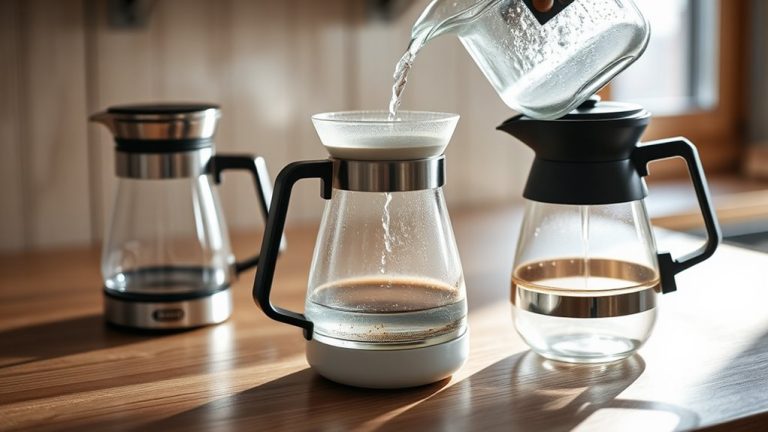
How to Brew Pour Over Coffee With a Tea Kettle (Non-Gooseneck)
You can make great pour over coffee with a regular tea kettle by focusing on technique. Keep the kettle low and pour slowly in small, concentric circles to avoid channeling. Use freshly boiled water and let it cool 30 seconds if needed, aiming for 195–205°F. A steady, centered stream helps with even saturation. Control flow with short pulses if your spout is wide. With practice, you’ll get consistent results-almost as precise as a gooseneck. There’s more to learn about fine-tuning each step.
Notable Insights
- Use freshly boiled water and let it sit 30 seconds if using a stove-top kettle for optimal temperature.
- Keep the kettle close to the brewer to improve control and minimize splashing during pouring.
- Pour in slow, concentric circles with short pulses to manage flow and ensure even saturation.
- Pre-wet the filter and aim for a full bloom within 30–40 seconds using a centered water stream.
- Adjust pour speed and grind size to fix sourness or bitterness, prioritizing consistency and technique.
You Don’t Need a Gooseneck for Great Pour Over
While a gooseneck kettle gives you more control over water flow, you don’t actually need one to brew a solid pour over. You can achieve great results with a regular tea kettle if you focus on manual control and a consistent technique. The key is pouring slowly and evenly, keeping the water stream centered to avoid channeling. A gooseneck offers precision, but it’s not magic-skill matters more. Use a gooseneck when you want fine-tuned pours for advanced methods like flat-bottom cone brewers. With a standard kettle, stick to simpler cones like Hario V60 or Kalita Wave. Practice helps you compensate for the wider spout. Just like any tool, results depend on how you use it. Over time, you’ll develop rhythm and control. You’re not locked into gear-your technique shapes the coffee more than the kettle shape. The best gooseneck kettles provide targeted pour control that enhances consistency, especially beneficial as you refine your brewing method.
Use a Regular Kettle With These Pour Over Tips
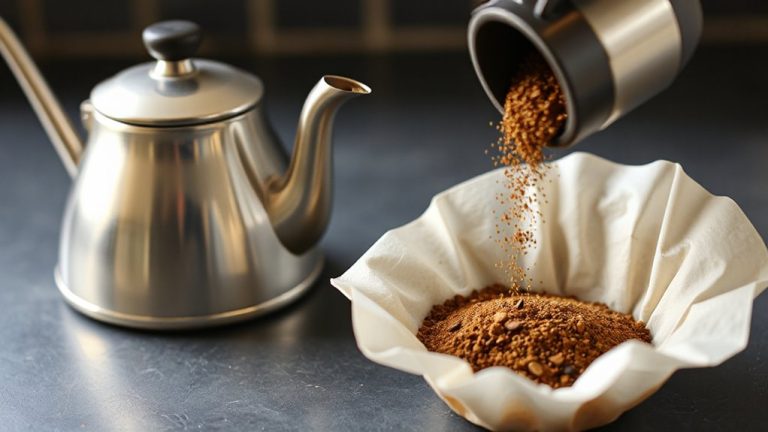
A steady hand makes all the difference when using a regular tea kettle for pour over coffee. Without a gooseneck, controlling the water flow is harder, but you can still brew well with the right pouring technique. Keep your kettle close to the brewer and pour in slow, concentric circles to avoid over-saturating one spot. Water temperature matters-always use hot, freshly boiled water. Pre-wet your filter to stabilize heat and begin your pour immediately after. Use short pulses if needed to manage flow. A gooseneck gives precision, but practice with a regular kettle builds skill. For more precision in your brewing setup, consider exploring the best coffee brewing kettles.
Heat Water to 195–205°F for Balanced Extraction
Getting the temperature right matters just as much as your pour technique, especially when you’re working with a regular kettle that doesn’t offer the precision of a gooseneck. For pour over, aim to heat your water to between 195–205°F. This range guarantees ideal water temperature for even extraction without burning the grounds. If the water’s too hot, you’ll pull out bitter compounds; too cool, and your coffee tastes sour. A reliable electric kettle with a thermometer gives you the most control, but a stove-top kettle works if you let it sit 30 seconds off boil in cooler climates. Maintaining proper water temperature helps achieve a stable extraction balance, giving you a smoother, more flavorful cup. Don’t guess-measure. Consistent heat means consistent results, especially with less precise gear. For even greater accuracy, consider using one of the best coffee thermometers to monitor your water temperature throughout the brew.
Pour Slowly to Control Flow and Avoid Channels
Always pour with deliberate slowness to maintain control over water flow and prevent channeling in the coffee bed. Your pour speed matters-going too fast with a regular tea kettle can cause uneven saturation, especially without a gooseneck spout. A slower, steady stream gives you more precision, helping distribute water evenly despite the wider spout. Focus on consistent water dispersion by moving the kettle in small, controlled circles over the grounds. This reduces the chance of water rushing through one area, which leads to over-extraction in some spots and under-extraction in others. You won’t have the same finesse as with a gooseneck, but slowing down improves your results. Think of it like painting-small, even strokes work better than splashing. Practicing deliberate pours makes a real difference in flavor.
Bloom Evenly Without a Gooseneck Spout
You can still achieve an even bloom with a regular tea kettle if you focus on control and technique. Start by pouring hot water in slow, concentric circles from the center outward, then reverse the motion. This promotes uniform saturation, ensuring all grounds begin releasing gases evenly. Use a steady hand and minimize the kettle’s height above the bed to reduce splashing and overflows. A gooseneck offers precision, but a standard spout can deliver a controlled infusion with practice. Keep the pour rate consistent-too fast causes channeling, too slow leads to uneven extraction. Aim for full saturation within 30–40 seconds. The key is patience and repetition. Over time, you’ll learn how your kettle behaves, letting you adjust for better contact. While specialized gear helps, it’s not required. Focus on technique, and you’ll get a solid bloom every time-no gooseneck needed.
Fix Flat or Bitter Coffee From Poor Pouring
If your coffee tastes flat or bitter, uneven pouring is likely the culprit, often due to inconsistent water distribution or incorrect flow rate. Poor grind consistency disrupts extraction, leading to sour or harsh notes. A coarse grind requires slower pouring to boost water agitation, while fine grounds need gentler flow to avoid over-extraction. With a regular tea kettle, control comes from wrist movement and tilt-pour in steady spirals, starting from the center and moving outward. Maintain moderate agitation to guarantee even saturation without channeling. Here’s how adjustments affect flavor:
| Issue | Cause | Fix |
|---|---|---|
| Flat taste | Low water agitation | Increase pour speed slightly |
| Bitterness | Over-extraction | Slow pour, check grind |
| Sourness | Under-extraction | Improve grind consistency |
| Uneven brewing | Irregular pouring | Use spiral pouring technique |
On a final note
You don’t need a gooseneck kettle to brew great pour over coffee. A regular tea kettle works if you pour slowly and evenly, keeping the water between 195–205°F. Control flow by tilting the kettle gently and moving in steady circles. Even blooming is possible with careful pouring. While a gooseneck offers precision, a standard kettle is practical and affordable for most home brewers.