Moka Pot Ratio: 1:7 to 1:10 Coffee-to-Water by Weight
Use a 1:7 to 1:10 coffee-to-water ratio in your Moka pot, depending on bean age-try 1:7 for older beans (3+ weeks) and 1:10 for fresh ones to avoid bitterness. Weigh both coffee and water with a digital scale like Timemore or Hable United Pro for accuracy, since volume changes with evaporation. Grind coffee to an espresso-fine consistency, but avoid going too fine to prevent clogging. The ideal setup balances extraction without overdoing heat or pressure. Try these tweaks in your next brew for cleaner, more consistent results.
Notable Insights
- Use a coffee-to-water ratio between 1:7 and 1:10 for balanced Moka pot extraction.
- Adjust to 1:10 for fresh beans and 1:7 for aged beans to optimize flavor.
- Weigh coffee and water with a digital scale for precise, consistent results.
- Grind coffee to an espresso-fine consistency to avoid under- or over-extraction.
- Avoid tamping grounds and ensure only the bottom chamber holds water for safe brewing.
Why the Right Coffee-to-Water Ratio Matters in Moka Pots
Getting the balance right between coffee and water in your Moka pot isn’t just about taste-it’s about extraction. Too much coffee or too little water leads to over-extraction, making your brew bitter, especially with high bean density beans that resist water penetration. On the flip side, under-extraction happens when there’s too little coffee, resulting in weak, sour coffee, particularly if brew temperature climbs too fast on high heat. The right ratio keeps pressure and heat working efficiently, ensuring even saturation and steady flow through the grounds. Since Moka pots rely on steam pressure, small changes in coffee amount affect how quickly water moves through the filter. Bean density and brew temperature interact closely-dense beans from high-altitude farms need more even heat to extract fully, while low-density beans can over-extract if the ratio’s off. You’re not just making coffee-you’re managing physics. For convenience without compromising on grind consistency, consider using pre-ground coffee for moka pots.
Use a 1:7 to 1:10 Ratio (Here’s How to Choose)
While there’s no single perfect ratio for every brew, using a range of 1:7 to 1:10-meaning one part coffee to seven to ten parts water by weight-gives you a reliable starting point for balanced Moka pot coffee. Your choice depends on bean age and brew temperature. Freshly roasted beans (under 2 weeks old) benefit from a weaker 1:10 ratio to avoid overpowering bitterness at high brew temperatures. Older beans (3+ weeks) lose volatility, so a stronger 1:7 ratio helps extract more flavor despite lower solubility. Selecting the right best coffee beans can significantly influence the final cup quality and extraction efficiency.
| Bean Age | Recommended Ratio | Why |
|---|---|---|
| Fresh (1–2 wks) | 1:10 | Prevents over-extraction at high temps |
| Aged (3+ wks) | 1:7 | Compensates for lost solubility |
Adjust within this range based on roast level and heat control.
Measure Coffee and Water Like a Pro (Scale vs. Scoop)
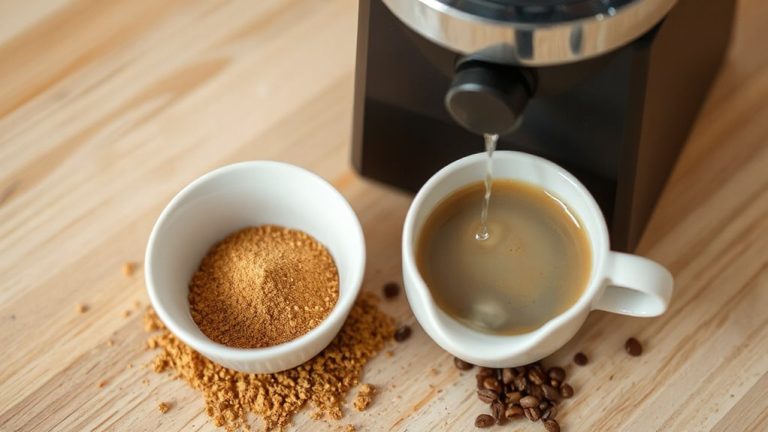
A good measurement method matters more than most realize, and when it comes to dialing in your Moka pot, weighing your coffee and water with a scale beats using scoops every time. Scoops vary in size and compress the grounds, which messes with tamping pressure and leads to uneven results. A $15 digital scale gives you accuracy to the gram, so you can reliably hit that ideal 1:7 to 1:10 ratio. Water weight matters just as much-especially since evaporation affects volume. Plus, weighing helps maximize bean freshness; once you open the bag, consistency keeps flavor predictable. Scales like the Timemore Scale or Hable United Pro are compact and precise. Scoops might be faster, but they’re guessing. If you care about what’s in your cup, skip the guesswork. Use a scale, lock in your dose, and let real data-not habit-guide your brew. For even better results, consider one of the best coffee scales that combine precision with features tailored to pour-over and espresso brewing.
Get the Perfect Grind Size for Balanced Extraction
Here’s how grind size impacts your brew:
| Grind Size | Effect on Brew |
|---|---|
| Too fine | Bitter, slow flow, possible clogging |
| Ideal | Smooth, balanced, full-bodied |
| Too coarse | Weak, sour, fast flow |
| Uneven | Mixed flavors, inconsistent extraction |
Use a burr grinder for uniformity-blade grinders create uneven particles. Adjust slightly based on your Moka pot’s design and your taste. A consistent espresso consistency guarantees even extraction and a richer cup every time.
Avoid These 5 Moka Pot Ratio Mistakes
You’ve got your grind size dialed in-uniform, espresso-fine, and ready to extract evenly-but if your coffee-to-water ratio is off, that precision won’t save your brew. One common mistake is overfilling chamber, which blocks steam and disrupts water flow. Never tamp grounds or pile them above the basket’s rim. Using too much coffee leads to sour, uneven extraction. On the flip side, too little under-extracts, yielding weak coffee. Ignore the “fill both chambers” myth-only the bottom chamber gets water. Ignoring pressure buildup is another error. If water can’t rise properly due to clogs or overfilling, pressure builds dangerously. Always clean the funnel and guarantee the safety valve is clear. A 1:7 to 1:9 ratio works best-like 20g coffee to 140g water for a 6-cup pot. Stick to these numbers, avoid these mistakes, and you’ll get consistent, rich results every time.
Adjust for Altitude and Stove Heat
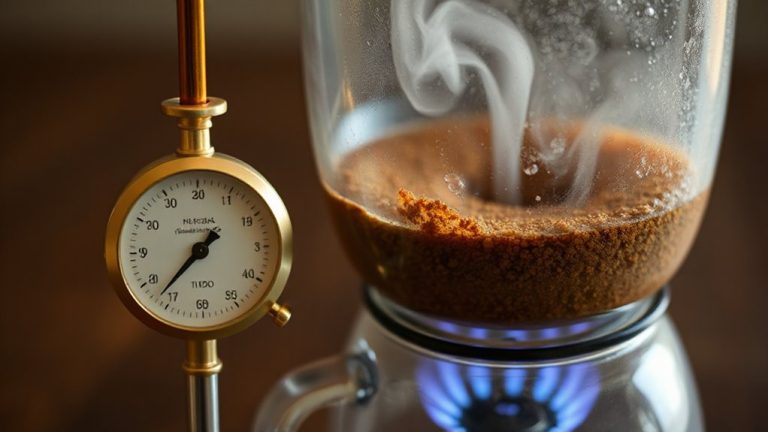
Since water boils at lower temperatures at higher elevations, you’ll need to adjust both your heat level and brew time to maintain extraction quality. Altitude effects mean your Moka pot may not reach ideal brewing temps, leading to under-extracted, weak coffee. To compensate, use slightly finer grounds and increase heat control by starting on medium and raising it as needed. Electric coils retain heat better than gas, helping offset altitude effects. On gas stoves, use a heat diffuser for more stable heat control. Avoid cranking the heat too high-scorching ruins flavor. If you’re above 3,000 feet, expect longer brew times; watch the stream for a steady, not sputtering, flow. Propane camp stoves work well at altitude but require careful heat control. Tweaking your approach based on your stove and elevation guarantees better results no matter where you brew.
Brew Consistently Great Moka Pot Coffee Every Time
Now that you’ve accounted for altitude and stove type, you can focus on the routine details that make each cup predictable and satisfying. Consistency starts with timing-aim for a brewing time of 4 to 6 minutes. Too fast, and the coffee tastes weak; too slow, and it turns bitter. Watch the pot closely: once you hear the gurgling slow, remove it from heat. Your pot material matters, too. Aluminum models like the classic Bialetti heat quickly but require gentle cleaning to avoid warping. Stainless steel versions, such as the Alessi Pulcina, last longer and resist corrosion but cost more. Use the same coffee dose, grind size, and water level each time. Preheat water if you want tighter control. These small, repeatable choices-combined with reliable equipment-ensure your moka pot brews well day after day.
On a final note
You’ll get the best moka pot coffee by sticking to a 1:7 to 1:10 coffee-to-water ratio, depending on your taste and roast. Use a scale for accuracy-scoops aren’t reliable. Grind your beans medium-fine, like table salt. Watch heat levels; too high burns the brew. Adjust slightly for altitude. Avoid common mistakes like overfilling or tamping. With consistent measurements and attention to detail, you’ll brew strong, balanced coffee every time.