The Effect of Grind Load on Heat Buildup in Conical Burr Grinders
Your conical burr grinder builds more heat with larger grind loads because extra beans increase friction and workload. This heat degrades flavor, especially in light and medium roasts, dulling those bright, complex notes. Even low-speed grinders warm up, and steel burrs spread heat faster. Smaller batches reduce thermal buildup and keep your grind consistent. Letting the grinder rest between uses also helps. For high-volume grinding, models like the Niche Zero handle heat better with insulation and airflow. You’ll want to know how back-to-back grinds affect your results over time.
Notable Insights
- Larger grind loads increase friction density, generating more heat in conical burr grinders.
- Higher bean volume in the grind chamber elevates temperature, degrading volatile flavor compounds.
- Thermal expansion from heavy loads alters burr gap, reducing grind consistency.
- Small batches reduce heat buildup and help maintain uniform particle size.
- Continuous grinding of large loads accelerates thermal drift, affecting extraction in later batches.
Why Heat Ruins Your Coffee’s Flavor
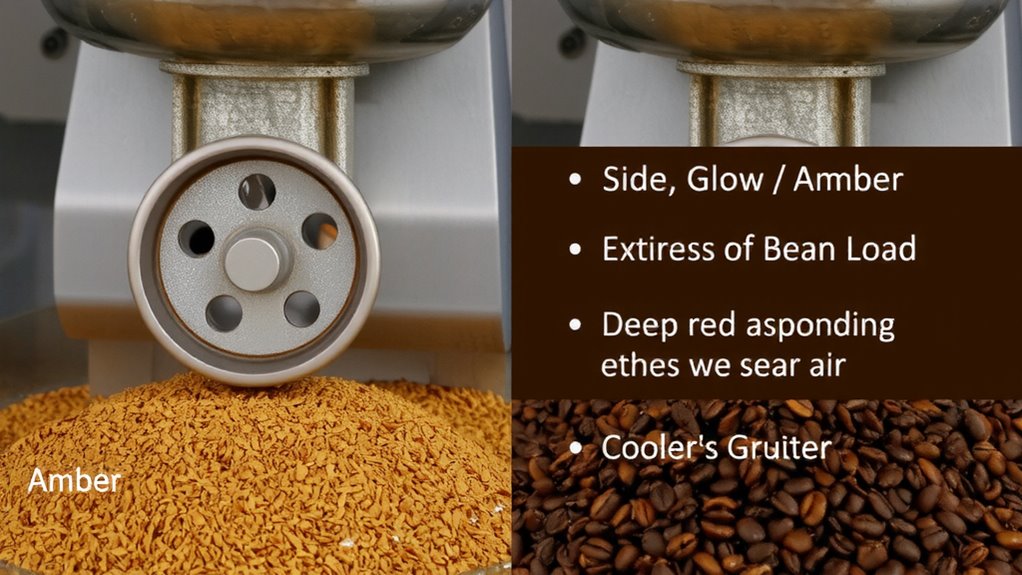
Although you might not notice it right away, heat buildup during grinding can seriously damage your coffee’s flavor before you even start brewing. Excessive heat triggers the Maillard reaction prematurely, a chemical process that, while desirable in roasting, degrades volatile compounds in coffee when it occurs during grinding. This leads to flavor degradation, dulling the bright, nuanced notes you’d expect from a fresh roast. Darker roasts are more vulnerable, but even light and medium roasts lose complexity. You’ll notice flat, stale, or ashy tastes in your cup-especially with longer grinding sessions or high-speed grinders. To preserve quality, you need to minimize heat exposure. That means choosing gear and methods that reduce friction and static heat retention. While blade grinders generate the most heat, even some burr models contribute to the problem if not designed well. Your best bet is controlling grind time and volume to keep flavors intact. Using a grinder with a built-in scale can help achieve precise, consistent dosing without overloading the grinder, reducing unnecessary heat buildup.
How Conical Burr Grinders Create Heat
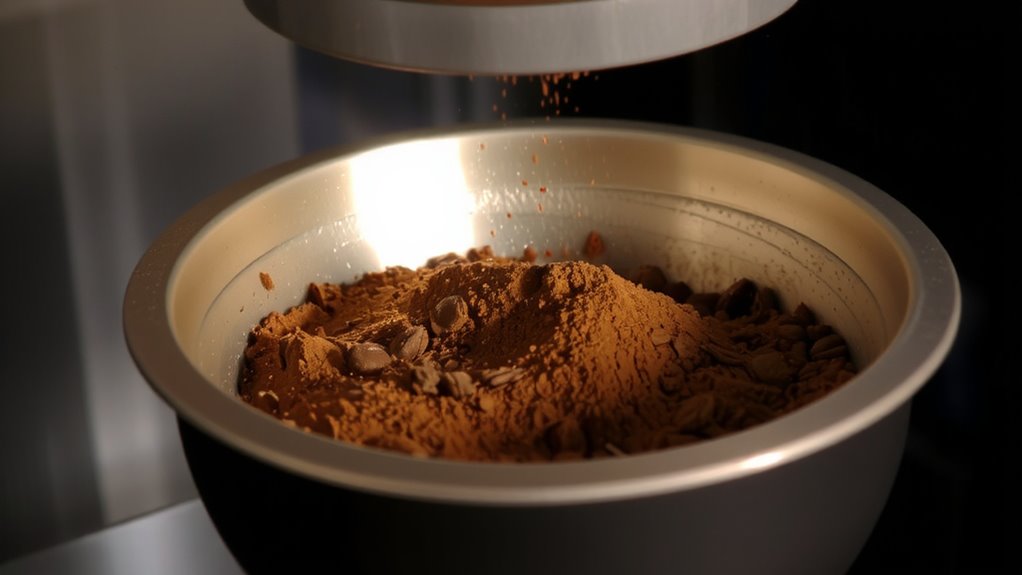
Since heat during grinding affects your coffee’s flavor, it’s worth understanding how conical burr grinders generate it, even though they’re generally cooler than blade or flat burr models. As you grind, the spinning burr crushes beans against the stationary one, creating friction generation-the main source of heat. Even at low speeds, this contact raises the temperature slightly. Materials matter: burrs made of steel or ceramic have different thermal conductivity, affecting how quickly heat transfers to the beans. Steel holds and transfers heat faster, while ceramic insulates a bit more, keeping grinds cooler. Grinder design also plays a role-better airflow and burr spacing help dissipate warmth. You won’t see massive spikes like in blade grinders, but some heat buildup is inevitable. Knowing how friction and material properties contribute helps you choose a grinder that suits your brewing style and keeps flavors clean. A well-designed Best Mill Grinders model can minimize heat through optimized burr alignment and motor speed.
How Grind Load Increases Heat
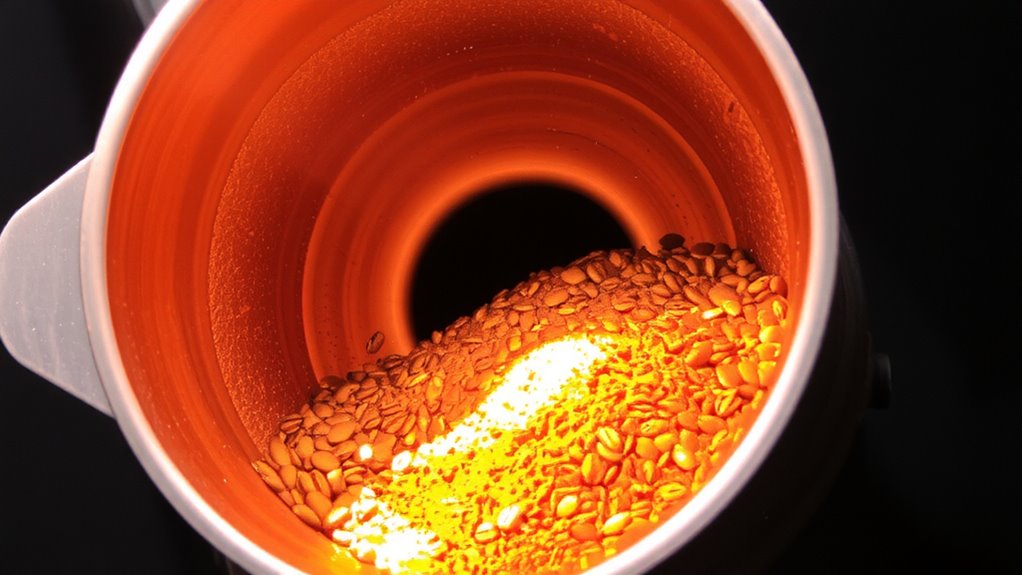
When you pack too many coffee beans into your conical burr grinder at once, the increased grind load forces the burrs to work harder, and that extra effort translates directly into more heat. As more beans cram between the burrs, friction density rises because the surfaces interact with more material in a confined space. That heightened contact generates excess thermal energy. You might not notice it immediately, but this heat affects your grind quality. The metal burrs experience thermal expansion, slightly altering the grind gap and leading to inconsistent particle sizes. Even high-end grinders like the Baratza Virtuoso or the 1ZPresso Q2 can’t fully avoid this effect under heavy loads. For best results, grind in smaller batches. You’ll reduce strain on the motor and limit heat buildup, preserving flavor clarity. A lighter load means less friction, more control, and a fresher-tasting cup.
How Heat Builds Up During Back-to-Back Grinds
Even if you’re using the right grind load, running several batches back-to-back can still push your grinder’s temperature into the red zone. Heat builds quickly because the motor and burrs don’t have time to cool between grinds. This causes thermal drift, where rising internal temperatures alter grind consistency over time. You’ll notice the later batches extracting differently, even if your settings stay the same. Friction variance plays a role, too-uneven contact between burrs generates hot spots, especially in lower-tier grinders with looser tolerances. Higher-end models, like the Niche Zero or MK Conical, manage this better thanks to tighter engineering and heat-dissipating materials. Still, no grinder is immune. To minimize risk, pause 30–60 seconds between batches. It’s a small delay that keeps thermal drift in check and guarantees more stable performance when grinding consecutively.
How Large Batches Change Coffee Flavor
Why does grinding a large batch sometimes leave your coffee tasting flat or off? Because extended grind sessions heat up your conical burr grinder, and that warmth changes how your coffee extracts. When beans get too hot, their volatile compounds degrade, dulling flavor. This affects your brew time and makes extraction uneven. Even if you use the right water temperature, overheated grinds can’t respond the same way. Choosing the right grinder can make a significant difference in heat management, especially with models designed for consistent performance during larger-volume grinding sessions, such as those highlighted in expert reviews of the best filter coffee grinders.
Here’s how it plays out:
| Condition | Effect on Coffee Flavor |
|---|---|
| Cool, fresh beans | Bright, balanced, full of clarity |
| Warm from grinding | Muted highs, flat acidity |
| Overheated batch | Stale notes, bitter or hollow finish |
| Proper grind temp | Consistent extraction, ideal brew time |
Heat alters your grind’s chemistry, so even solid water temperature settings can’t fix the damage. Grind in smaller batches to preserve flavor integrity.
How to Reduce Heat During High-Volume Grinding
If you’re grinding large amounts of coffee back-to-back, letting your conical burr grinder cool between batches is a simple move that makes a real difference in flavor. Good airflow management helps a lot-grinders like the Baratza Virtuoso+ use vents and fan-assisted design to shed heat faster than sealed models. You’ll notice less warmth in the beans and more clarity in the cup. Motor insulation also matters; models with better internal shielding, such as the Niche Zero, reduce heat transfer to the burrs even during long runs. While passive cooling works, don’t rely on it alone-pace your grinding. Skip extended sessions without breaks, especially with dense, dark roasts that increase friction. Upgrading to a grinder with effective airflow management and quality motor insulation cuts heat buildup where it starts. These features won’t stop warming entirely, but they keep temps in a safer range for flavor-sensitive brewing.
How Cooling Periods Improve Grind Consistency
Letting your grinder rest between batches does more than protect flavor-it helps maintain grind consistency over time. When you run your grinder continuously, heat builds up due to friction, and because of thermal inertia, the burrs hold onto that heat, changing how beans break apart. Even after you stop grinding, the retained heat affects the next batch if you don’t allow time for heat dissipation. That’s why short cooling periods-just 30 to 60 seconds-make a real difference. Allowing the motor and burrs to cool reduces expansion, keeping the grind size stable. Machines like the Baratza Forté or the Niche Zero handle heat better than budget models, but all grinders benefit from pauses during high-volume use. You’ll get more uniform particles, better extraction, and more consistent shots. Skip the rest, and you’re gambling with accuracy. A quick break isn’t wasted time-it’s part of the process.
On a final note
You need to manage grind load to keep heat in check. High-volume or back-to-back grinds raise temperatures, especially in conical burr grinders like the Baratza Virtuoso or Fellow Ode. Excess heat alters particle size and burns volatile compounds, dulling flavor. Letting the grinder cool between batches improves consistency. For frequent grinding, choose grinders with better heat dissipation or lower retention. Short breaks make a real difference in preserving clarity and balance in your cup.