How to Make Cold Brew Coffee Concentrate for Iced Lattes and Cocktails
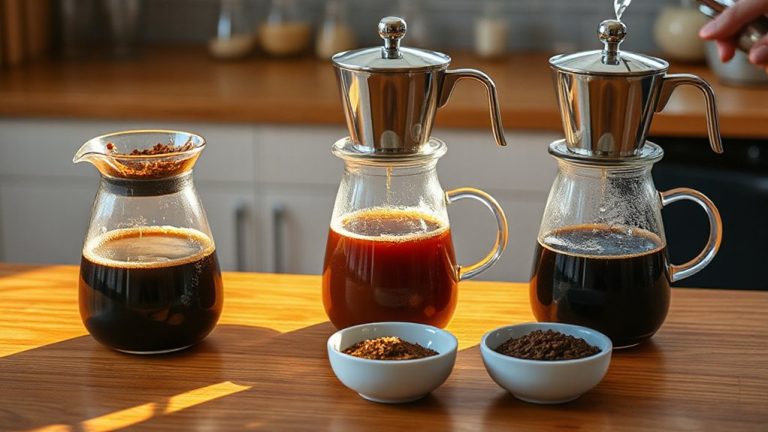
Steep coarsely ground medium to dark roast coffee-like Colombian or Sumatran-in a 1:4 ratio with cold, filtered water for 12 to 16 hours at room temperature. Stir once to saturate, then strain through a fine-mesh sieve and coffee filter. Store the concentrate in the fridge for up to two weeks. Dilute 1:1 with water or milk for lattes, or use in cocktails. You’ll find more ways to optimize flavor and use it creatively just ahead.
Notable Insights
- Use a 1:4 ratio of coarsely ground coffee to cold, filtered water for a smooth, strong concentrate.
- Steep the mixture for 12–16 hours at room temperature to achieve balanced flavor and optimal extraction.
- Strain thoroughly with a fine-mesh sieve and coffee filter to remove sediment and ensure clarity.
- Store the concentrate in a sealed container in the fridge for up to two weeks.
- Dilute 1:1 with water, milk, or in cocktails for rich iced lattes or coffee-based drinks.
What Is Cold Brew Concentrate?
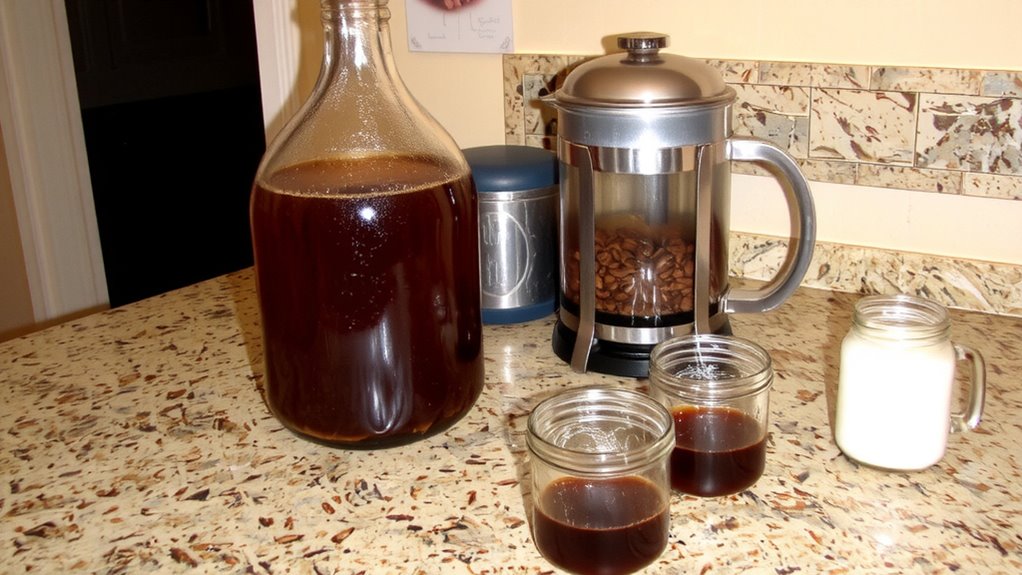
Cold brew concentrate starts with coarse coffee grounds steeped in cold water for 12 to 24 hours, producing a strong, smooth base meant for dilution. You control the flavor profile by adjusting the extraction time-longer steeping pulls more compounds, deepening the taste but risking bitterness if overdone. Most find 16 to 18 hours hits the sweet spot for balanced richness. Unlike hot brewing, cold water minimizes acid extraction, resulting in a noticeably smoother, less acidic concentrate. You’ll typically use a 1:4 coffee-to-water ratio, then dilute with water or milk (1:1 or 1:2) when serving. A French press works well for small batches, while mason jars or dedicated cold brew makers handle larger volumes. Store the concentrate in the fridge for up to two weeks. It’s practical, scalable, and ideal for iced drinks-but remember, it’s not ready to drink straight. For those looking to streamline the process, a cold brew coffee maker can simplify filtration and brewing.
Why Cold Brew Concentrate Tastes Better Over Ice
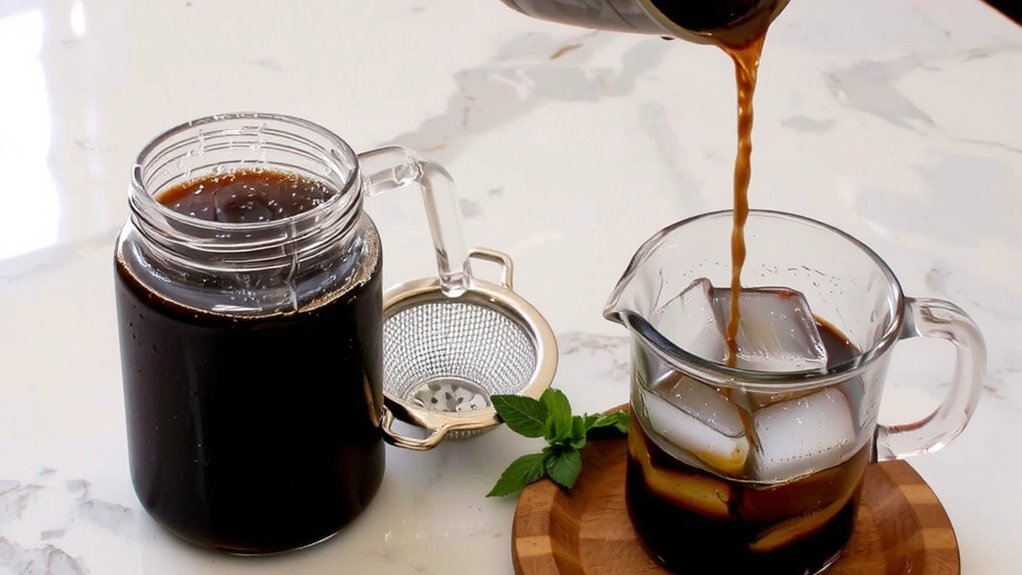
You’ve already seen how cold brew concentrate delivers a smooth, low-acid foundation thanks to its long steep in cold water-now consider what happens when that concentrate meets ice. Unlike hot brews that turn bitter and muted as they cool, your concentrate maintains flavor preservation because it was never exposed to heat. The smooth extraction from cold water pulls fewer sour and astringent compounds, so even when diluted over ice, the coffee stays balanced and rich. Hot-brewed coffee loses aromatic notes and clarity when chilled, but cold brew concentrate retains its character. It’s designed for ice, not adapted to it. That means every sip stays true to the original brew, without needing sugar or milk to mask off-notes. For iced lattes or cocktails, this consistency makes a difference. You control the strength by adjusting water or milk, not by sacrificing taste. It’s practical, reliable, and built for performance, not guesswork. A high-quality cold brew makers setup ensures optimal extraction and ease of use at home.
Best Coffee and Grind for Cold Brew Concentrate
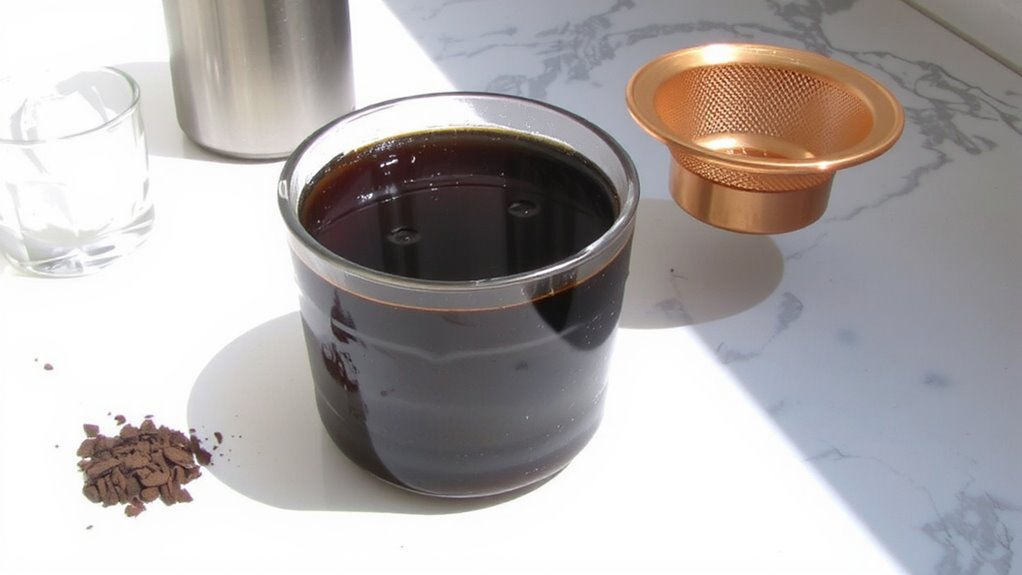
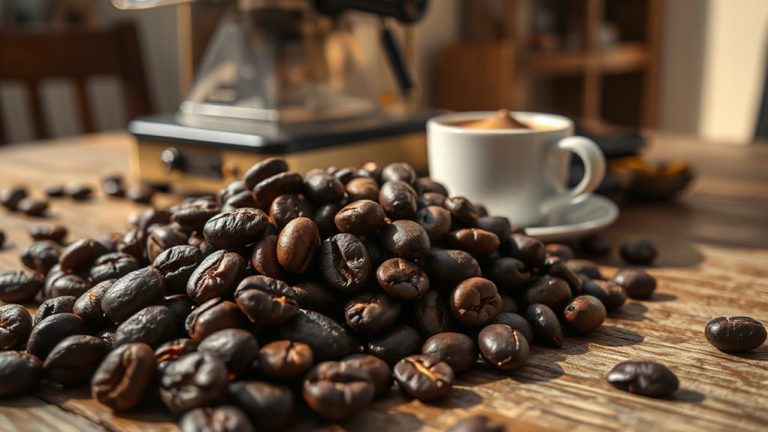
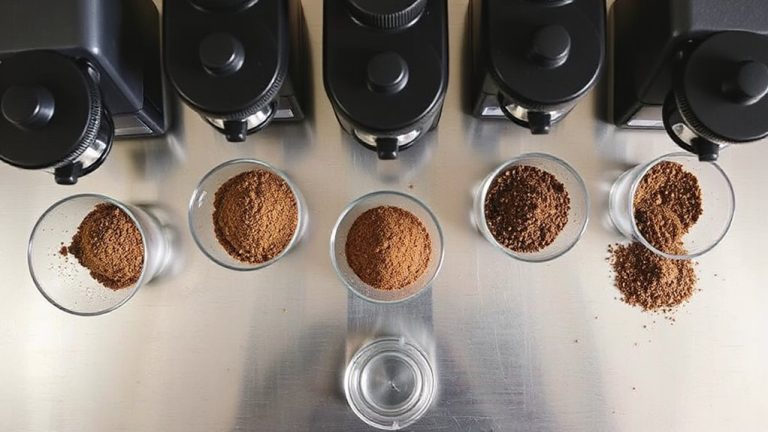
The foundation of a great cold brew concentrate starts with the right beans and grind size. Your coffee selection should favor medium to dark roast beans-like Colombian or Sumatran-because they yield the balanced, low-acidity profile cold brew is known for. Avoid overly light roasts, as they can taste underdeveloped and sour when steeped cold. When it comes to grind consistency, go coarse. A uniform, coarse grind prevents over-extraction and sediment, which keeps your concentrate smooth and clean. Blade grinders often create uneven particles, so a burr grinder is your best bet for consistency. Brands like Baratza Encore or Capresso 560 offer affordable options with reliable output. Skip pre-ground coffee unless it’s labeled for cold brew, since standard grinds are usually too fine. Great results start here-choose wisely, grind evenly, and you’re already ahead. For trusted options, check out top picks in our best coffee for cold brew roundup.
How to Make Cold Brew Concentrate at Home
Starting with the coffee and grind you’ve chosen sets you up for success, but now it’s time to put those ingredients to work. Use a ratio of 1:4, coffee to cold, filtered water-about 1 cup coarsely ground beans to 4 cups water. Combine in a jar or pitcher, stirring to wet all grounds. Cover and steep at room temperature for 12–16 hours; longer isn’t always stronger and can increase bitterness. Skip cold brew myths like needing refrigeration during steeping-it’s not required. After steeping, strain using a fine-mesh sieve, then a coffee filter or cheesecloth to remove fines. You can use homemade equipment like mason jars and cloth filters, though dedicated systems like French presses or DIY cold brew makers offer slightly better filtration. Avoid metal containers due to potential flavor transfer. Store concentrate in a sealed container in the fridge for up to two weeks.
How to Use Cold Brew Concentrate in Lattes and Cocktails
What if your cold brew concentrate could do more than just stretch into iced coffee? You can use it as a base for rich lattes and bold cocktails with minimal effort. For lattes, mix one part concentrate with one part milk-dairy or plant-based-and add ice. Try flavor pairings like vanilla syrup with oat milk or cinnamon with almond milk for variety. In cocktails, cold brew shines in drinks like espresso martinis or cold brew old-fashioneds. Use a cocktail shaker and chilled glassware to elevate serving styles. The concentrate’s smooth profile cuts through spirits without added sugar. For best results, dilute to taste-usually a 1:1 to 1:2 ratio with water or milk. It stores well, so you can prep multiple uses ahead. Whether serving creamy, sweet, or spirit-forward, cold brew concentrate adapts reliably across drink types, giving consistent flavor and strength every time.
Pro Tips for Smoother, Stronger Cold Brew Concentrate
While you might think brewing stronger, smoother cold brew is all about the beans, it’s actually the grind size and water-to-coffee ratio that make or break your concentrate. Use a coarse grind to prevent over-extraction and sludge-think sea salt, not sand. Stick to a 1:4 coffee-to-water ratio for a balanced concentrate. Before steeping, try a brief bloom extraction: pour just enough room-temp water to saturate the grounds, wait 30 seconds. This releases trapped CO2 and improves flavor consistency. During steeping, limit agitation control by avoiding stirring; excessive movement extracts bitter compounds. Steep for 12–16 hours at room temperature for ideal clarity and strength. Use filtered water-you’ll taste the difference. A French press works well for ease, but a DIY mason jar setup with a paper filter gives cleaner results. Strain thoroughly to remove fines.
On a final note
You’ve got the basics: use coarse-ground, medium-dark roast beans like French or Colombian for smooth, low-acid concentrate. Steep 12–24 hours in room-temperature water, then dilute before serving. It lasts up to two weeks refrigerated. For lattes, mix 1:1 with milk. In cocktails, replace simple syrup with cold brew for depth. A French press or airtight jar works fine-no special gear needed. Strain well to avoid grit.