What Makes Espírito Santo’s Robusta a Key Ingredient in Espresso Blends
You get richer crema and stronger body in your espresso with Espírito Santo’s Robusta because its dense beans and high oil content handle high-heat roasting without scorching. It adds bold flavor, chocolatey depth, and low acidity that balances well with Arabica. This Robusta also improves extraction consistency and crema stability, especially in milk drinks. Its resilience and performance make it a preferred choice for quality blends. There’s more to how it’s grown and processed that explains its edge.
Notable Insights
- Espírito Santo’s Robusta has high bean density, enabling it to withstand high-heat roasting without scorching.
- Its high lipid and soluble solids content produces thick, long-lasting crema essential for quality espresso.
- The bold flavor profile features earthy depth, chocolate notes, and nutty undertones, enhancing espresso complexity.
- Low acidity provides a clean, sturdy finish that balances brighter Arabica beans in blends.
- Grown in ideal tropical conditions and carefully processed, it ensures consistency and roast stability in commercial settings.
Why Espírito Santo Robusta Powers Better Espresso
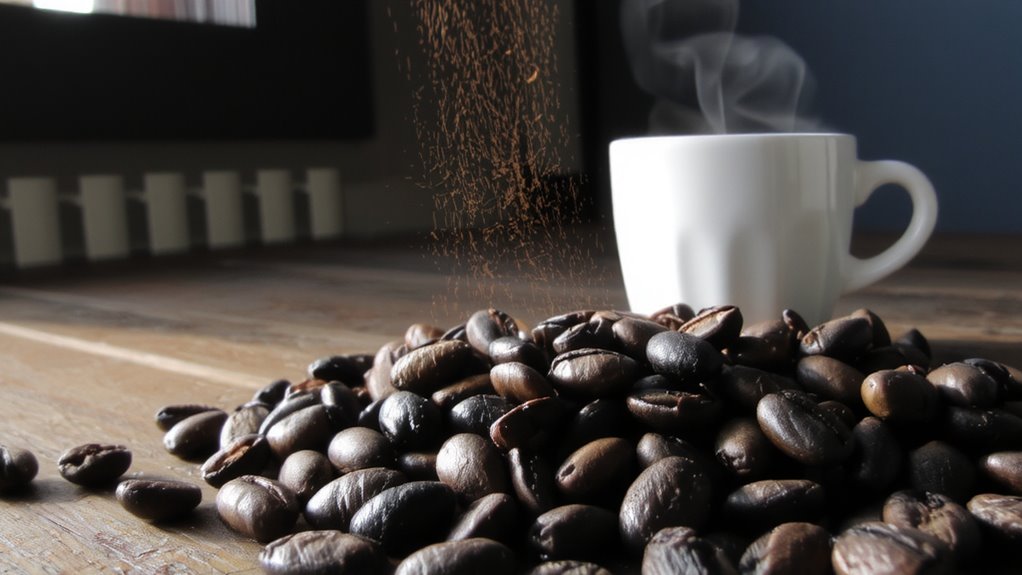
It’s not just marketing hype-there’s real structure behind why Espírito Santo’s Robusta ends up in so many quality espresso blends. You’ll notice it brings strong bean density, which helps it survive high-heat roasting without scorching. That density supports even extraction, especially in fast-paced commercial settings where consistency matters. It also has natural roast resilience, meaning it holds up well under dark or extended roasting-common for espresso-without turning flat or ashy. Compared to softer Robustas, this regional variety maintains clarity and punch. When you blend it with Arabica, you’re not just adding caffeine; you’re adding structural stability. It fills gaps in mouthfeel and body, especially useful in machines with lower pressure or older grinders that struggle with fines. No, it won’t replace Arabica’s brightness, but paired wisely, it enhances balance and reliability-two things any serious barista actually depends on.
More Crema, More Strength: The Espresso Advantage
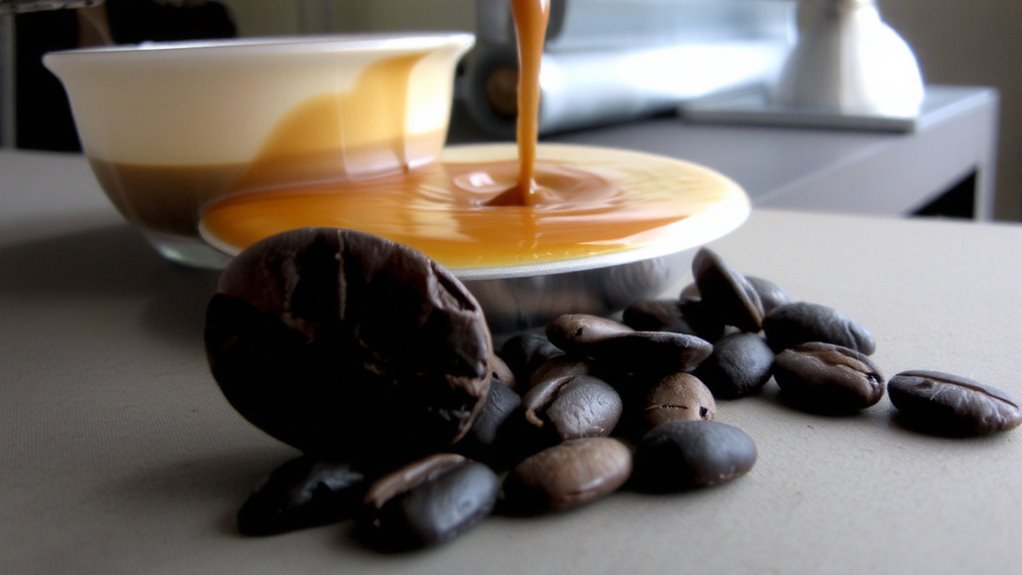
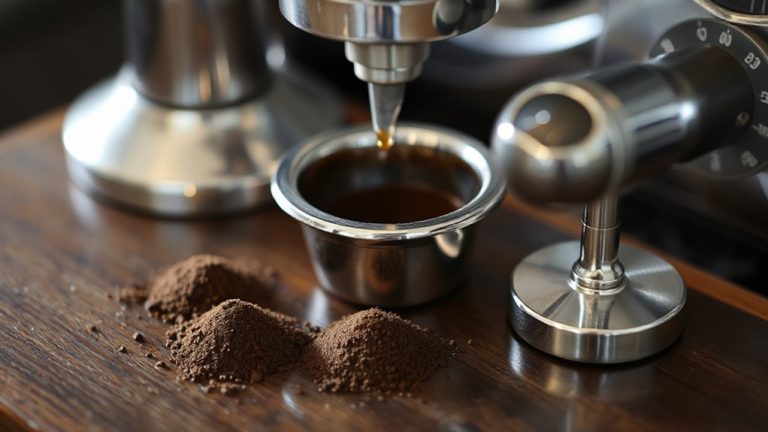
You get more than just bold flavor when you pull espresso with Espírito Santo Robusta-its high lipid and soluble solids content directly boosts crema production, giving shots a thicker, longer-lasting layer that holds up well under milk. That means better crema density and a more stable shot, especially in milk drinks where texture matters. You also get bold intensity without needing extra dose or pressure. For best results, use a double basket and a 1:2 ratio. Here’s how it compares:
| Feature | Espírito Santo Robusta | Typical Arabica Blend |
|---|---|---|
| Crema Density | High | Moderate |
| Bold Intensity | Strong | Medium |
| Milk Compatibility | Excellent | Good |
| Shot Stability | Long-lasting | Fades faster |
| Grind Tolerance | Forgiving | Sensitive |
Flavor That Stands Out: Earth, Chocolate, and Depth
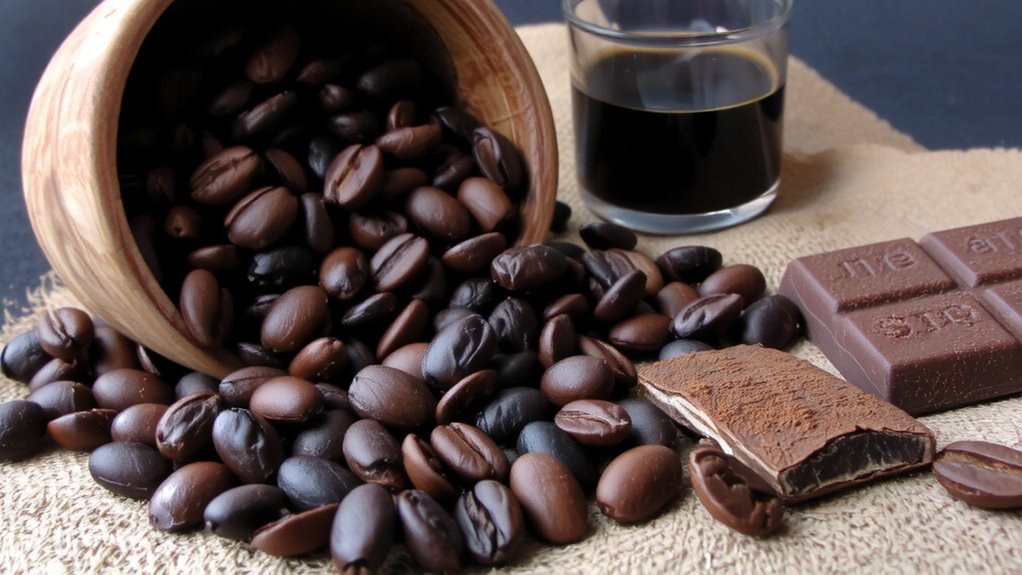
Earthy depth, rich chocolate notes, and a full-bodied profile-those are the hallmarks of Espírito Santo Robusta when pulled right. You’ll notice its bold aroma first, intense and roasty, filling the room before you even sip. That strength carries into the flavor, where earthy characteristics dominate but don’t overwhelm. You’ll pick up distinct nutty undertones-think roasted almonds or hazelnut-that add balance to the intensity. When brewed as espresso, the concentration enhances these traits, making them more pronounced without turning harsh, especially with a quality machine pulling consistent shots. It’s not subtle, and that’s the point. If you’re after complexity layered with power, this bean delivers. The chocolate notes pair well with darker roasts, while the low acidity keeps the finish clean and sturdy. For those valuing depth over brightness, Espírito Santo Robusta brings exactly what you need-flavor that stands out without fading.
Why Roasters Blend Espírito Santo Robusta With Arabica
Espírito Santo Robusta’s bold structure and rich chocolate tones make it a standout on its own, but roasters rarely use it solo. You blend it with Arabica to balance flavor, boost body, and improve performance. Arabica brings acidity and floral notes, while Robusta adds depth and crema-essential for espresso. Together, they create caffeine synergy, giving a smoother, longer-lasting kick than either bean alone. Robusta also improves roast stability, holding up better under high heat, which helps in large batches or fast roasting. That stability means fewer burnt edges and more consistent shots. Most specialty blends use 20–30% Espírito Santo Robusta because it integrates well without overpowering. If you’re pulling espresso on a standard machine, this mix guarantees reliable extraction and richer mouthfeel. Pure Arabica can taste thin; pure Robusta, harsh. The blend? Just right for a balanced, energizing shot.
How Espírito Santo Robusta Is Grown and Processed
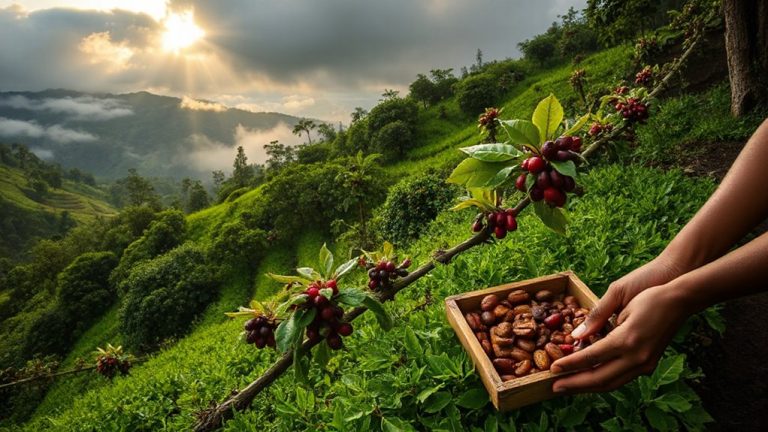
Robusta thrives in the humid tropical lowlands of Espírito Santo, where consistent rainfall, rich clay soils, and steady temperatures between 20–25°C create ideal growing conditions. You’ll find farmers using shade cultivation to protect plants from intense sun, which also supports biodiversity and improves bean density. This method slows cherry development, often enhancing quality. Most growers rely on manual harvesting to selectively pick only ripe cherries, boosting consistency but increasing labor costs. After harvest, beans are typically processed using wet or semi-washed methods to remove mucilage and reduce fermentation flaws. Mechanical dryers are common, especially during rainy seasons, giving farmers better control over moisture levels. Proper drying is critical-too fast, and beans crack; too slow, and mold risks rise. You’ll get more uniform results when processing is well-monitored, making these steps essential for maintaining the clean, bold profile roasters depend on.
Why Espírito Santo Robusta Dominates Espresso Blends
You’re likely to notice Espírito Santo Robusta in your espresso not just for its intensity, but for the way it stabilizes crema and adds a smooth, syrupy body that lingers. That’s no accident-its high bean density helps it survive dark roasts without scorching, giving consistent results even in high-heat drum roasters. This roast resilience means fewer underdeveloped notes and less waste during production. When blended with Arabica, Espírito Santo Robusta boosts caffeine and body without overwhelming complexity. Its compact structure supports even extraction in standard commercial grinders, reducing channeling. Compared to other Robustas, it’s less harsh, making it ideal for blends where balance matters. You’ll find it in many European espresso formulas, especially in Italy and France, where crema stability is non-negotiable. If you’re dialing in a blend for a rotary pump machine, this bean’s predictability saves time and improves shot repeatability week after week.
On a final note
You’ll see Espírito Santo robusta in many espresso blends because it boosts crema and body better than most. It adds earthy depth, chocolate notes, and strength without overpowering. When blended with Arabica, it balances flavor and caffeine at a lower cost. Grown in Brazil’s coastal heat and processed for consistency, it’s reliable. If you want richer, bolder shots on a budget, try a blend with 20–30% of this robusta. Just don’t expect delicate acidity.