Jamaican Blue Mountain Coffee: Why It Costs $40+ a Pound
You’re drinking a rare, regulated coffee when you choose Jamaican Blue Mountain-less than 10% of beans meet official certification. Grown at high altitudes with cool temps and steady rain, the beans develop balanced sweetness and low acidity. Hand-harvested and wet-processed for consistency, they’re sun-dried carefully to preserve quality. Japan buys over 80% of exports, thanks to long-term trade ties and a preference for smooth flavor. Real Blue Mountain has certification labels, batch numbers, and a clean, floral profile-expect to pay $40+ per pound. There’s more to how it reached luxury status than meets the eye.
Notable Insights
- Limited production in Jamaica’s Blue Mountains due to small farms, challenging terrain, and strict export quotas creates scarcity and exclusivity.
- High-altitude growing conditions and cool, misty climate slow bean development, enhancing sugar content and producing a smooth, balanced flavor.
- Hand-harvesting of only ripe cherries and meticulous wet-processing ensure high quality and consistency in every batch.
- Japan’s long-standing trade agreements and cultural preference for mild coffee secure over 80% of annual exports, driving global demand.
- Authenticity is verified by JCIB certification, with official packaging, origin proof, and premium pricing distinguishing genuine Blue Mountain coffee.
Why Is Jamaican Blue Mountain Coffee So Rare?
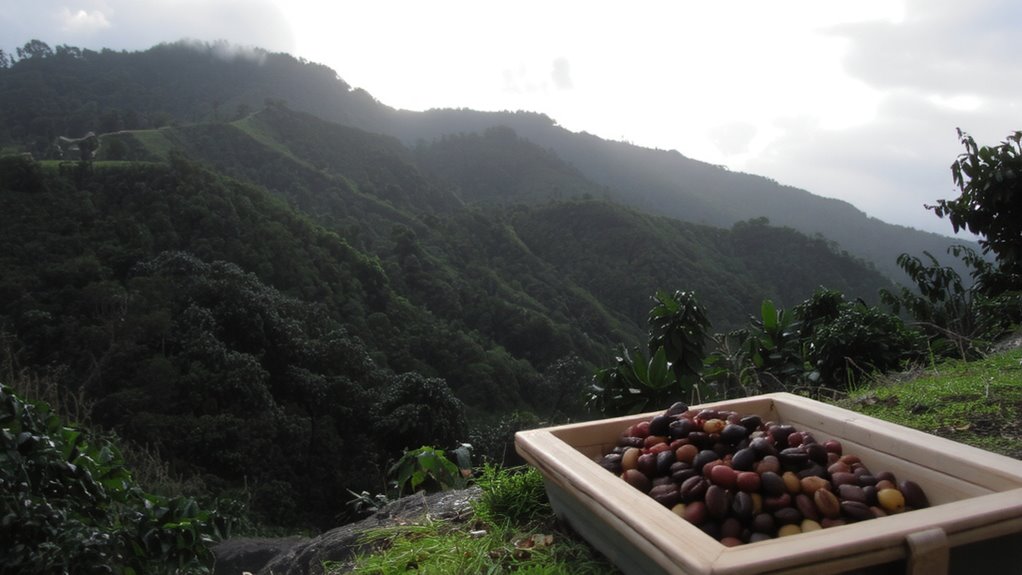
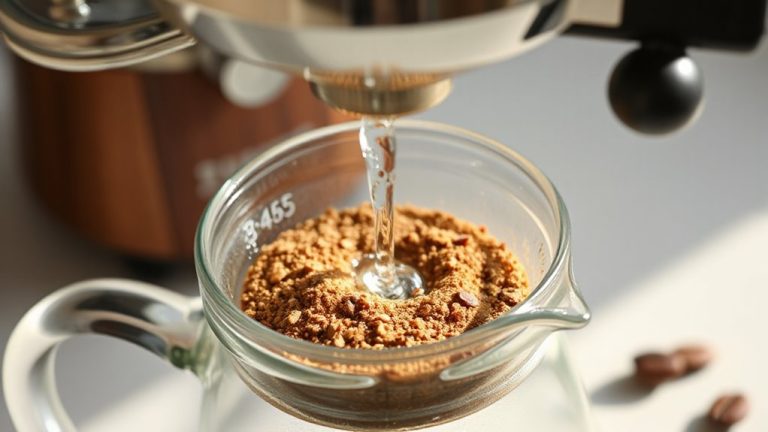
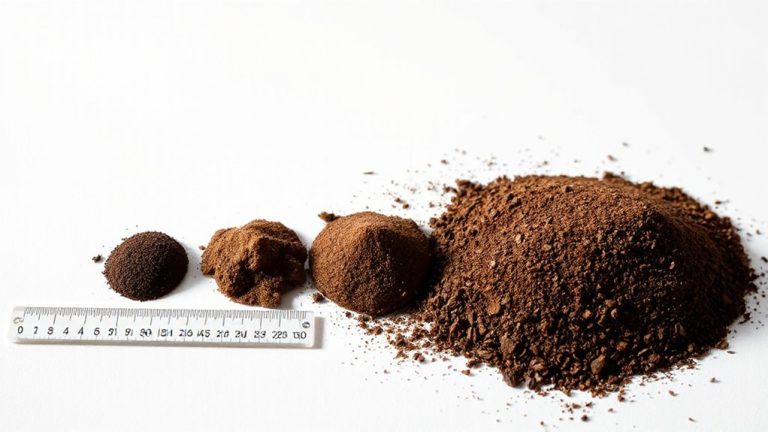
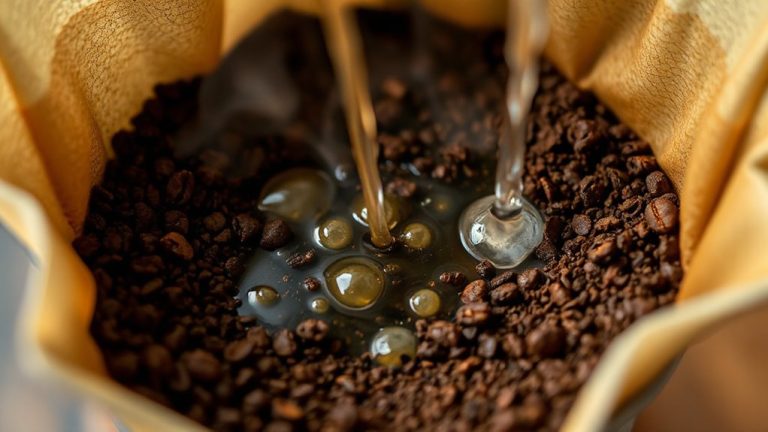
Only about 10% of the coffee grown in Jamaica’s Blue Mountains gets the official certification to be called “Jamaican Blue Mountain Coffee,” and that strict control is a big reason why it’s so rare. You’re dealing with limited production-farms are small, yields are low, and the terrain makes large-scale farming impractical. On top of that, Jamaica enforces strict export quotas, meaning only set amounts can leave the island each year, mostly going to Japan and select markets. If you’re sourcing beans, expect high prices and verify authenticity, as counterfeit versions are common. For brewing, use a pour-over or siphon to highlight its mild, balanced profile. Pre-ground won’t cut it-grind fresh to preserve clarity. While other high-altitude coffees offer complexity, few match this bean’s smooth finish. You’ll need patience and a reliable supplier, but when done right, it’s worth the effort. Keep storage airtight; freshness matters more here than most.
How Climate Shapes the Flavor of Blue Mountain Coffee
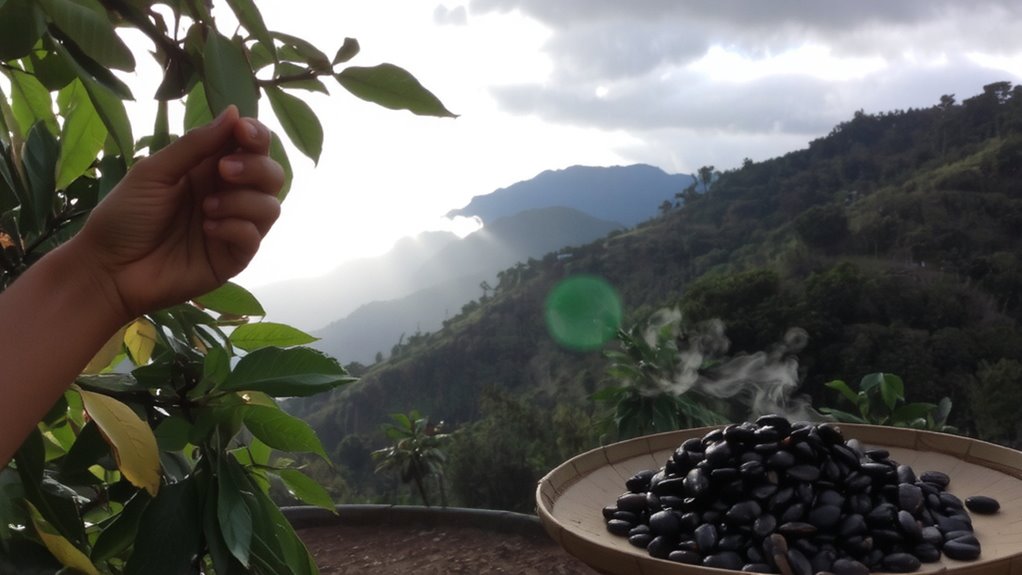
Because the Blue Mountains have cool nights, frequent cloud cover, and steady rainfall, the coffee plants grow slowly, which helps concentrate sugars and develop a smoother, more balanced cup. You’ll taste the terroir influence in every sip-clean, mild, and subtly sweet, with little acidity. Altitude effects play a key role, as farms between 3,000 and 5,500 feet create ideal conditions for dense bean development. Here’s how climate factors shape flavor:
| Climate Factor | Effect on Coffee | Example Outcome |
|---|---|---|
| Cool nighttime temps | Slows bean maturation | Enhanced sugar development |
| Consistent rainfall | Steady growth cycle | Uniform bean size |
| High altitude | Lower oxygen, dense beans | Richer mouthfeel |
| Cloud cover | Reduced sun stress | Smoother acidity |
| Misty conditions | Extended cherry ripening | Balanced sweetness |
These elements combine to define Blue Mountain’s distinct profile. You’re not just tasting coffee-you’re experiencing a direct result of precise environmental conditions. No added flavors needed. Many of the top-rated beans showcasing this unique profile are included in the Best Jamaican Blue Mountain Coffee Picks.
How Jamaican Blue Mountain Coffee Is Harvested and Processed
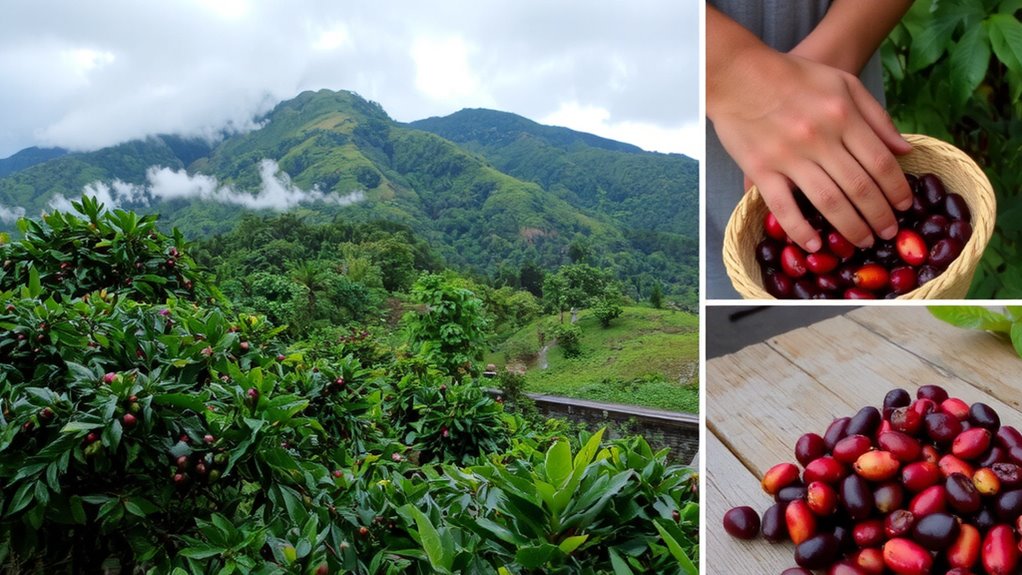
You’ve tasted the results of the Blue Mountains’ unique climate-those slow-growing beans that develop smooth, balanced flavors under cool mists and high altitudes. Now you’re seeing how that quality is preserved from farm to green bean. Farmers use hand picking techniques to select only ripe, red cherries, avoiding underripe or overripe ones that could spoil the batch. This selective harvesting guarantees uniformity, though it’s labor-intensive. After picking, cherries go straight to wet processing methods at local mills. Here, they’re pulped to remove the outer skin, then fermented in water for 12–24 hours to break down mucilage. After rinsing, beans are soaked in clean water before being sun-dried on raised beds. This careful wet processing enhances clarity and reduces defects, giving Blue Mountain coffee its clean, refined profile you can taste in every cup.
Why Japan Dominates Demand for Blue Mountain Coffee
While much of the world enjoys Blue Mountain coffee in smaller batches, Japan has consistently secured the largest share of exports, accounting for over 80% of annual shipments from Jamaica. You can trace this dominance to long-standing trade partnerships established in the 1970s, when Japanese investors helped stabilize Jamaican coffee infrastructure in exchange for reliable supply. These ties remain strong, ensuring priority access to beans. Equally important is cultural preference-Japan values smooth, low-acid coffee with balanced flavor, traits Blue Mountain delivers naturally. Japanese roasters often use precise, slow roasting techniques to preserve these qualities, enhancing sweetness without bitterness. Unlike markets favoring bold, dark roasts, Japan’s approach complements the bean’s delicate profile. You’ll find it served in specialty cafes or as premium canned coffee, where quality justifies the price. For you, this means origin matters-but so does preparation.
How to Spot Real Jamaican Blue Mountain Coffee
If you’re after authentic Jamaican Blue Mountain coffee, knowing how to verify its origin is essential, since imitations are common. Start with certification authenticity-look for the Jamaica Coffee Industry Board (JCIB) seal. This guarantees the beans are grown in the designated Blue Mountain region. Packaging verification is just as vital: check for official logos, harvest dates, and farm details. Avoid bulk or vacuum-sealed bags without traceability. For the best experience, consider trying one of the top-rated Blue Mountain coffee picks that have been vetted for authenticity and quality.
| Feature | Real Blue Mountain | Common Imitation |
|---|---|---|
| Certification | JCIB-licensed | No official seal |
| Origin | Elevations 915–1,524m | Unknown or non-Jamaican |
| Aroma | Mild, floral, low acidity | Harsh, bitter notes |
| Packaging | Detailed labeling, batch # | Generic, vague claims |
| Price | Premium ($40+/lb) | Suspiciously low |
Buy from verified sellers and brew with precision.
On a final note
You now know why Jamaican Blue Mountain coffee is rare, how climate shapes its smooth taste, and how Japan dominates demand. To enjoy it, buy beans certified by the Coffee Industry Board of Jamaica. Grind fresh, use a quality burr grinder, and brew with a pour-over or drip for clarity. Avoid dark roasts-they mask delicate notes. Store beans in an airtight container away from light. Real Blue Mountain is pricey, so compare sourcing and roast dates carefully.