Tailoring AeroPress Extraction Methods Based on Bean Variety and Desired Flavor Profile
Use a fine grind for bright, high-grown beans like Yirgacheffe or Kenyan to improve extraction without overdoing sourness. Brew at 175°F–185°F to highlight acidity, or 195°F–205°F for richer body. Short brews (1–1.5 minutes) keep things crisp; longer ones (2.5–3 minutes) add depth. Try the inverted method for even saturation and better control. Stick to a 1:15 to 1:17 ratio for balance. There’s more to fine-tuning your ideal cup based on bean behavior and taste goals.
Notable Insights
- Match fine grind size to bright, high-grown beans to enhance clarity and avoid under-extraction of delicate flavors.
- Use water between 175°F–185°F to emphasize acidity and floral notes in light-roast, high-altitude coffees.
- Adjust brew time: shorter (1–1.5 min) for brightness, longer (2.5–3 min) for body and sweetness.
- Employ the inverted method to improve saturation and control bloom time for more consistent extractions.
- Maintain a 1:15 to 1:17 coffee-to-water ratio for balanced clarity and strength across diverse bean profiles.
Grind Fine for Bright, High-Grown Beans
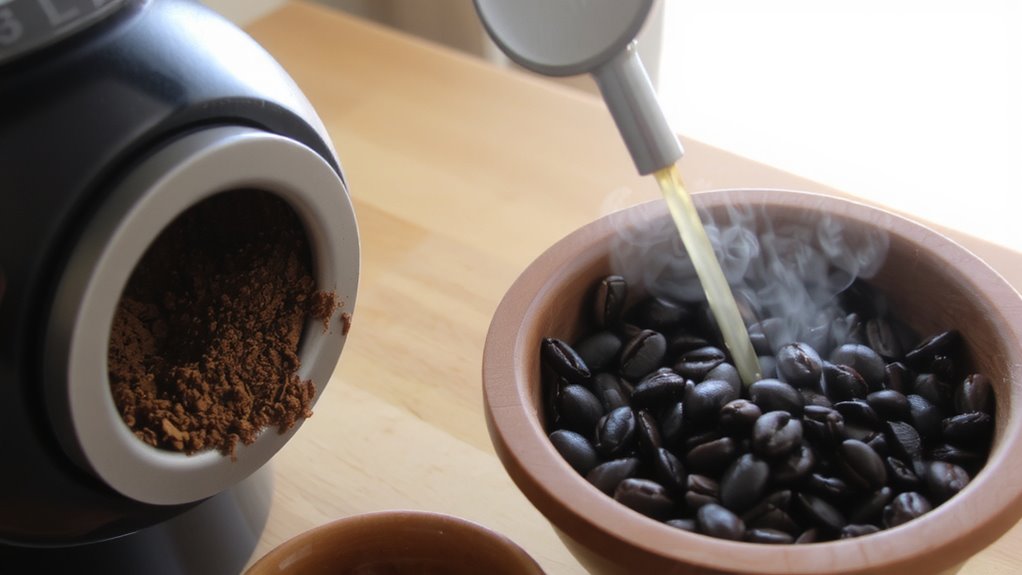
Fine grind. You’ll want this setting when working with bright, high-grown beans-from regions like Ethiopia’s Yirgacheffe or Kenya’s central highlands-where the bean origin contributes lively acidity and floral or citrus notes. These dense beans respond well to finer particles because they extract more evenly, pulling out delicate flavors without tipping into sourness. Pair this grind with a medium to light roast level; darker roasts can mute the brightness these beans are prized for. A fine grind increases surface area, helping you get the most from the shorter steep time typical in AeroPress brewing. Just avoid going too fine-like espresso level-as it may lead to clogging or over-extraction. Use a burr grinder for consistency. If your cup tastes sharp or thin, check both grind size and roast level. Adjust incrementally. This method shines with beans labeled as washed or naturally processed from high elevations. For precise control over both dosage and extraction time, consider using a scale with a built-in coffee scale with timer.
Brew Cooler for Brightness, Hotter for Body
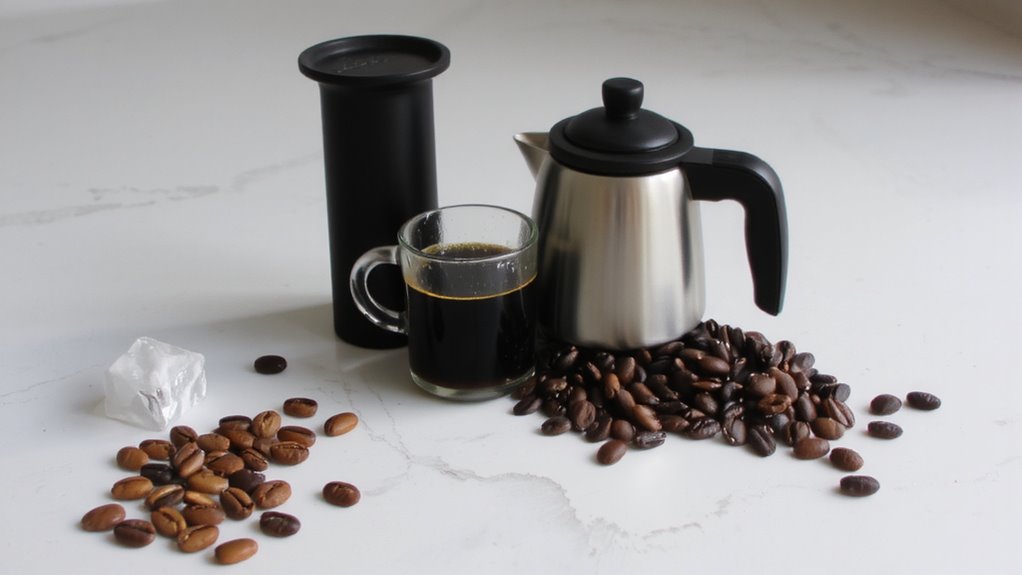
You’ve already dialed in your grind to match the bean’s density and roast-now it’s time to tweak the water temperature to shape your cup’s character. For lighter, brighter notes-especially in high-grown beans-use cooler water, around 175°F to 185°F. Lower water temperature slows extraction, pulling more acidity and delicate floral or citrus tones without over-expressing bitterness. It’s ideal when you want a tea-like clarity. If you prefer a heavier mouthfeel and deeper sweetness, go hotter-try 195°F to 205°F. This boosts extraction of sugars and body, lending a rounder, more robust profile. Adjusting water temperature is a direct lever for flavor balance. Cooler temps favor acidity and lift; hotter ones enhance body and smoothness. No single setting works for all beans-test across a few brews to see how each responds. The Perfect Coffee Brewing Temperature ensures optimal extraction while preserving the nuanced flavors of each bean variety.
Shorten Time for Acidity, Lengthen for Depth
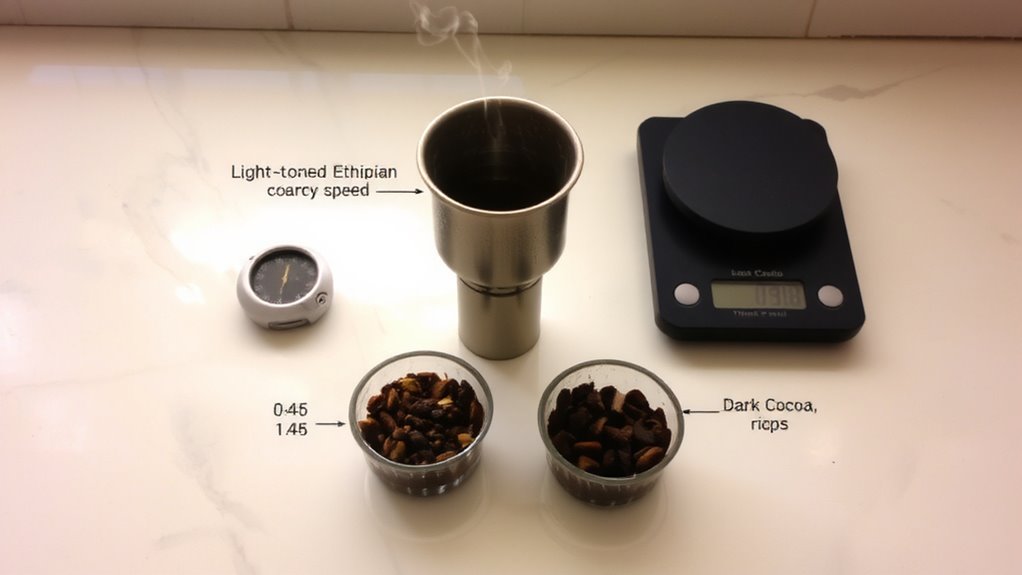
What if you could shift your coffee’s balance from bright and snappy to rich and layered-just by adjusting how long it steeps? You can. Shorter brew times, around 1–1.5 minutes, highlight acidity and clarity, especially in light-roast beans. Try a shorter bloom-15 seconds-and a faster pour to limit early extraction. This works well when you want vibrant notes from African or naturally processed coffees. For depth and body, extend the total time to 2.5–3 minutes. Let the bloom go 30–45 seconds and slow the pour for even drawdown. The longer contact pulls out sugars and complex compounds, great for Sumatrans or darker profiles. Time isn’t just a clock-it’s a tool. You don’t need special gear, just control over duration. Adjust based on taste, not rules. Shorter for lift, longer for weight. The Aeropress coffee makers recommended in top roundups offer consistent brewing conditions ideal for these time-based adjustments.
Use Inverted for Even Saturation and Control
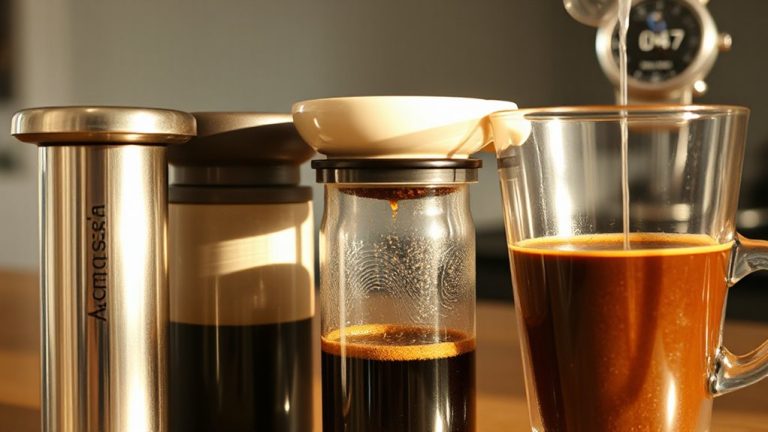
If you’re looking to improve consistency in your AeroPress brews, flipping to the inverted method might be worth trying. By brewing upside down, you prevent premature dripping, giving you full control over water contact time. Start by placing the plunger in the chamber, then add your ground coffee. Pour water just off the boil-around 195–205°F-and guarantee even saturation. This setup lets you manage bloom duration precisely, typically 30–45 seconds, releasing trapped gases for a more even extraction. Adjusting water temperature within this range can fine-tune flavor, especially with light or dark roasts. Once bloomed, stir gently, attach the filter cap, flip carefully, and press. The inverted method reduces variability, particularly helpful when dialing in new beans. While it demands attention to avoid spills, the payoff is consistent saturation and greater control over critical variables like bloom duration and water temperature.
Dial In 1:15 to 1:17 Ratio for Balanced Strength
A consistent coffee-to-water ratio is one of the most effective ways to sharpen your AeroPress results after mastering saturation and brew time. For balanced strength and clarity, dial in a 1:15 to 1:17 ratio-like 15g coffee to 225–255g water. This range works well across light and medium roasts, giving body without overpowering brightness. Water quality matters: use filtered water with balanced minerals to avoid flat or harsh flavors. Your agitation technique also affects extraction; stir gently once or twice to promote even saturation without over-agitating, which can lead to bitterness. If your brew tastes weak, try a finer grind or slightly more coffee. If it’s too strong or harsh, adjust coarser or reduce dose. Small tweaks within this ratio range let you fine-tune strength and balance based on bean variety and roast level, giving repeatable, flavorful results.
On a final note
You’ll get brighter flavors from high-grown beans by grinding fine and brewing cooler, around 175°F. For heavier body, use hotter water, near 205°F. Shorter brew times boost acidity; go longer for depth. The inverted method helps saturate grounds evenly and gives you more control. Stick to a 1:15–1:17 coffee-to-water ratio for balanced strength-adjust slightly based on bean and taste.