Adjusting Grinding Techniques for Consistent Espresso Flavors Across Multiple Machines
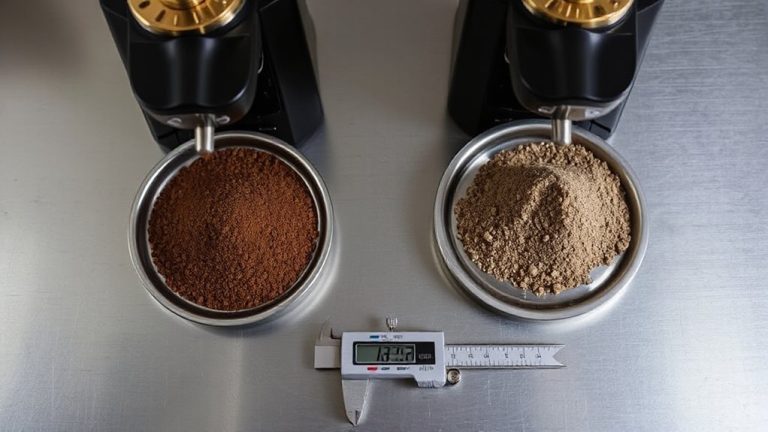
You need consistent grind size across all grinders-tiny differences can alter extraction and flavor. Match each grinder to your machine’s pressure profile, especially with profiling systems. Calibrate doses to offset grinder variances; a Mazzer Robur might need more than a Niche Zero. Use WDT or levelling tools for even distribution and prevent channeling. Adjust daily for humidity and bean age. Log every change. See how small tweaks add up to stable, repeatable shots.
Notable Insights
- Use matched grinder models with flat burrs to ensure uniform particle distribution across multiple machines.
- Calibrate grinders to each machine’s pressure profile for consistent extraction under varying pressure dynamics.
- Adjust dose slightly between grinders to compensate for differences in particle size and distribution.
- Apply distribution tools like WDT or levellers to prevent channeling and promote even water flow.
- Perform daily grind calibration and log shot data to track and correct for environmental and bean variability.
Why Grind Consistency Matters for Multi-Machine Setups
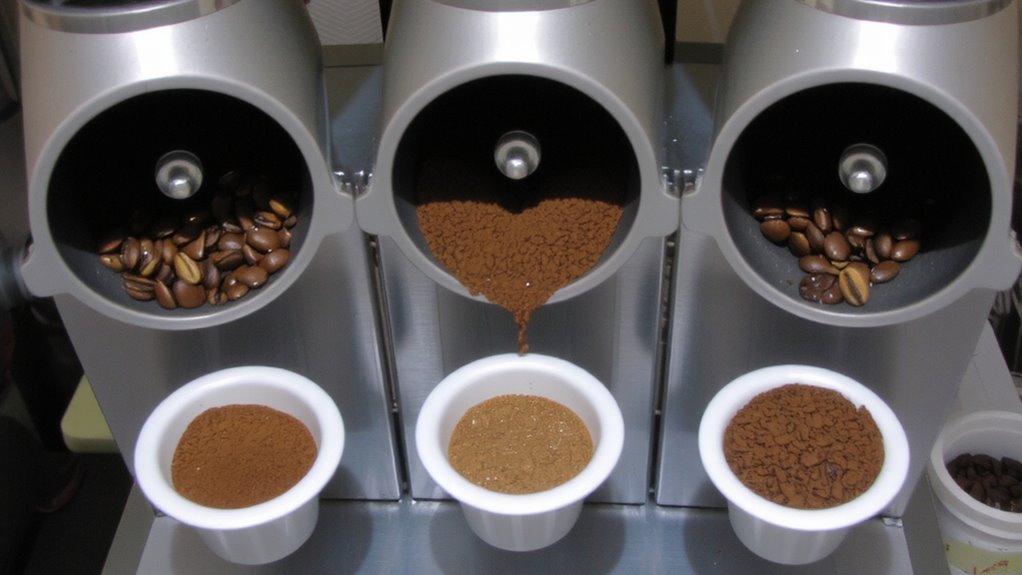
A consistent grind size isn’t just helpful when running multiple espresso machines-it’s essential. When you’re pulling shots across different units, even small variances in grind shape or particle distribution can throw off extraction. You’ll end up with one machine pulling bitter, over-extracted shots while another serves sour, weak espresso. Uniform grinds guarantee each dose tamps evenly and water flows at the same rate. Flat burrs typically give you better particle distribution than conical, especially in high-volume setups. You want minimal fines and boulders-those cause clogging and channeling. If your grinders aren’t aligned, you’re fighting inconsistency before the shot even starts. That’s why top cafes use the same grinder model across stations. It’s not about cost-it’s control. Matched grinders mean predictable shape and size, so every machine behaves the same. Consistency starts before the portafilter. Investing in high-quality best coffee grinders ensures long-term stability across multi-machine environments.
Match Each Grinder to Its Machine’s Pressure Profile
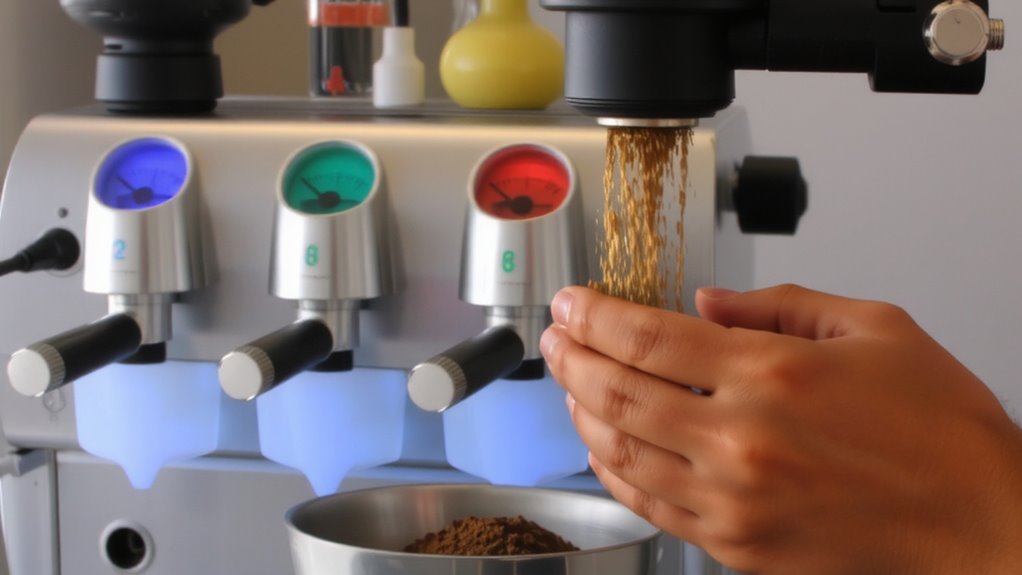
Why do some grinders work better with certain espresso machines? Because each machine has a unique pressure profile, and your grinder must respond consistently to that input. Machines with advanced pressure profiling, like the Slayer or Decent EP, let baristas manipulate pressure during extraction, demanding precise grinder calibration. If your grinder can’t deliver uniform particle size under varying pressure demands, shots will pull inconsistently. You need tight grinder calibration to match the machine’s output-especially when pulling high-pressure ramps or soft pre-infusions. A Mazzer Robur, for example, behaves differently on a machine with fixed 9-bar pressure versus one with dynamic profiling. Matching grinder to machine means adjusting for how water moves through the puck under real-time pressure shifts. Skip this step, and your flavor consistency collapses, no matter how good your beans are. For optimal results, consider starting with one of the top-performing single-dose espresso grinders available today.
Dial In Doses to Balance Grinder Differences
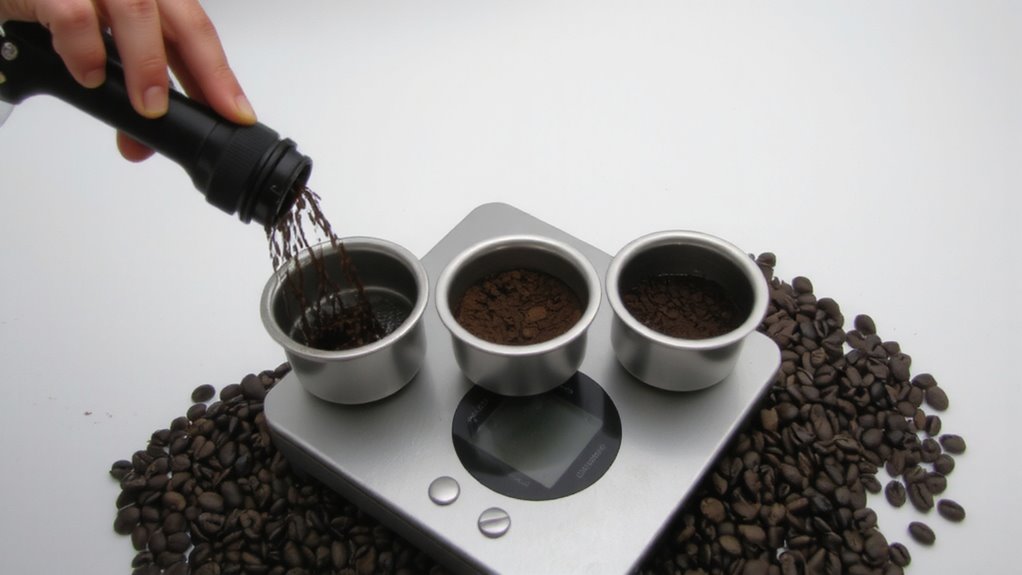
Your grind settings aren’t the only lever to pull when chasing shot consistency-dose matters just as much, especially when switching between grinders. Even with identical settings, different grinders produce varied particle distributions due to blade design, burr alignment, and grinder calibration. That means a 19g dose on one might extract like 18g or 20g on another. To balance this, adjust your dose precision: weigh shots and tweak the dose until extraction time and flavor align across machines. For example, a Mazzer Robur may require 0.5g more than a Niche Zero for the same result. Small changes create big impacts. Always recalibrate dose after swapping grinders-even with the same beans. This isn’t one-size-fits-all; it’s about matching equipment behavior to your target shot. Dose adjustments compensate for grinder inconsistencies, ensuring reliable, repeatable espressos day to day. A high-quality manual coffee grinder can offer greater control over particle size and consistency, making it easier to dial in precise doses when portability or simplicity is a priority.
Fix Uneven Shots With WDT or Levelling Tools
When shots pull unevenly-channelling down one side or sputtering to a stop-chances are, your grounds aren’t distributed evenly in the basket. Poor distribution leads to uneven puck moisture and inconsistent extraction. You can fix this with proper tools like a WDT (Weiss Distribution Technique) or a levelling tool. These help spread grounds evenly before tamping, reducing channels and improving flow. Apply even tamping pressure to avoid compacting one side too much. Uneven pressure creates dense spots that restrict water.
| Method | Tool Type | Best For |
|---|---|---|
| WDT | Needle tool | Deep, uniform mixing |
| Leveller | Metal disk | Fast, flat distribution |
| Finger swipe | Manual | Quick fixes, less precise |
WDT works well with finer grinds; levellers save time daily. Both improve puck moisture consistency and response to tamping pressure.
Time Your Grind Settings for Daily Bean Changes
How often do you tweak your grind dial when switching beans? If you’re not adjusting daily, you’re likely missing key shifts in flavor. Fresh beans change rapidly-humidity, roast age, and origin all impact extraction. That’s why consistent grind calibration is essential each morning. Set a routine: weigh doses, time shots, and record results. This habit supports effective flavor tracking across batches. A bean from Ethiopia might need a finer setting on Monday than Wednesday, even from the same bag. Machines react differently, so small grind changes keep shots balanced. Skipping daily checks leads to sour or bitter pulls. Use a timer and notebook, or a simple app, to log adjustments. It doesn’t take long, and the payoff is steady espresso. Treat each bean change like a fresh start-because it is. Grind calibration isn’t perfectionism; it’s practical. Flavor tracking keeps quality real, cup after cup.
Run a Standardized Dial-In on Every Machine
Why does one machine pull a balanced shot while another produces chaos, even with the same beans and settings? It often comes down to inconsistent machine calibration. Every espresso machine behaves differently due to wear, pressure stability, and brew head design. That’s why you’ve got to run a standardized dial-in on each one-no exceptions. This isn’t just grinding and hoping; it’s deliberate shot profiling to match each machine’s personality. Start with the same dose and technique, adjust grind size, and track time and yield until you hit balance.
| Step | Action |
|---|---|
| 1 | Set dose (e.g., 18g) and target yield (e.g., 36g) |
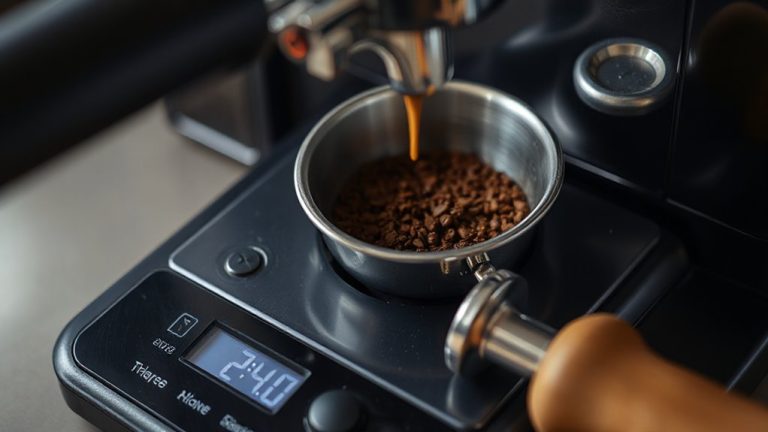
| 2 | Adjust grind until 28–32 second extraction |
| 3 | Evaluate taste, then refine for shot profiling |
Consistent machine calibration means repeatable results across your setup.
Log Every Change in a Cross-Machine Espresso Journal
Precision starts with memory, and memory shouldn’t rely on you guessing what worked last Tuesday. Every tweak you make across machines-especially grinder calibration-needs recording. Without a cross-machine espresso journal, you’re just repeating work. Track each change: grind setting, dose, yield, time, and how the shot tasted. That way, when Machine B behaves like last week’s Machine A, you’ve got data, not guesses. Apps work, but a shared physical notebook at the bar keeps things simple and visible. Shot logging reveals patterns-maybe your EK43 needs 11 clicks finer on Tuesdays due to humidity, or your Mythos grinds hotter midday. Consistency across machines isn’t luck; it’s logged decisions. Compare logs weekly. Adjust based on trends, not taste alone. This isn’t overkill-it’s how shops maintain flavor, shift after shift, bean to cup.
On a final note
You’ll get consistent espresso across machines only by matching each grinder to its machine’s pressure profile and adjusting dose accordingly. Use WDT or levelling tools to prevent channeling. Dial in fresh each day-especially when beans change-and stick to a standardized method on every machine. Track all changes in a shared journal so adjustments stay precise and repeatable. Consistency isn’t automatic; it’s built step by step.